




















G7 leaders confront iran conflict and global energy shock
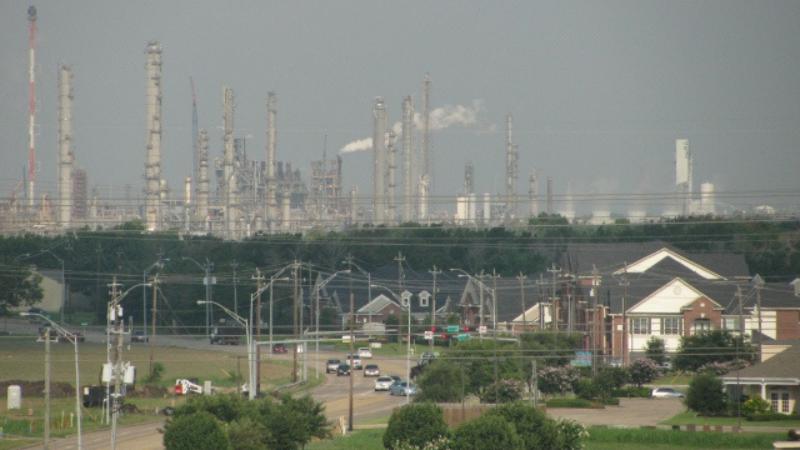
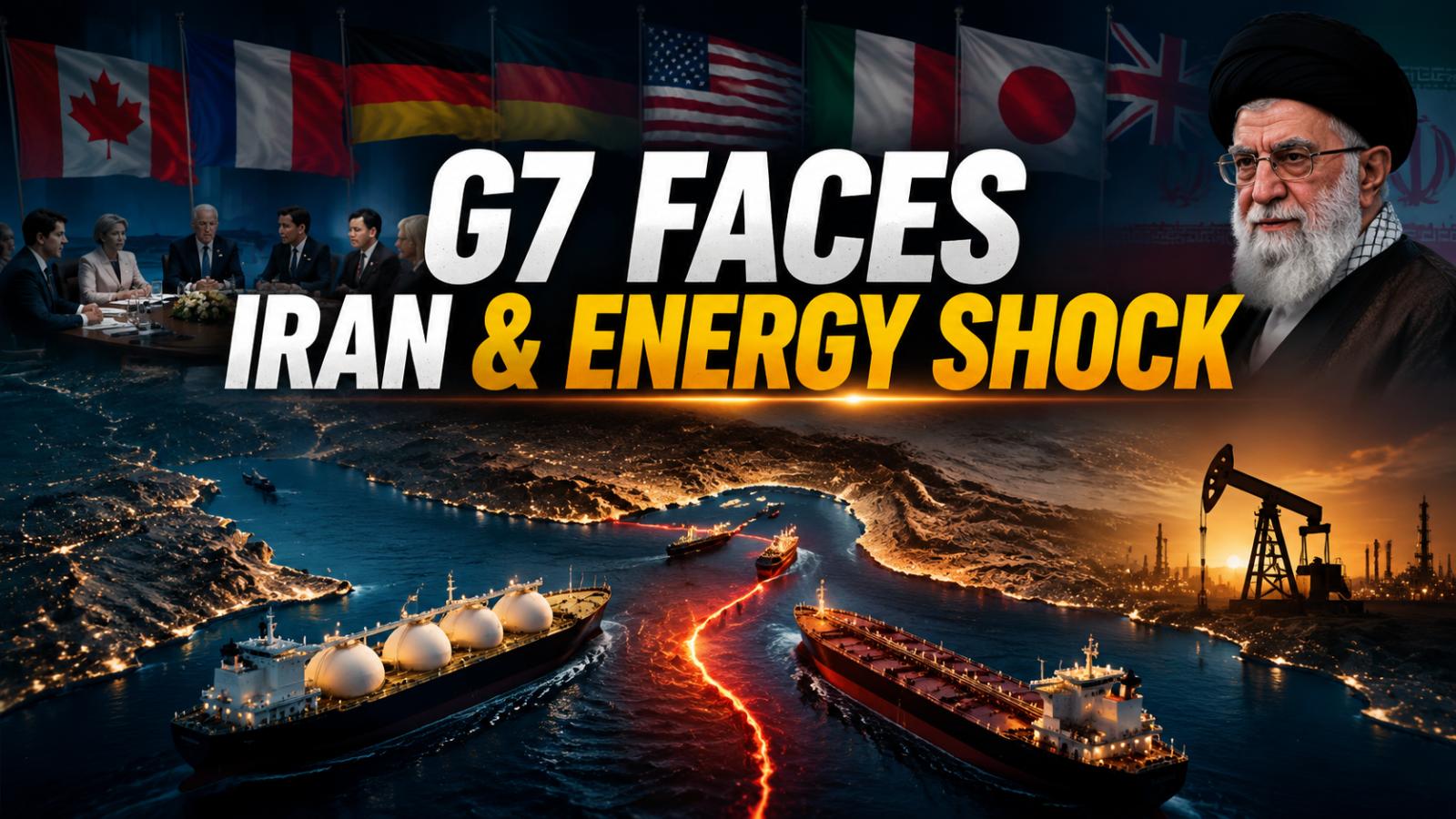
The G7 summit in France unfolded under the shadow of growing instability linked to tensions involving Iran and wider regional security concerns. While political disagreements remained in the background, the more immediate concern for leaders was the economic impact spreading across global energy markets. Rising uncertainty around shipping routes and oil supply quickly turned the discussions toward inflation, fuel pricing, and trade resilience.
G7 leaders confront iran conflict and global energy shock
The G7 summit in France unfolded under the shadow of growing instability linked to tensions involving Iran and wider regional security concerns. While political disagreements remained in the background, the more immediate concern for leaders was the economic impact spreading across global energy markets. Rising uncertainty around shipping routes and oil supply quickly turned the discussions toward inflation, fuel pricing, and trade resilience.
Oil Prices Fall as Iran-US Peace Hopes Lift Markets
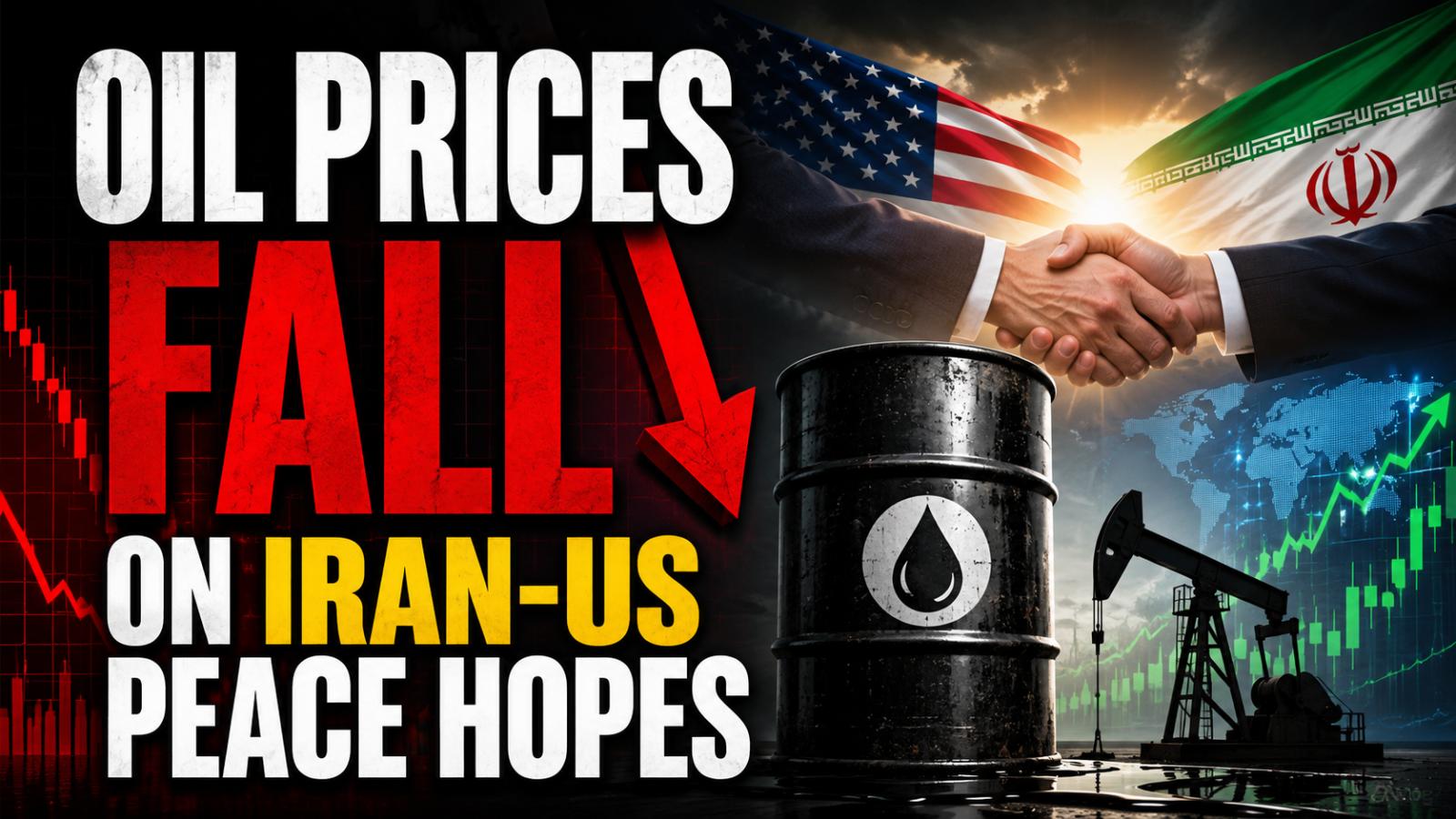
Oil Falls On Peace Deal Hopes Oil prices fell sharply on Friday, June 12, 2026 as renewed hopes for a peace agreement between Iran and the United States eased fears of prolonged disruption to global energy supplies. Brent crude dropped below $86 a barrel during trading before recovering part of its losses, while market attention remained focused on whether diplomatic progress could reduce risks around Middle
Oil Prices Fall as Iran-US Peace Hopes Lift Markets
Oil Falls On Peace Deal Hopes Oil prices fell sharply on Friday, June 12, 2026 as renewed hopes for a peace agreement between Iran and the United States eased fears of prolonged disruption to global energy supplies. Brent crude dropped below $86 a barrel during trading before recovering part of its losses, while market attention remained focused on whether diplomatic progress could reduce risks around Middle
US Consumer Confidence Falls in May as Inflation Pressures Spending
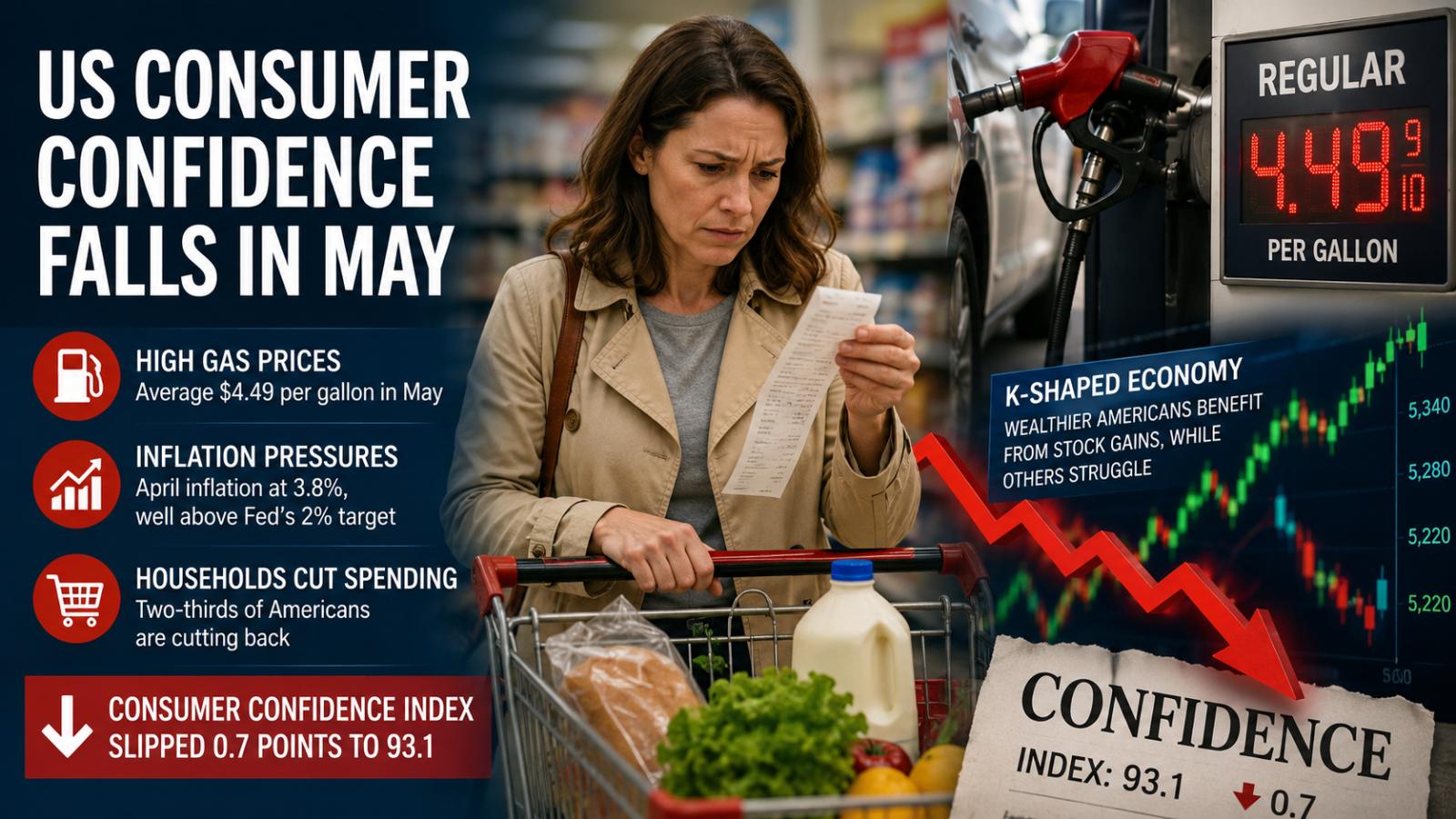
US consumer confidence falls in May as inflation, high gas prices and a softer job outlook pressure household budgets, according to the Conference Board’s latest survey. The drop shows why many Americans are pulling back on spending even as stocks remain near record highs. Why US Consumer Confidence Falls in May The Conference Board’s consumer confidence index slipped 0.7 points to 93.1 in May, marking the first decline after three m
US Consumer Confidence Falls in May as Inflation Pressures Spending
US consumer confidence falls in May as inflation, high gas prices and a softer job outlook pressure household budgets, according to the Conference Board’s latest survey. The drop shows why many Americans are pulling back on spending even as stocks remain near record highs. Why US Consumer Confidence Falls in May The Conference Board’s consumer confidence index slipped 0.7 points to 93.1 in May, marking the first decline after three m
Kevin Warsh Takes Over as Fed Chair as Trump Urges Independence
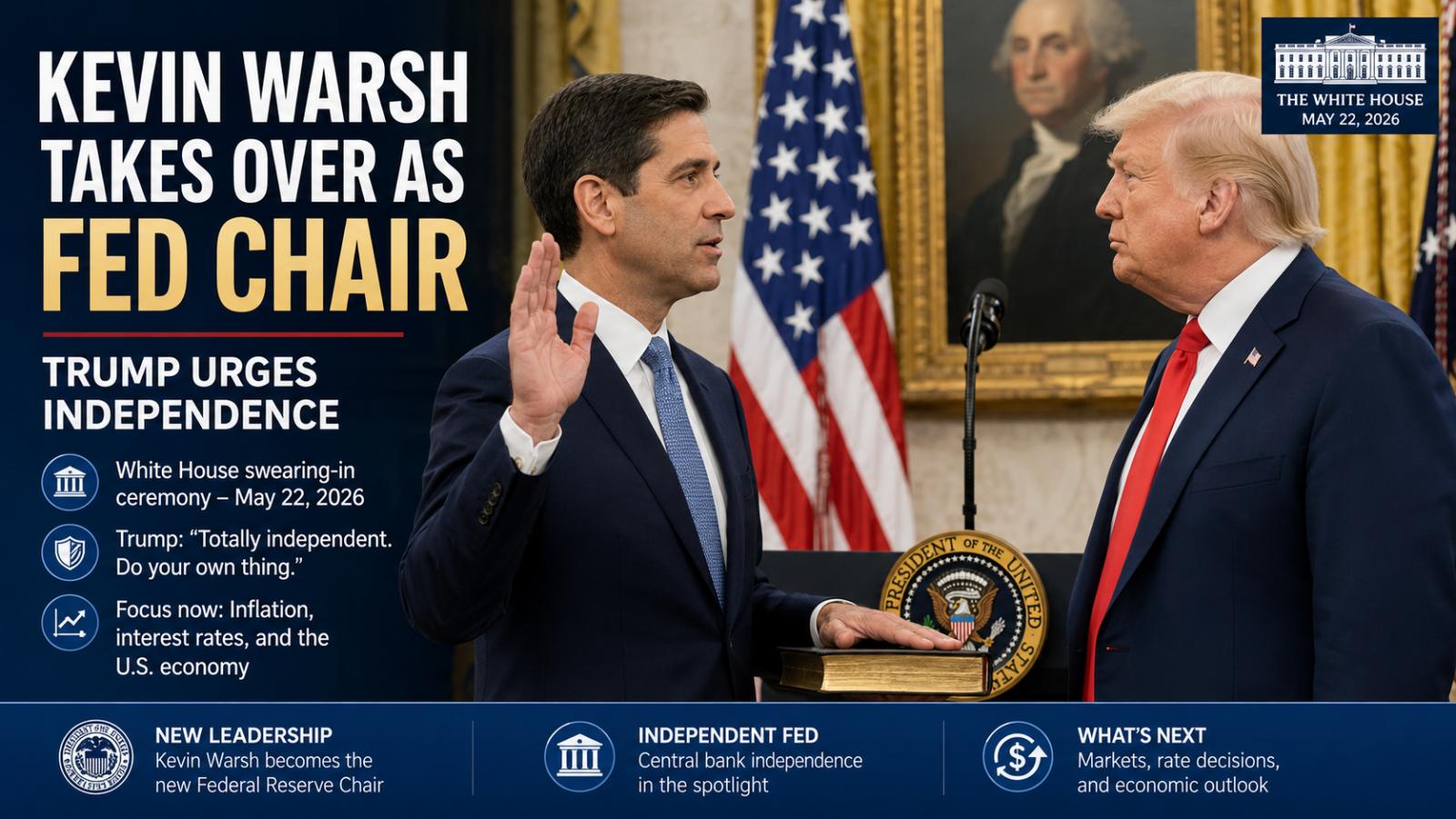
Kevin Warsh took over as Federal Reserve chair at a White House swearing-in ceremony on Friday, May 22, 2026, as President Donald Trump publicly urged him to lead the central bank independently. The transition places Warsh at the center of a politically sensitive moment for the Federal Reserve, with inflation, interest rates and central bank independence all under close national scrutiny. Trump Says Warsh Should Lead Without Political Pressure
Kevin Warsh Takes Over as Fed Chair as Trump Urges Independence
Kevin Warsh took over as Federal Reserve chair at a White House swearing-in ceremony on Friday, May 22, 2026, as President Donald Trump publicly urged him to lead the central bank independently. The transition places Warsh at the center of a politically sensitive moment for the Federal Reserve, with inflation, interest rates and central bank independence all under close national scrutiny. Trump Says Warsh Should Lead Without Political Pressure
Fuel Prices Rise In India As Petrol Diesel CNG Hike Hits Major Cities
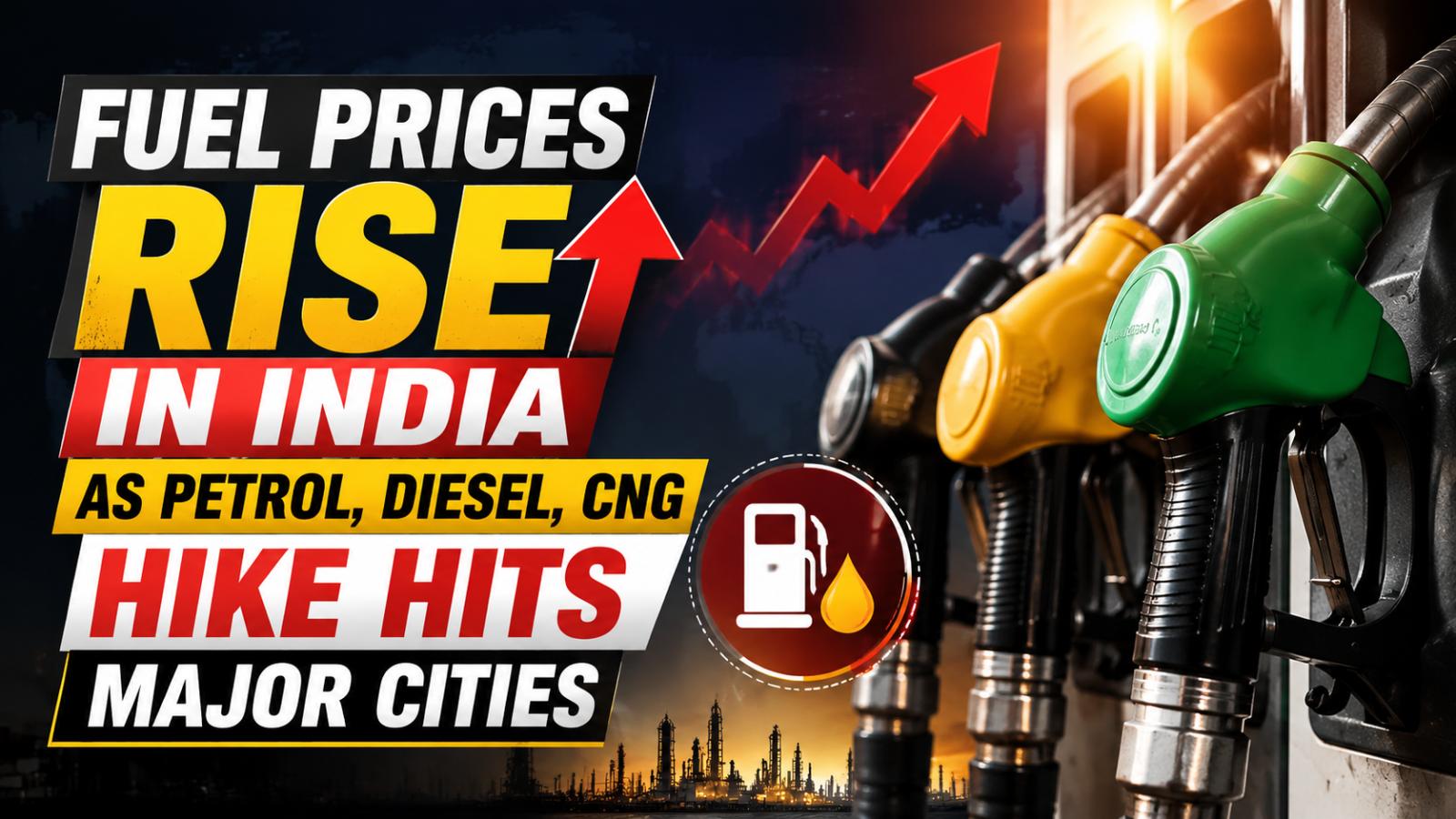
The petrol, diesel, and CNG price hike in India took effect on Friday, May 15, 2026. This was the first retail fuel price increase in four years, following the surge in global crude oil prices due to the Iran war. Fuel Price Hike Overview in Major Cities The government raised petrol, diesel, and CNG prices following a surge in global crude oil prices triggered by the Iran war. This is the first retail fuel price hike in four years. The increase is expected to affect transportation costs, household spending, and overall inflation. City Petrol Price (Rs/Litre) Petrol Hike (Rs) Diesel Price (Rs/Litre) Diesel Hike (Rs) CNG Price (Rs/Kg) CNG Hike (Rs) Delhi 97.77 3.00 90.67 3.00 79.09 2.00 Kolkata 108.74 3.29 95.13 3.11 — — Mumbai 106.68 3.14 93.14 3.11 84.00 2.00 Chennai 103.67 2.83 95.25 2.86 — — Hyderabad 104.50 3.10 94.20 3.05 80.50 2.00 Economic Implications and Expert Insights India’s state-run oil companies, IOCL, BPCL, and HPCL, were absorbing high crude costs for months, incurring daily losses of around Rs 1,600 crore. Imported crude prices jumped from $69 per barrel in February to $113-114 per barrel after the Iran war began on February 28. Economists, including Finance Commission Chair Dr Arvind Panagariya, recommended that retail prices be adjusted to prevent further losses and sustain OMC operations. Prime Minister Modi has appealed to citizens to conserve fuel and encouraged work-from-home practices to reduce foreign outflows. The Delhi government initiated a 90-day campaign promoting fuel-saving habits and limited office days. The fuel price increase is expected to push up transportation and logistics costs, which may drive inflation in essential commodities like milk and vegetables. Household savings could shrink, and discretionary spending may reduce, potentially slowing consumption, production, and GDP growth. While consumers will feel the immediate impact, this step was unavoidable given the international crude price surge.
Fuel Prices Rise In India As Petrol Diesel CNG Hike Hits Major Cities
The petrol, diesel, and CNG price hike in India took effect on Friday, May 15, 2026. This was the first retail fuel price increase in four years, following the surge in global crude oil prices due to the Iran war. Fuel Price Hike Overview in Major Cities The government raised petrol, diesel, and CNG prices following a surge in global crude oil prices triggered by the Iran war. This is the first retail fuel price hike in four years. The increase is expected to affect transportation costs, household spending, and overall inflation. City Petrol Price (Rs/Litre) Petrol Hike (Rs) Diesel Price (Rs/Litre) Diesel Hike (Rs) CNG Price (Rs/Kg) CNG Hike (Rs) Delhi 97.77 3.00 90.67 3.00 79.09 2.00 Kolkata 108.74 3.29 95.13 3.11 — — Mumbai 106.68 3.14 93.14 3.11 84.00 2.00 Chennai 103.67 2.83 95.25 2.86 — — Hyderabad 104.50 3.10 94.20 3.05 80.50 2.00 Economic Implications and Expert Insights India’s state-run oil companies, IOCL, BPCL, and HPCL, were absorbing high crude costs for months, incurring daily losses of around Rs 1,600 crore. Imported crude prices jumped from $69 per barrel in February to $113-114 per barrel after the Iran war began on February 28. Economists, including Finance Commission Chair Dr Arvind Panagariya, recommended that retail prices be adjusted to prevent further losses and sustain OMC operations. Prime Minister Modi has appealed to citizens to conserve fuel and encouraged work-from-home practices to reduce foreign outflows. The Delhi government initiated a 90-day campaign promoting fuel-saving habits and limited office days. The fuel price increase is expected to push up transportation and logistics costs, which may drive inflation in essential commodities like milk and vegetables. Household savings could shrink, and discretionary spending may reduce, potentially slowing consumption, production, and GDP growth. While consumers will feel the immediate impact, this step was unavoidable given the international crude price surge.
Trump Highlights Xi Meeting as Key Diplomatic Win
Trump Discusses Meeting with Xi Jinping US President Donald Trump spoke on Thursday, May 14, in his first interview following a high-stakes meeting with Chinese President Xi Jinping. The President described the discussion as a significant diplomatic achievement, asserting that his administration is treated with a heightened level of seriousness by the Chinese leadership. He contrasted his approach to foreign relations with
Trump Highlights Xi Meeting as Key Diplomatic Win
Trump Discusses Meeting with Xi Jinping US President Donald Trump spoke on Thursday, May 14, in his first interview following a high-stakes meeting with Chinese President Xi Jinping. The President described the discussion as a significant diplomatic achievement, asserting that his administration is treated with a heightened level of seriousness by the Chinese leadership. He contrasted his approach to foreign relations with
Kevin Warsh Confirmed as Fed Chair as Inflation and Rate-Cut Pressure Intensify
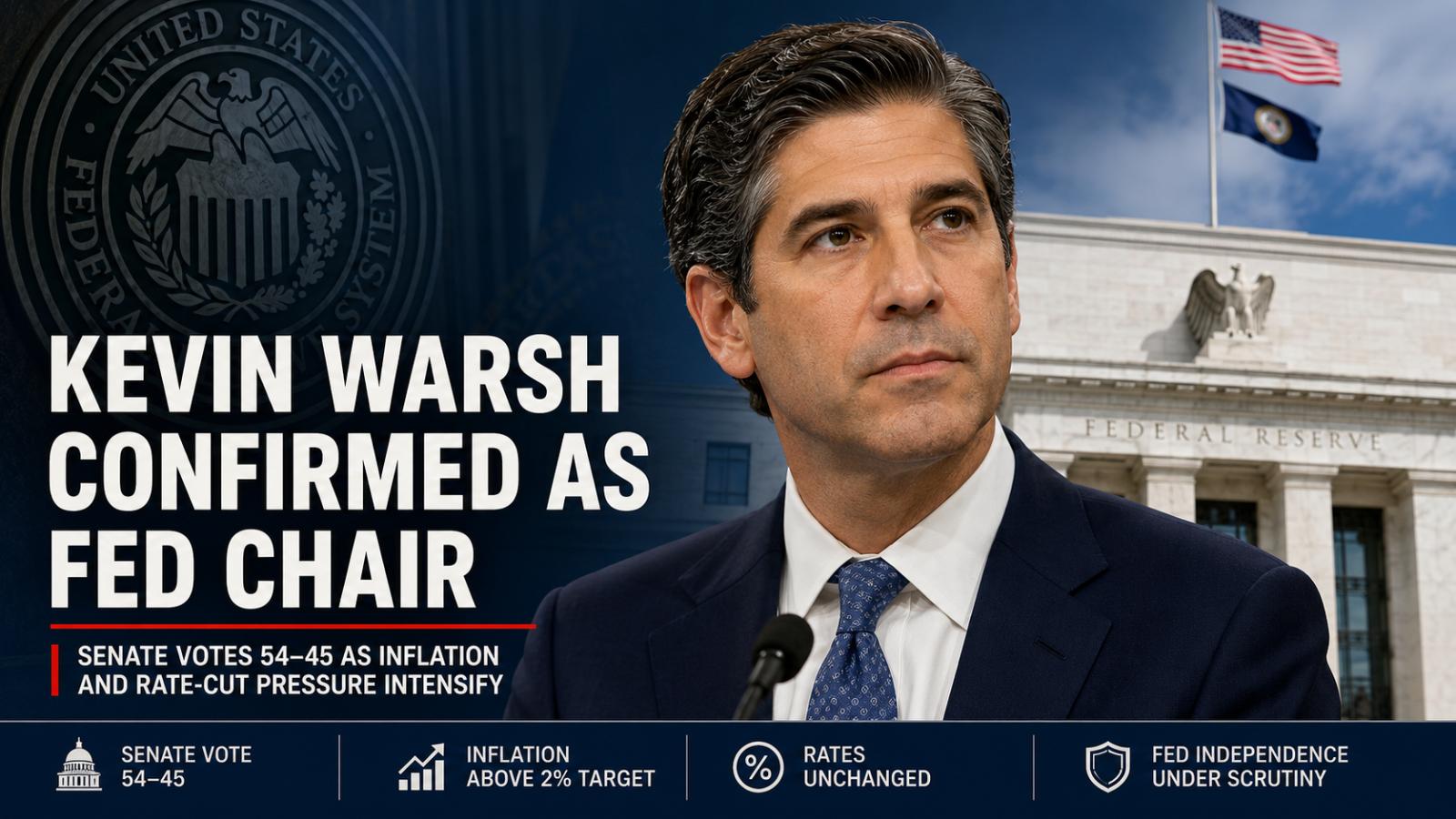
Kevin Warsh was confirmed as Federal Reserve chair on Wednesday, May 13, 2026, placing President Donald Trump’s nominee at the center of a high-stakes debate over inflation, interest rates and the independence of the U.S. central bank. The Senate approved Warsh in a 54–45 largely party-line vote, clearing the way for the former Federal Reserve official to succeed Jerome Powell. The confirmation followed uncertainty tied to a Justice Department investigation involving Powell, whi
Kevin Warsh Confirmed as Fed Chair as Inflation and Rate-Cut Pressure Intensify
Kevin Warsh was confirmed as Federal Reserve chair on Wednesday, May 13, 2026, placing President Donald Trump’s nominee at the center of a high-stakes debate over inflation, interest rates and the independence of the U.S. central bank. The Senate approved Warsh in a 54–45 largely party-line vote, clearing the way for the former Federal Reserve official to succeed Jerome Powell. The confirmation followed uncertainty tied to a Justice Department investigation involving Powell, whi
Trump Gas Tax Suspension Plan: How Much Could Drivers Save?
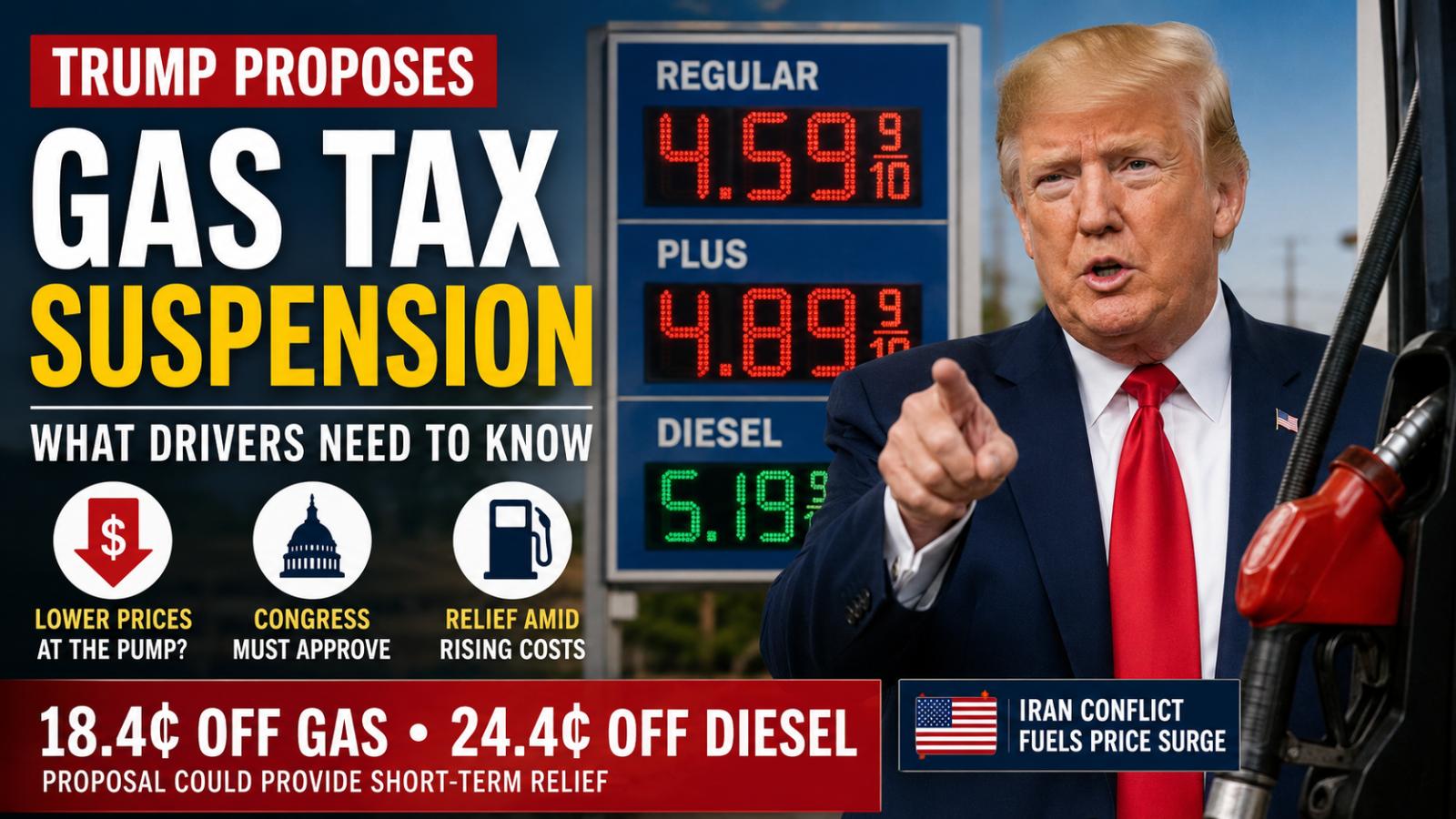
President Donald Trump is backing a temporary federal gas tax suspension as US drivers face sharply higher fuel prices linked to the Iran conflict. The proposal could cut up to 18.4 cents per gallon from gasoline and 24.4 cents per gallon from diesel, but it cannot take effect without approval from Congress. How Much Could Drivers Save? Trump said on Monday, May 11, 2026, that he wants to remove the federal gas tax “for a period of time” and restore it once prices ease. The White House has not confirmed whether formal legislation has already been sent to lawmakers. The relief would be limited compared with the wider rise in pump prices. US gasoline prices have climbed sharply since the Iran conflict intensified, leaving many households paying more for commuting, deliveries and daily transportation. Congress Holds The Key The federal gas tax helps fund highways, bridges and public transit through the Highway Trust Fund. Any suspension could give drivers short-term relief but may raise concerns over road funding. Energy Secretary Chris Wright said the administration supports steps to lower fuel costs. Some lawmakers have also backed a temporary gas tax holiday, while critics argue the savings may not fully reach consumers. For American families already dealing with inflation, even a small reduction at the pump could matter. But the plan’s real impact depends on Congress, fuel markets and whether gas stations pass the full tax cut to drivers.
Trump Gas Tax Suspension Plan: How Much Could Drivers Save?
President Donald Trump is backing a temporary federal gas tax suspension as US drivers face sharply higher fuel prices linked to the Iran conflict. The proposal could cut up to 18.4 cents per gallon from gasoline and 24.4 cents per gallon from diesel, but it cannot take effect without approval from Congress. How Much Could Drivers Save? Trump said on Monday, May 11, 2026, that he wants to remove the federal gas tax “for a period of time” and restore it once prices ease. The White House has not confirmed whether formal legislation has already been sent to lawmakers. The relief would be limited compared with the wider rise in pump prices. US gasoline prices have climbed sharply since the Iran conflict intensified, leaving many households paying more for commuting, deliveries and daily transportation. Congress Holds The Key The federal gas tax helps fund highways, bridges and public transit through the Highway Trust Fund. Any suspension could give drivers short-term relief but may raise concerns over road funding. Energy Secretary Chris Wright said the administration supports steps to lower fuel costs. Some lawmakers have also backed a temporary gas tax holiday, while critics argue the savings may not fully reach consumers. For American families already dealing with inflation, even a small reduction at the pump could matter. But the plan’s real impact depends on Congress, fuel markets and whether gas stations pass the full tax cut to drivers.
US gas prices hit $4.52 for the first time since 2022, causing political pressure for Trump
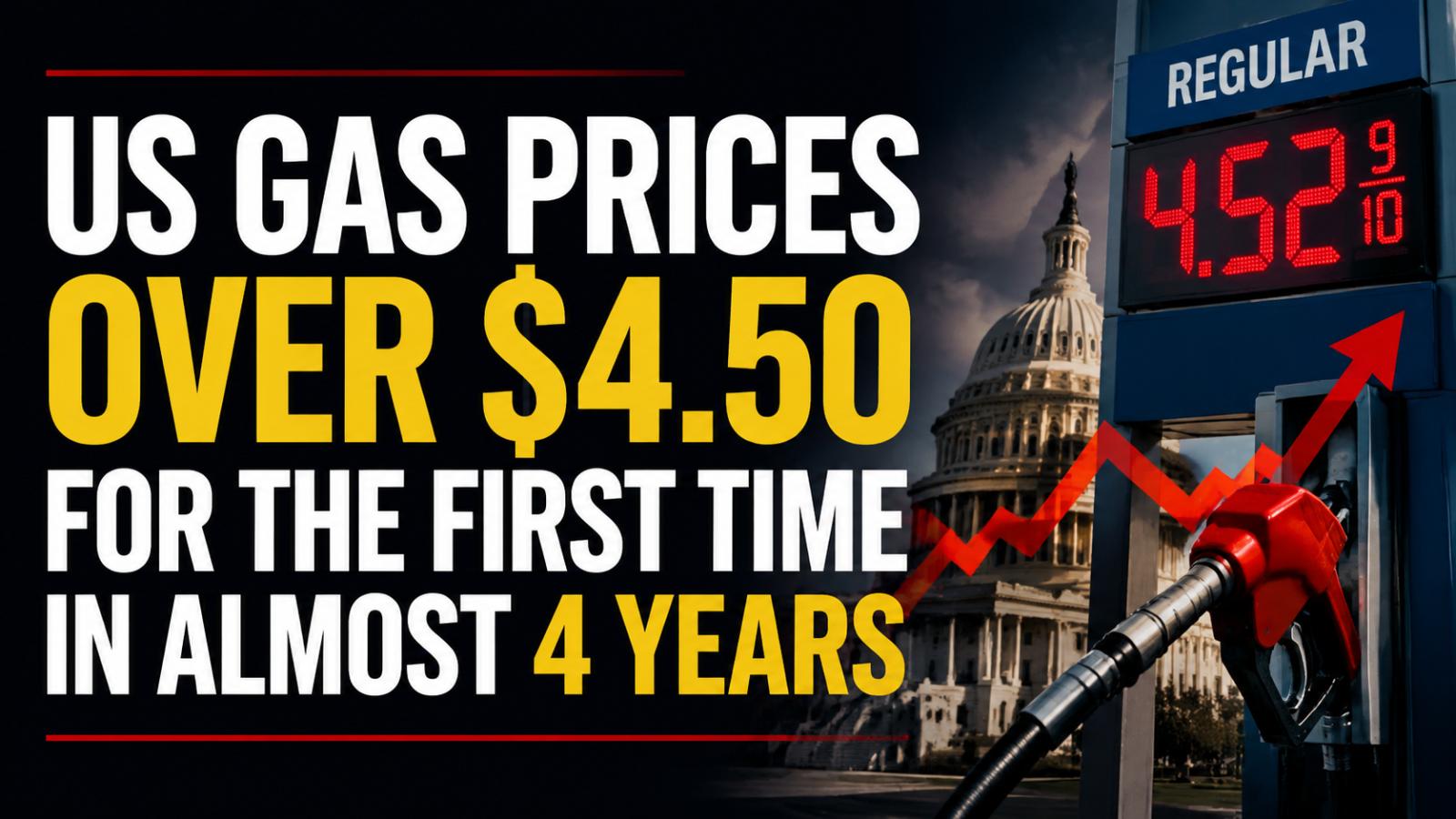
For the first time since July 2022, Americans are facing gas prices above $4.50 a gallon, with the national average hitting $4.52 as of May 6. This surge in fuel prices is placing significant political pressure on President Donald Trump, just five months before the 2024 US Midterm elections. Rising gas prices, coupled with low approval ratings, are adding to the growing dissatisfaction over his handling of key issues such as the economy, inflation, and international conflicts.
US gas prices hit $4.52 for the first time since 2022, causing political pressure for Trump
For the first time since July 2022, Americans are facing gas prices above $4.50 a gallon, with the national average hitting $4.52 as of May 6. This surge in fuel prices is placing significant political pressure on President Donald Trump, just five months before the 2024 US Midterm elections. Rising gas prices, coupled with low approval ratings, are adding to the growing dissatisfaction over his handling of key issues such as the economy, inflation, and international conflicts.
Texas Fuel Prices Jump, Squeezing Household Budgets
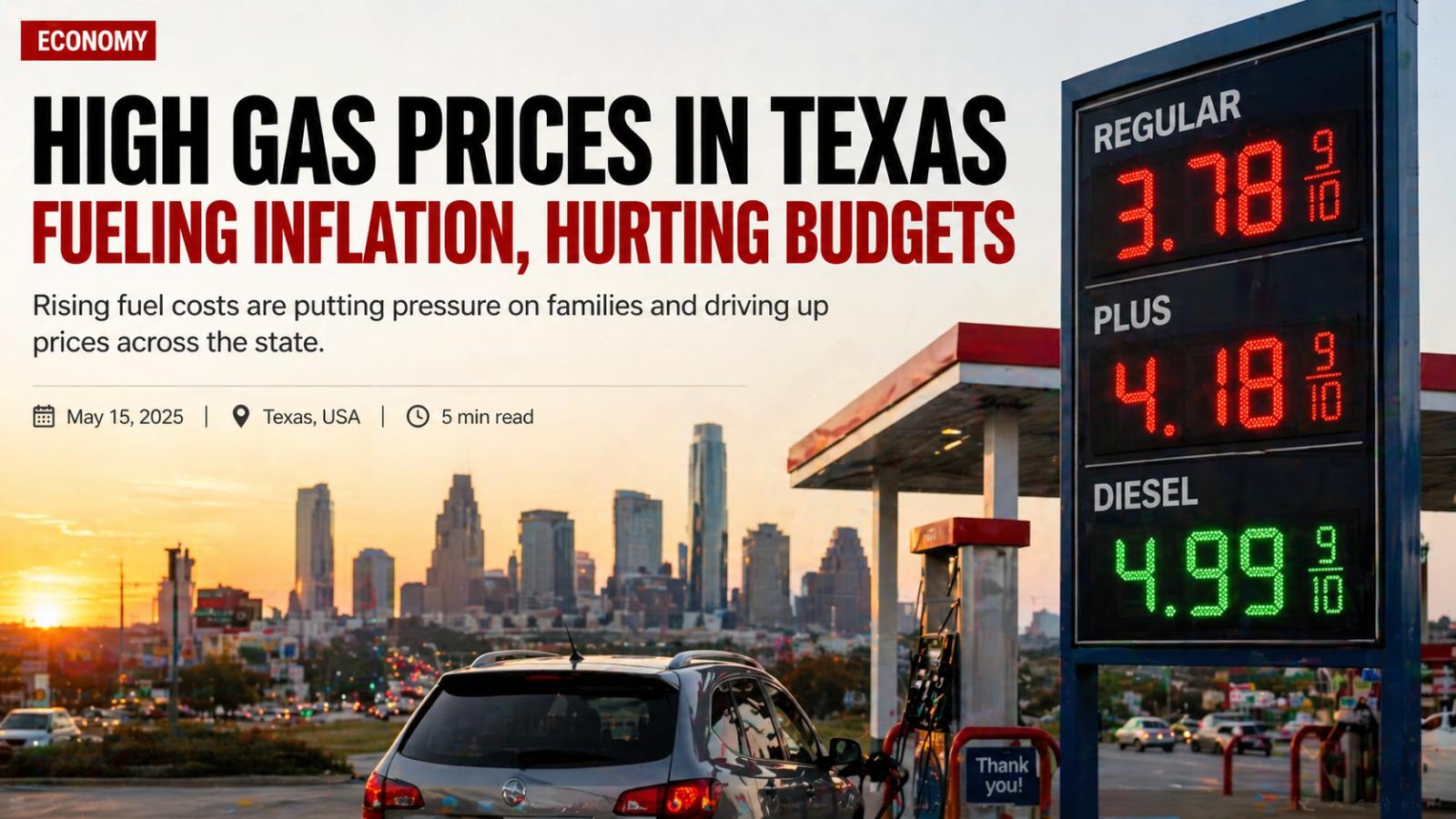
The numbers on gas station signs across Texas are rising fast—and for many drivers, so is the stress. What used to be a routine fill-up is now a moment of hesitation, as fuel costs eat deeper into already stretched budgets. High gas prices in Texas have surged in recent weeks, climbing from about $2.55 per gallon in early February to nearly $3.78. The sharp increase is being driven by global tensions that have disrupted oil supply routes, sending ripple effects through loca
Texas Fuel Prices Jump, Squeezing Household Budgets
The numbers on gas station signs across Texas are rising fast—and for many drivers, so is the stress. What used to be a routine fill-up is now a moment of hesitation, as fuel costs eat deeper into already stretched budgets. High gas prices in Texas have surged in recent weeks, climbing from about $2.55 per gallon in early February to nearly $3.78. The sharp increase is being driven by global tensions that have disrupted oil supply routes, sending ripple effects through loca
Milma Approves ₹4 Per Litre Milk Price Hike In Kerala From May 20
The Kerala Cooperative Milk Marketing Federation (Milma) has approved a ₹4 per litre increase in milk prices across Kerala, a move that is expected to come into effect from May 20, 2026. The decision was taken during a high-level meeting of the cooperative’s governing body on April 30, 2026, amid growi
Milma Approves ₹4 Per Litre Milk Price Hike In Kerala From May 20
The Kerala Cooperative Milk Marketing Federation (Milma) has approved a ₹4 per litre increase in milk prices across Kerala, a move that is expected to come into effect from May 20, 2026. The decision was taken during a high-level meeting of the cooperative’s governing body on April 30, 2026, amid growi
Why are US gas prices rising? Stalled Iran talks push costs to four-year high
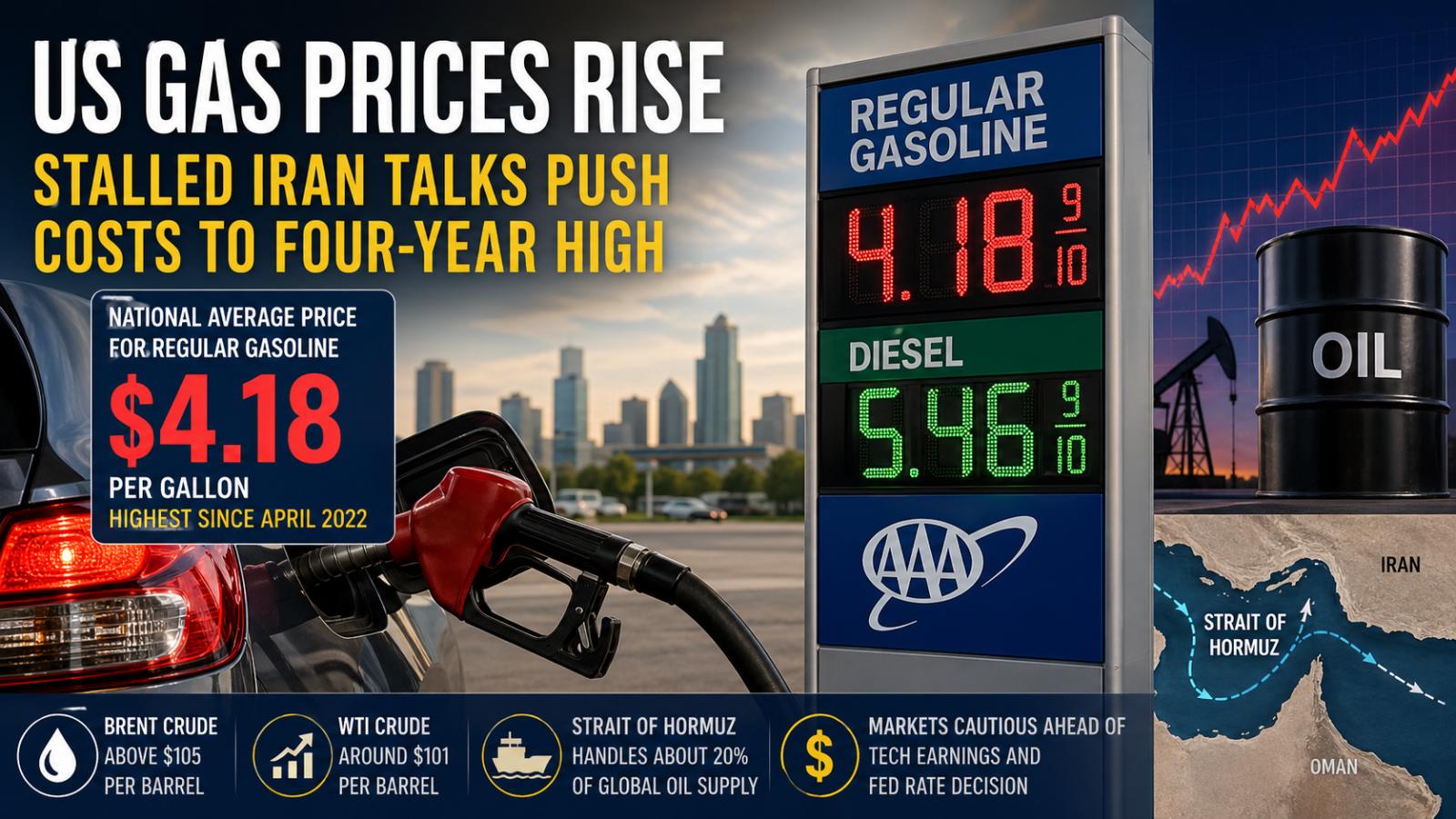
Stalled Iran talks push costs to four-year high Gasoline prices across the United States climbed sharply on Tuesday, April 28, 2026, reaching their highest level in four years as stalled negotiations between Washington and Tehran fueled a surge in global oil markets. According to AAA, the national average price for a gallon of regular gasoline rose to $4.18, marking the h
Why are US gas prices rising? Stalled Iran talks push costs to four-year high
Stalled Iran talks push costs to four-year high Gasoline prices across the United States climbed sharply on Tuesday, April 28, 2026, reaching their highest level in four years as stalled negotiations between Washington and Tehran fueled a surge in global oil markets. According to AAA, the national average price for a gallon of regular gasoline rose to $4.18, marking the h
India economy faces slowdown risks amid rising crude oil prices
India growth slowdown: oil price surge impacts economy India growth slowdown has become a major concern after crude oil prices crossed $100 per barrel following tensions linked to the Iran conflict. The sharp increase in energy costs is already affecting corporate earnings and is expected to impact the FY27 outlook, according to analysts tracking the India economy slowdown. The rising oil price surge is not seen as a short-term issue. Higher crude oil prices are likely to continue putting pressure on multiple sectors including consumer, auto, and financial industries. JP Morgan has warned that supply disruptions and elevated energy costs India could persist for months, even after a ceasefire, delaying full normalization. The firm has reduced its FY27 earnings forecast by 2–10 percent across major sectors, highlighting the growing risks to corporate earnings India. Experts point out that the impact will be visible in different ways. Companies may face margin compression, reduced demand, and operational challenges, while consumers may experience the effects through higher prices and inflation India. These combined factors are expected to slow overall economic momentum. Market estimates show that Nifty EPS growth could drop sharply from earlier expectations of around 15 percent to nearly 7–8 percent if crude oil prices remain high. Key industries such as automobiles, oil and gas, and airlines are likely to be the most affected due to their heavy dependence on fuel. Despite these pressures, India Inc revenue growth remains stable, but the growth pattern is shifting from volume-driven to price-led expansion. This means companies are increasing prices to maintain revenues, a strategy that may not be sustainable if inflation continues to rise. West Asia continues to play a crucial role in India’s economy. The region accounts for a significant share of exports and remittances, making India highly sensitive to disruptions in West Asia trade and income flows. Any prolonged instability could further deepen the India growth slowdown. Investor sentiment has also weakened amid global uncertainty. Foreign portfolio investors have turned net sellers, with total FPI outflows reaching nearly ₹1.68 trillion since early 2026, reflecting concerns over geopolitical risks and economic stability.
India economy faces slowdown risks amid rising crude oil prices
India growth slowdown: oil price surge impacts economy India growth slowdown has become a major concern after crude oil prices crossed $100 per barrel following tensions linked to the Iran conflict. The sharp increase in energy costs is already affecting corporate earnings and is expected to impact the FY27 outlook, according to analysts tracking the India economy slowdown. The rising oil price surge is not seen as a short-term issue. Higher crude oil prices are likely to continue putting pressure on multiple sectors including consumer, auto, and financial industries. JP Morgan has warned that supply disruptions and elevated energy costs India could persist for months, even after a ceasefire, delaying full normalization. The firm has reduced its FY27 earnings forecast by 2–10 percent across major sectors, highlighting the growing risks to corporate earnings India. Experts point out that the impact will be visible in different ways. Companies may face margin compression, reduced demand, and operational challenges, while consumers may experience the effects through higher prices and inflation India. These combined factors are expected to slow overall economic momentum. Market estimates show that Nifty EPS growth could drop sharply from earlier expectations of around 15 percent to nearly 7–8 percent if crude oil prices remain high. Key industries such as automobiles, oil and gas, and airlines are likely to be the most affected due to their heavy dependence on fuel. Despite these pressures, India Inc revenue growth remains stable, but the growth pattern is shifting from volume-driven to price-led expansion. This means companies are increasing prices to maintain revenues, a strategy that may not be sustainable if inflation continues to rise. West Asia continues to play a crucial role in India’s economy. The region accounts for a significant share of exports and remittances, making India highly sensitive to disruptions in West Asia trade and income flows. Any prolonged instability could further deepen the India growth slowdown. Investor sentiment has also weakened amid global uncertainty. Foreign portfolio investors have turned net sellers, with total FPI outflows reaching nearly ₹1.68 trillion since early 2026, reflecting concerns over geopolitical risks and economic stability.
What is driving Iran’s cooking oil trade surge? Inflation and shortages at the border
On Turkey’s bustling border crossing with Iran, inflation and shortages are driving a surge in cooking oil trade as economic pressures deepen inside Iran. At the Kapikoy crossing near Van in eastern Turkey, merchants and travelers described a growing demand for basic goods, particularly cooking oil, as Iranian consumers grapple with soaring prices and limited supply. Shopkeepers at the crossing said demand has risen sharply in recent days, with dozens of individuals carrying multiple large bottles of oil back into Iran. The trade has become a small but vital source of income for both Turkish vendors and Iranian buyers seeking to resell or use the goods domestically. Rising food prices and subsidy reforms reshape consumer behavior Iran’s inflation crisis, projected by the International Monetary Fund to approach 70 percent in 2026, has significantly eroded purchasing power. Cooking oil prices surged after the government removed subsidies on certain essential imports in January, a move intended to reduce state spending amid ongoing sanctions. Iranian officials, including President Masoud Pezeshkian, have defended the policy, arguing that subsidies were being exploited without effectively lowering prices. However, many consumers report difficulty finding affordable cooking oil in local markets, forcing them to look beyond the country’s borders. Border trade becomes a lifeline for struggling households For some Iranians, cross-border trade offers a modest financial cushion. Individuals interviewed at the crossing described buying cooking oil in Turkey for just over $10 per five-liter bottle and reselling it in Iran at slightly lower prices than domestic shops, earning small profits. The Kapikoy crossing has remained one of the few consistent links between Iran and the outside world during recent disruptions, including airspace closures and an ongoing internet shutdown that has limited access to information within the country. Economic strain intensifies amid conflict and job losses Beyond inflation, Iran’s economy is facing additional strain from conflict-related disruptions and layoffs. The country’s minimum wage, roughly $108 per month, has failed to keep pace with rising living costs, leaving many households under severe financial pressure. Recent protests driven by economic discontent have been met with government crackdowns, adding to an atmosphere of uncertainty. While the government has introduced monthly cash payments equivalent to about $7 to offset rising costs, analysts say the measure is unlikely to significantly ease the burden on most families. Limited relief despite growing cross-border activity Although the increase in cross-border trade highlights the resilience of individuals adapting to economic hardship, the overall impact remains limited. The modest profits generated by transporting goods like cooking oil do little to offset the broader challenges posed by inflation, unemployment, and supply shortages. For many Iranians, the scenes at the Turkey-Iran border underscore a deeper economic crisis, where even basic necessities require creative—and often difficult—solutions to obtain.
What is driving Iran’s cooking oil trade surge? Inflation and shortages at the border
On Turkey’s bustling border crossing with Iran, inflation and shortages are driving a surge in cooking oil trade as economic pressures deepen inside Iran. At the Kapikoy crossing near Van in eastern Turkey, merchants and travelers described a growing demand for basic goods, particularly cooking oil, as Iranian consumers grapple with soaring prices and limited supply. Shopkeepers at the crossing said demand has risen sharply in recent days, with dozens of individuals carrying multiple large bottles of oil back into Iran. The trade has become a small but vital source of income for both Turkish vendors and Iranian buyers seeking to resell or use the goods domestically. Rising food prices and subsidy reforms reshape consumer behavior Iran’s inflation crisis, projected by the International Monetary Fund to approach 70 percent in 2026, has significantly eroded purchasing power. Cooking oil prices surged after the government removed subsidies on certain essential imports in January, a move intended to reduce state spending amid ongoing sanctions. Iranian officials, including President Masoud Pezeshkian, have defended the policy, arguing that subsidies were being exploited without effectively lowering prices. However, many consumers report difficulty finding affordable cooking oil in local markets, forcing them to look beyond the country’s borders. Border trade becomes a lifeline for struggling households For some Iranians, cross-border trade offers a modest financial cushion. Individuals interviewed at the crossing described buying cooking oil in Turkey for just over $10 per five-liter bottle and reselling it in Iran at slightly lower prices than domestic shops, earning small profits. The Kapikoy crossing has remained one of the few consistent links between Iran and the outside world during recent disruptions, including airspace closures and an ongoing internet shutdown that has limited access to information within the country. Economic strain intensifies amid conflict and job losses Beyond inflation, Iran’s economy is facing additional strain from conflict-related disruptions and layoffs. The country’s minimum wage, roughly $108 per month, has failed to keep pace with rising living costs, leaving many households under severe financial pressure. Recent protests driven by economic discontent have been met with government crackdowns, adding to an atmosphere of uncertainty. While the government has introduced monthly cash payments equivalent to about $7 to offset rising costs, analysts say the measure is unlikely to significantly ease the burden on most families. Limited relief despite growing cross-border activity Although the increase in cross-border trade highlights the resilience of individuals adapting to economic hardship, the overall impact remains limited. The modest profits generated by transporting goods like cooking oil do little to offset the broader challenges posed by inflation, unemployment, and supply shortages. For many Iranians, the scenes at the Turkey-Iran border underscore a deeper economic crisis, where even basic necessities require creative—and often difficult—solutions to obtain.
How is U.S. pressure on Iran intensifying? It combines sanctions, blockade, and enforcement
How is U.S. pressure on Iran intensifying? It combines sanctions, blockade, and enforcement as economic and geopolitical forces converge to place unprecedented strain on Tehran, according to a former U.S. Treasury sanctions expert who described the current moment as a rare alignment of leverage. Converging tools create peak economic pressure Miad Maleki, a former Treasury Department sanctions specialist, said the United States is applying multiple pressu
How is U.S. pressure on Iran intensifying? It combines sanctions, blockade, and enforcement
How is U.S. pressure on Iran intensifying? It combines sanctions, blockade, and enforcement as economic and geopolitical forces converge to place unprecedented strain on Tehran, according to a former U.S. Treasury sanctions expert who described the current moment as a rare alignment of leverage. Converging tools create peak economic pressure Miad Maleki, a former Treasury Department sanctions specialist, said the United States is applying multiple pressu
India’s renewable energy growth reduces impact of global oil shocks
As geopolitical tensions in West Asia continue to disrupt global oil and gas markets, India is showing greater structural resilience compared with past crises, driven by a steady shift in how it produces and consumes energy. Data published in the Reserve Bank of India’s March Bulletin indicates that renewable sources accounted for 26.4 percent of India’s total electricity generation as of January 2026, rising from 22.1 percent in January 2025. This increase reflects a broader tran
India’s renewable energy growth reduces impact of global oil shocks
As geopolitical tensions in West Asia continue to disrupt global oil and gas markets, India is showing greater structural resilience compared with past crises, driven by a steady shift in how it produces and consumes energy. Data published in the Reserve Bank of India’s March Bulletin indicates that renewable sources accounted for 26.4 percent of India’s total electricity generation as of January 2026, rising from 22.1 percent in January 2025. This increase reflects a broader tran
US corporate profits remain strong despite global tensions and rising costs
From the early 2020s through 2026, U.S. corporations have demonstrated a remarkable ability to sustain and expand profits despite a series of economic shocks, including the COVID-19 pandemic, rising inflation, tariffs, and ongoing geopolitical conflicts. Recent data indicate that corporate profits have reached a record share of gross domestic product, while profit margins—measuring the gap between input costs and final selling prices—remain near historic highs. Executives across m
US corporate profits remain strong despite global tensions and rising costs
From the early 2020s through 2026, U.S. corporations have demonstrated a remarkable ability to sustain and expand profits despite a series of economic shocks, including the COVID-19 pandemic, rising inflation, tariffs, and ongoing geopolitical conflicts. Recent data indicate that corporate profits have reached a record share of gross domestic product, while profit margins—measuring the gap between input costs and final selling prices—remain near historic highs. Executives across m
India’s Growth Outlook Remains Strong at 6.5% in 2026, Says IMF Report
The International Monetary Fund (IMF) has revised its growth projections for India, forecasting a robust 6.5% growth for both 2026 and 2027, despite the global economic disruptions caused by the ongoing war in West Asia. India remains the fastest-growing major economy, although the IMF's global growth forecast has been downgraded to 3.1% for 2026, a decline from its January projection. The IMF report highlights the toll the war has taken on global markets and supply chains, especially in sect
India’s Growth Outlook Remains Strong at 6.5% in 2026, Says IMF Report
The International Monetary Fund (IMF) has revised its growth projections for India, forecasting a robust 6.5% growth for both 2026 and 2027, despite the global economic disruptions caused by the ongoing war in West Asia. India remains the fastest-growing major economy, although the IMF's global growth forecast has been downgraded to 3.1% for 2026, a decline from its January projection. The IMF report highlights the toll the war has taken on global markets and supply chains, especially in sect
Ken Griffin warns prolonged Hormuz closure could trigger global recession
Ken Griffin, founder and chief executive of Citadel, warned that a prolonged closure of the Strait of Hormuz could push the global economy into a recession, underscoring the fragile balance of energy markets and geopolitical stability. Speaking at the Semafor World Economy conference in Washington, D.C., on Tuesday, April 14, 2026, Griffin said that if the critical shipping route remains shut for an extended period, the economic consequences would be unavoidable. He noted that a disruption lasting between six and 12 months would almost certainly result in a global downturn, given the strait’s importance as a key transit point for oil shipments. The Strait of Hormuz handles a significant portion of the world’s crude oil supply, and any sustained blockage would likely drive oil prices higher, intensifying inflationary pressures across major economies. While oil prices have eased slightly from peak levels reached during recent tensions, they remain elevated at around $100 per barrel, compared to under $70 before the conflict began. Griffin emphasized that global markets have so far shown resilience, with stock prices recovering to levels seen prior to earlier U.S. military actions in the region. However, he cautioned that investor confidence remains highly dependent on the duration and scope of the conflict. Many market participants, he said, may be underestimating the risk of further escalation and its potential impact on global growth. He also pointed to heightened vulnerability in Asian economies, which rely heavily on energy imports and are particularly sensitive to oil price fluctuations. A sustained increase in fuel costs could slow industrial output and consumer demand across the region. At the same time, Griffin suggested that prolonged disruption could accelerate a structural shift toward alternative energy sources, including wind, solar, and nuclear power, as countries seek to reduce reliance on volatile supply routes. His remarks highlight growing concerns among financial leaders that geopolitical instability in critical energy corridors could have far-reaching consequences for global economic stability.
Ken Griffin warns prolonged Hormuz closure could trigger global recession
Ken Griffin, founder and chief executive of Citadel, warned that a prolonged closure of the Strait of Hormuz could push the global economy into a recession, underscoring the fragile balance of energy markets and geopolitical stability. Speaking at the Semafor World Economy conference in Washington, D.C., on Tuesday, April 14, 2026, Griffin said that if the critical shipping route remains shut for an extended period, the economic consequences would be unavoidable. He noted that a disruption lasting between six and 12 months would almost certainly result in a global downturn, given the strait’s importance as a key transit point for oil shipments. The Strait of Hormuz handles a significant portion of the world’s crude oil supply, and any sustained blockage would likely drive oil prices higher, intensifying inflationary pressures across major economies. While oil prices have eased slightly from peak levels reached during recent tensions, they remain elevated at around $100 per barrel, compared to under $70 before the conflict began. Griffin emphasized that global markets have so far shown resilience, with stock prices recovering to levels seen prior to earlier U.S. military actions in the region. However, he cautioned that investor confidence remains highly dependent on the duration and scope of the conflict. Many market participants, he said, may be underestimating the risk of further escalation and its potential impact on global growth. He also pointed to heightened vulnerability in Asian economies, which rely heavily on energy imports and are particularly sensitive to oil price fluctuations. A sustained increase in fuel costs could slow industrial output and consumer demand across the region. At the same time, Griffin suggested that prolonged disruption could accelerate a structural shift toward alternative energy sources, including wind, solar, and nuclear power, as countries seek to reduce reliance on volatile supply routes. His remarks highlight growing concerns among financial leaders that geopolitical instability in critical energy corridors could have far-reaching consequences for global economic stability.
US consumer confidence hits record low amid Iran conflict and rising energy prices
Consumer confidence in the United States fell sharply in April, reaching its lowest level on record as concerns over rising energy prices and the economic impact of the Iran conflict intensified, according to survey data released on Friday, April 11, 2026. The University of Michigan’s closely watched consumer sentiment index dropped to 47.6, marking a 10.7% decline from March and setting a new historic low. Both the current economic conditions index and the expectations index also p
US consumer confidence hits record low amid Iran conflict and rising energy prices
Consumer confidence in the United States fell sharply in April, reaching its lowest level on record as concerns over rising energy prices and the economic impact of the Iran conflict intensified, according to survey data released on Friday, April 11, 2026. The University of Michigan’s closely watched consumer sentiment index dropped to 47.6, marking a 10.7% decline from March and setting a new historic low. Both the current economic conditions index and the expectations index also p


