#iranairspace
Iran Claims US MQ-9 Reaper Drone Shot Down After Gulf Airspace Breach
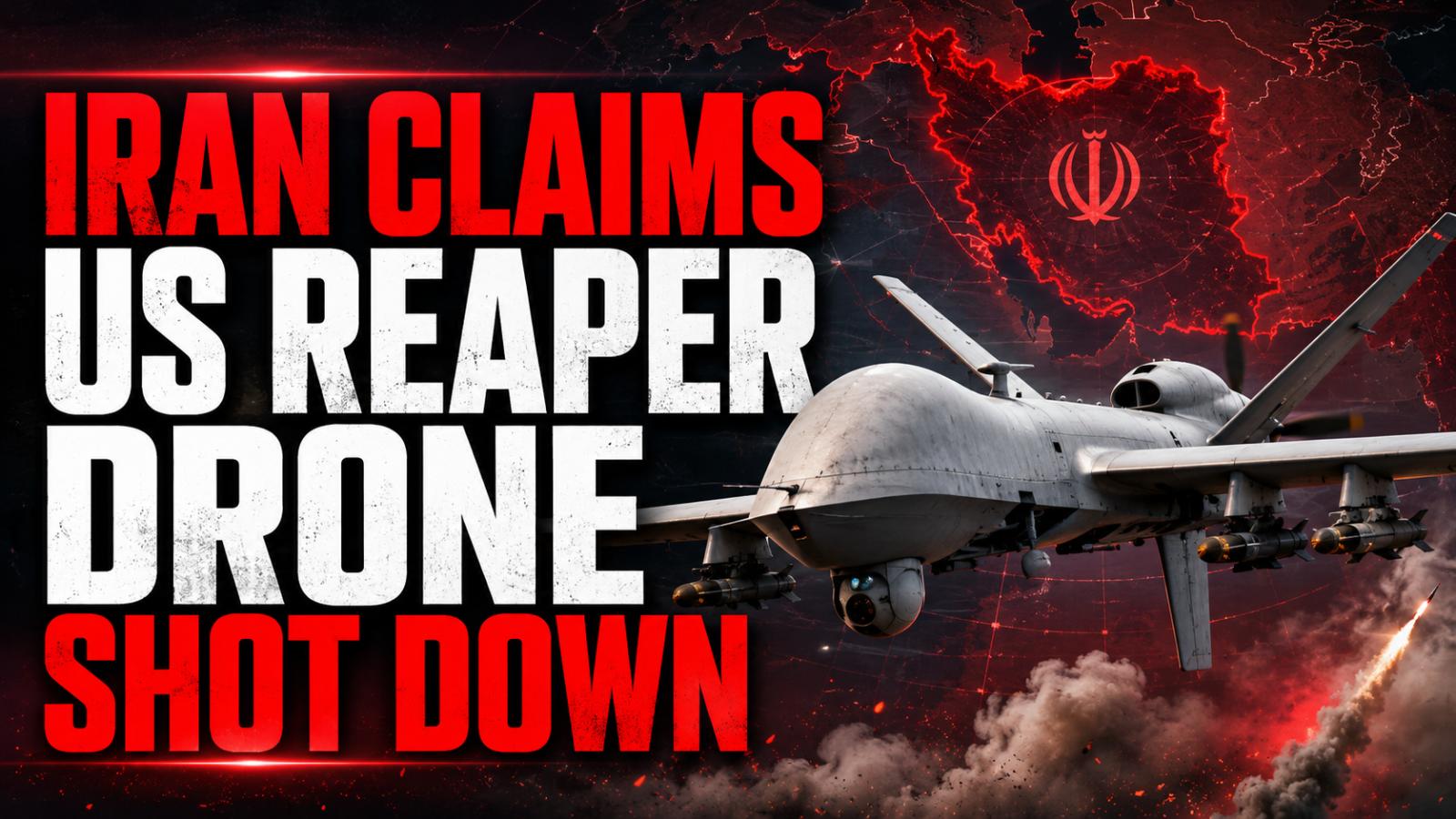
Iran has claimed that its forces shot down a US MQ-9 Reaper drone after what it described as an airspace violation over the Gulf region. According to Iran’s Islamic Revolutionary Guard Corps, the aircraft entered Iranian airspace before being targeted. The IRGC also claimed that its forces fired at an RQ-4 surveillance drone and an F-35 fighter jet, saying the aircraft were forced away from Iranian airspace. The claim has not yet answered several important questions. The exact time, location, flight path and independent confirmation of the incident remain unclear. Because of that, the event should be treated as a claim from Iran unless the United States or another reliable source confirms more details. Why This Gulf Drone Incident Matters The Gulf region is one of the most sensitive military zones in the world. It includes major shipping routes, energy corridors and heavily monitored airspace. Any military aircraft activity in this area can quickly increase tension, especially when it involves the United States and Iran. Iran says the drone crossed into its airspace. In past Gulf incidents, Washington and Tehran have often disagreed over whether US aircraft were flying in international airspace or inside Iranian territory. That is why the location of this alleged drone incident is important. If the drone was inside Iranian airspace, Iran will present it as a defensive action. If it was outside Iranian airspace, the incident could be seen as a serious escalation. What Is the MQ-9 Reaper Drone? The MQ-9 Reaper is a remotely piloted US military drone used for intelligence, surveillance, reconnaissance and precision strike missions. In simple terms, it is a large unmanned aircraft that can stay in the sky for long hours, monitor wide areas and support military operations from a distance. The MQ-9A Reaper is built by General Atomics Aeronautical Systems. It is known for long endurance, high-altitude operations and flexible mission use. General Atomics says the MQ-9A can fly for more than 27 hours, reach speeds of 240 KTAS, operate up to 50,000 feet and carry a payload of 3,850 pounds. Why the Reaper Drone Is Important for the US Military The MQ-9 Reaper is valuable because it can perform both surveillance and strike roles. It can watch military zones, track movement, support troops, monitor maritime routes and carry guided weapons when required. The drone can be equipped with cameras, infrared sensors, radar systems and weapons such as Hellfire missiles and guided bombs. This makes it useful in conflict zones where long-distance monitoring and quick response are needed. For the United States, losing an MQ-9 Reaper is not just a financial loss. It can also affect intelligence gathering, battlefield awareness and military messaging in a tense region. Why Iran’s Claim Is Getting Attention Iran’s statement is getting attention because it comes during a period of high regional tension. Drone activity, fighter jet movement and air defense operations in the Gulf can easily turn into a larger diplomatic or military dispute. The mention of an RQ-4 drone and an F-35 fighter jet makes the claim even more sensitive. The RQ-4 is associated with high-altitude surveillance, while the F-35 is one of the most advanced fighter jets used by the US and its allies. However, Iran’s statement does not clearly prove that all aircraft were hit or damaged. The clearer claim is about the MQ-9 Reaper drone. What Is Still Not Clear? Several key facts are still missing. There is no fully clear public confirmation about the exact location of the alleged airspace breach. There is also no complete independent verification of whether a US MQ-9 Reaper was actually shot down in the manner Iran described. The United States’ official response is also important. Until more details are confirmed, the safest way to report the incident is to say that Iran claims it shot down the drone, not that the drone was definitely shot down. Bigger Picture: US-Iran Tensions in the Gulf The Gulf has seen repeated military tension between Iran and the United States over the years. Drone surveillance, naval patrols, sanctions, regional alliances and conflict spillovers have all contributed to mistrust. A drone shootdown claim can become more than a military headline. It can affect diplomacy, oil markets, regional security and public messaging from both sides. That is why this incident is being watched closely. Final Takeaway Iran has claimed that it shot down a US MQ-9 Reaper drone after an alleged airspace breach over the Gulf region. The IRGC also said it fired at other US aircraft, including an RQ-4 drone and an F-35 fighter jet. However, important details such as the exact location, timing and independent confirmation are still unclear. For now, the incident should be seen as a major claim from Iran, not a fully confirmed military event. If verified, it could become another serious flashpoint between Iran and the United States in the Gulf.
Iran Claims US MQ-9 Reaper Drone Shot Down After Gulf Airspace Breach
Iran has claimed that its forces shot down a US MQ-9 Reaper drone after what it described as an airspace violation over the Gulf region. According to Iran’s Islamic Revolutionary Guard Corps, the aircraft entered Iranian airspace before being targeted. The IRGC also claimed that its forces fired at an RQ-4 surveillance drone and an F-35 fighter jet, saying the aircraft were forced away from Iranian airspace. The claim has not yet answered several important questions. The exact time, location, flight path and independent confirmation of the incident remain unclear. Because of that, the event should be treated as a claim from Iran unless the United States or another reliable source confirms more details. Why This Gulf Drone Incident Matters The Gulf region is one of the most sensitive military zones in the world. It includes major shipping routes, energy corridors and heavily monitored airspace. Any military aircraft activity in this area can quickly increase tension, especially when it involves the United States and Iran. Iran says the drone crossed into its airspace. In past Gulf incidents, Washington and Tehran have often disagreed over whether US aircraft were flying in international airspace or inside Iranian territory. That is why the location of this alleged drone incident is important. If the drone was inside Iranian airspace, Iran will present it as a defensive action. If it was outside Iranian airspace, the incident could be seen as a serious escalation. What Is the MQ-9 Reaper Drone? The MQ-9 Reaper is a remotely piloted US military drone used for intelligence, surveillance, reconnaissance and precision strike missions. In simple terms, it is a large unmanned aircraft that can stay in the sky for long hours, monitor wide areas and support military operations from a distance. The MQ-9A Reaper is built by General Atomics Aeronautical Systems. It is known for long endurance, high-altitude operations and flexible mission use. General Atomics says the MQ-9A can fly for more than 27 hours, reach speeds of 240 KTAS, operate up to 50,000 feet and carry a payload of 3,850 pounds. Why the Reaper Drone Is Important for the US Military The MQ-9 Reaper is valuable because it can perform both surveillance and strike roles. It can watch military zones, track movement, support troops, monitor maritime routes and carry guided weapons when required. The drone can be equipped with cameras, infrared sensors, radar systems and weapons such as Hellfire missiles and guided bombs. This makes it useful in conflict zones where long-distance monitoring and quick response are needed. For the United States, losing an MQ-9 Reaper is not just a financial loss. It can also affect intelligence gathering, battlefield awareness and military messaging in a tense region. Why Iran’s Claim Is Getting Attention Iran’s statement is getting attention because it comes during a period of high regional tension. Drone activity, fighter jet movement and air defense operations in the Gulf can easily turn into a larger diplomatic or military dispute. The mention of an RQ-4 drone and an F-35 fighter jet makes the claim even more sensitive. The RQ-4 is associated with high-altitude surveillance, while the F-35 is one of the most advanced fighter jets used by the US and its allies. However, Iran’s statement does not clearly prove that all aircraft were hit or damaged. The clearer claim is about the MQ-9 Reaper drone. What Is Still Not Clear? Several key facts are still missing. There is no fully clear public confirmation about the exact location of the alleged airspace breach. There is also no complete independent verification of whether a US MQ-9 Reaper was actually shot down in the manner Iran described. The United States’ official response is also important. Until more details are confirmed, the safest way to report the incident is to say that Iran claims it shot down the drone, not that the drone was definitely shot down. Bigger Picture: US-Iran Tensions in the Gulf The Gulf has seen repeated military tension between Iran and the United States over the years. Drone surveillance, naval patrols, sanctions, regional alliances and conflict spillovers have all contributed to mistrust. A drone shootdown claim can become more than a military headline. It can affect diplomacy, oil markets, regional security and public messaging from both sides. That is why this incident is being watched closely. Final Takeaway Iran has claimed that it shot down a US MQ-9 Reaper drone after an alleged airspace breach over the Gulf region. The IRGC also said it fired at other US aircraft, including an RQ-4 drone and an F-35 fighter jet. However, important details such as the exact location, timing and independent confirmation are still unclear. For now, the incident should be seen as a major claim from Iran, not a fully confirmed military event. If verified, it could become another serious flashpoint between Iran and the United States in the Gulf.
Iran airspace resumes operations amid ongoing US-Iran conflict tensions
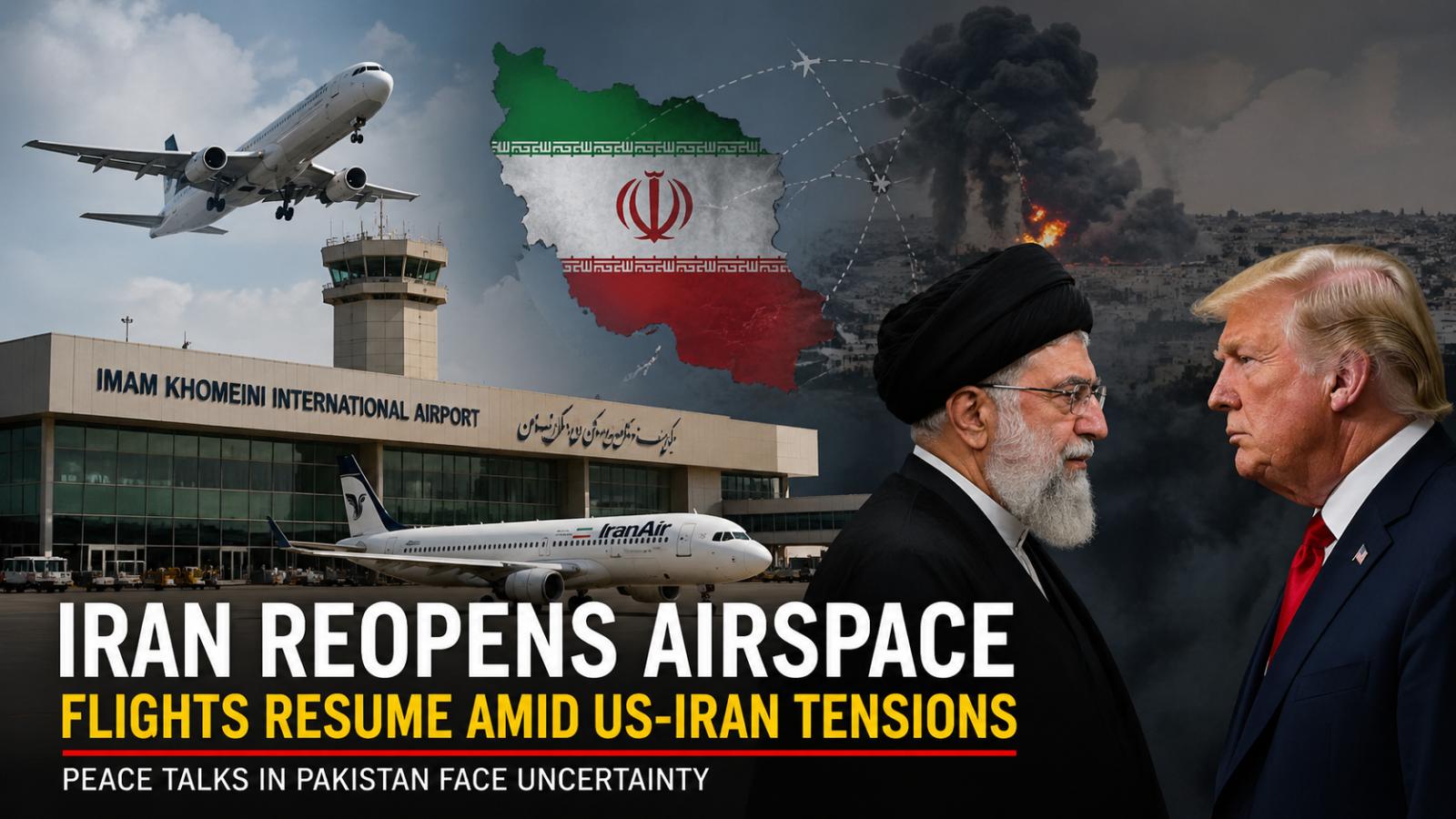
Iran airspace has resumed operations nearly two months after being shut down following joint airstrikes by the United States and Israel, marking a cautious step toward normalcy amid ongoing regional tensions. The reopening of Imam Khomeini International Airport on April 25 signals a gradual recovery in Iran’s aviation sector, even as diplomatic uncertainty continues to cloud the broader US-Iran conflict. The airspace closure was enforced on February 28 after coordinated military action escalated into a wider confrontation, forcing Iran to halt civilian aviation across the country. With security assessments and operational preparations now underway, authorities have begun restoring flight services in phases. Initial departures from Tehran include routes to Medina, Muscat, and Istanbul, reflecting limited but significant progress in reconnecting international travel corridors. Iran’s Civil Aviation Authority has indicated that full restoration of aviation services will depend on continued coordination between military and civilian agencies. Earlier, on April 18, Iran reopened its eastern airspace to international flights, allowing transit operations to resume and easing pressure on regional air traffic routes. Officials emphasize that passenger safety remains the top priority during this phased reopening. At the same time, diplomatic efforts to de-escalate the US-Iran war have encountered fresh complications. A delegation linked to former US President Donald Trump, including envoy Steve Witkoff and adviser Jared Kushner, is currently in Pakistan for a second round of peace talks. However, Iran has clearly denied any direct engagement with US representatives during this visit, raising doubts about the progress of negotiations. Iran’s Foreign Ministry has clarified that its position will be conveyed through Pakistani intermediaries, with Foreign Minister Abbas Araghchi actively involved in discussions aimed at reducing tensions. Tehran continues to describe the conflict as “an externally imposed war of aggression”, stressing the importance of restoring regional stability and easing sanctions pressure. Previous negotiations collapsed after Iran strongly objected to US demands to maintain sanctions and naval restrictions during talks. As both sides remain firm in their positions, the reopening of Iran airspace stands as a significant operational step, even as broader geopolitical challenges remain unresolved.
Iran airspace resumes operations amid ongoing US-Iran conflict tensions
Iran airspace has resumed operations nearly two months after being shut down following joint airstrikes by the United States and Israel, marking a cautious step toward normalcy amid ongoing regional tensions. The reopening of Imam Khomeini International Airport on April 25 signals a gradual recovery in Iran’s aviation sector, even as diplomatic uncertainty continues to cloud the broader US-Iran conflict. The airspace closure was enforced on February 28 after coordinated military action escalated into a wider confrontation, forcing Iran to halt civilian aviation across the country. With security assessments and operational preparations now underway, authorities have begun restoring flight services in phases. Initial departures from Tehran include routes to Medina, Muscat, and Istanbul, reflecting limited but significant progress in reconnecting international travel corridors. Iran’s Civil Aviation Authority has indicated that full restoration of aviation services will depend on continued coordination between military and civilian agencies. Earlier, on April 18, Iran reopened its eastern airspace to international flights, allowing transit operations to resume and easing pressure on regional air traffic routes. Officials emphasize that passenger safety remains the top priority during this phased reopening. At the same time, diplomatic efforts to de-escalate the US-Iran war have encountered fresh complications. A delegation linked to former US President Donald Trump, including envoy Steve Witkoff and adviser Jared Kushner, is currently in Pakistan for a second round of peace talks. However, Iran has clearly denied any direct engagement with US representatives during this visit, raising doubts about the progress of negotiations. Iran’s Foreign Ministry has clarified that its position will be conveyed through Pakistani intermediaries, with Foreign Minister Abbas Araghchi actively involved in discussions aimed at reducing tensions. Tehran continues to describe the conflict as “an externally imposed war of aggression”, stressing the importance of restoring regional stability and easing sanctions pressure. Previous negotiations collapsed after Iran strongly objected to US demands to maintain sanctions and naval restrictions during talks. As both sides remain firm in their positions, the reopening of Iran airspace stands as a significant operational step, even as broader geopolitical challenges remain unresolved.
Iran Reopens Airspace to Evacuate 1,000 Indians Tonight
In a major development amid the ongoing conflict between Iran and Israel, Iran has temporarily reopened its closed airspace to facilitate the evacuation of Indian nationals. The decision comes as a humanitarian gesture following diplomatic efforts by the Indian government. As per official reports, nearly 1,000 Indian citizens, including students and workers stranded in different regions of Iran, will return to India on Friday night via special chartered flight
Iran Reopens Airspace to Evacuate 1,000 Indians Tonight
In a major development amid the ongoing conflict between Iran and Israel, Iran has temporarily reopened its closed airspace to facilitate the evacuation of Indian nationals. The decision comes as a humanitarian gesture following diplomatic efforts by the Indian government. As per official reports, nearly 1,000 Indian citizens, including students and workers stranded in different regions of Iran, will return to India on Friday night via special chartered flight