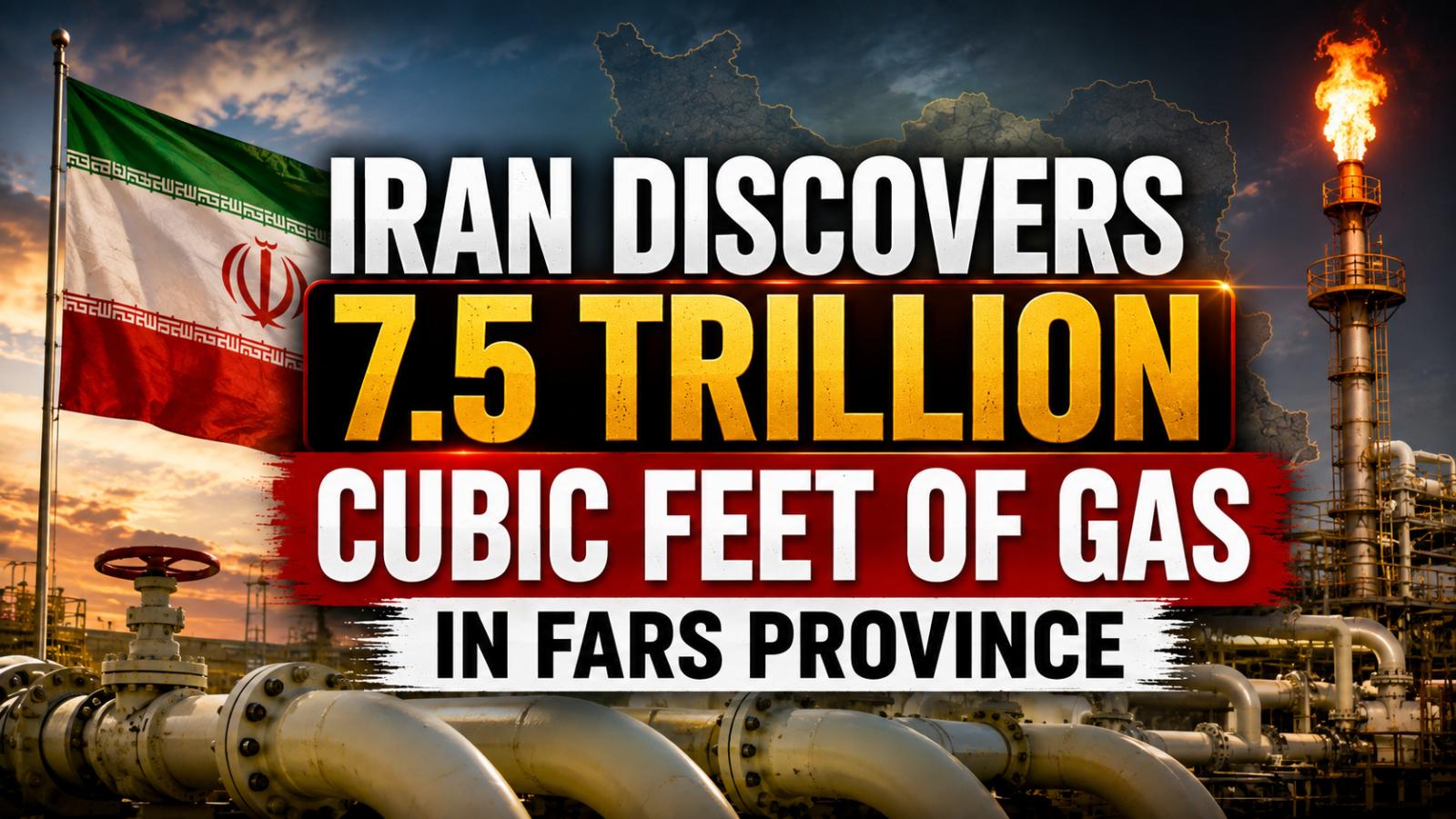
Iran has announced a major gas discovery in the southern part of Fars Province, with Oil Minister Mohsen Paknejad estimating the field contains about 7.5 trillion cubic feet of gas. The discovery could strengthen Iran’s gas reserves as the country faces economic pressure and challenges across its energy sector.
Iran gas discovery reaches 7.5 trillion cubic feet
Paknejad announced the discovery on Sunday, saying the newly identified field holds an estimated 7.5 trillion cubic feet, or roughly 212 billion cubic metres, of natural gas.
Of that total, approximately 5.7 trillion cubic feet is considered recoverable, according to figures provided by the oil minister. Recoverable reserves refer to the portion of gas that authorities estimate can realistically be extracted under technical and economic conditions.
Paknejad said the recoverable volume could provide an amount of gas comparable to the production of one phase of the giant South Pars field for about 15 years. The comparison highlights the potential scale of the new resource, although future output will depend on development, infrastructure and production conditions.
Sweet gas could lower development costs
The Iranian oil minister described the resource as “sweet gas,” a term generally used for natural gas containing relatively low levels of hydrogen sulfide and other sulfur compounds.
That characteristic could offer an economic advantage because sweet gas typically requires less processing than sour gas before entering commercial supply systems. Paknejad said this could help reduce both development and operating costs at the field.
The discovery also includes gas condensates, according to the minister. These liquid hydrocarbons can have significant commercial value alongside natural gas production. Paknejad said the condensate resources could potentially generate tens of billions of dollars in additional value.
The actual economic return, however, will depend on factors including investment, production rates, infrastructure, energy prices and Iran’s access to international markets.
New reserves strengthen Iran energy sector
The discovery comes at an important time for Iran’s energy industry. Tehran has been working to maintain and repair energy infrastructure while dealing with sanctions and broader economic pressure.
Iran already possesses some of the world’s largest natural gas reserves, and South Pars remains central to the country’s gas production. Adding another substantial resource could improve long-term supply options, but discovering gas does not automatically translate into immediate production.
A field must undergo appraisal and development before commercial extraction can begin. That process can require drilling additional wells, building processing facilities and connecting production sites to pipelines and other infrastructure.
Iran gas reserves gain new strategic resource
Paknejad said the discovery adds a significant resource to Iran’s national hydrocarbon reserves. If subsequent assessments confirm the announced estimates, the Fars gas field could become an important addition to the country’s long-term energy portfolio.
The timing also gives the announcement wider economic significance as Tehran navigates sanctions and international tensions that can complicate financing, technology access and energy exports.
For Iran, the value of the discovery will ultimately depend not only on the volume underground but also on how quickly and efficiently it can bring the recoverable gas and condensates into production. The government has not yet provided a detailed timetable for development or commercial output from the newly announced field.
Iran has announced a major gas discovery in the southern part of Fars Province, with Oil Minister Mohsen Paknejad estimating the field contains about 7.5 trillion cubic feet of gas. The discovery could strengthen Iran’s gas reserves as the country faces economic pressure and challenges across its energy sector.
Iran gas discovery reaches 7.5 trillion cubic feet
Paknejad announced the discovery on Sunday, saying the newly identified field holds an estimated 7.5 trillion cubic feet, or roughly 212 billion cubic metres, of natural gas.
Of that total, approximately 5.7 trillion cubic feet is considered recoverable, according to figures provided by the oil minister. Recoverable reserves refer to the portion of gas that authorities estimate can realistically be extracted under technical and economic conditions.
Paknejad said the recoverable volume could provide an amount of gas comparable to the production of one phase of the giant South Pars field for about 15 years. The comparison highlights the potential scale of the new resource, although future output will depend on development, infrastructure and production conditions.
Sweet gas could lower development costs
The Iranian oil minister described the resource as “sweet gas,” a term generally used for natural gas containing relatively low levels of hydrogen sulfide and other sulfur compounds.
That characteristic could offer an economic advantage because sweet gas typically requires less processing than sour gas before entering commercial supply systems. Paknejad said this could help reduce both development and operating costs at the field.
The discovery also includes gas condensates, according to the minister. These liquid hydrocarbons can have significant commercial value alongside natural gas production. Paknejad said the condensate resources could potentially generate tens of billions of dollars in additional value.
The actual economic return, however, will depend on factors including investment, production rates, infrastructure, energy prices and Iran’s access to international markets.
New reserves strengthen Iran energy sector
The discovery comes at an important time for Iran’s energy industry. Tehran has been working to maintain and repair energy infrastructure while dealing with sanctions and broader economic pressure.
Iran already possesses some of the world’s largest natural gas reserves, and South Pars remains central to the country’s gas production. Adding another substantial resource could improve long-term supply options, but discovering gas does not automatically translate into immediate production.
A field must undergo appraisal and development before commercial extraction can begin. That process can require drilling additional wells, building processing facilities and connecting production sites to pipelines and other infrastructure.
Iran gas reserves gain new strategic resource
Paknejad said the discovery adds a significant resource to Iran’s national hydrocarbon reserves. If subsequent assessments confirm the announced estimates, the Fars gas field could become an important addition to the country’s long-term energy portfolio.
The timing also gives the announcement wider economic significance as Tehran navigates sanctions and international tensions that can complicate financing, technology access and energy exports.
For Iran, the value of the discovery will ultimately depend not only on the volume underground but also on how quickly and efficiently it can bring the recoverable gas and condensates into production. The government has not yet provided a detailed timetable for development or commercial output from the newly announced field.