#japanindia
Japan India digital pact reshapes Indo Pacific tech routes
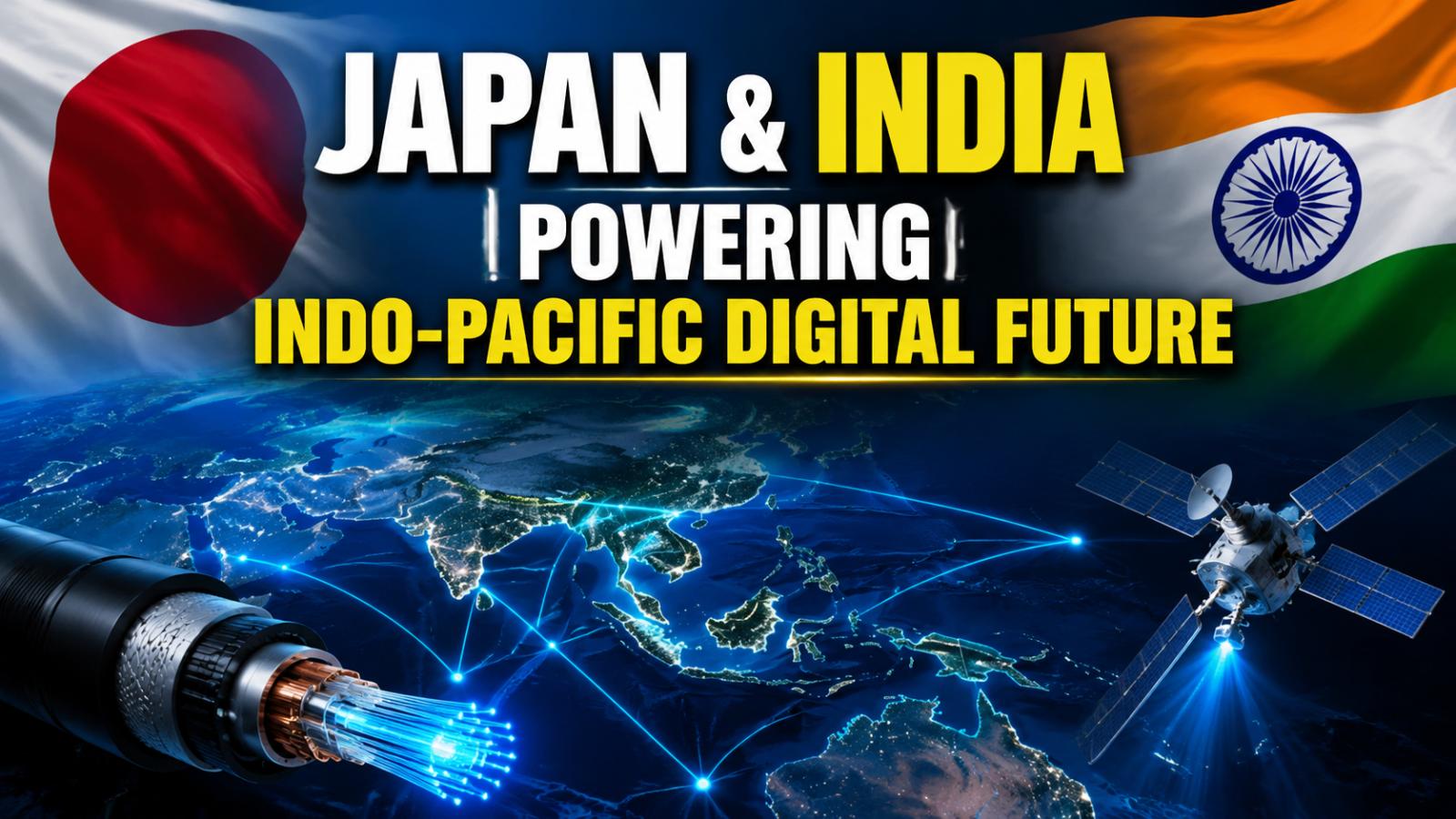
The Indo-Pacific strategy is increasingly moving away from traditional security frameworks toward digital infrastructure control. Japan and India are emerging as key drivers in this transition, focusing on secure data movement, resilient communication systems, and long-term technological independence from concentrated global networks. The shift reflects a broader attempt to reduce vulnerabilities in cross-border data flows and critical digital assets.
Japan India digital pact reshapes Indo Pacific tech routes
The Indo-Pacific strategy is increasingly moving away from traditional security frameworks toward digital infrastructure control. Japan and India are emerging as key drivers in this transition, focusing on secure data movement, resilient communication systems, and long-term technological independence from concentrated global networks. The shift reflects a broader attempt to reduce vulnerabilities in cross-border data flows and critical digital assets.
India Japan summit 2026 boosts FOIP rare earth strategy
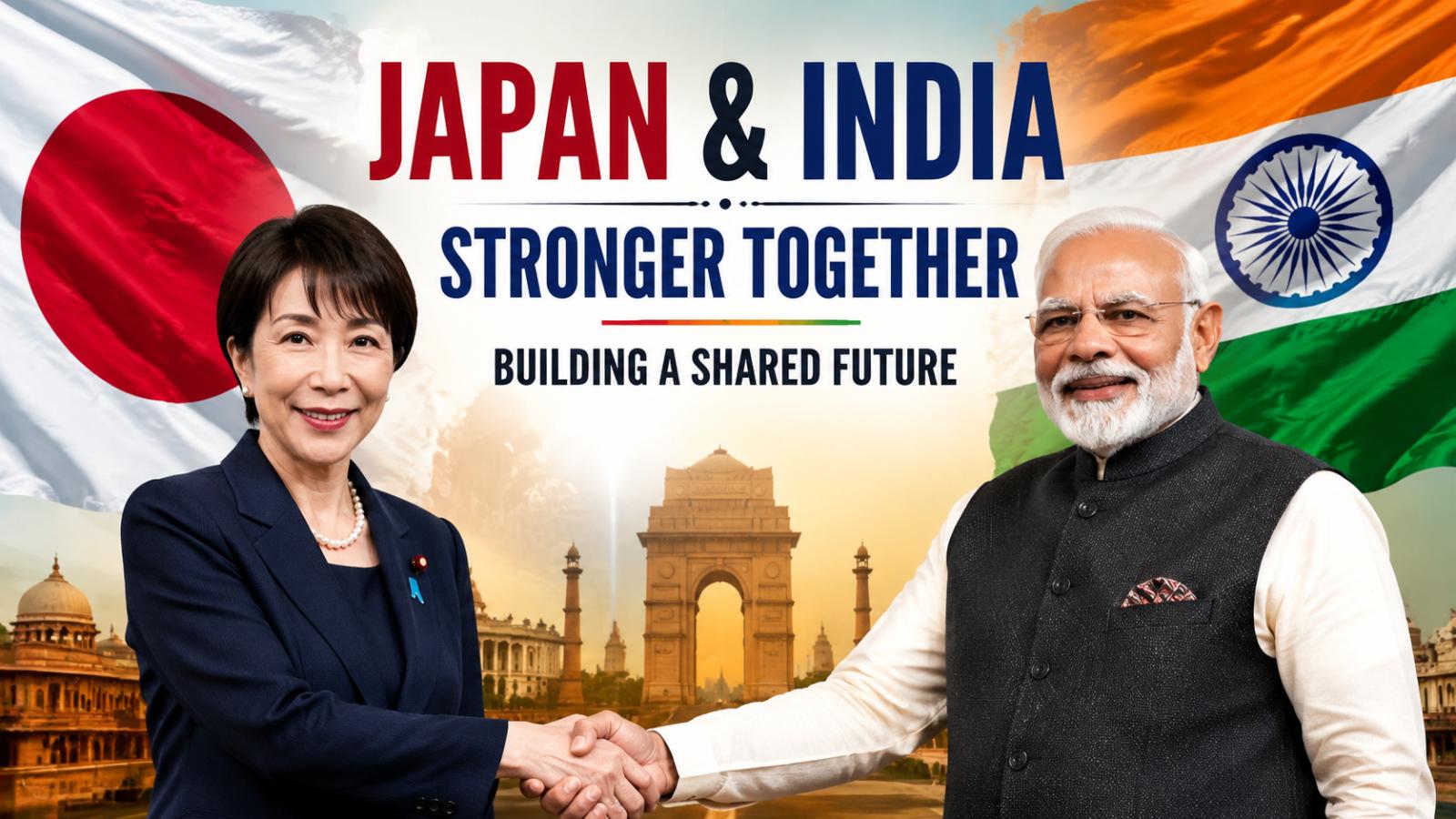
The India Japan Summit 2026 is emerging as more than diplomatic engagement, shifting toward a structured economic alignment under the Free and Open Indo-Pacific (FOIP) framework. Japan is positioning India as a long-term partner in building alternative production networks outside China’s dominant supply ecosystem. The focus is no longer symbolic cooperation but measurable industrial integration across energy, technology, and critical materials. Rare Earth Dependency and Strategic Diversification A major driver of the summit is global concern over rare earth concentration in China. These materials are essential for electric vehicles, defence systems, and semiconductor manufacturing. Japan has been actively seeking diversification, and India is being viewed as a viable partner due to its untapped mineral reserves and growing extraction capability. However, this shift is not immediate. India still faces infrastructure gaps in refining and processing, which limits its ability to fully replace existing supply chains. The partnership therefore focuses on joint development rather than replacement. Northeast India as an Emerging Industrial Bridge Northeast India is increasingly being integrated into strategic planning as a logistics and manufacturing connector between South Asia and Southeast Asia. Its geographical position near the Bay of Bengal makes it relevant for regional trade routes, especially under Japan-backed connectivity initiatives. The long-term expectation is the development of corridors linking manufacturing zones, ports, and resource hubs. But execution remains a challenge due to terrain, infrastructure bottlenecks, and slow industrial scaling. EV Batteries and Semiconductor Collaboration Expands The summit is expected to accelerate cooperation in electric mobility and chip production. Japan’s technology strength in precision manufacturing complements India’s expanding industrial base and domestic demand growth. Instead of simple export-import trade, both countries are moving toward localized production ecosystems. This includes battery supply chains, semiconductor assembly, and joint research in advanced materials. The real shift here is from consumption-driven trade to production-sharing models. Investment Flow and Industrial Integration Japanese investment in India continues to grow steadily, with a strong presence in automobiles, electronics, and infrastructure. The partnership now appears to be entering a deeper phase where investment is tied to strategic supply chain redesign rather than isolated projects. This creates a long-term dependency loop where both economies benefit from shared manufacturing ecosystems, but also become more structurally linked to global market fluctuations. Strategic Outcome: A Competing Supply Chain Bloc The broader outcome of the India Japan Summit 2026 is the gradual formation of an alternative industrial network in Asia. It does not replace existing systems overnight but creates parallel pathways in critical sectors like energy storage, semiconductors, and defence manufacturing. The key question going forward is execution speed. Policy alignment is strong, but infrastructure readiness and capital deployment will decide how quickly this partnership moves from strategy to reality.
India Japan summit 2026 boosts FOIP rare earth strategy
The India Japan Summit 2026 is emerging as more than diplomatic engagement, shifting toward a structured economic alignment under the Free and Open Indo-Pacific (FOIP) framework. Japan is positioning India as a long-term partner in building alternative production networks outside China’s dominant supply ecosystem. The focus is no longer symbolic cooperation but measurable industrial integration across energy, technology, and critical materials. Rare Earth Dependency and Strategic Diversification A major driver of the summit is global concern over rare earth concentration in China. These materials are essential for electric vehicles, defence systems, and semiconductor manufacturing. Japan has been actively seeking diversification, and India is being viewed as a viable partner due to its untapped mineral reserves and growing extraction capability. However, this shift is not immediate. India still faces infrastructure gaps in refining and processing, which limits its ability to fully replace existing supply chains. The partnership therefore focuses on joint development rather than replacement. Northeast India as an Emerging Industrial Bridge Northeast India is increasingly being integrated into strategic planning as a logistics and manufacturing connector between South Asia and Southeast Asia. Its geographical position near the Bay of Bengal makes it relevant for regional trade routes, especially under Japan-backed connectivity initiatives. The long-term expectation is the development of corridors linking manufacturing zones, ports, and resource hubs. But execution remains a challenge due to terrain, infrastructure bottlenecks, and slow industrial scaling. EV Batteries and Semiconductor Collaboration Expands The summit is expected to accelerate cooperation in electric mobility and chip production. Japan’s technology strength in precision manufacturing complements India’s expanding industrial base and domestic demand growth. Instead of simple export-import trade, both countries are moving toward localized production ecosystems. This includes battery supply chains, semiconductor assembly, and joint research in advanced materials. The real shift here is from consumption-driven trade to production-sharing models. Investment Flow and Industrial Integration Japanese investment in India continues to grow steadily, with a strong presence in automobiles, electronics, and infrastructure. The partnership now appears to be entering a deeper phase where investment is tied to strategic supply chain redesign rather than isolated projects. This creates a long-term dependency loop where both economies benefit from shared manufacturing ecosystems, but also become more structurally linked to global market fluctuations. Strategic Outcome: A Competing Supply Chain Bloc The broader outcome of the India Japan Summit 2026 is the gradual formation of an alternative industrial network in Asia. It does not replace existing systems overnight but creates parallel pathways in critical sectors like energy storage, semiconductors, and defence manufacturing. The key question going forward is execution speed. Policy alignment is strong, but infrastructure readiness and capital deployment will decide how quickly this partnership moves from strategy to reality.
Takaichi visit signals deeper Japan India strategic cooperation
The visit of Sanae Takaichi to New Delhi marks a renewed phase in relations between Japan and India. Her meeting with
Takaichi visit signals deeper Japan India strategic cooperation
The visit of Sanae Takaichi to New Delhi marks a renewed phase in relations between Japan and India. Her meeting with