








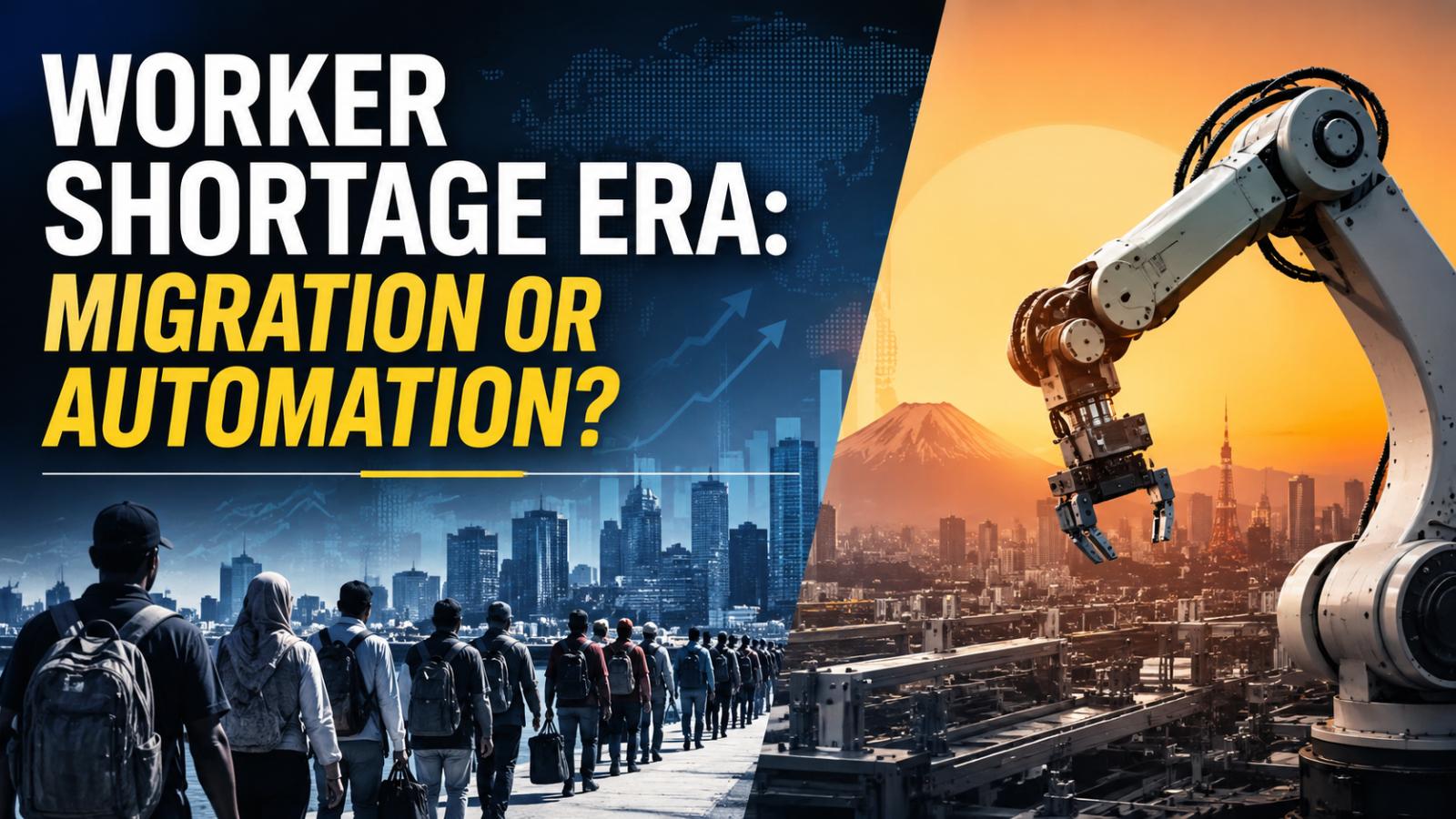












The worker shortage era is no longer a distant demographic warning. OECD projections show a shrinking working-age population, rising public costs and slower growth, while Japan’s labor gap reveals why migration and automation are becoming economic necessities. Ageing workforce changes the global labor market The world has crossed a demographic threshold that many economies cannot easily reverse. Falling birth
Japan is preparing for one of the most significant changes to its foreign labour policy in decades as the country struggles with a rapidly ageing population and a shrinking workforce. According to government plans currently under review, Japan is expected to accept more than 1.2 million foreign workers by March 2029 through a restructured visa and skill development framework. The move reflects a gro