















#jnim
JNIM blockade in Mali on April 30 deepens crisis around Bamako
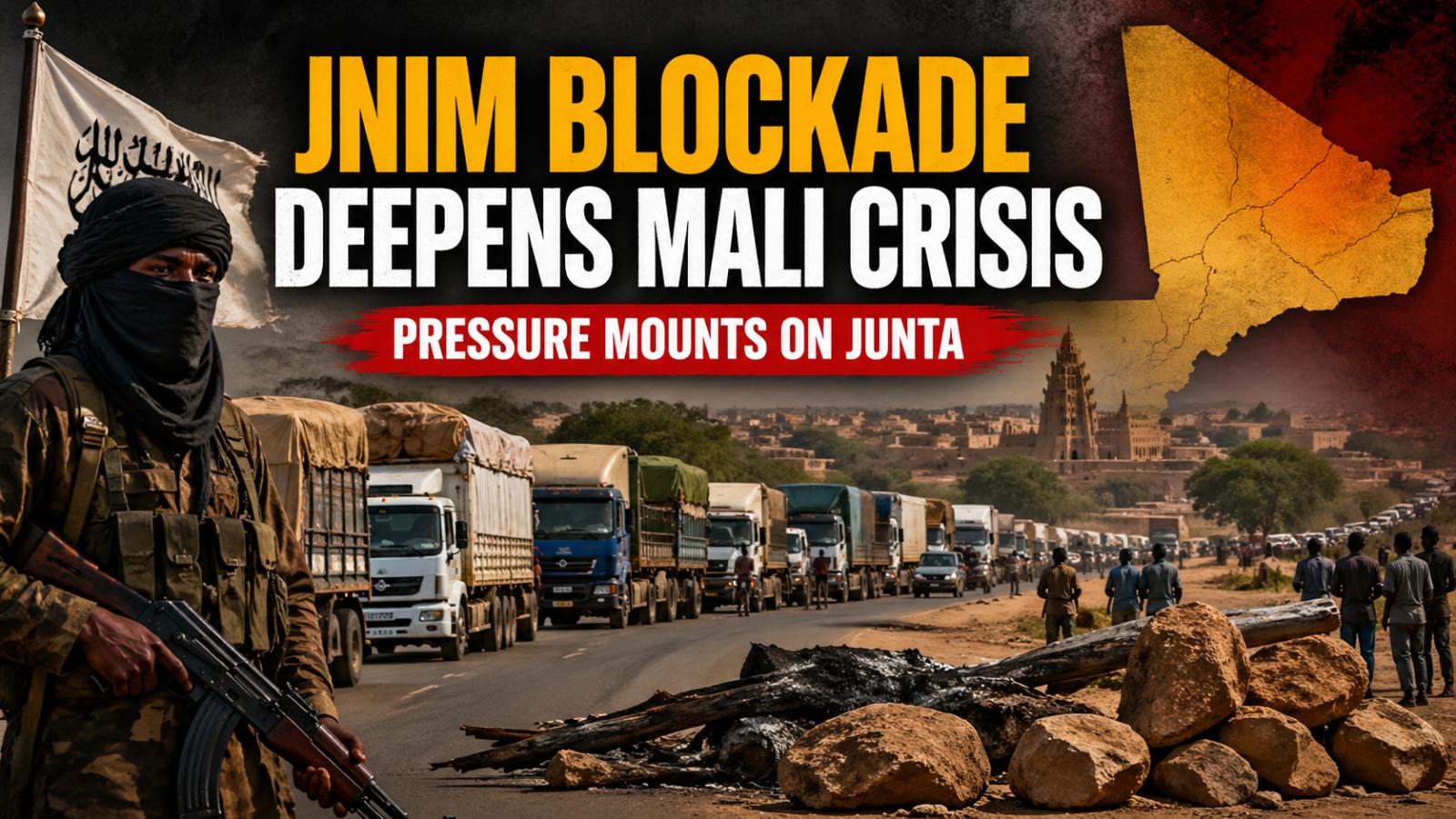
JNIM blockade in mali escalates crisis on April 30 The Mali crisis intensified on April 30 as the jnim blockade tightened around bamako, cutting key supply routes and increasing pressure on the mali junta government. The jihadist group, the Group for the Support of Islam and Muslims, also called for a united front to remove the military leadership, raising fears of deeper instability across the country. JNIM released a statement on Thursday, April 30, urging political parties, security forces, religious leaders, and citizens to unite against the junta. the group called for a “common front” to bring down the government and push for a transition, following recent coordinated attacks with Tuareg fighters. These attacks targeted military positions and led to the death of Mali’s defence minister Sadio Camara. His funeral in Bamako was held under tight security, attended by thousands including junta leader Assimi Goita. At the same time, the blockade around bamako has created a major supply crisis, with roads leading into the capital and nearby Kati effectively shut. Hundreds of trucks and passenger vehicles remain stranded at entry points, with drivers reporting long waits and growing uncertainty. jnim warned of strict action against anyone using these routes, allowing only those inside the city to leave. The impact is severe because Mali depends heavily on road transport for essential goods. As a landlocked country, it relies on routes through neighboring nations for fuel and supplies. key trade corridors linking to ports like abidjan are now disrupted, affecting businesses and daily life. Reports of violence against drivers along these routes have added to fear, though some claims remain unverified. Air traffic into Bamako continues without disruption, but the overall situation remains tense. analysts warn that if the blockade continues, it could worsen the mali economy crisis and create further humanitarian challenges. The developments on April 30 highlight the growing difficulty for authorities in handling both security threats and economic stability in Mali.
JNIM blockade in Mali on April 30 deepens crisis around Bamako
JNIM blockade in mali escalates crisis on April 30 The Mali crisis intensified on April 30 as the jnim blockade tightened around bamako, cutting key supply routes and increasing pressure on the mali junta government. The jihadist group, the Group for the Support of Islam and Muslims, also called for a united front to remove the military leadership, raising fears of deeper instability across the country. JNIM released a statement on Thursday, April 30, urging political parties, security forces, religious leaders, and citizens to unite against the junta. the group called for a “common front” to bring down the government and push for a transition, following recent coordinated attacks with Tuareg fighters. These attacks targeted military positions and led to the death of Mali’s defence minister Sadio Camara. His funeral in Bamako was held under tight security, attended by thousands including junta leader Assimi Goita. At the same time, the blockade around bamako has created a major supply crisis, with roads leading into the capital and nearby Kati effectively shut. Hundreds of trucks and passenger vehicles remain stranded at entry points, with drivers reporting long waits and growing uncertainty. jnim warned of strict action against anyone using these routes, allowing only those inside the city to leave. The impact is severe because Mali depends heavily on road transport for essential goods. As a landlocked country, it relies on routes through neighboring nations for fuel and supplies. key trade corridors linking to ports like abidjan are now disrupted, affecting businesses and daily life. Reports of violence against drivers along these routes have added to fear, though some claims remain unverified. Air traffic into Bamako continues without disruption, but the overall situation remains tense. analysts warn that if the blockade continues, it could worsen the mali economy crisis and create further humanitarian challenges. The developments on April 30 highlight the growing difficulty for authorities in handling both security threats and economic stability in Mali.
What triggered India’s response to Mali violence? Coordinated terror strikes and minister’s death
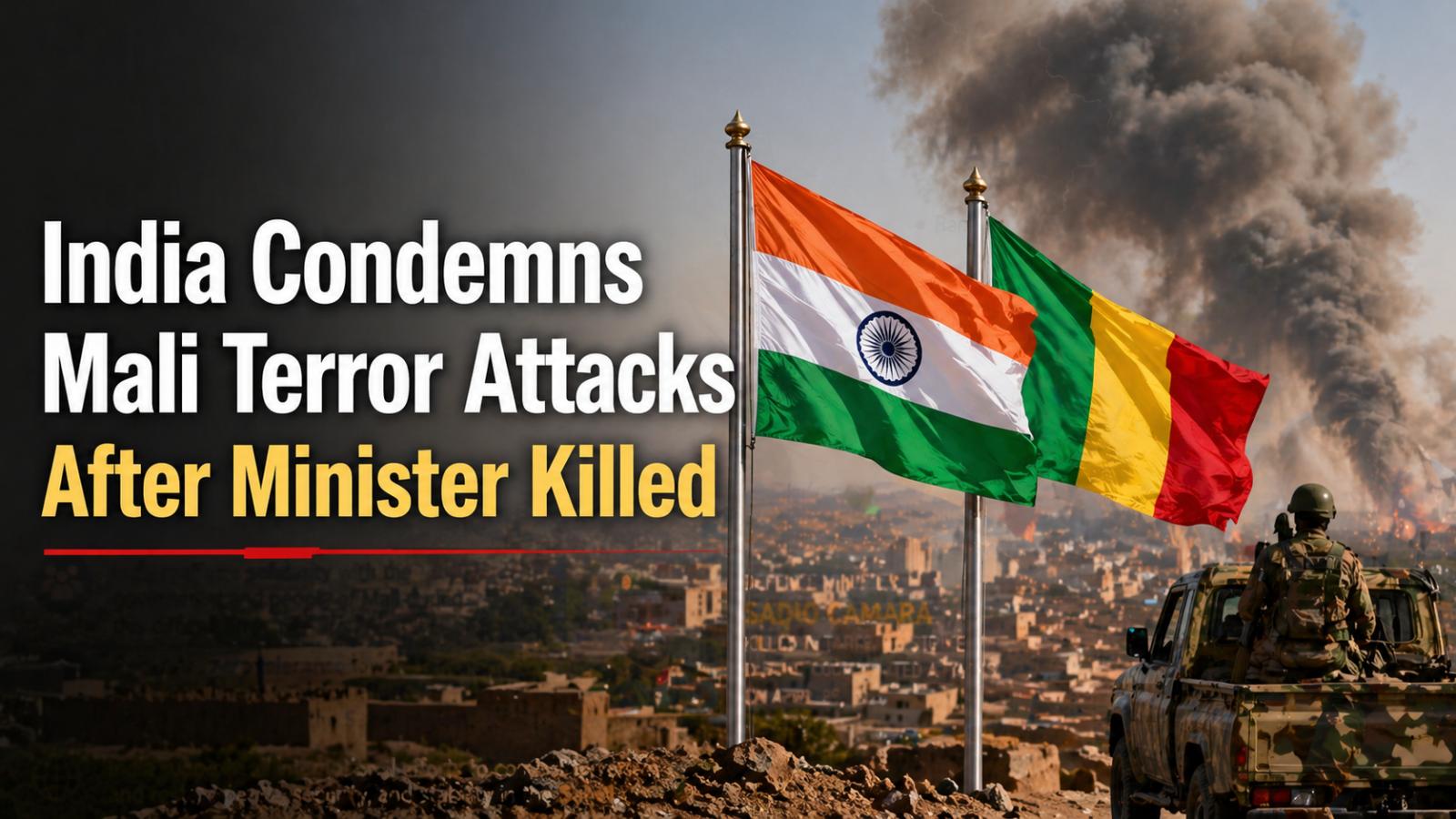
India condemns Mali terror attacks after minister killed, highlights global security risks and support for Sahel stability. The Government of India issued a strong condemnation on Tuesday, April 28, 2026 (IST), following a series of coordinated terrorist attacks across Mali that resulted in significant casualties and heightened regional instability. In an official statement, the Ministry of External Affairs expressed condolences to victims’ families and affirmed solidarity with Mali’s government and citizens. Coordinated assaults escalate violence across Mali The wave of violence began on Saturday, April 25, 2026, when militant group Jama'at Nusrat al-Islam wal-Muslimin joined forces with Tuareg separatists from the Front de libération de l'Azawad. Together, they launched synchronized attacks targeting key locations from the capital Bamako to northern regions. The coordinated nature of the assaults marked one of the most significant escalations of violence in the country in recent years. Death of defense minister shocks leadership Among those killed was Sadio Camara, Mali’s Minister of Defence and Veteran Affairs, who died in a targeted strike during the offensive. His death has sent shockwaves through Mali’s political and military leadership, raising concerns about the capacity of state institutions to counter increasingly sophisticated insurgent operations. India reiterates zero tolerance on terrorism In its statement, New Delhi emphasized its longstanding policy of zero tolerance toward terrorism. The government reaffirmed its commitment to combating extremist violence in all forms and voiced support for international efforts aimed at restoring peace and stability in the Sahel region. Officials in New Delhi indicated that the scale and coordination of the attacks reflect evolving threats posed by transnational militant networks. Broader implications for Sahel stability The attacks have intensified concerns within India’s strategic community that Mali could become a more entrenched base for global terror groups. While India has historically maintained a measured relationship with Bamako focused on development and capacity building, the latest violence underscores growing instability across the Sahel. Analysts warn that continued unrest may have wider implications for international security and counterterrorism efforts.
What triggered India’s response to Mali violence? Coordinated terror strikes and minister’s death
India condemns Mali terror attacks after minister killed, highlights global security risks and support for Sahel stability. The Government of India issued a strong condemnation on Tuesday, April 28, 2026 (IST), following a series of coordinated terrorist attacks across Mali that resulted in significant casualties and heightened regional instability. In an official statement, the Ministry of External Affairs expressed condolences to victims’ families and affirmed solidarity with Mali’s government and citizens. Coordinated assaults escalate violence across Mali The wave of violence began on Saturday, April 25, 2026, when militant group Jama'at Nusrat al-Islam wal-Muslimin joined forces with Tuareg separatists from the Front de libération de l'Azawad. Together, they launched synchronized attacks targeting key locations from the capital Bamako to northern regions. The coordinated nature of the assaults marked one of the most significant escalations of violence in the country in recent years. Death of defense minister shocks leadership Among those killed was Sadio Camara, Mali’s Minister of Defence and Veteran Affairs, who died in a targeted strike during the offensive. His death has sent shockwaves through Mali’s political and military leadership, raising concerns about the capacity of state institutions to counter increasingly sophisticated insurgent operations. India reiterates zero tolerance on terrorism In its statement, New Delhi emphasized its longstanding policy of zero tolerance toward terrorism. The government reaffirmed its commitment to combating extremist violence in all forms and voiced support for international efforts aimed at restoring peace and stability in the Sahel region. Officials in New Delhi indicated that the scale and coordination of the attacks reflect evolving threats posed by transnational militant networks. Broader implications for Sahel stability The attacks have intensified concerns within India’s strategic community that Mali could become a more entrenched base for global terror groups. While India has historically maintained a measured relationship with Bamako focused on development and capacity building, the latest violence underscores growing instability across the Sahel. Analysts warn that continued unrest may have wider implications for international security and counterterrorism efforts.


