#marketanalysis
AI spending surge could top $1 trillion by 2027, analysts say
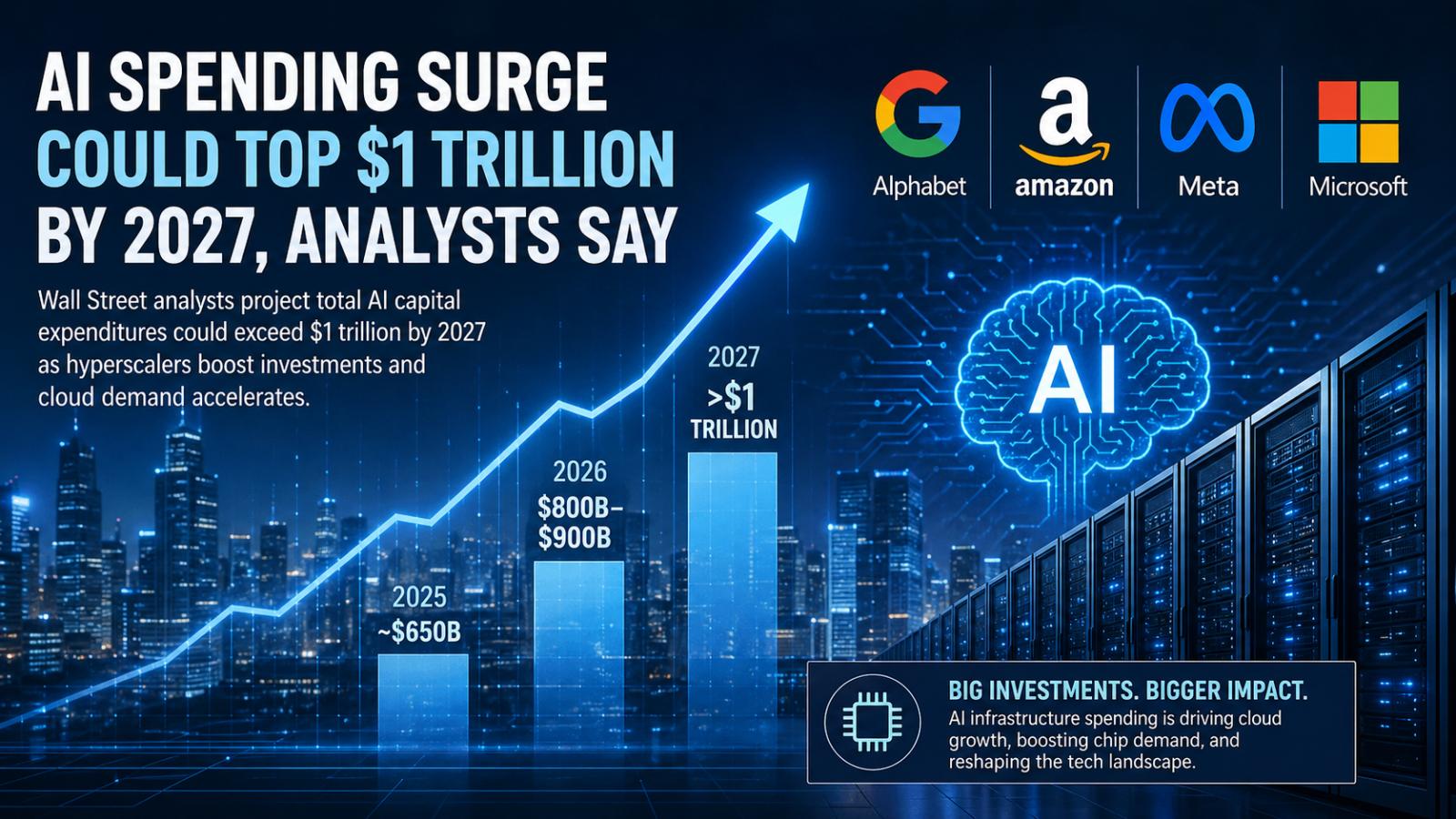
Wall Street analysts project AI spending could exceed $1 trillion by 2027 as major tech firms boost investments. Strong cloud demand and rising revenues support growth, though investor concerns remain over returns and rising infrastructure costs AI spending surge could top $1 trillion by 2027, analysts say is increasingly shaping expectations across the technology sector, as Wall Street analysts project unprecedented capital expenditures driven by artificial intelligence demand. Following recent tech earnings announcements on Wednesday, analysts at firms including Evercore and Bank of America estimate total AI-related capital spending could surpass $1 trillion by 2027, with 2026 projections already rising to between $800 billion and $900 billion. The surge reflects aggressive investment strategies by major technology companies, including Alphabet, Amazon, Meta, and Microsoft. According to analyst estimates, projected capital spending for 2026 includes approximately $200 billion from Amazon, $190 billion from Microsoft, $185 billion from Alphabet, and $135 billion from Meta, reflecting broad increases across the sector. Executives continue to signal confidence in long-term AI investments despite investor concerns about the scale of spending. Amazon CEO Andy Jassy emphasized the company’s commitment to infrastructure expansion, citing strong long-term returns. Similarly, Alphabet reported significant growth in its cloud segment, with revenue increasing sharply year over year, reinforcing expectations that AI-driven services are becoming a major revenue driver. Analysts note that while capital expenditures continue to rise, early signs of return on investment are emerging. Strong cloud demand, expanding contract backlogs, and increasing enterprise adoption of AI tools are contributing to revenue growth. Alphabet, in particular, has seen substantial backlog expansion tied to its cloud platform, with a large portion expected to convert into revenue over the next two years. However, not all companies are receiving equal investor confidence. Meta’s increased spending plans have raised concerns about near-term returns, particularly as its free cash flow has declined significantly compared to the previous year. CEO Mark Zuckerberg acknowledged higher infrastructure costs, including rising component prices, while maintaining confidence in the long-term value of AI investments. The rapid expansion of AI infrastructure is also benefiting semiconductor manufacturers and hardware suppliers. Companies such as Intel are seeing increased demand as AI workloads require a broader range of computing hardware beyond graphics processors. Analysts highlight growing demand for specialized chips and custom silicon solutions, suggesting that AI development could drive sustained growth across the semiconductor industry. Overall, analysts expect improving revenue and cash flow trends across the sector by 2026, supporting continued investment. While skepticism remains about the pace and scale of spending, the combination of strong demand, expanding cloud services, and technological advancements indicates that the AI-driven capital expenditure cycle is likely to continue shaping the global technology landscape.
AI spending surge could top $1 trillion by 2027, analysts say
Wall Street analysts project AI spending could exceed $1 trillion by 2027 as major tech firms boost investments. Strong cloud demand and rising revenues support growth, though investor concerns remain over returns and rising infrastructure costs AI spending surge could top $1 trillion by 2027, analysts say is increasingly shaping expectations across the technology sector, as Wall Street analysts project unprecedented capital expenditures driven by artificial intelligence demand. Following recent tech earnings announcements on Wednesday, analysts at firms including Evercore and Bank of America estimate total AI-related capital spending could surpass $1 trillion by 2027, with 2026 projections already rising to between $800 billion and $900 billion. The surge reflects aggressive investment strategies by major technology companies, including Alphabet, Amazon, Meta, and Microsoft. According to analyst estimates, projected capital spending for 2026 includes approximately $200 billion from Amazon, $190 billion from Microsoft, $185 billion from Alphabet, and $135 billion from Meta, reflecting broad increases across the sector. Executives continue to signal confidence in long-term AI investments despite investor concerns about the scale of spending. Amazon CEO Andy Jassy emphasized the company’s commitment to infrastructure expansion, citing strong long-term returns. Similarly, Alphabet reported significant growth in its cloud segment, with revenue increasing sharply year over year, reinforcing expectations that AI-driven services are becoming a major revenue driver. Analysts note that while capital expenditures continue to rise, early signs of return on investment are emerging. Strong cloud demand, expanding contract backlogs, and increasing enterprise adoption of AI tools are contributing to revenue growth. Alphabet, in particular, has seen substantial backlog expansion tied to its cloud platform, with a large portion expected to convert into revenue over the next two years. However, not all companies are receiving equal investor confidence. Meta’s increased spending plans have raised concerns about near-term returns, particularly as its free cash flow has declined significantly compared to the previous year. CEO Mark Zuckerberg acknowledged higher infrastructure costs, including rising component prices, while maintaining confidence in the long-term value of AI investments. The rapid expansion of AI infrastructure is also benefiting semiconductor manufacturers and hardware suppliers. Companies such as Intel are seeing increased demand as AI workloads require a broader range of computing hardware beyond graphics processors. Analysts highlight growing demand for specialized chips and custom silicon solutions, suggesting that AI development could drive sustained growth across the semiconductor industry. Overall, analysts expect improving revenue and cash flow trends across the sector by 2026, supporting continued investment. While skepticism remains about the pace and scale of spending, the combination of strong demand, expanding cloud services, and technological advancements indicates that the AI-driven capital expenditure cycle is likely to continue shaping the global technology landscape.
What do Apple options trades reveal? Mixed sentiment ahead of earnings
Apple’s stock may have remained largely flat over the past six months, but activity in the options market suggests traders are anticipating significant movement following its latest earnings report. Implied volatility points to a potential 3.5% swing in either direction, notably higher than the average 1.8% move seen after the company’s previous four quarterly earnings announcements. Options pricing reflects heightened expectations The increase in im
What do Apple options trades reveal? Mixed sentiment ahead of earnings
Apple’s stock may have remained largely flat over the past six months, but activity in the options market suggests traders are anticipating significant movement following its latest earnings report. Implied volatility points to a potential 3.5% swing in either direction, notably higher than the average 1.8% move seen after the company’s previous four quarterly earnings announcements. Options pricing reflects heightened expectations The increase in im
Trump praises Palantir as AI stock faces sharp weekly decline
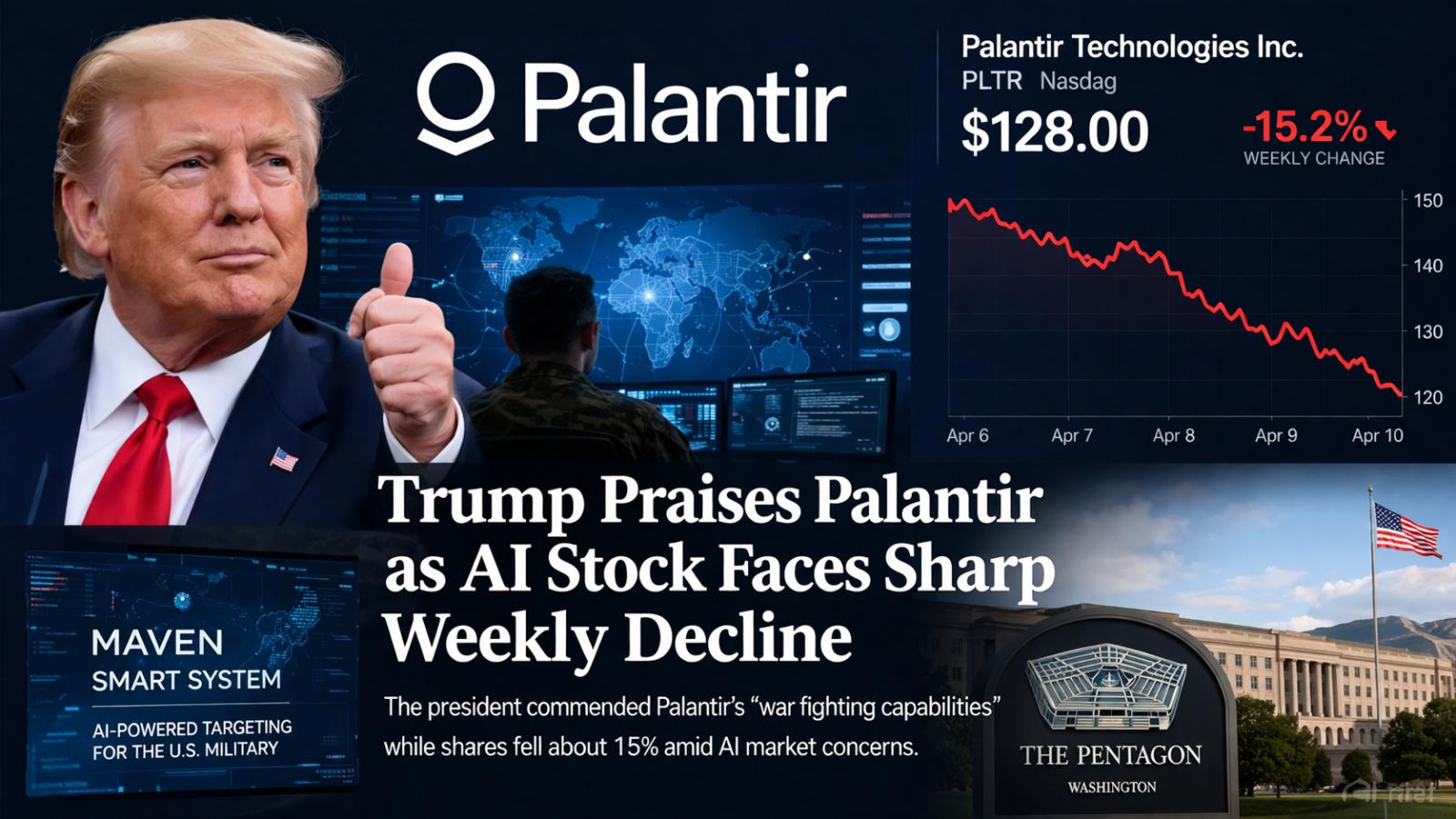
Shares of Palantir Technologies declined sharply over the week ending Friday, April 10, 2026, even as Donald Trump publicly praised the company’s role in defense technology. The stock fell approximately 15% during the week, reflecting broader pressure across the software and artificial intelligence sectors. In a post on Truth Social on Friday, April 10, 2026, Trump highlighted Palantir’s capabilities, stating that the company has demonstrated strong “war fighting capabilities and equipment.” His remarks come as reports indicate that the U.S. military is using Palantir’s AI-powered Maven Smart System platform to assist with target identification in operations in the Middle East. The company derives a significant portion of its U.S. revenue from government contracts, including work with the Pentagon and immigration enforcement agencies. Palantir CEO Alex Karp has consistently supported the use of advanced technology in defense, aligning more closely with current administration policies despite previously backing Joe Biden. Karp has also defended the company against criticism over surveillance concerns involving both immigrants and U.S. citizens. The company’s political positioning has drawn internal and external scrutiny. In October 2025, a senior communications executive described the firm’s perceived political shift as “concerning,” though related public footage was later removed from online platforms. Palantir’s partnerships in the AI sector have also raised questions. Its platform integrates models from multiple labs, including Anthropic, which has faced restrictions from the Department of Defense due to concerns over potential misuse in autonomous weapons and surveillance. Although Karp previously indicated plans to phase out Anthropic’s models, no such move has yet been confirmed. Market sentiment toward AI stocks weakened further after Anthropic introduced a new model with limited release, citing risks of misuse. This has fueled broader concerns that rapid AI advancements could disrupt traditional software business models. Investor skepticism has also been amplified by Michael Burry, who has taken bearish positions on several AI-related companies, including Palantir. In recent commentary, Burry suggested the stock may experience short-term gains but maintained that its fundamental value remains significantly lower than current levels. Following the week’s decline, Palantir shares were trading near $128, reflecting ongoing volatility in the AI-driven technology sector.
Trump praises Palantir as AI stock faces sharp weekly decline
Shares of Palantir Technologies declined sharply over the week ending Friday, April 10, 2026, even as Donald Trump publicly praised the company’s role in defense technology. The stock fell approximately 15% during the week, reflecting broader pressure across the software and artificial intelligence sectors. In a post on Truth Social on Friday, April 10, 2026, Trump highlighted Palantir’s capabilities, stating that the company has demonstrated strong “war fighting capabilities and equipment.” His remarks come as reports indicate that the U.S. military is using Palantir’s AI-powered Maven Smart System platform to assist with target identification in operations in the Middle East. The company derives a significant portion of its U.S. revenue from government contracts, including work with the Pentagon and immigration enforcement agencies. Palantir CEO Alex Karp has consistently supported the use of advanced technology in defense, aligning more closely with current administration policies despite previously backing Joe Biden. Karp has also defended the company against criticism over surveillance concerns involving both immigrants and U.S. citizens. The company’s political positioning has drawn internal and external scrutiny. In October 2025, a senior communications executive described the firm’s perceived political shift as “concerning,” though related public footage was later removed from online platforms. Palantir’s partnerships in the AI sector have also raised questions. Its platform integrates models from multiple labs, including Anthropic, which has faced restrictions from the Department of Defense due to concerns over potential misuse in autonomous weapons and surveillance. Although Karp previously indicated plans to phase out Anthropic’s models, no such move has yet been confirmed. Market sentiment toward AI stocks weakened further after Anthropic introduced a new model with limited release, citing risks of misuse. This has fueled broader concerns that rapid AI advancements could disrupt traditional software business models. Investor skepticism has also been amplified by Michael Burry, who has taken bearish positions on several AI-related companies, including Palantir. In recent commentary, Burry suggested the stock may experience short-term gains but maintained that its fundamental value remains significantly lower than current levels. Following the week’s decline, Palantir shares were trading near $128, reflecting ongoing volatility in the AI-driven technology sector.
Markets stay resilient as Trump-era geopolitical risks fail to shake investors
The opening weeks of 2026 have delivered a series of dramatic geopolitical developments tied to the United States, ranging from the capture of Venezuela’s president to sharp rhetoric surrounding Iran’s handling of domestic unrest and renewed discussion of using force to secure Greenland. Yet, in contrast to the gravity of these headlines, global equity markets have continued to post steady gains, raising questions about why investors appear largely unfazed by rising international tensions
Markets stay resilient as Trump-era geopolitical risks fail to shake investors
The opening weeks of 2026 have delivered a series of dramatic geopolitical developments tied to the United States, ranging from the capture of Venezuela’s president to sharp rhetoric surrounding Iran’s handling of domestic unrest and renewed discussion of using force to secure Greenland. Yet, in contrast to the gravity of these headlines, global equity markets have continued to post steady gains, raising questions about why investors appear largely unfazed by rising international tensions