#markettrend
Bitcoin Hits $78,000 12-Week High: 3 Key Reasons Behind The Surge
On April 27, 2026, Bitcoin touched a 12-week high near $78,000, driven by institutional demand, global economic trends, and long-term investor confidence. Bitcoin has climbed to a 12-week high, hovering close to the $78,000 mark as of April 27, 2026, reflecting a steady and controlled u
Bitcoin Hits $78,000 12-Week High: 3 Key Reasons Behind The Surge
On April 27, 2026, Bitcoin touched a 12-week high near $78,000, driven by institutional demand, global economic trends, and long-term investor confidence. Bitcoin has climbed to a 12-week high, hovering close to the $78,000 mark as of April 27, 2026, reflecting a steady and controlled u
Regulators eye prediction markets after suspicious betting activity
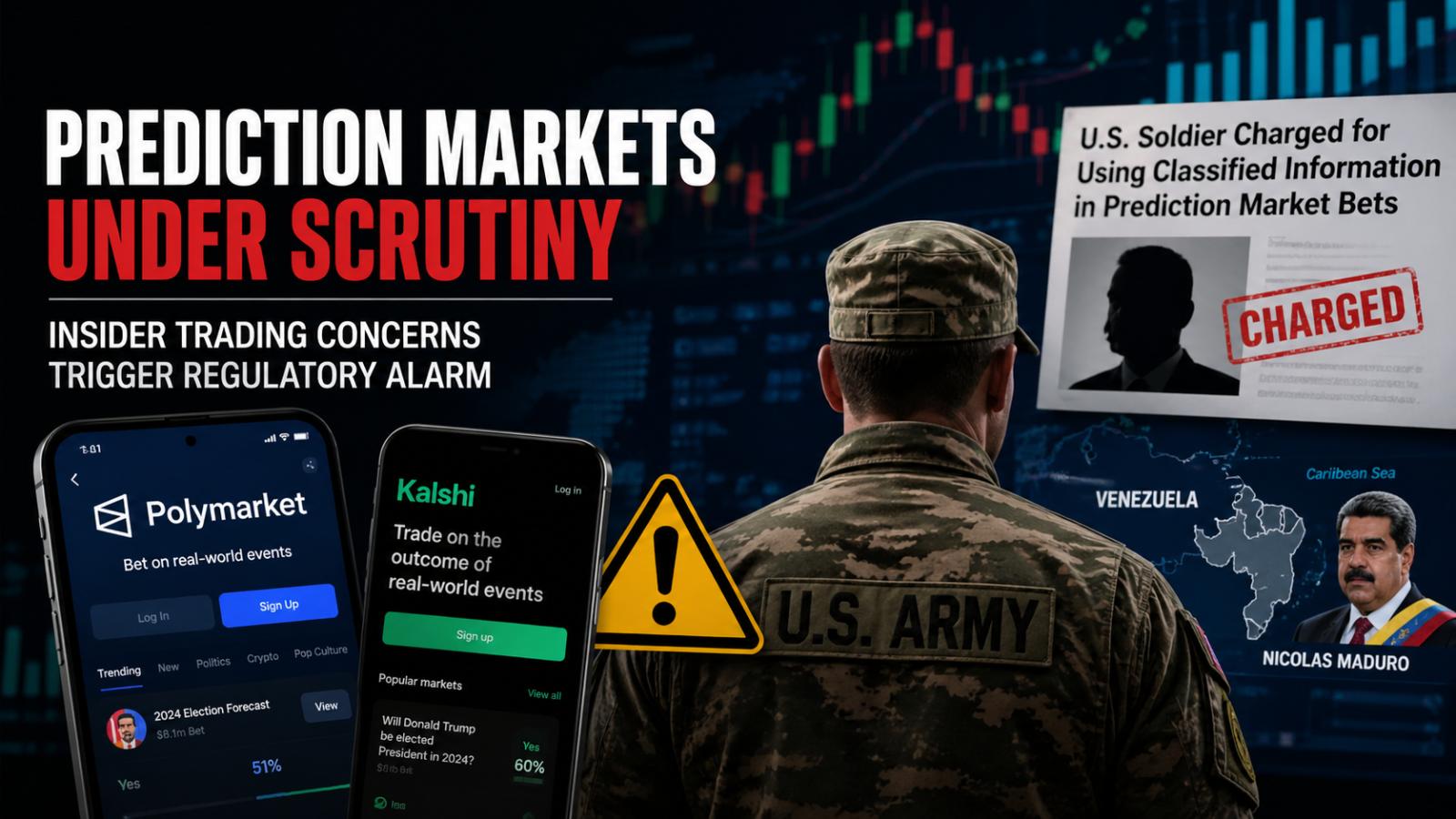
Prediction markets, digital platforms that allow users to wager on future events, are drawing increasing scrutiny amid concerns over suspicious trading activity and the potential misuse of sensitive information. The issue has gained prominence following a case involving a US Army special forces soldier accused of leveraging classified intelligence to place bets linked to a mission targeting Venezuelan President Nicolas Maduro. What are prediction markets? Prediction markets such as Polymarket and Kalshi operate in a manner similar to gambling platforms, but instead of sports, they focus on real-world events. Users place wagers on outcomes ranging from political developments and economic shifts to weather patterns and online activity. Participants earn profits if their predictions are accurate, while platforms generate revenue through transaction fees. With millions of users globally, these platforms now facilitate billions of dollars in wagers across diverse subjects including elections, tariffs, and commodity prices. Are these markets legal? The legal status of prediction markets varies by region. Globally, many jurisdictions permit such platforms, but the regulatory framework in the United States remains complex. Polymarket had been restricted domestically for several years before resuming limited operations, while Kalshi operates under oversight from the Commodity Futures Trading Commission. Some users attempt to bypass restrictions through virtual private networks, raising additional compliance concerns. Unlike traditional bookmakers, these platforms position themselves as exchanges that enable trading rather than setting odds. Can prediction markets accurately forecast events? Research suggests that collective forecasting, often described as the “wisdom of crowds,” can provide valuable insights. By aggregating diverse opinions, prediction markets can sometimes outperform individual experts in anticipating political, economic, and global outcomes. What are the risks involved? Concerns have intensified regarding the potential use of insider information. In the recent case, the US soldier allegedly earned more than $400,000 by betting on outcomes tied to a military operation. Similar patterns have been observed before major geopolitical and entertainment events, where unusual betting activity accurately predicted outcomes. Such incidents have raised questions about whether privileged information is influencing market behavior. Regulatory response and growing oversight Authorities are responding to these developments with increased vigilance. Several US states have initiated measures to restrict or ban prediction markets, while platforms like Kalshi and Polymarket have introduced safeguards to prevent misuse. Kalshi has prohibited political candidates from betting on their own elections, and government agencies have cautioned officials against using insider knowledge for financial gain. A concept with historical roots Despite recent attention, prediction markets are not a new phenomenon. Early models such as the Iowa Electronic Markets, established in 1988, focused on political forecasting. In 2003, the Pentagon explored launching a platform to predict geopolitical events, including potential security threats, but the initiative was abandoned following public criticism. As scrutiny intensifies, the future of prediction markets will likely depend on how effectively regulators and platforms address concerns surrounding transparency, legality, and the ethical use of information.
Regulators eye prediction markets after suspicious betting activity
Prediction markets, digital platforms that allow users to wager on future events, are drawing increasing scrutiny amid concerns over suspicious trading activity and the potential misuse of sensitive information. The issue has gained prominence following a case involving a US Army special forces soldier accused of leveraging classified intelligence to place bets linked to a mission targeting Venezuelan President Nicolas Maduro. What are prediction markets? Prediction markets such as Polymarket and Kalshi operate in a manner similar to gambling platforms, but instead of sports, they focus on real-world events. Users place wagers on outcomes ranging from political developments and economic shifts to weather patterns and online activity. Participants earn profits if their predictions are accurate, while platforms generate revenue through transaction fees. With millions of users globally, these platforms now facilitate billions of dollars in wagers across diverse subjects including elections, tariffs, and commodity prices. Are these markets legal? The legal status of prediction markets varies by region. Globally, many jurisdictions permit such platforms, but the regulatory framework in the United States remains complex. Polymarket had been restricted domestically for several years before resuming limited operations, while Kalshi operates under oversight from the Commodity Futures Trading Commission. Some users attempt to bypass restrictions through virtual private networks, raising additional compliance concerns. Unlike traditional bookmakers, these platforms position themselves as exchanges that enable trading rather than setting odds. Can prediction markets accurately forecast events? Research suggests that collective forecasting, often described as the “wisdom of crowds,” can provide valuable insights. By aggregating diverse opinions, prediction markets can sometimes outperform individual experts in anticipating political, economic, and global outcomes. What are the risks involved? Concerns have intensified regarding the potential use of insider information. In the recent case, the US soldier allegedly earned more than $400,000 by betting on outcomes tied to a military operation. Similar patterns have been observed before major geopolitical and entertainment events, where unusual betting activity accurately predicted outcomes. Such incidents have raised questions about whether privileged information is influencing market behavior. Regulatory response and growing oversight Authorities are responding to these developments with increased vigilance. Several US states have initiated measures to restrict or ban prediction markets, while platforms like Kalshi and Polymarket have introduced safeguards to prevent misuse. Kalshi has prohibited political candidates from betting on their own elections, and government agencies have cautioned officials against using insider knowledge for financial gain. A concept with historical roots Despite recent attention, prediction markets are not a new phenomenon. Early models such as the Iowa Electronic Markets, established in 1988, focused on political forecasting. In 2003, the Pentagon explored launching a platform to predict geopolitical events, including potential security threats, but the initiative was abandoned following public criticism. As scrutiny intensifies, the future of prediction markets will likely depend on how effectively regulators and platforms address concerns surrounding transparency, legality, and the ethical use of information.
What challenges is Tesla facing in India? Market hurdles limit EV expansion
What challenges is Tesla facing in India? Market hurdles limit EV expansion India has emerged as the weakest new market globally for Tesla Inc, underscoring the structural and policy challenges facing the automaker led by Elon Musk despite rising demand for electric vehicles in
What challenges is Tesla facing in India? Market hurdles limit EV expansion
What challenges is Tesla facing in India? Market hurdles limit EV expansion India has emerged as the weakest new market globally for Tesla Inc, underscoring the structural and policy challenges facing the automaker led by Elon Musk despite rising demand for electric vehicles in
US consumer confidence hits record low amid Iran conflict and rising energy prices
Consumer confidence in the United States fell sharply in April, reaching its lowest level on record as concerns over rising energy prices and the economic impact of the Iran conflict intensified, according to survey data released on Friday, April 11, 2026. The University of Michigan’s closely watched consumer sentiment index dropped to 47.6, marking a 10.7% decline from March and setting a new historic low. Both the current economic conditions index and the expectations index also p
US consumer confidence hits record low amid Iran conflict and rising energy prices
Consumer confidence in the United States fell sharply in April, reaching its lowest level on record as concerns over rising energy prices and the economic impact of the Iran conflict intensified, according to survey data released on Friday, April 11, 2026. The University of Michigan’s closely watched consumer sentiment index dropped to 47.6, marking a 10.7% decline from March and setting a new historic low. Both the current economic conditions index and the expectations index also p
Dining costs surge in Houston as restaurants adjust pricing strategies
HOUSTON – The cost of dining out in Houston is increasing at a pace that outstrips many other major cities across the United States, reflecting broader economic pressures affecting both consumers and the food service industry. Recent industry data indicates that restaurant prices in Houston have risen by approximately 4.6% over the past year. This increase is placing additional strain on household budgets, particularly for individuals already managing tight financial conditions. What was once considered an affordable leisure activity is becoming more difficult for many residents to justify as everyday expenses continue to climb. The impact is being felt across the restaurant sector, from established businesses to newly launched ventures. Rising operational expenses, including rent, labor, and supply costs, are forcing business owners to rethink pricing strategies and overall operations. Many are working to balance the need to remain competitive with the necessity of maintaining profitability in a challenging market environment. For newer establishments, the financial burden can be especially significant. Initial cost projections for launching and maintaining a restaurant have increased sharply compared to previous years, making it more difficult for entrepreneurs to enter the market or sustain early operations. Higher monthly overheads are now a common concern, often exceeding earlier expectations by a substantial margin. Despite these challenges, restaurant operators are exploring ways to adapt. Adjustments may include revising menus, optimizing supply chains, and implementing cost-control measures aimed at preserving customer demand while managing expenses. However, the continued rise in prices suggests that both businesses and consumers will need to navigate ongoing economic uncertainty in the months ahead. As Houston’s dining landscape evolves, the interplay between rising costs and consumer spending habits will likely shape the future of the city’s restaurant industry.
Dining costs surge in Houston as restaurants adjust pricing strategies
HOUSTON – The cost of dining out in Houston is increasing at a pace that outstrips many other major cities across the United States, reflecting broader economic pressures affecting both consumers and the food service industry. Recent industry data indicates that restaurant prices in Houston have risen by approximately 4.6% over the past year. This increase is placing additional strain on household budgets, particularly for individuals already managing tight financial conditions. What was once considered an affordable leisure activity is becoming more difficult for many residents to justify as everyday expenses continue to climb. The impact is being felt across the restaurant sector, from established businesses to newly launched ventures. Rising operational expenses, including rent, labor, and supply costs, are forcing business owners to rethink pricing strategies and overall operations. Many are working to balance the need to remain competitive with the necessity of maintaining profitability in a challenging market environment. For newer establishments, the financial burden can be especially significant. Initial cost projections for launching and maintaining a restaurant have increased sharply compared to previous years, making it more difficult for entrepreneurs to enter the market or sustain early operations. Higher monthly overheads are now a common concern, often exceeding earlier expectations by a substantial margin. Despite these challenges, restaurant operators are exploring ways to adapt. Adjustments may include revising menus, optimizing supply chains, and implementing cost-control measures aimed at preserving customer demand while managing expenses. However, the continued rise in prices suggests that both businesses and consumers will need to navigate ongoing economic uncertainty in the months ahead. As Houston’s dining landscape evolves, the interplay between rising costs and consumer spending habits will likely shape the future of the city’s restaurant industry.
Gold and Silver Prices Surge: Is Now the Right Time to Invest or Wait?
Gold and silver have witnessed significant price jumps recently, attracting attention from investors as global market conditions remain uncertain. After two consecutive days of price declines, both metals have made a strong rebound, with gold prices soaring by Rs 5,300 (3.82%) to reach Rs 1,44,212 on the Multi Commodity Exchange (MCX). Silver saw an even larger increase, rising by Rs 13,060 (5.82%), reaching Rs 2,36,980. This sharp uptick in precious metal prices is largely driven by weakenin
Gold and Silver Prices Surge: Is Now the Right Time to Invest or Wait?
Gold and silver have witnessed significant price jumps recently, attracting attention from investors as global market conditions remain uncertain. After two consecutive days of price declines, both metals have made a strong rebound, with gold prices soaring by Rs 5,300 (3.82%) to reach Rs 1,44,212 on the Multi Commodity Exchange (MCX). Silver saw an even larger increase, rising by Rs 13,060 (5.82%), reaching Rs 2,36,980. This sharp uptick in precious metal prices is largely driven by weakenin
Bitcoin Drops to 16-Month Low: Is a Fall Below $60,000 Imminent?
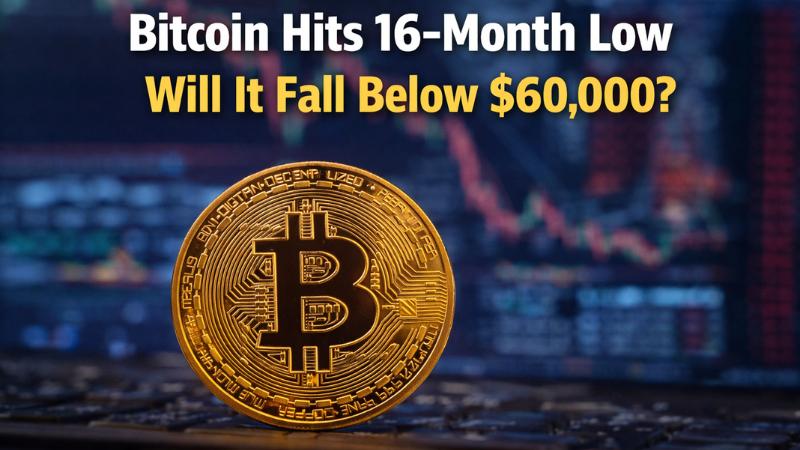
Bitcoin, the world’s largest cryptocurrency, faced a dramatic price drop on February 6, 2026, hitting an intraday low of $60,008.52 during volatile trading. This marks the lowest point for Bitcoin since October 2024. The decline occurred amid a broader selloff across global markets, especially in technology stocks, metals, and other riskier assets, raising concerns about whether Bitcoin could fall below the $60,000 mark in the coming days. After touching this 16-month low, Bitcoin
Bitcoin Drops to 16-Month Low: Is a Fall Below $60,000 Imminent?
Bitcoin, the world’s largest cryptocurrency, faced a dramatic price drop on February 6, 2026, hitting an intraday low of $60,008.52 during volatile trading. This marks the lowest point for Bitcoin since October 2024. The decline occurred amid a broader selloff across global markets, especially in technology stocks, metals, and other riskier assets, raising concerns about whether Bitcoin could fall below the $60,000 mark in the coming days. After touching this 16-month low, Bitcoin
Sundar Pichai warns AI boom carries risks as global excitement surges
Google chief executive Sundar Pichai has urged caution as global enthusiasm for artificial intelligence continues to fuel record valuations and intense competition across the technology sector. In an interview, Pichai described the present moment as remarkable for innovation, yet marked by clear signs that investor expectations may be stretching beyond what the industry can sustain. His comments arrive at a time when comparisons to previous periods of market exuberance, particularly the late
Sundar Pichai warns AI boom carries risks as global excitement surges
Google chief executive Sundar Pichai has urged caution as global enthusiasm for artificial intelligence continues to fuel record valuations and intense competition across the technology sector. In an interview, Pichai described the present moment as remarkable for innovation, yet marked by clear signs that investor expectations may be stretching beyond what the industry can sustain. His comments arrive at a time when comparisons to previous periods of market exuberance, particularly the late
Buffett finally buys into Google parent Alphabet with multibillion-dollar stake
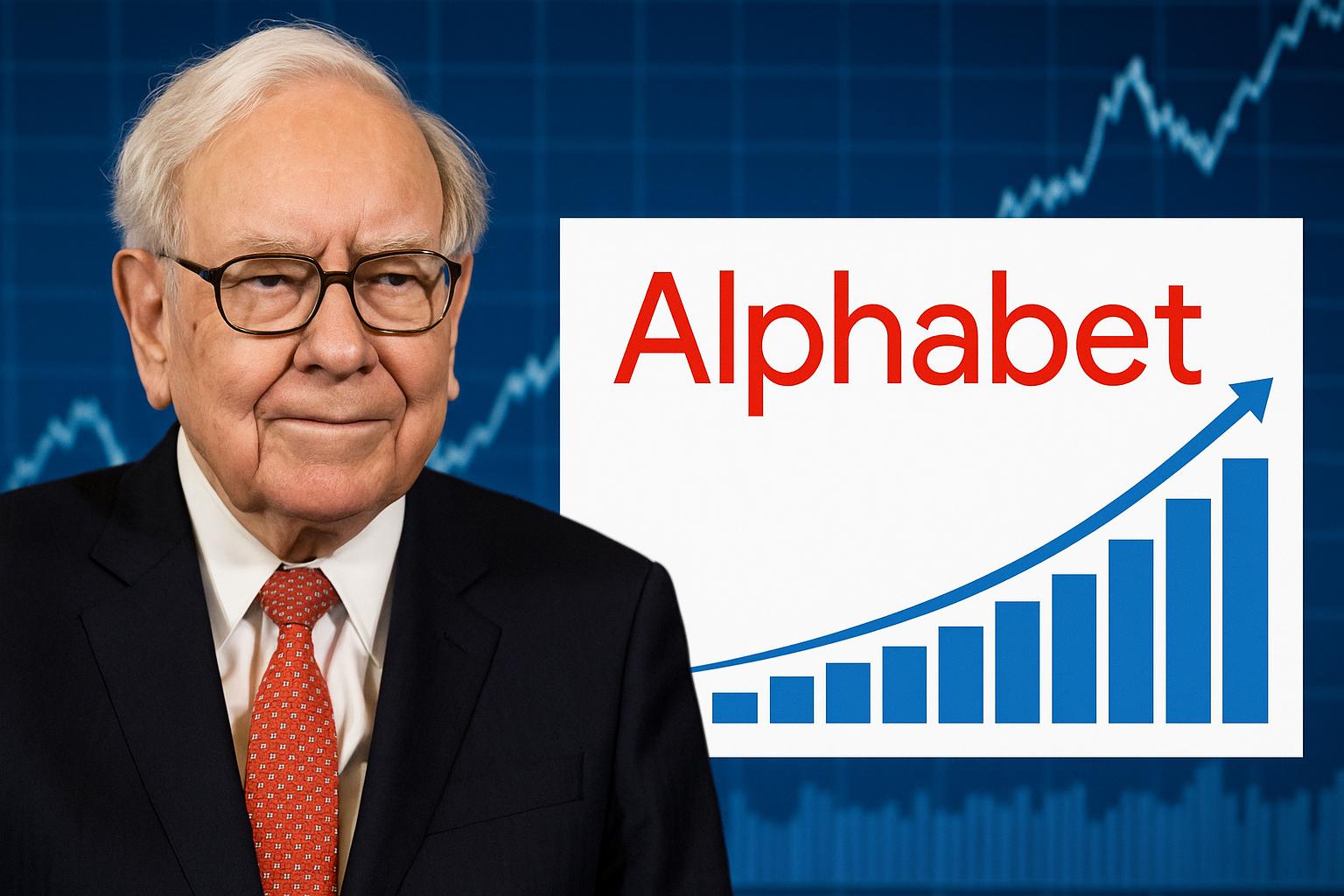
Warren Buffett has long admitted that one of his biggest investing oversights was failing to buy shares of Google in its early years. Two decades later, that regret has turned into action. Berkshire Hathaway has disclosed a new position in Alphabet Inc valued at approximately 4.3 billion US dollars, marking one of the most notable shifts in the firm’s long-standing investment philosophy. The announcement immediately boosted market sentiment around Alphabet, with shares rising after the fili
Buffett finally buys into Google parent Alphabet with multibillion-dollar stake
Warren Buffett has long admitted that one of his biggest investing oversights was failing to buy shares of Google in its early years. Two decades later, that regret has turned into action. Berkshire Hathaway has disclosed a new position in Alphabet Inc valued at approximately 4.3 billion US dollars, marking one of the most notable shifts in the firm’s long-standing investment philosophy. The announcement immediately boosted market sentiment around Alphabet, with shares rising after the fili
"Base Metals Trading: Key Factors, Market Trends, and Trading Strategies"
Base metals, including copper, zinc, aluminum, and lead, are essential to various industries due to their widespread availability and cost-effectiveness. Unlike precious metals such as gold and silver, base metals are heavily mined and traded on global exchanges like the London Metal Exchange (LME) and the Multi Commodity Exchange (MCX). Their significance spans across manufacturing, infrastructure, and construction, making them crucial to economic growth and development. The p
"Base Metals Trading: Key Factors, Market Trends, and Trading Strategies"
Base metals, including copper, zinc, aluminum, and lead, are essential to various industries due to their widespread availability and cost-effectiveness. Unlike precious metals such as gold and silver, base metals are heavily mined and traded on global exchanges like the London Metal Exchange (LME) and the Multi Commodity Exchange (MCX). Their significance spans across manufacturing, infrastructure, and construction, making them crucial to economic growth and development. The p