#medicine
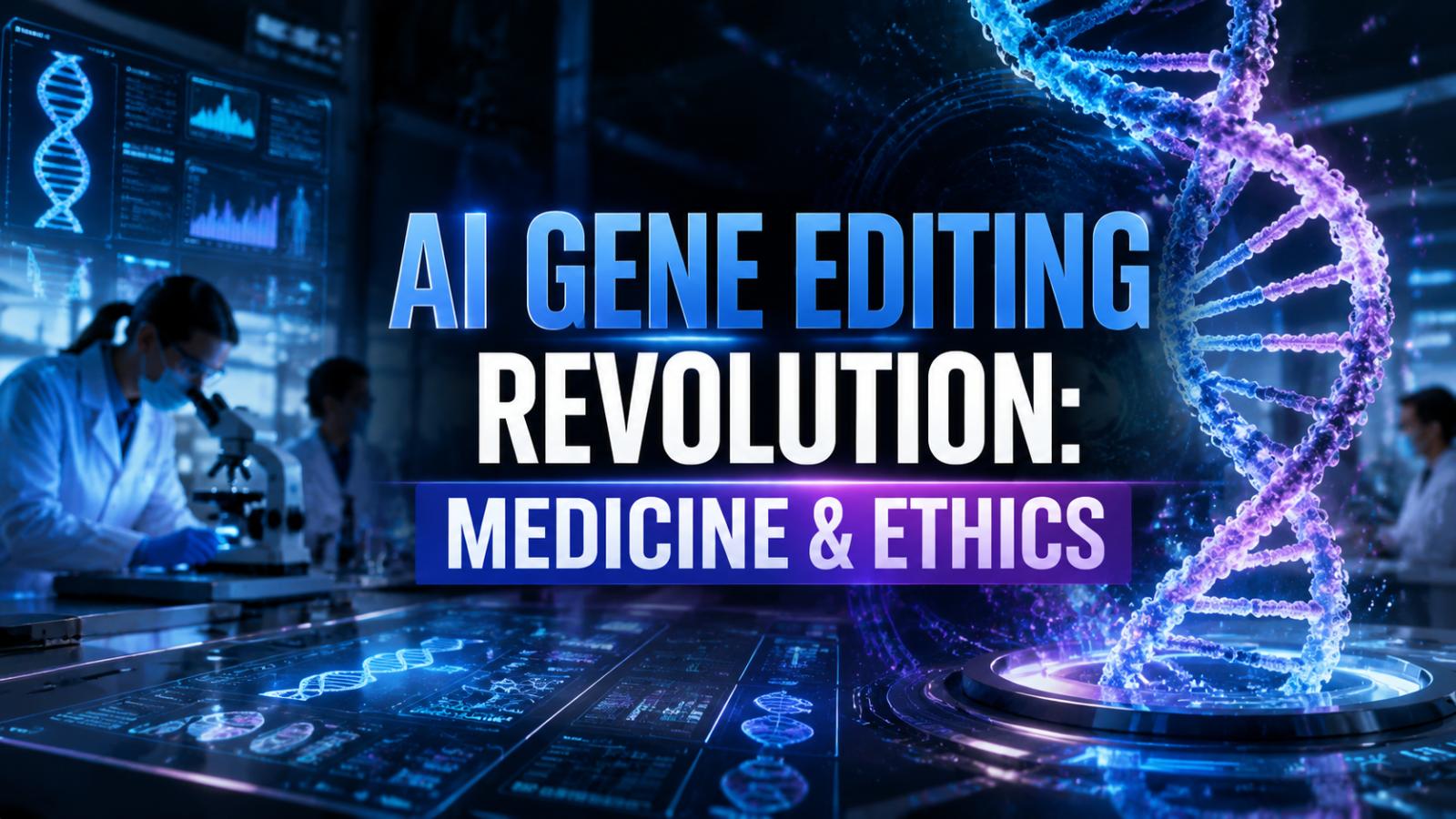
Artificial intelligence reshapes genome editing and ethics debate
AI gene editing is rapidly changing how scientists understand and treat human diseases. Artificial intelligence now helps researchers study DNA faster, identify harmful mutations, and design improved therapies. By analyzing large sets of genetic data, AI reduces the time needed for discovery and supports more accurate medical research. This progress is helping scientists explore treatments for diseases that were once considered difficult or impossible to cure, making gene-based medicine more practical and efficient. AI accelerates genome research Artificial intelligence systems process huge volumes of genomic data and detect patterns that are too complex for traditional methods. These systems predict how gene changes may affect the human body and help researchers test ideas digitally before real lab experiments. This reduces cost, saves time, and increases accuracy in genetic research. It also allows scientists to better understand rare diseases and develop targeted treatment strategies. Advanced gene editing tools New AI-powered tools such as OpenCRISPR, DeepGenomics, and predictive editing models are improving precision in DNA modification. These systems help reduce errors during gene editing and improve safety by predicting off-target effects. They also allow researchers to simulate genetic changes before applying them in real biological systems, making experiments more controlled and reliable. Ethical and safety concerns Despite its benefits, AI gene editing raises serious concerns about misuse and safety. Easy access to synthetic DNA and limited oversight in some research environments can increase risks. The same technology that helps cure diseases could also be misused if not properly regulated. This makes strong monitoring and responsible use essential for protecting public health. Need for global regulation Experts recommend strict global rules for AI-driven gene editing. These include screening synthetic DNA orders, maintaining detailed lab records, and ensuring transparency in research. International cooperation is also necessary to prevent misuse and strengthen biosecurity systems. Ethical guidelines must guide research, especially in sensitive areas like embryo editing and human genetic modification. Balancing progress and responsibility AI gene editing offers major benefits in medicine, including faster drug development, precision treatments, and better understanding of human genetics. However, these advances must be balanced with strong safety measures. Responsible use of technology, combined with global cooperation, will ensure that AI improves healthcare without creating new biological risks.
Artificial intelligence reshapes genome editing and ethics debate
AI gene editing is rapidly changing how scientists understand and treat human diseases. Artificial intelligence now helps researchers study DNA faster, identify harmful mutations, and design improved therapies. By analyzing large sets of genetic data, AI reduces the time needed for discovery and supports more accurate medical research. This progress is helping scientists explore treatments for diseases that were once considered difficult or impossible to cure, making gene-based medicine more practical and efficient. AI accelerates genome research Artificial intelligence systems process huge volumes of genomic data and detect patterns that are too complex for traditional methods. These systems predict how gene changes may affect the human body and help researchers test ideas digitally before real lab experiments. This reduces cost, saves time, and increases accuracy in genetic research. It also allows scientists to better understand rare diseases and develop targeted treatment strategies. Advanced gene editing tools New AI-powered tools such as OpenCRISPR, DeepGenomics, and predictive editing models are improving precision in DNA modification. These systems help reduce errors during gene editing and improve safety by predicting off-target effects. They also allow researchers to simulate genetic changes before applying them in real biological systems, making experiments more controlled and reliable. Ethical and safety concerns Despite its benefits, AI gene editing raises serious concerns about misuse and safety. Easy access to synthetic DNA and limited oversight in some research environments can increase risks. The same technology that helps cure diseases could also be misused if not properly regulated. This makes strong monitoring and responsible use essential for protecting public health. Need for global regulation Experts recommend strict global rules for AI-driven gene editing. These include screening synthetic DNA orders, maintaining detailed lab records, and ensuring transparency in research. International cooperation is also necessary to prevent misuse and strengthen biosecurity systems. Ethical guidelines must guide research, especially in sensitive areas like embryo editing and human genetic modification. Balancing progress and responsibility AI gene editing offers major benefits in medicine, including faster drug development, precision treatments, and better understanding of human genetics. However, these advances must be balanced with strong safety measures. Responsible use of technology, combined with global cooperation, will ensure that AI improves healthcare without creating new biological risks.
India Makes Cough Syrups Prescription Only Under New Drug Rule 2026
Government restricts cough syrup sales under new prescription rule The Government of India has introduced a strict regulatory change that makes cough syrups and other medicinal syrup-based formulations available only against a valid prescription from a registered medical practitioner. The decision comes through an amendment to the Drugs Rules, 1945, and represents a major shift in how over-the-counter medi
India Makes Cough Syrups Prescription Only Under New Drug Rule 2026
Government restricts cough syrup sales under new prescription rule The Government of India has introduced a strict regulatory change that makes cough syrups and other medicinal syrup-based formulations available only against a valid prescription from a registered medical practitioner. The decision comes through an amendment to the Drugs Rules, 1945, and represents a major shift in how over-the-counter medi
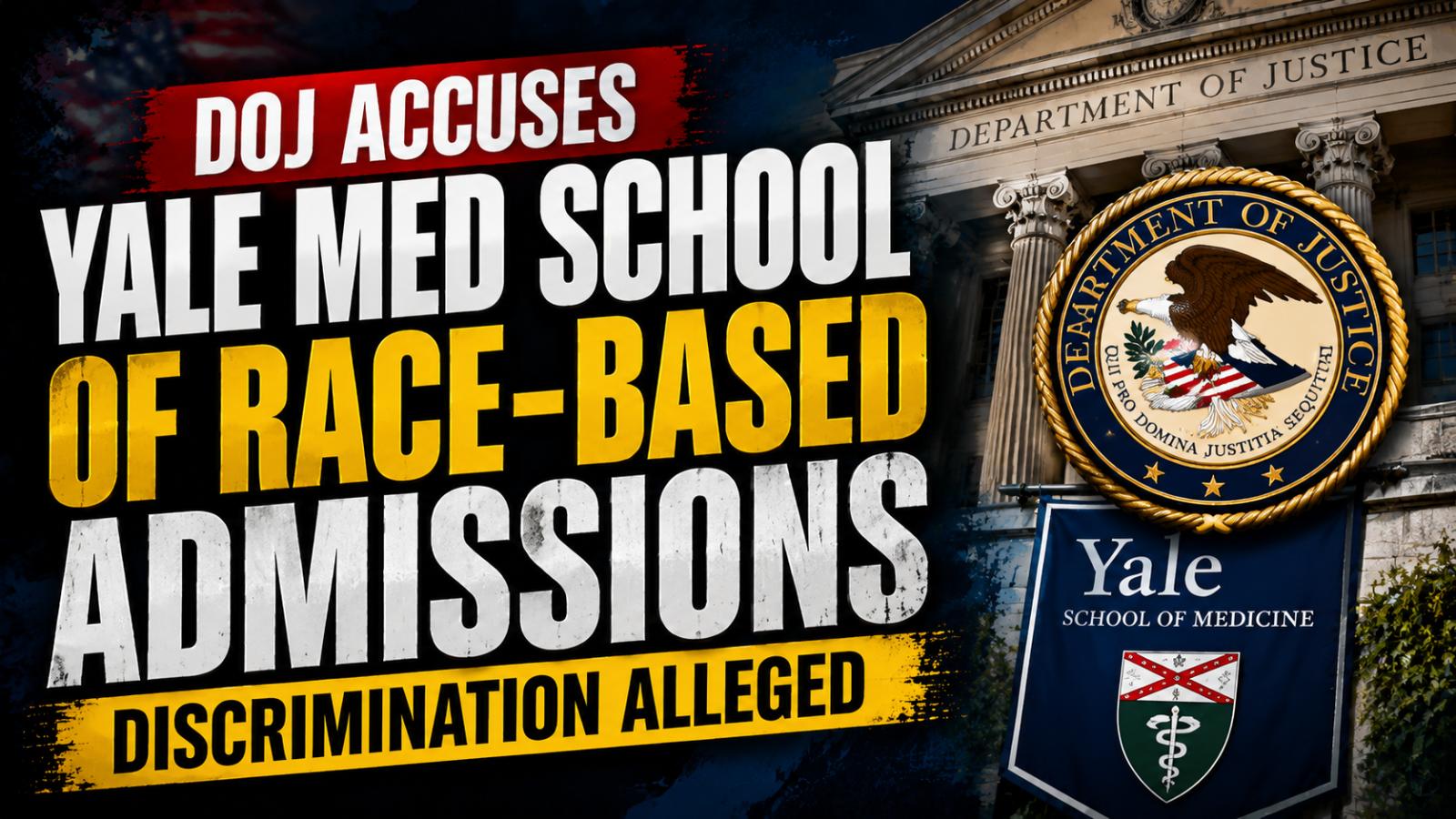
DOJ Accuses Yale of Admissions Bias
Federal Accusations Against Yale The United States Department of Justice on Thursday, May 14, 2026, accused Yale School of Medicine of discriminating against white and Asian applicants. The allegations follow a year-long federal investigation into the university’s diversity-focused admissions practices. According to the Justice Department, Yale leadership intentionally selected applicants based on race, resulting in Black
DOJ Accuses Yale of Admissions Bias
Federal Accusations Against Yale The United States Department of Justice on Thursday, May 14, 2026, accused Yale School of Medicine of discriminating against white and Asian applicants. The allegations follow a year-long federal investigation into the university’s diversity-focused admissions practices. According to the Justice Department, Yale leadership intentionally selected applicants based on race, resulting in Black
India, Vietnam unveil roadmap to boost bilateral trade to $25 billion by 2030
India and Vietnam have agreed to strengthen their economic ties with an ambitious goal of increasing bilateral trade to USD 25 billion by 2030. This announcement, made by Prime Minister Narendra Modi on May 6, 2026, is part of a new strategic roadmap designed to expand economic and sector-specific cooperation between the two countries. The announcement was made following the signing of several Memoranda of Understanding (MoUs) at Hyderabad House in Delhi by PM Modi and Vietnam's President To
India, Vietnam unveil roadmap to boost bilateral trade to $25 billion by 2030
India and Vietnam have agreed to strengthen their economic ties with an ambitious goal of increasing bilateral trade to USD 25 billion by 2030. This announcement, made by Prime Minister Narendra Modi on May 6, 2026, is part of a new strategic roadmap designed to expand economic and sector-specific cooperation between the two countries. The announcement was made following the signing of several Memoranda of Understanding (MoUs) at Hyderabad House in Delhi by PM Modi and Vietnam's President To
BJP Attacks Siddaramaiah Govt Over Health System Failures, Job Vacancies, and Corruption
Karnataka BJP Chief BY Vijayendra launched a scathing attack on Chief Minister Siddaramaiah and his government, accusing them of "lying and cheating" instead of addressing the state's critical issues. Speaking at a press conference, Vijayendra questioned the long-standing leadership of Siddaramaiah, who has presented the state budget a record-breaking 16 times, and demanded that the CM provide solutions to the burning problems facing Karnataka, rather than continuing to offer excuses.
BJP Attacks Siddaramaiah Govt Over Health System Failures, Job Vacancies, and Corruption
Karnataka BJP Chief BY Vijayendra launched a scathing attack on Chief Minister Siddaramaiah and his government, accusing them of "lying and cheating" instead of addressing the state's critical issues. Speaking at a press conference, Vijayendra questioned the long-standing leadership of Siddaramaiah, who has presented the state budget a record-breaking 16 times, and demanded that the CM provide solutions to the burning problems facing Karnataka, rather than continuing to offer excuses.
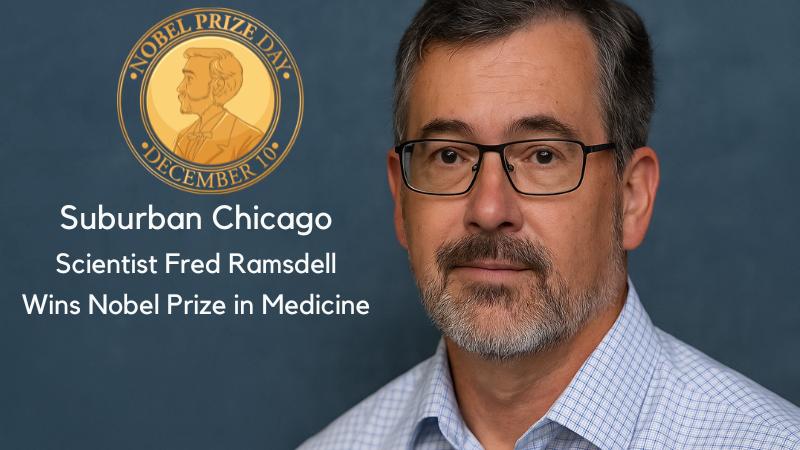
Suburban Chicago Scientist Fred Ramsdell Wins Nobel Prize in Medicine
A suburban Chicago native, Fred Ramsdell, has earned one of science’s highest honors, sharing the 2025 Nobel Prize in Physiology or Medicine with Mary E. Brunkow and Dr. Shimon Sakaguchi for their pioneering discoveries on peripheral immune tolerance. Their groundbreaking work unveiled how the body prevents immune cells from attacking its own tissues—a finding that has revolutionized the field of immunology and paved the way for new treatments for autoimmune diseases and cancer.
Suburban Chicago Scientist Fred Ramsdell Wins Nobel Prize in Medicine
A suburban Chicago native, Fred Ramsdell, has earned one of science’s highest honors, sharing the 2025 Nobel Prize in Physiology or Medicine with Mary E. Brunkow and Dr. Shimon Sakaguchi for their pioneering discoveries on peripheral immune tolerance. Their groundbreaking work unveiled how the body prevents immune cells from attacking its own tissues—a finding that has revolutionized the field of immunology and paved the way for new treatments for autoimmune diseases and cancer.
How IBM Watson Is Changing the Healthcare Industry
The healthcare industry has always been driven by innovation, but the integration of artificial intelligence is pushing it into a new era. At the forefront of this transformation is IBM Watson, a cognitive computing system that’s redefining how medical professionals diagnose, treat, and manage diseases. By analyzing vast amounts of data quickly and accurately, IBM Watson is helping doctors make more informed decisions, ultimately improving patient outcomes. One of the key ways
How IBM Watson Is Changing the Healthcare Industry
The healthcare industry has always been driven by innovation, but the integration of artificial intelligence is pushing it into a new era. At the forefront of this transformation is IBM Watson, a cognitive computing system that’s redefining how medical professionals diagnose, treat, and manage diseases. By analyzing vast amounts of data quickly and accurately, IBM Watson is helping doctors make more informed decisions, ultimately improving patient outcomes. One of the key ways
PM Modi Launches Genome India Data for Biotechnology Research
On Thursday, Prime Minister Narendra Modi unveiled the genome sequencing data of 10,000 Indian nationals, a significant step in advancing biotechnology research in India. This data, known as Genome India Data, encapsulates the vast genetic diversity of the Indian population and will be available to researchers through the Indian Biological Data Centre (IBDC) with "managed access." PM Modi highlighted that the national database would be crucial in the treatment of genetic and infecti
PM Modi Launches Genome India Data for Biotechnology Research
On Thursday, Prime Minister Narendra Modi unveiled the genome sequencing data of 10,000 Indian nationals, a significant step in advancing biotechnology research in India. This data, known as Genome India Data, encapsulates the vast genetic diversity of the Indian population and will be available to researchers through the Indian Biological Data Centre (IBDC) with "managed access." PM Modi highlighted that the national database would be crucial in the treatment of genetic and infecti
FDA Seizes Fake Medicines Worth Rs 1.85 Crore in Maharashtra Raids
Officials from the Food and Drug Administration (FDA) have seized counterfeit drugs worth Rs 1.85 crore after conducting raids at two locations in Maharashtra’s Thane district. The raids, which took place in Bhiwandi and Mira Road over the past few months, uncovered a scheme where the accused were manufacturing and selling spurious medicines while falsely branding them as original products. The drugs were distributed across several states, deceiving patients and jeopardizing p
FDA Seizes Fake Medicines Worth Rs 1.85 Crore in Maharashtra Raids
Officials from the Food and Drug Administration (FDA) have seized counterfeit drugs worth Rs 1.85 crore after conducting raids at two locations in Maharashtra’s Thane district. The raids, which took place in Bhiwandi and Mira Road over the past few months, uncovered a scheme where the accused were manufacturing and selling spurious medicines while falsely branding them as original products. The drugs were distributed across several states, deceiving patients and jeopardizing p