





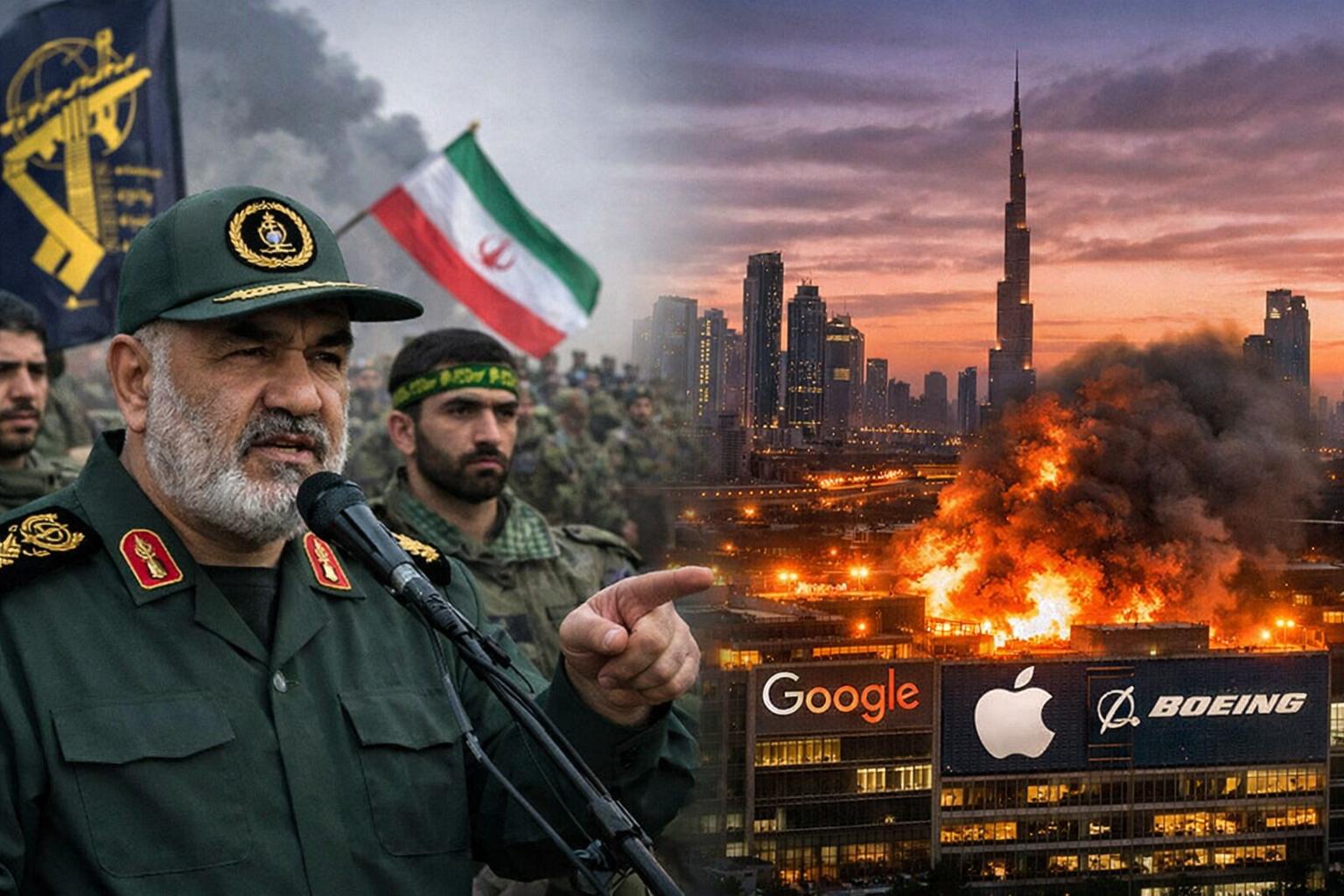
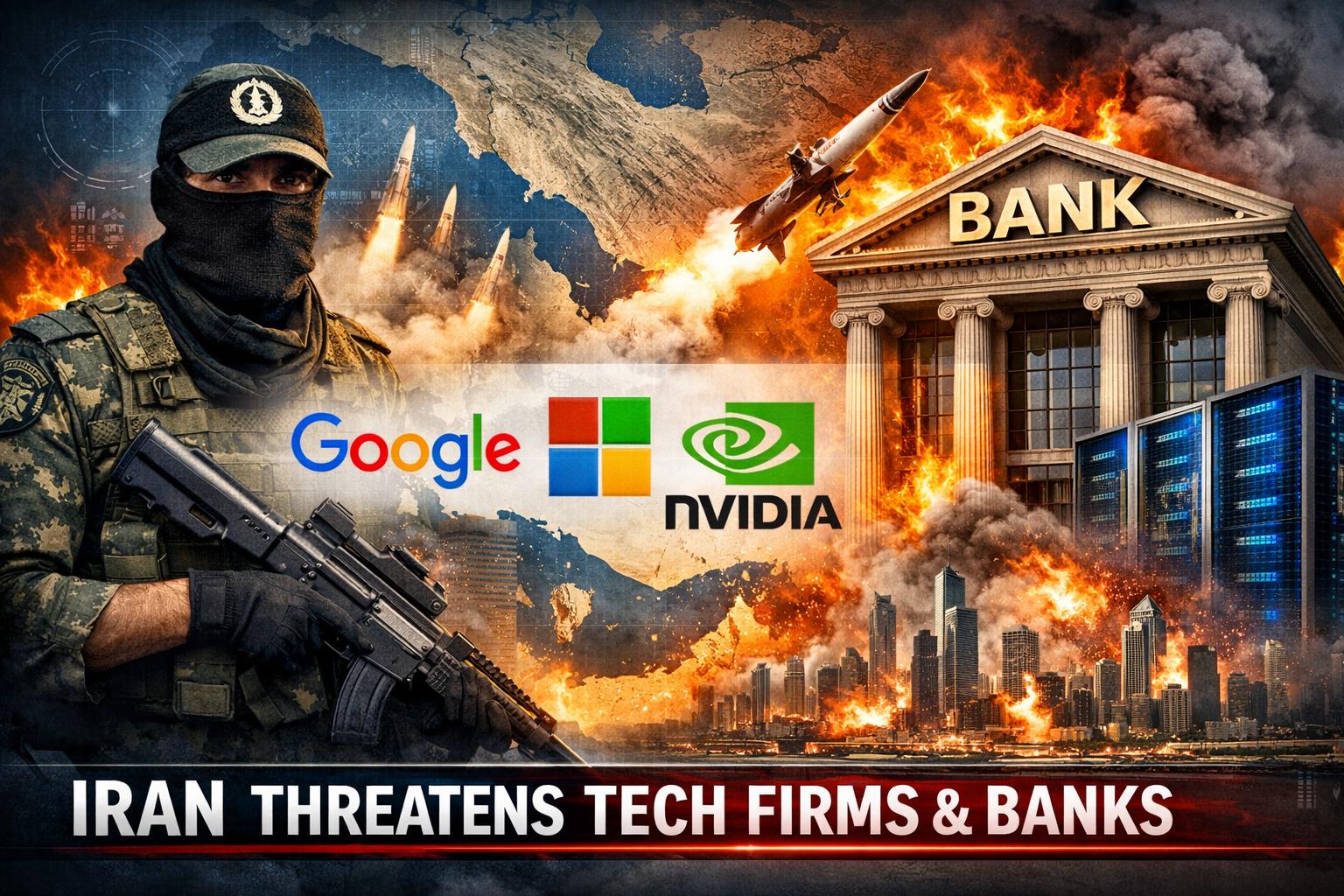












Iran’s Islamic Revolutionary Guard Corps (IRGC) issued a warning on Tuesday, March 31, 2026, stating it would target major American companies operating across West Asia and the Gulf if further Iranian leaders are killed in what it described as “targeted assassinations.” The statement marks a significant escalation in tensions, as the IRGC directly named 18 prominent U.S.-based firms and warned of potential retaliation against their regional facilities. Among the companies identified we
Tensions in the Middle East have entered a new phase after Iran warned that it could target economic infrastructure and facilities linked to major international technology companies as the regional conflict continues to intensify. The warning indicates a shift in the nature of modern warfare, where economic systems, financial institutions, and technology infrastructure are increasingly viewed as strategic targets alongside conventional military installations. A spokesperson for Khatam
The Middle East is rapidly positioning itself as a significant force in global technology, with countries like Saudi Arabia, the United Arab Emirates, and Qatar taking bold steps to attract international tech investors and build local capacity. These nations are not only signing multibillion-dollar deals but also enacting legal reforms, fostering startup ecosystems, and constructing the infrastructure needed to support advanced artificial intelligence systems and cloud-based technologies. Thi