










#modi-in-europe
G7 Evian leaders informal chat sparks viral buzz
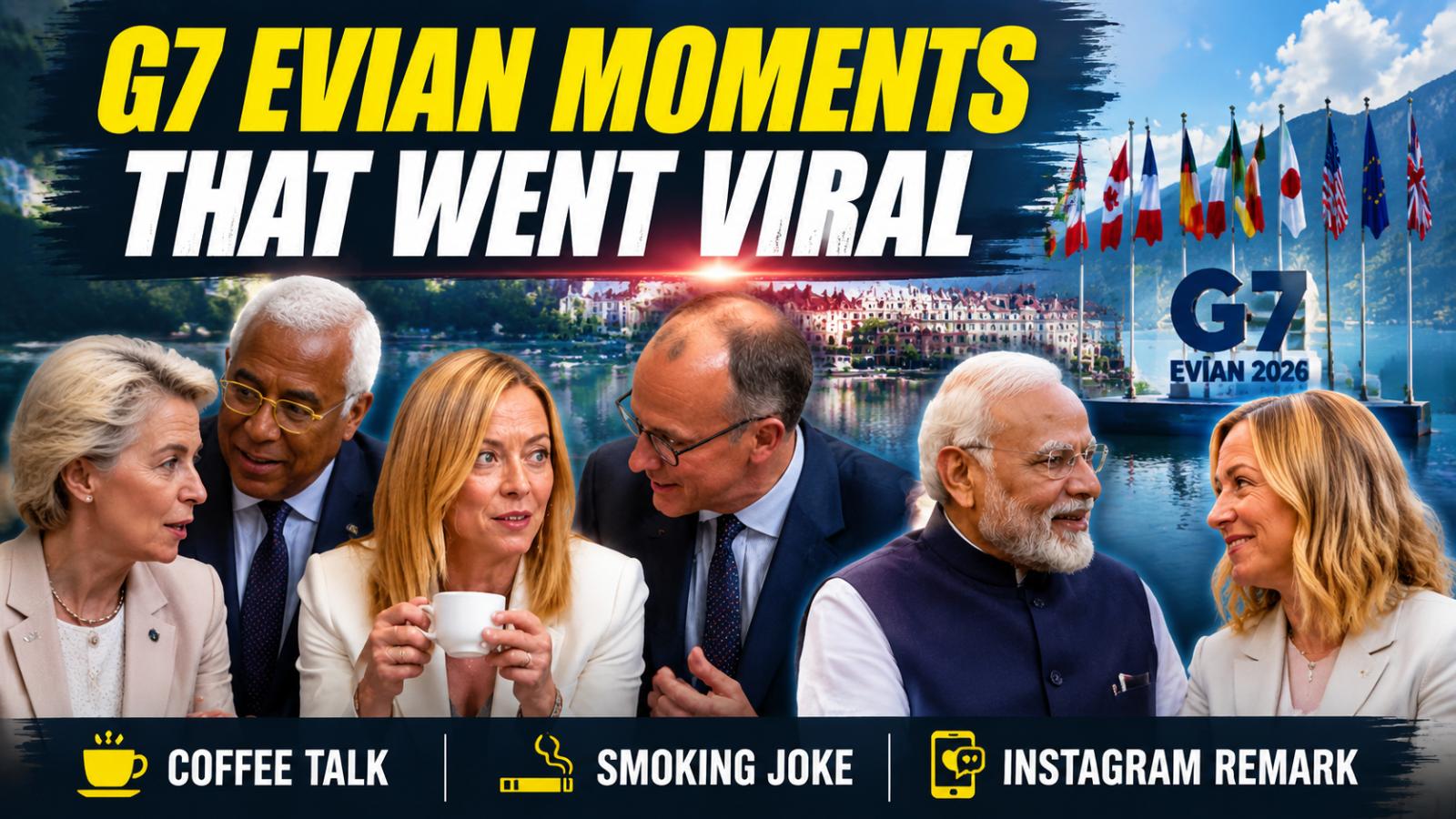
At the G7 gathering in Evian, moments outside official discussions drew unexpected attention as world leaders were seen engaging in relaxed conversation. Italian Prime Minister Giorgia Meloni was part of a brief informal exchange with several European counterparts, where everyday topics such as coffee habits and lifestyle choices surfaced during a pause between sessions. The interaction quickly spread across social platforms, overshadowing parts of the formal agenda in online discussions. Light remarks on personal habits draw reactions During the interaction, discussions shifted to routine habits, with references to coffee consumption and smoking-related comments among leaders including Friedrich Merz, Ursula von der Leyen, Antonio Costa and Keir Starmer. Meloni’s mention of recently changing personal habits added a relatable tone to the exchange, prompting light reactions from others in the group. The unscripted nature of the conversation contributed to its rapid circulation online, where short clips gained traction within hours. Modi and Meloni brief exchange becomes symbolic online moment A separate moment during the leaders’ photo session involving Indian Prime Minister Narendra Modi and Giorgia Meloni also gained attention online. Their brief exchange, followed by remarks about their visibility on social media platforms, was widely shared by users who often highlight their diplomatic rapport in informal contexts. While the comment was light in tone, it reinforced how global leaders’ public interactions are increasingly interpreted through a digital and cultural lens. Informal diplomacy shapes online perception Although the summit primarily focused on global economic and strategic issues, the viral spread of these informal exchanges highlighted a growing shift in how international events are consumed. Short, unscripted moments now often travel faster than official statements, influencing public perception of diplomacy. The Evian summit became another example of how modern political communication extends beyond negotiation rooms into real-time social media narratives.
G7 Evian leaders informal chat sparks viral buzz
At the G7 gathering in Evian, moments outside official discussions drew unexpected attention as world leaders were seen engaging in relaxed conversation. Italian Prime Minister Giorgia Meloni was part of a brief informal exchange with several European counterparts, where everyday topics such as coffee habits and lifestyle choices surfaced during a pause between sessions. The interaction quickly spread across social platforms, overshadowing parts of the formal agenda in online discussions. Light remarks on personal habits draw reactions During the interaction, discussions shifted to routine habits, with references to coffee consumption and smoking-related comments among leaders including Friedrich Merz, Ursula von der Leyen, Antonio Costa and Keir Starmer. Meloni’s mention of recently changing personal habits added a relatable tone to the exchange, prompting light reactions from others in the group. The unscripted nature of the conversation contributed to its rapid circulation online, where short clips gained traction within hours. Modi and Meloni brief exchange becomes symbolic online moment A separate moment during the leaders’ photo session involving Indian Prime Minister Narendra Modi and Giorgia Meloni also gained attention online. Their brief exchange, followed by remarks about their visibility on social media platforms, was widely shared by users who often highlight their diplomatic rapport in informal contexts. While the comment was light in tone, it reinforced how global leaders’ public interactions are increasingly interpreted through a digital and cultural lens. Informal diplomacy shapes online perception Although the summit primarily focused on global economic and strategic issues, the viral spread of these informal exchanges highlighted a growing shift in how international events are consumed. Short, unscripted moments now often travel faster than official statements, influencing public perception of diplomacy. The Evian summit became another example of how modern political communication extends beyond negotiation rooms into real-time social media narratives.
Zelenskyy Counters Trump: India Mostly With Ukraine Calls For Stronger EU-India Ties
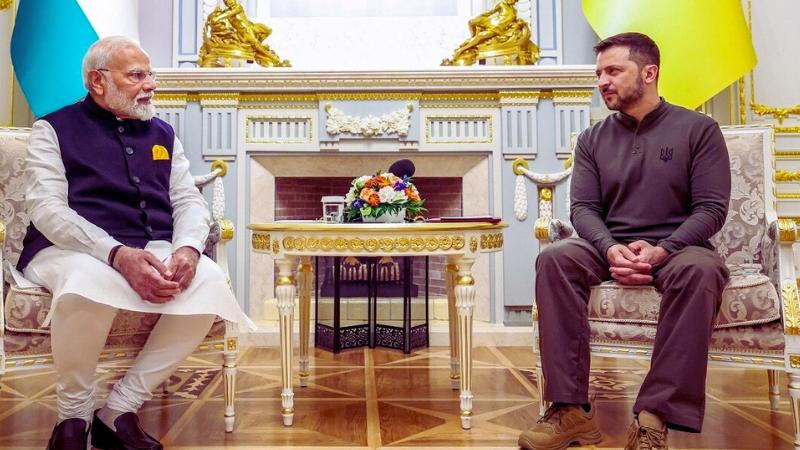
Ukrainian President Volodymyr Zelenskyy has pushed back against US President Donald Trump’s claims that India is “funding Russia’s war in Ukraine.” Speaking in an interview with Fox News, Zelenskyy stated that “India is mostly with us” while acknowledging ongoing energy challenges that complicate the picture. His comments came after Trump, during a speech at the 80th session of the United Nations General Assembly (UNGA), dir
Zelenskyy Counters Trump: India Mostly With Ukraine Calls For Stronger EU-India Ties
Ukrainian President Volodymyr Zelenskyy has pushed back against US President Donald Trump’s claims that India is “funding Russia’s war in Ukraine.” Speaking in an interview with Fox News, Zelenskyy stated that “India is mostly with us” while acknowledging ongoing energy challenges that complicate the picture. His comments came after Trump, during a speech at the 80th session of the United Nations General Assembly (UNGA), dir
PM Narendra Modi's Historic Visit to Poland Marks a Shift in India's Foreign Policy
Prime Minister Narendra Modi is making headlines with his historic visit to Poland, marking the first visit by an Indian Prime Minister in more than 40 years. This visit underscores a major shift in India’s foreign policy, moving from a stance of distance to one of active engagement and connectivity. Modi humorously noted that this visit, along with his recent trip to Austria, represents a series of diplomatic "firsts" reflecting India's evolving international strategy.
PM Narendra Modi's Historic Visit to Poland Marks a Shift in India's Foreign Policy
Prime Minister Narendra Modi is making headlines with his historic visit to Poland, marking the first visit by an Indian Prime Minister in more than 40 years. This visit underscores a major shift in India’s foreign policy, moving from a stance of distance to one of active engagement and connectivity. Modi humorously noted that this visit, along with his recent trip to Austria, represents a series of diplomatic "firsts" reflecting India's evolving international strategy.


