#monetarypolicy
Who Was Alan Greenspan? His Fed Career and Economic Legacy
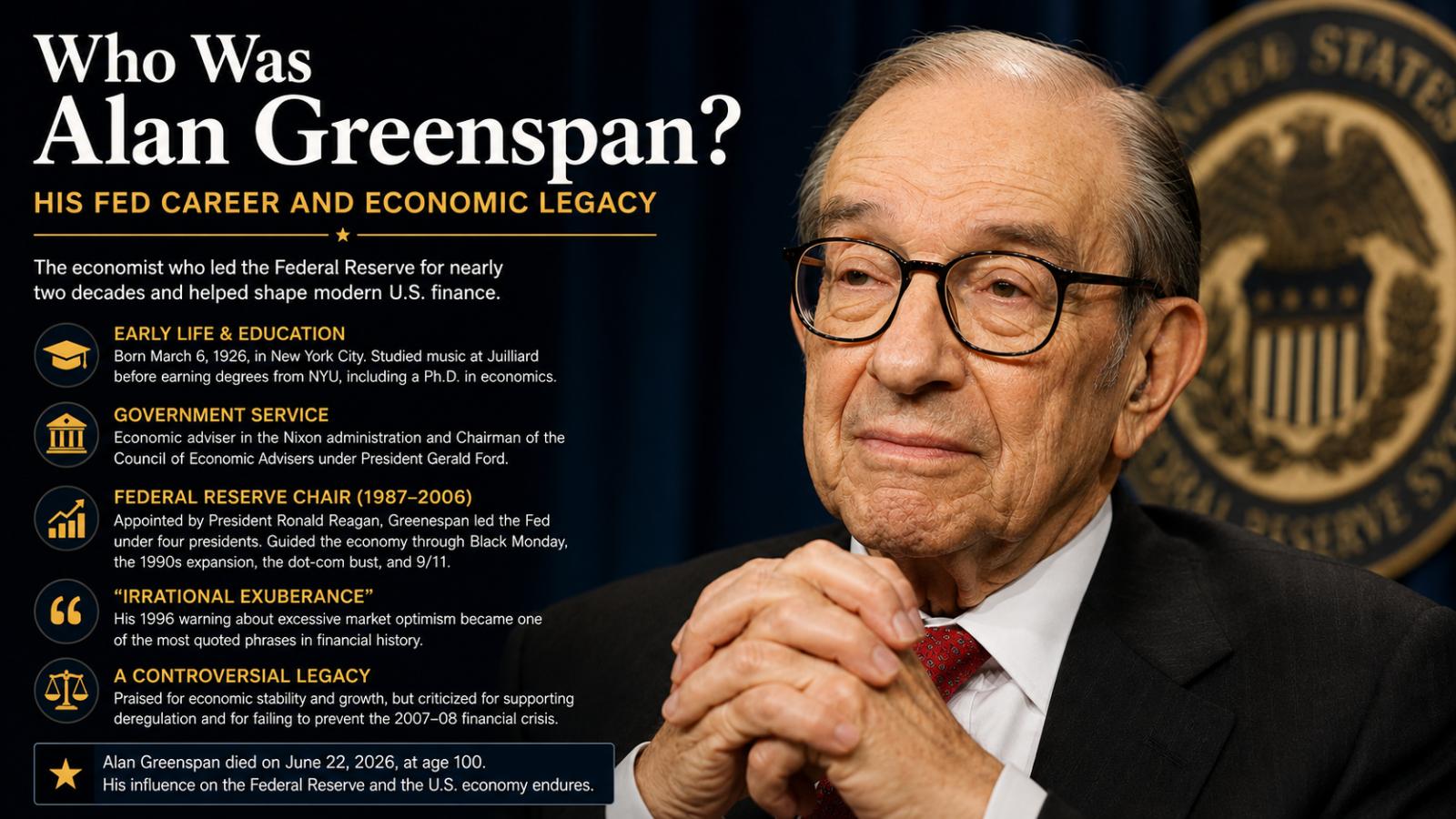
Who was Alan Greenspan? He was one of the most influential—and disputed—central bankers in modern U.S. history, leading the Federal Reserve from 1987 to 2006. Greenspan died on Monday, June 22, 2026, at age 100. His death renewed attention on a career that spanned Wall Street, presidential administrations and nearly two decades at the center of U.S. monetary policy. Who Was Alan Greenspan? Born on March 6, 1926, in New York City, Greenspan
Who Was Alan Greenspan? His Fed Career and Economic Legacy
Who was Alan Greenspan? He was one of the most influential—and disputed—central bankers in modern U.S. history, leading the Federal Reserve from 1987 to 2006. Greenspan died on Monday, June 22, 2026, at age 100. His death renewed attention on a career that spanned Wall Street, presidential administrations and nearly two decades at the center of U.S. monetary policy. Who Was Alan Greenspan? Born on March 6, 1926, in New York City, Greenspan
Alan Greenspan, Former Federal Reserve Chair, Dies at 100
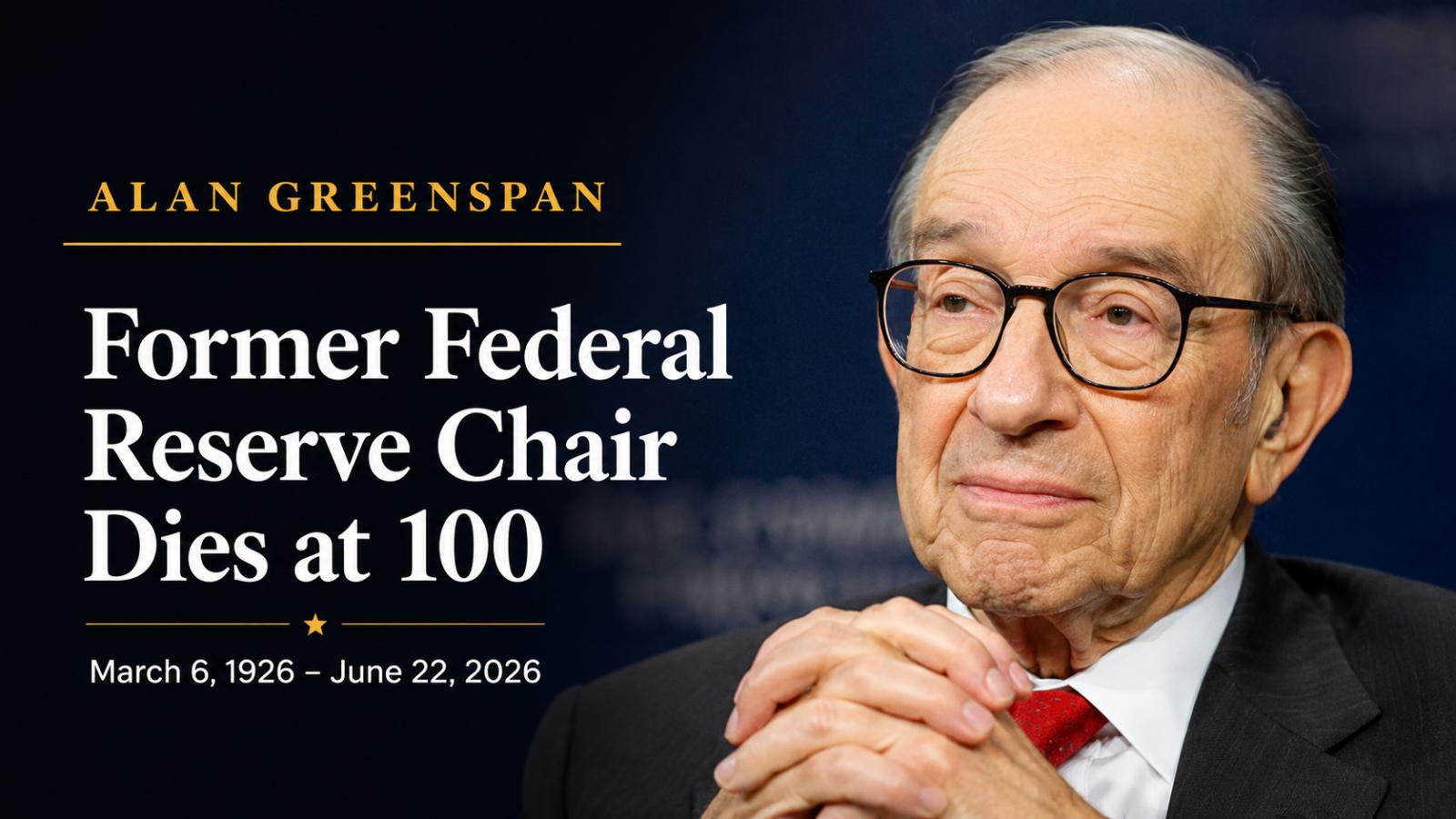
Alan Greenspan, the former Federal Reserve chair who shaped U.S. monetary policy for nearly two decades, died on Monday, June 22, 2026, at age 100. His wife, NBC News correspondent Andrea Mitchell, said Greenspan died at their home from complications of Parkinson’s disease. Alan Greenspan Dies After Nearly Two Decades Leading the Fed Greenspan served as chair of the Federal Res
Alan Greenspan, Former Federal Reserve Chair, Dies at 100
Alan Greenspan, the former Federal Reserve chair who shaped U.S. monetary policy for nearly two decades, died on Monday, June 22, 2026, at age 100. His wife, NBC News correspondent Andrea Mitchell, said Greenspan died at their home from complications of Parkinson’s disease. Alan Greenspan Dies After Nearly Two Decades Leading the Fed Greenspan served as chair of the Federal Res
Former Fed Chair Powell Honored at JFK Ceremony
Jerome Powell Honored at JFK Profile in Courage Award Jerome Powell, former Chair of the Federal Reserve, was honored at the John F. Kennedy Profile in Courage Award ceremony on May 31 in Boston, Massachusetts. The event recognized his steadfast leadership in the financial sector and dedication to public service. The ceremony, organized by the JFK Library Foundation, highlighted Powell’s contributions to s
Former Fed Chair Powell Honored at JFK Ceremony
Jerome Powell Honored at JFK Profile in Courage Award Jerome Powell, former Chair of the Federal Reserve, was honored at the John F. Kennedy Profile in Courage Award ceremony on May 31 in Boston, Massachusetts. The event recognized his steadfast leadership in the financial sector and dedication to public service. The ceremony, organized by the JFK Library Foundation, highlighted Powell’s contributions to s
Kevin Warsh Takes Over as Fed Chair as Trump Urges Independence
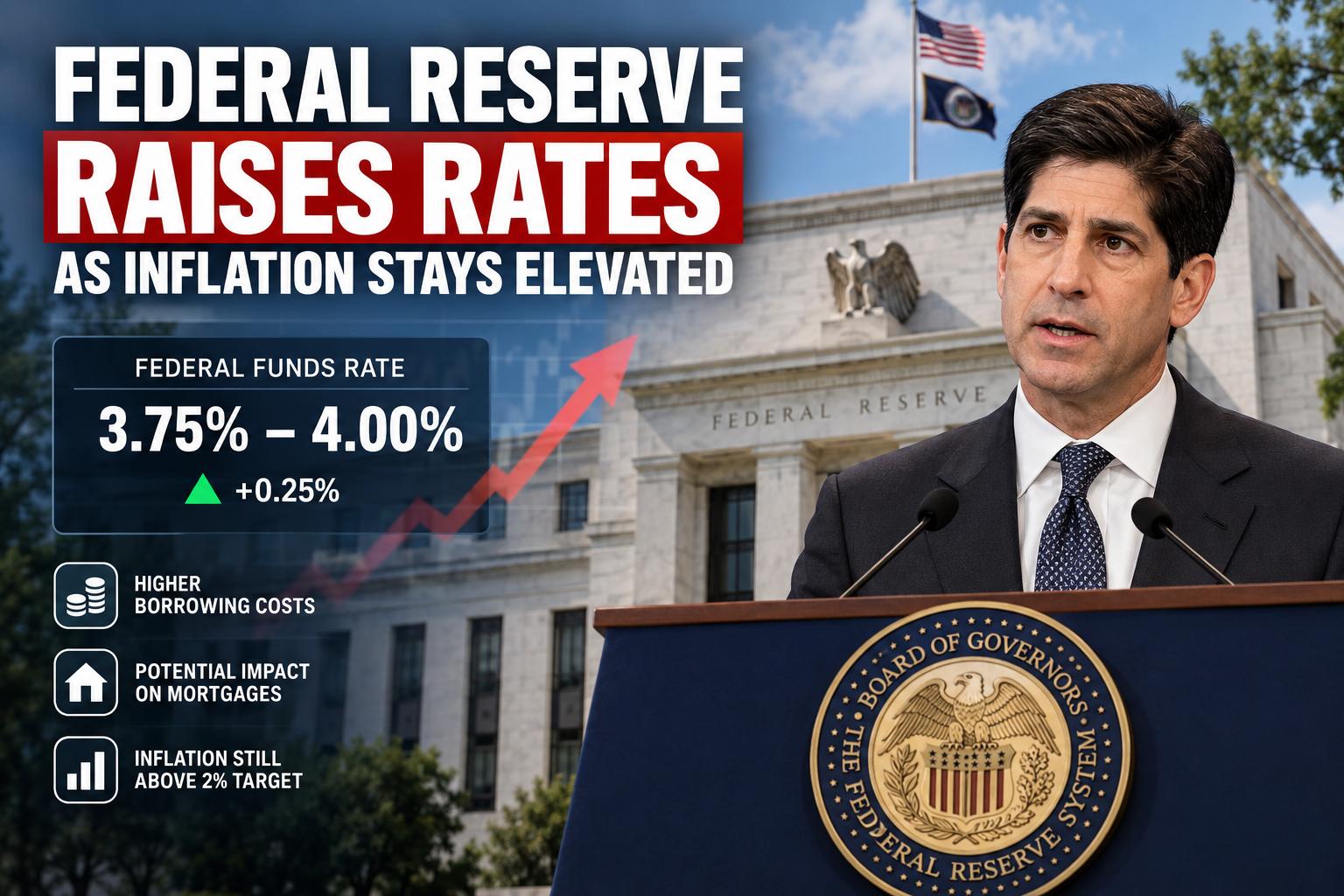
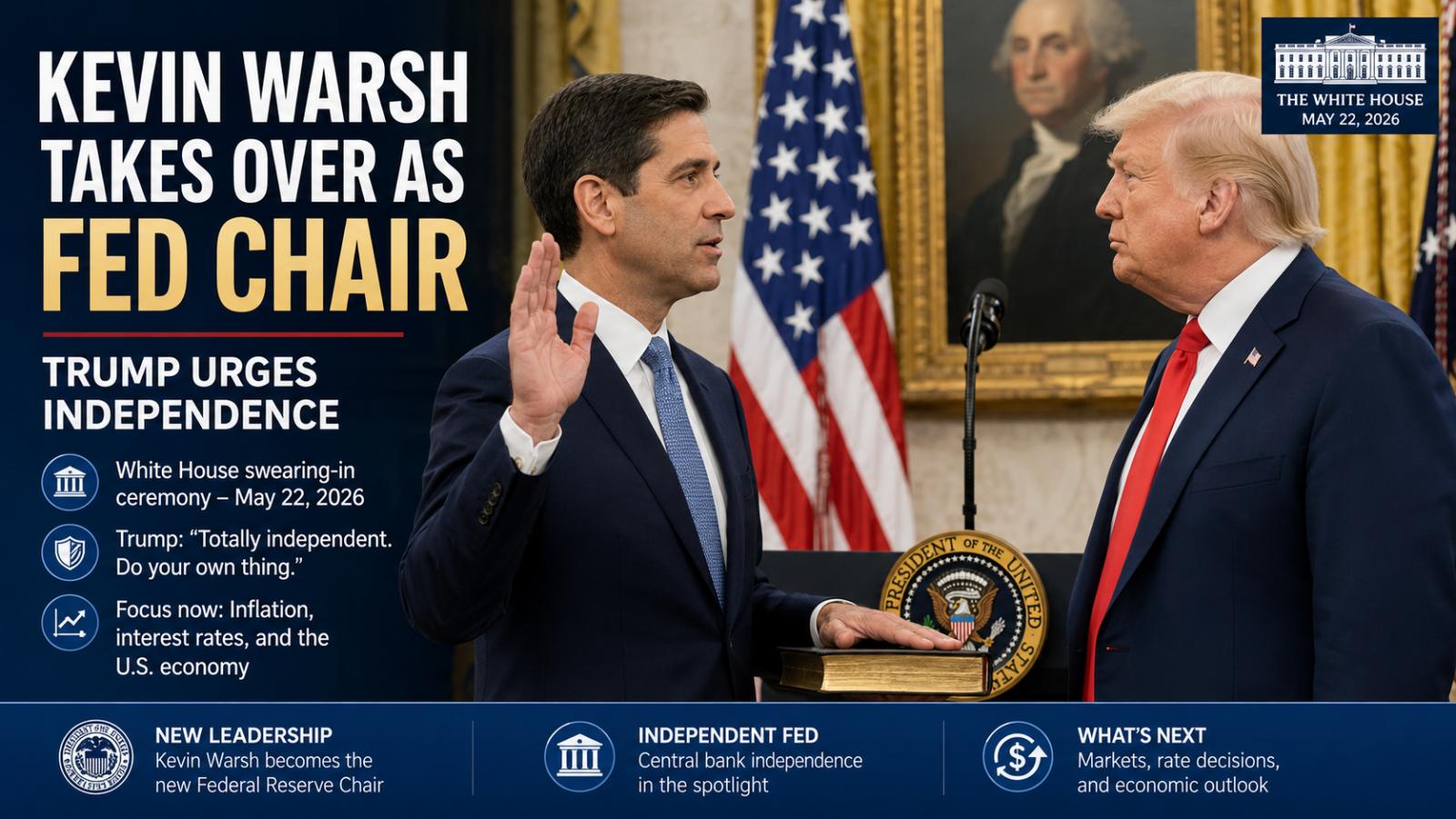
Kevin Warsh took over as Federal Reserve chair at a White House swearing-in ceremony on Friday, May 22, 2026, as President Donald Trump publicly urged him to lead the central bank independently. The transition places Warsh at the center of a politically sensitive moment for the Federal Reserve, with inflation, interest rates and central bank independence all under close national scrutiny. Trump Says Warsh Should Lead Without Political Pressure
Kevin Warsh Takes Over as Fed Chair as Trump Urges Independence
Kevin Warsh took over as Federal Reserve chair at a White House swearing-in ceremony on Friday, May 22, 2026, as President Donald Trump publicly urged him to lead the central bank independently. The transition places Warsh at the center of a politically sensitive moment for the Federal Reserve, with inflation, interest rates and central bank independence all under close national scrutiny. Trump Says Warsh Should Lead Without Political Pressure
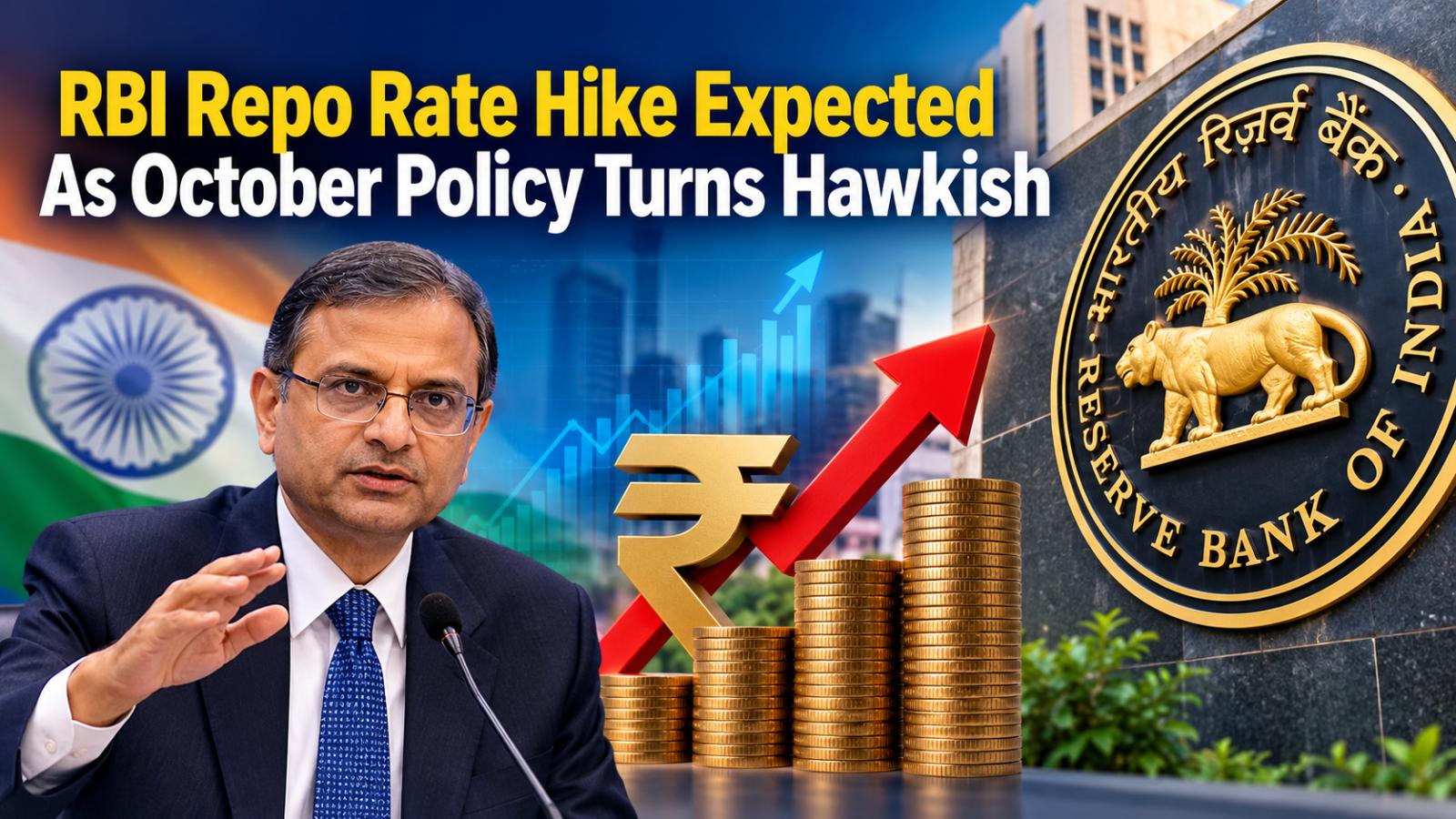
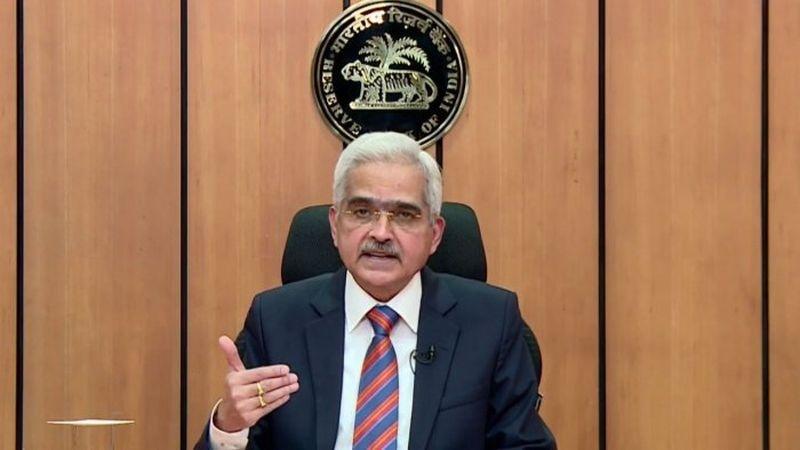
RBI Keeps Repo Rate Steady at 5.25% in First FY27 Monetary Policy
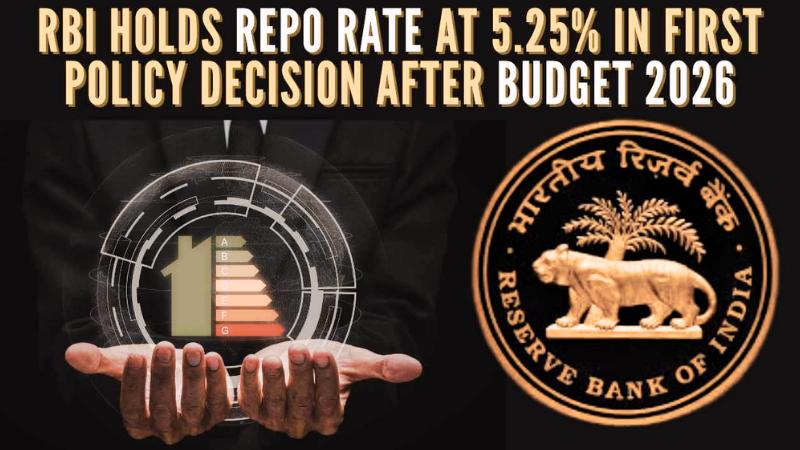
The Reserve Bank of India has kept the policy repo rate unchanged at 5.25% in its first monetary policy announcement for the financial year 2026–27. The decision was announced by RBI Governor Sanjay Malhotra following a detaile
RBI Keeps Repo Rate Steady at 5.25% in First FY27 Monetary Policy
The Reserve Bank of India has kept the policy repo rate unchanged at 5.25% in its first monetary policy announcement for the financial year 2026–27. The decision was announced by RBI Governor Sanjay Malhotra following a detaile
Government Retains 4% Retail Inflation Target Till 2031 in Consultation with RBI
The central government has retained the 4% retail inflation target for the next five years, from April 1, 2026, to March 31, 2031, with a tolerance band of 2–6%. This decision, made in consultation with the Reserve Bank of India (RBI), continues the inflation-targeting framework that was first introduced in 2016. The move aims to maintain price stability while allowing some flexibility in the target, accommodating short-term volatility. The government’s inflation target, outline
Government Retains 4% Retail Inflation Target Till 2031 in Consultation with RBI
The central government has retained the 4% retail inflation target for the next five years, from April 1, 2026, to March 31, 2031, with a tolerance band of 2–6%. This decision, made in consultation with the Reserve Bank of India (RBI), continues the inflation-targeting framework that was first introduced in 2016. The move aims to maintain price stability while allowing some flexibility in the target, accommodating short-term volatility. The government’s inflation target, outline
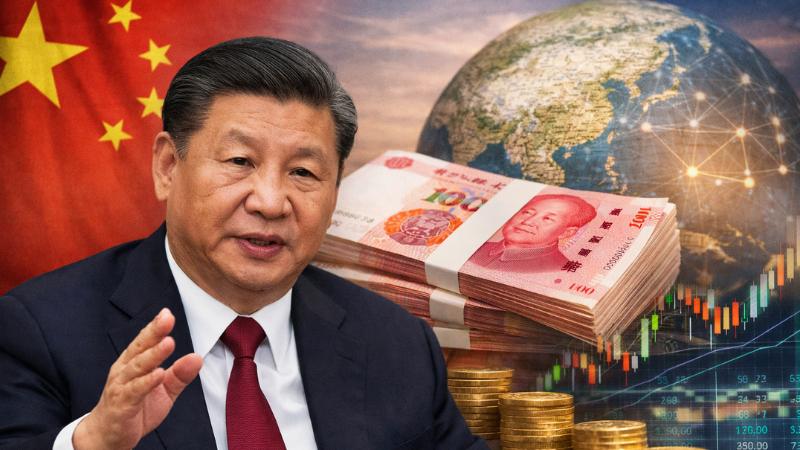
China seeks stronger yuan as Xi Jinping outlines push for global reserve currency
Amid continuing global economic uncertainty and renewed debate over the stability of major reserve currencies, Chinese President Xi Jinping has reiterated China’s ambition to build a “strong currency” and gradually elevate the yuan’s status in the global financial system. Xi said China aims to expand the use of the yuan in international trade, investment, and foreign exchange markets, underscoring a long-standing policy goal to strengthen the country’s financial influence worldwide. Xi’s remarks were outlined in a speech delivered in 2024 to senior provincial and ministerial officials and later published on Saturday in Qiushi, the Communist Party’s leading theoretical journal. The publication of excerpts from the address comes at a time of heightened volatility in global markets and growing scrutiny of the dominance of the US dollar, adding significance to Beijing’s renewed emphasis on currency strength and financial resilience. In the speech, Xi set out what he described as the essential characteristics of a global financial powerhouse. These included a solid economic foundation, world-leading technological and industrial capabilities, and a widely accepted and credible currency. He argued that currency strength was inseparable from broader national competitiveness and institutional capacity, noting that financial influence must be supported by real economic and technological power rather than short-term market movements. Xi also stressed the importance of a capable and independent central bank able to implement effective monetary policy and macroprudential management. He said globally competitive financial institutions, along with influential international financial centres, were necessary to attract global capital and exert pricing power in international markets. According to Xi, these elements must be matched with strong regulation, a reliable legal framework, and a deep pool of skilled financial professionals to ensure long-term stability and credibility. While acknowledging China’s scale in global finance, Xi noted that the country still faced structural limitations. He said China ranked among the world’s largest economies in terms of banking assets, foreign exchange reserves, and capital market size, but remained “big but not strong” overall. Transforming China into a true global financial powerhouse, he added, would be a gradual and long-term undertaking rather than an immediate achievement. Beijing has promoted the internationalisation of the yuan for more than a decade, with measurable progress in its use for cross-border trade settlement. The currency’s role in global markets, however, remains limited when compared with established reserve currencies. China’s Cross-Border Interbank Payment System currently clears an average of about 700 billion yuan, or roughly 100 billion US dollars, in transactions each day. This figure remains well below the nearly 2 trillion US dollars cleared daily through the dollar-based Clearing House Interbank Payments System. Yuan-denominated debt issuance in international markets also accounts for a small share of global activity, representing less than one percent of total issuance. These figures highlight the gap between China’s ambitions and the yuan’s current global footprint, despite steady domestic financial expansion. In recent months, the yuan has generally held firm against the US dollar, even amid trade tensions and uneven global growth. This stability contrasts with the sharper depreciation seen during former US President Donald Trump’s first term, when market observers speculated that Chinese authorities tolerated a weaker currency to offset the impact of tariffs. International investment banks continue to argue that the yuan remains below its long-term fair value, reflecting both policy controls and cautious foreign investor sentiment. The republication of Xi’s speech signals continuity in China’s financial strategy rather than a sudden shift. As global markets navigate uncertainty and reassess existing monetary structures, Beijing appears intent on steadily advancing its vision of a stronger yuan and a more influential role in the international financial system over the long term.
China seeks stronger yuan as Xi Jinping outlines push for global reserve currency
Amid continuing global economic uncertainty and renewed debate over the stability of major reserve currencies, Chinese President Xi Jinping has reiterated China’s ambition to build a “strong currency” and gradually elevate the yuan’s status in the global financial system. Xi said China aims to expand the use of the yuan in international trade, investment, and foreign exchange markets, underscoring a long-standing policy goal to strengthen the country’s financial influence worldwide. Xi’s remarks were outlined in a speech delivered in 2024 to senior provincial and ministerial officials and later published on Saturday in Qiushi, the Communist Party’s leading theoretical journal. The publication of excerpts from the address comes at a time of heightened volatility in global markets and growing scrutiny of the dominance of the US dollar, adding significance to Beijing’s renewed emphasis on currency strength and financial resilience. In the speech, Xi set out what he described as the essential characteristics of a global financial powerhouse. These included a solid economic foundation, world-leading technological and industrial capabilities, and a widely accepted and credible currency. He argued that currency strength was inseparable from broader national competitiveness and institutional capacity, noting that financial influence must be supported by real economic and technological power rather than short-term market movements. Xi also stressed the importance of a capable and independent central bank able to implement effective monetary policy and macroprudential management. He said globally competitive financial institutions, along with influential international financial centres, were necessary to attract global capital and exert pricing power in international markets. According to Xi, these elements must be matched with strong regulation, a reliable legal framework, and a deep pool of skilled financial professionals to ensure long-term stability and credibility. While acknowledging China’s scale in global finance, Xi noted that the country still faced structural limitations. He said China ranked among the world’s largest economies in terms of banking assets, foreign exchange reserves, and capital market size, but remained “big but not strong” overall. Transforming China into a true global financial powerhouse, he added, would be a gradual and long-term undertaking rather than an immediate achievement. Beijing has promoted the internationalisation of the yuan for more than a decade, with measurable progress in its use for cross-border trade settlement. The currency’s role in global markets, however, remains limited when compared with established reserve currencies. China’s Cross-Border Interbank Payment System currently clears an average of about 700 billion yuan, or roughly 100 billion US dollars, in transactions each day. This figure remains well below the nearly 2 trillion US dollars cleared daily through the dollar-based Clearing House Interbank Payments System. Yuan-denominated debt issuance in international markets also accounts for a small share of global activity, representing less than one percent of total issuance. These figures highlight the gap between China’s ambitions and the yuan’s current global footprint, despite steady domestic financial expansion. In recent months, the yuan has generally held firm against the US dollar, even amid trade tensions and uneven global growth. This stability contrasts with the sharper depreciation seen during former US President Donald Trump’s first term, when market observers speculated that Chinese authorities tolerated a weaker currency to offset the impact of tariffs. International investment banks continue to argue that the yuan remains below its long-term fair value, reflecting both policy controls and cautious foreign investor sentiment. The republication of Xi’s speech signals continuity in China’s financial strategy rather than a sudden shift. As global markets navigate uncertainty and reassess existing monetary structures, Beijing appears intent on steadily advancing its vision of a stronger yuan and a more influential role in the international financial system over the long term.
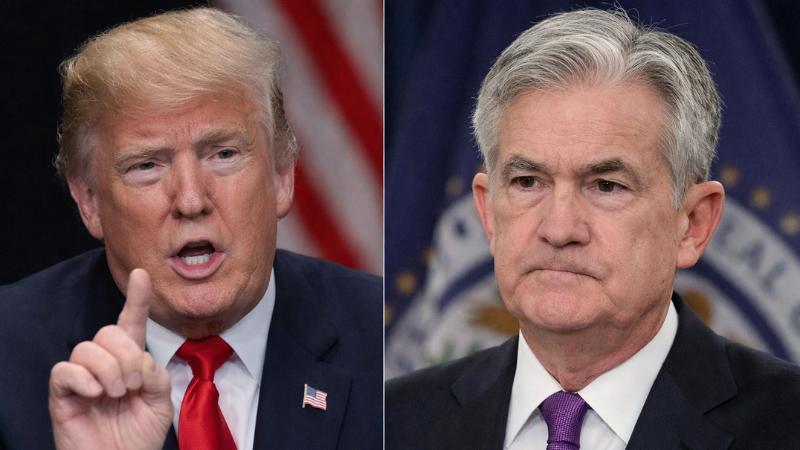
Trump criticizes Fed chair Powell over interest rates after FOMC decision
US President Donald Trump sharply criticized Federal Reserve Chair Jerome Powell on Thursday following the central bank’s decision to leave interest rates unchanged, accusing him of delaying necessary rate cuts and undermining the nation’s economic strength, national security and global competitiveness. The comments came shortly after the Federal Open Market Committee announced it would maintain its benchmark interest rate, a move that aligned with market expectations but drew strong poli

Trump criticizes Fed chair Powell over interest rates after FOMC decision
US President Donald Trump sharply criticized Federal Reserve Chair Jerome Powell on Thursday following the central bank’s decision to leave interest rates unchanged, accusing him of delaying necessary rate cuts and undermining the nation’s economic strength, national security and global competitiveness. The comments came shortly after the Federal Open Market Committee announced it would maintain its benchmark interest rate, a move that aligned with market expectations but drew strong poli
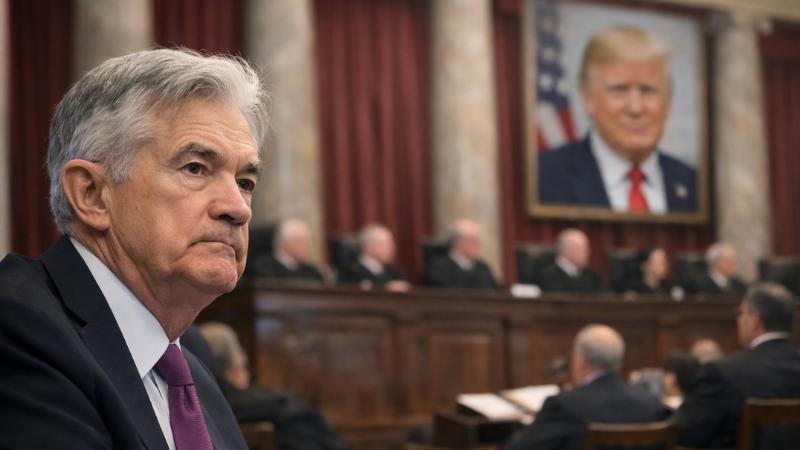
Fed chair to attend Supreme Court arguments in Trump challenge over governor removal
Federal Reserve Chair Jerome Powell is expected to attend oral arguments at the Supreme Court on Wednesday in a closely watched case challenging President Donald Trump’s authority to remove a sitting member of the central bank’s governing board. The case centers on Trump’s attempt to dismiss Federal Reserve Governor Lisa Cook, a move that has raised fundamental questions about the independence of the nation’s monetary policymaker. Powell’s decision to be present for the arguments is unusual for a sitting Fed chair, underscoring the significance the central bank places on the outcome. Within the Federal Reserve, the dispute is widely viewed as having far-reaching implications for the institution’s autonomy and its ability to conduct monetary policy without political interference. The case asks whether a president can remove a Federal Reserve governor outside the narrow circumstances traditionally allowed by law. The backdrop to the Supreme Court proceedings includes heightened scrutiny of Powell himself. Earlier this year, the Fed chair disclosed that he is the subject of a criminal investigation by the U.S. Attorney’s Office related to a multi-billion-dollar renovation of the Federal Reserve’s headquarters and statements he made to Congress about the project. Powell has said the investigation is being used as a pretext tied to policy disagreements, particularly the Fed’s refusal to reduce interest rates as aggressively as the White House sought last year. In a rare public statement issued in January, Powell argued that the threat of criminal charges stems from the Federal Reserve’s mandate to set interest rates based on its assessment of what best serves the public interest, rather than political preferences. He emphasized that the central bank’s decisions are made collectively by the Board of Governors and are guided by economic data and long-term stability considerations. The legal fight began after Trump announced in August that he was firing Cook from the seven-member Federal Reserve Board, alleging mortgage fraud connected to two homes she owns. Cook has denied any wrongdoing and has not been charged with a crime. She subsequently filed suit in federal court in Washington, seeking to block her removal and arguing that the president lacked cause under the law to dismiss her. A federal district judge issued an injunction in September preventing Cook’s removal while the case proceeds, a decision later upheld by a federal appeals court. Those rulings kept Cook in her post and set the stage for the administration’s appeal to the Supreme Court. In filings before the high court, the Department of Justice has argued that the lower court orders amount to improper judicial interference with the president’s removal authority. The government contends that the Constitution grants the president broad power to remove executive branch officials, including members of the Federal Reserve Board, for cause. Opponents of that view warn that allowing such removals could undermine the central bank’s independence and expose monetary policy to political pressure. The Supreme Court’s decision could therefore reshape the balance of power between the White House and the Federal Reserve, with potential consequences for interest rate policy, financial markets, and the broader economy. As the justices prepare to hear arguments, Powell’s attendance signals how consequential the case is for the Federal Reserve’s leadership. The ruling, expected later this year, is likely to define the limits of presidential authority over one of the country’s most influential economic institutions.
Fed chair to attend Supreme Court arguments in Trump challenge over governor removal
Federal Reserve Chair Jerome Powell is expected to attend oral arguments at the Supreme Court on Wednesday in a closely watched case challenging President Donald Trump’s authority to remove a sitting member of the central bank’s governing board. The case centers on Trump’s attempt to dismiss Federal Reserve Governor Lisa Cook, a move that has raised fundamental questions about the independence of the nation’s monetary policymaker. Powell’s decision to be present for the arguments is unusual for a sitting Fed chair, underscoring the significance the central bank places on the outcome. Within the Federal Reserve, the dispute is widely viewed as having far-reaching implications for the institution’s autonomy and its ability to conduct monetary policy without political interference. The case asks whether a president can remove a Federal Reserve governor outside the narrow circumstances traditionally allowed by law. The backdrop to the Supreme Court proceedings includes heightened scrutiny of Powell himself. Earlier this year, the Fed chair disclosed that he is the subject of a criminal investigation by the U.S. Attorney’s Office related to a multi-billion-dollar renovation of the Federal Reserve’s headquarters and statements he made to Congress about the project. Powell has said the investigation is being used as a pretext tied to policy disagreements, particularly the Fed’s refusal to reduce interest rates as aggressively as the White House sought last year. In a rare public statement issued in January, Powell argued that the threat of criminal charges stems from the Federal Reserve’s mandate to set interest rates based on its assessment of what best serves the public interest, rather than political preferences. He emphasized that the central bank’s decisions are made collectively by the Board of Governors and are guided by economic data and long-term stability considerations. The legal fight began after Trump announced in August that he was firing Cook from the seven-member Federal Reserve Board, alleging mortgage fraud connected to two homes she owns. Cook has denied any wrongdoing and has not been charged with a crime. She subsequently filed suit in federal court in Washington, seeking to block her removal and arguing that the president lacked cause under the law to dismiss her. A federal district judge issued an injunction in September preventing Cook’s removal while the case proceeds, a decision later upheld by a federal appeals court. Those rulings kept Cook in her post and set the stage for the administration’s appeal to the Supreme Court. In filings before the high court, the Department of Justice has argued that the lower court orders amount to improper judicial interference with the president’s removal authority. The government contends that the Constitution grants the president broad power to remove executive branch officials, including members of the Federal Reserve Board, for cause. Opponents of that view warn that allowing such removals could undermine the central bank’s independence and expose monetary policy to political pressure. The Supreme Court’s decision could therefore reshape the balance of power between the White House and the Federal Reserve, with potential consequences for interest rate policy, financial markets, and the broader economy. As the justices prepare to hear arguments, Powell’s attendance signals how consequential the case is for the Federal Reserve’s leadership. The ruling, expected later this year, is likely to define the limits of presidential authority over one of the country’s most influential economic institutions.
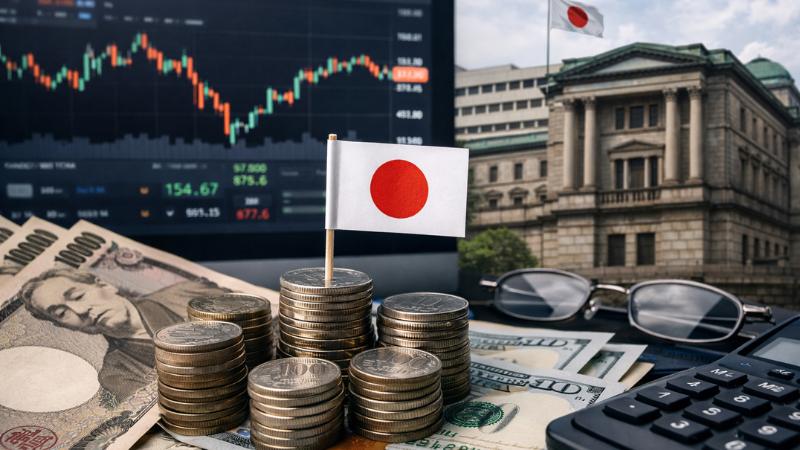
Japan central bank eyes rate increase amid inflation and weak growth
Japan’s central bank on Thursday began its final policy meeting of the year, with markets widely expecting a further increase in benchmark interest rates as officials continue the gradual shift away from years of ultra-loose monetary policy. The decision, scheduled to be announced on Friday, could mark the highest borrowing costs Japan has seen in three decades, underscoring the Bank of Japan’s determination to normalize policy amid persistent inflation pressures. Market pricing
Japan central bank eyes rate increase amid inflation and weak growth
Japan’s central bank on Thursday began its final policy meeting of the year, with markets widely expecting a further increase in benchmark interest rates as officials continue the gradual shift away from years of ultra-loose monetary policy. The decision, scheduled to be announced on Friday, could mark the highest borrowing costs Japan has seen in three decades, underscoring the Bank of Japan’s determination to normalize policy amid persistent inflation pressures. Market pricing
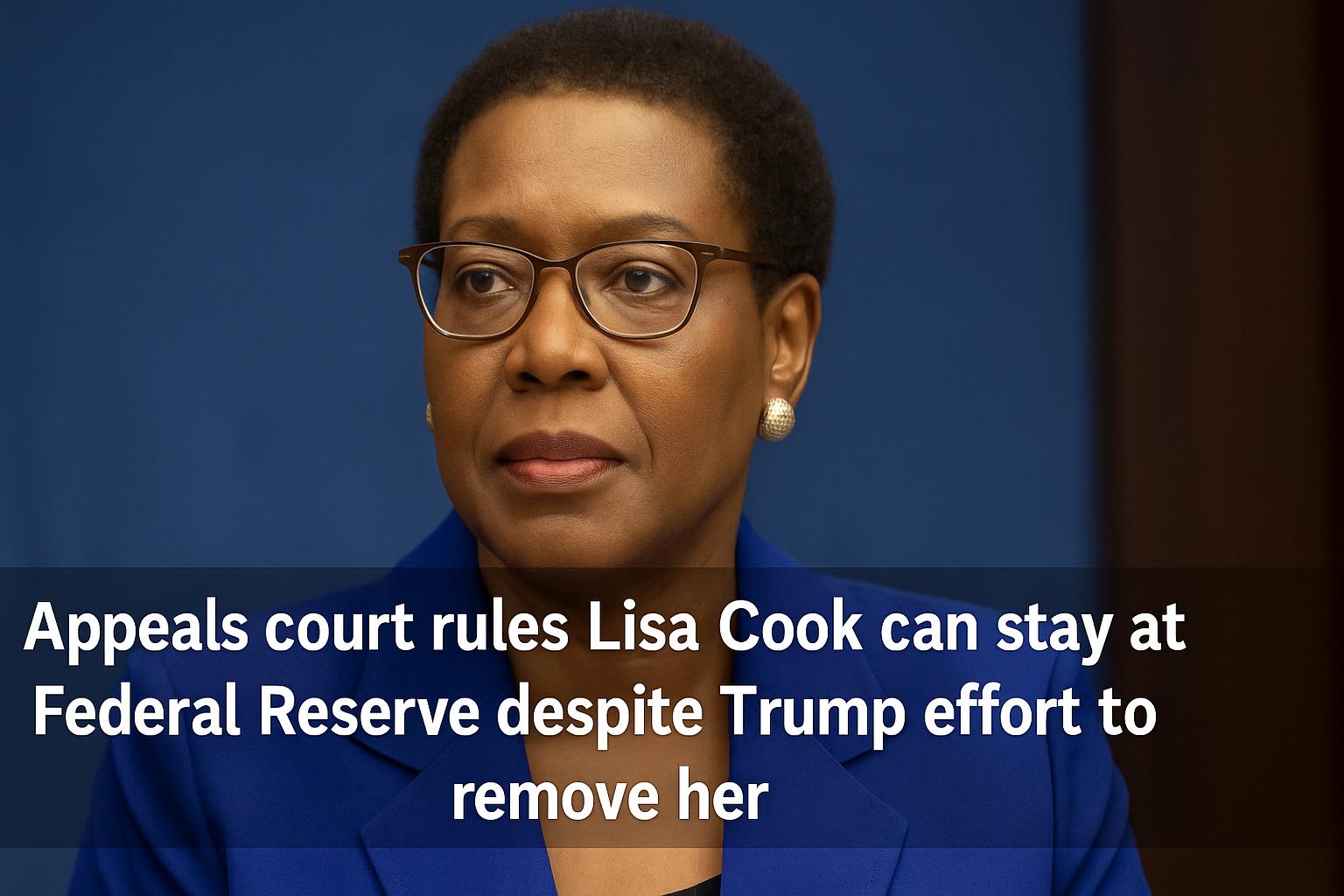
Appeals court rules Lisa Cook can stay at Federal Reserve despite Trump effort to remove her
A federal appeals court has ruled that Lisa Cook, a governor at the United States Federal Reserve, will remain in her position for now despite efforts by former President Donald Trump to remove her. The ruling from the US Court of Appeals for the District of Columbia Circuit came just before a major Federal Reserve meeting scheduled to begin on Tuesday, where policymakers are expected to weigh critical decisions on interest rates. Trump has sought to dismiss Cook from her role, accu
Appeals court rules Lisa Cook can stay at Federal Reserve despite Trump effort to remove her
A federal appeals court has ruled that Lisa Cook, a governor at the United States Federal Reserve, will remain in her position for now despite efforts by former President Donald Trump to remove her. The ruling from the US Court of Appeals for the District of Columbia Circuit came just before a major Federal Reserve meeting scheduled to begin on Tuesday, where policymakers are expected to weigh critical decisions on interest rates. Trump has sought to dismiss Cook from her role, accu
Who Is Lisa Cook? Fed Governor Faces Trump Removal Over Mortgage Fraud Allegations
Lisa Cook, appointed as a Federal Reserve governor by President Joe Biden in 2022, has become embroiled in a political and legal controversy. President Donald Trump recently called for her removal from the Fed, citing allegations of mortgage fraud. This decision has sparked widespread debate about political interference in the independence of the Federal Reserve, an institution that plays a crucial role in shaping US monetary policy and regulating the financial
Who Is Lisa Cook? Fed Governor Faces Trump Removal Over Mortgage Fraud Allegations
Lisa Cook, appointed as a Federal Reserve governor by President Joe Biden in 2022, has become embroiled in a political and legal controversy. President Donald Trump recently called for her removal from the Fed, citing allegations of mortgage fraud. This decision has sparked widespread debate about political interference in the independence of the Federal Reserve, an institution that plays a crucial role in shaping US monetary policy and regulating the financial
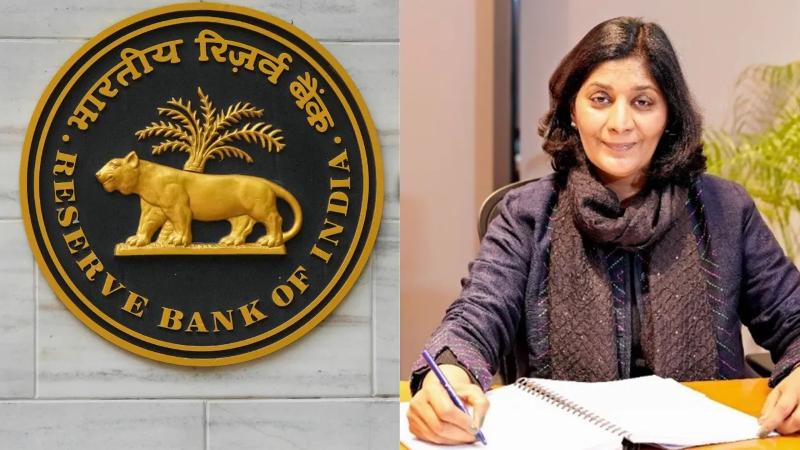
Poonam Gupta Becomes First Woman in 10 Years to Be Appointed as RBI Deputy Governor
Poonam Gupta, a prominent economist with global expertise, has been appointed as the new Deputy Governor of the Reserve Bank of India (RBI). Her appointment marks a historic milestone, as she becomes the first woman in over a decade to assume this high-ranking position at India’s central bank. She succeeds Michael Patra, who retired in January 2024. Gupta brings with her nearly two decades of international experience, having worked with the World Bank, International Monet
Poonam Gupta Becomes First Woman in 10 Years to Be Appointed as RBI Deputy Governor
Poonam Gupta, a prominent economist with global expertise, has been appointed as the new Deputy Governor of the Reserve Bank of India (RBI). Her appointment marks a historic milestone, as she becomes the first woman in over a decade to assume this high-ranking position at India’s central bank. She succeeds Michael Patra, who retired in January 2024. Gupta brings with her nearly two decades of international experience, having worked with the World Bank, International Monet
RBI Keeps Rates Unchanged, Lowers GDP Growth Forecast
On Friday, the Reserve Bank of India (RBI) announced it would keep the repo rate unchanged at 6.5% for the 11th consecutive time. This decision comes despite the GDP growth rate for the July-September quarter falling to a 7-quarter low of 5.4%, which was below the RBI's earlier projection of 7%. The RBI paused its rate hike cycle in April last year after raising rates by 250 basis points since May 2022. In the fifth bi-monthly monetary policy review for the current fiscal year,
RBI Keeps Rates Unchanged, Lowers GDP Growth Forecast
On Friday, the Reserve Bank of India (RBI) announced it would keep the repo rate unchanged at 6.5% for the 11th consecutive time. This decision comes despite the GDP growth rate for the July-September quarter falling to a 7-quarter low of 5.4%, which was below the RBI's earlier projection of 7%. The RBI paused its rate hike cycle in April last year after raising rates by 250 basis points since May 2022. In the fifth bi-monthly monetary policy review for the current fiscal year,
China Unveils Bold Monetary Stimulus to Revive Economy Amid Slow Growth Concerns
In response to growing concerns over slowing economic growth, the People's Bank of China (PBOC) has announced a comprehensive package of monetary stimulus measures. This initiative underscores the government's urgency to stabilize the economy and regain investor confidence, especially as the country risks missing its annual growth target of around 5%. Key elements of the package include a reduction in the seven-day reverse repurchase rate to 1.5% and a cut in the reserve req
China Unveils Bold Monetary Stimulus to Revive Economy Amid Slow Growth Concerns
In response to growing concerns over slowing economic growth, the People's Bank of China (PBOC) has announced a comprehensive package of monetary stimulus measures. This initiative underscores the government's urgency to stabilize the economy and regain investor confidence, especially as the country risks missing its annual growth target of around 5%. Key elements of the package include a reduction in the seven-day reverse repurchase rate to 1.5% and a cut in the reserve req