#museai
Alexandr Wang apologises after Meta Muse AI flight booking joke
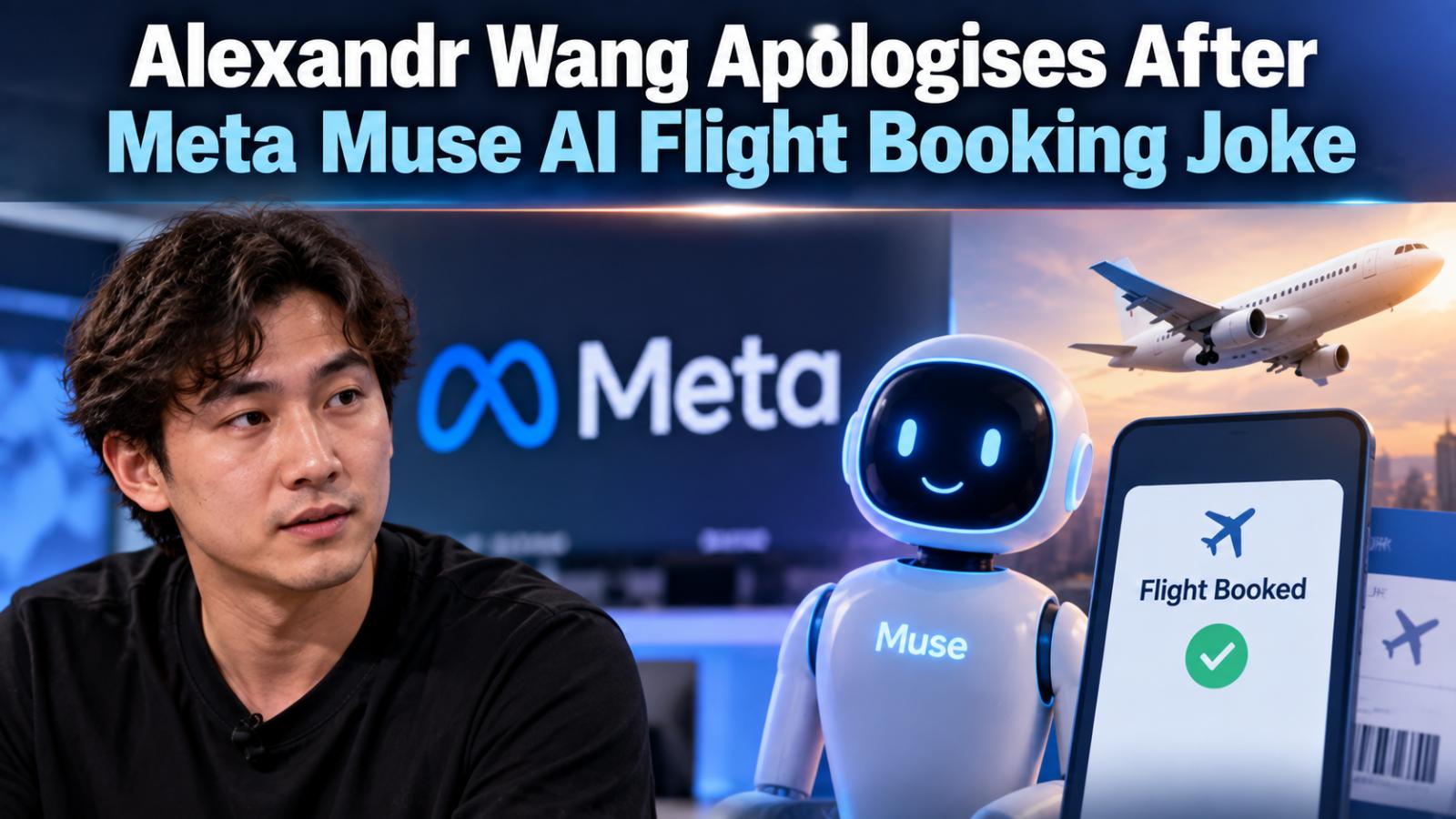
Meta AI executive Alexandr Wang attracted attention online after responding to Webflow CTO Utkarsh Sengar, who said he had successfully used Meta’s Muse AI agent to book plane tickets. The exchange quickly became a talking point because it combined a casual social-media interaction with a practical example of how AI agents are beginning to handle everyday tasks. Sengar shared his experience on X, saying Muse had helped complete the flight-booking process and that the experience made him reluctant to return to traditional booking methods. Wang responded positively to the post and then made a lighthearted remark about ensuring that Sengar also booked a return ticket. He later followed up with an apology, describing the comment as a “dumb joke.” The brief interaction gained attention not just because of Wang’s response, but because it demonstrated how AI tools are moving beyond simple question-and-answer functions. Instead of merely suggesting flights or comparing prices, newer AI agents are being developed to carry out actions for users. Meta Muse AI agent handles real-world flight booking Meta’s Muse AI agent is designed to assist users with practical digital tasks rather than only generating text-based answers. Flight booking is one example of the type of activity such systems are expected to handle as companies push toward more autonomous AI assistants. The technology reflects a wider shift in artificial intelligence, where assistants are increasingly being built to browse websites, interact with online services and complete multi-step tasks. Travel planning is a particularly useful test because booking a flight may involve searching schedules, comparing options, entering passenger information and completing transactions. Sengar’s experience therefore offered a real-world example of how an AI agent could reduce the number of steps normally required from a user. It also showed why technology companies are investing heavily in systems that can act on instructions rather than simply provide recommendations. Utkarsh Sengar flight booking sparks Alexandr Wang response The exchange between Sengar and Wang also brought additional visibility to Muse. While Wang’s joke became the social-media hook, the larger story was the successful use of an AI agent for a routine but relatively complex consumer task. For users, the appeal is straightforward: if an AI assistant can reliably handle activities such as travel bookings, appointments, shopping or other online tasks, it could save time and reduce repetitive work. However, wider adoption will also depend on how comfortable people are with giving AI systems access to personal information, payment details and connected accounts. Security, privacy and user control are therefore likely to remain important questions as autonomous AI agents become more capable. A system that can complete transactions may be more useful than a traditional chatbot, but it also carries greater responsibility when handling sensitive information or making decisions on a user’s behalf. The Alexandr Wang Meta Muse AI flight booking exchange may have started as a short online conversation, but it highlights a broader change in how AI products are evolving. The next phase of consumer AI is increasingly focused on completing actions, and travel booking could become one of the clearest examples of whether users are ready to trust AI agents with everyday tasks.
Alexandr Wang apologises after Meta Muse AI flight booking joke
Meta AI executive Alexandr Wang attracted attention online after responding to Webflow CTO Utkarsh Sengar, who said he had successfully used Meta’s Muse AI agent to book plane tickets. The exchange quickly became a talking point because it combined a casual social-media interaction with a practical example of how AI agents are beginning to handle everyday tasks. Sengar shared his experience on X, saying Muse had helped complete the flight-booking process and that the experience made him reluctant to return to traditional booking methods. Wang responded positively to the post and then made a lighthearted remark about ensuring that Sengar also booked a return ticket. He later followed up with an apology, describing the comment as a “dumb joke.” The brief interaction gained attention not just because of Wang’s response, but because it demonstrated how AI tools are moving beyond simple question-and-answer functions. Instead of merely suggesting flights or comparing prices, newer AI agents are being developed to carry out actions for users. Meta Muse AI agent handles real-world flight booking Meta’s Muse AI agent is designed to assist users with practical digital tasks rather than only generating text-based answers. Flight booking is one example of the type of activity such systems are expected to handle as companies push toward more autonomous AI assistants. The technology reflects a wider shift in artificial intelligence, where assistants are increasingly being built to browse websites, interact with online services and complete multi-step tasks. Travel planning is a particularly useful test because booking a flight may involve searching schedules, comparing options, entering passenger information and completing transactions. Sengar’s experience therefore offered a real-world example of how an AI agent could reduce the number of steps normally required from a user. It also showed why technology companies are investing heavily in systems that can act on instructions rather than simply provide recommendations. Utkarsh Sengar flight booking sparks Alexandr Wang response The exchange between Sengar and Wang also brought additional visibility to Muse. While Wang’s joke became the social-media hook, the larger story was the successful use of an AI agent for a routine but relatively complex consumer task. For users, the appeal is straightforward: if an AI assistant can reliably handle activities such as travel bookings, appointments, shopping or other online tasks, it could save time and reduce repetitive work. However, wider adoption will also depend on how comfortable people are with giving AI systems access to personal information, payment details and connected accounts. Security, privacy and user control are therefore likely to remain important questions as autonomous AI agents become more capable. A system that can complete transactions may be more useful than a traditional chatbot, but it also carries greater responsibility when handling sensitive information or making decisions on a user’s behalf. The Alexandr Wang Meta Muse AI flight booking exchange may have started as a short online conversation, but it highlights a broader change in how AI products are evolving. The next phase of consumer AI is increasingly focused on completing actions, and travel booking could become one of the clearest examples of whether users are ready to trust AI agents with everyday tasks.