





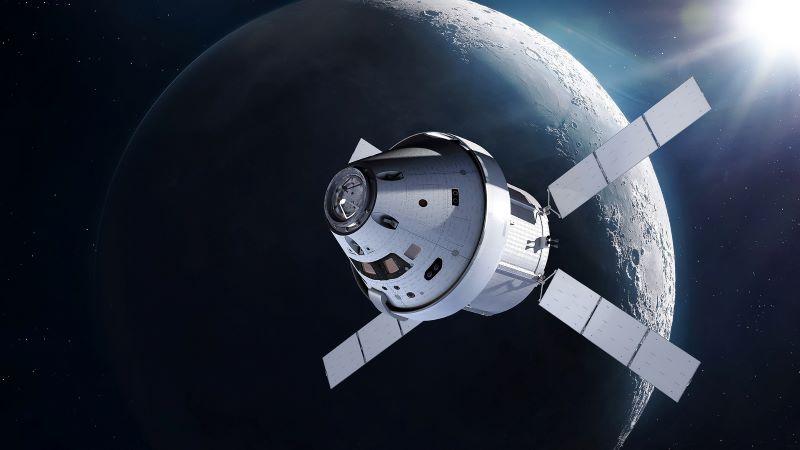
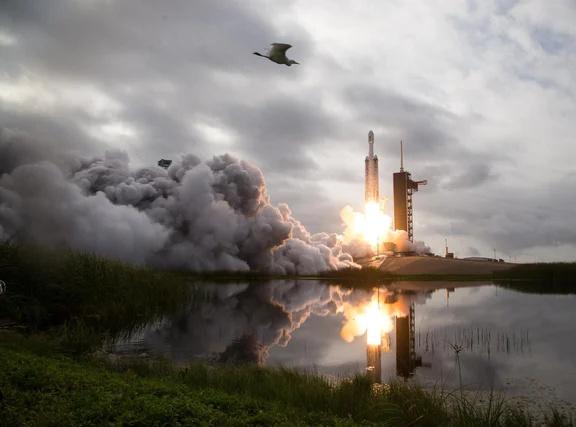











The world is once again looking at the Moon with excitement. After more than 50 years, humans are preparing to travel around the Moon again, and the NASA Artemis II mission is ready to make history. This mission will send four astronauts into space, taking them around the Moon and back to Earth. It is not just a space journey—it is the beginning of a new era of space exploration. What is Artemis II Mission?
A decommissioned NASA satellite that once helped scientists understand how Earth’s magnetic field protects the planet from harmful cosmic radiation is expected to reenter Earth’s atmosphere on Tuesday evening. According to NASA, the spacecraft known as Van Allen Probe A could make atmospheric reentry around 7:45 p.m. Eastern Time, though officials note that predicting the exact moment remains difficult. Space agencies say the timing of the event carries uncertainty, with the act
The 2026 Solar Eclipse will occur on February 17, and it is set to be a remarkable celestial event. This eclipse will be an annular solar eclipse, often referred to as the Ring of Fire eclipse. Here's everything you need to know about this rare event: Eclipse Type: The eclipse will be an annular solar eclipse. In this type of eclipse, the Moon will cover about 96% of the Sun, but due to the Moon being farther from Earth, it will appear slightly smaller than the Sun. As a
India’s space journey reached another landmark moment as Indian Space Research Organisation successfully launched the heaviest foreign satellite ever placed into orbit from Indian soil. The mission was carried out using the powerful LVM3 launch vehicle from the Satish Dhawan Space Centre in Sriharikota, reinforcing India’s growing reputation as a reliable and competitive space launch destination
The United States embassy in India has issued a new advisory urging all visa applicants to strictly adhere to the updated appointment dates communicated through recent rescheduling emails. The mission clarified that individuals who arrive on their previously scheduled dates will not be granted entry into any embassy or consulate facility. The reminder follows a series of appointment modifications across multiple visa categories prompted by internal adjustments to scheduling systems, and aims
NASA’s discovery of interstellar comet 3I/ATLAS has sparked global interest after Harvard astrophysicist Avi Loeb suggested it could be a form of alien technology. Detected on July 1, 2025, the comet is only the third known interstellar object to pass through our solar system. While NASA confirmed that 3I/ATLAS poses no threat to Earth, Loeb and other researchers argue that its unique chemical and physical properties set it apart from natural space objects, warranting a deeper investigation
A massive 8.8 magnitude earthquake that struck off Russia’s Kamchatka Peninsula in late July 2025 triggered a tsunami racing across the Pacific Ocean. While the waves caused minimal damage, the event provided a critical real-world test for Nasa’s Guardian system, an advanced disaster detection technology developed at the Jet Propulsion Laboratory in California. Guardian detected atmospheric disturbances created by the tsunami within 20 minutes of
Asteroid 2025 QY4 is drawing the attention of both scientists and astronomy enthusiasts as it prepares to make a close approach to Earth this week. The asteroid, which belongs to the Aten group of space rocks known for orbiting across Earth’s path, measures nearly 180 feet in diameter and is travelling at an astonishing speed of more than 39,000 miles per hour. Its size and velocity make it an object worth monitoring, even though experts have already conf
AI is everywhere right now — writing emails, powering chatbots, predicting your shopping habits… and maybe even taking your job. But here's the real question: What’s next? What comes after AI? What’s the next big thing that could be bigger, bolder, and more life-changing than artificial intelligence? You’re about to find out. Let’s dive into 5 f
James Lovell, the iconic Apollo 13 commander whose leadership and quick thinking turned a near-disaster into one of NASA’s greatest examples of problem-solving, has died at the age of 97. He passed away on Thursday in Lake Forest, Illinois, as confirmed by NASA in an official statement on Friday. Lovell’s remarkable career in space exploration spanned some of the most pivotal missions in the early years of the United States space program, and his a
Austin has just surpassed Houston in height, securing its spot as the home of the tallest building in Texas. The Waterline Tower, located at 98 Red River Street, stands at an impressive 74 stories and reaches a height of 1,025 feet. This new landmark in the Texas skyline is now 23 feet taller than the Chase Tower in Houston, which had held the title of Texas' tallest building since 1981. Waterline Tower:
India has achieved a significant milestone in its space exploration and climate monitoring goals with the successful launch of the Nasa-Isro Synthetic Aperture Radar (Nisar) satellite. Launched on July 30, 2025, from the Satish Dhawan Space Centre in Sriharikota, the satellite is a $1.5 billion joint venture between the Indian Space Research Organisation (ISRO) and the United States’ National Aeronautics and Space Administration (Nasa). Weighing 2393 kil
India marked a major milestone in space collaboration today with the successful launch of the NISAR mission, a joint project between ISRO and NASA. Lifted into orbit aboard the GSLV-F16 from Sriharikota, NISAR is set to become the world’s most advanced Earth observation satellite. With a unique dual-frequency Synthetic Aperture Radar that combines NASA’s L-band and ISRO’s S-band systems, the satellite can penetrate clouds, forests, and even d
Indian astronaut Shubhanshu Shukla is set to return to Earth after a landmark mission aboard the International Space Station (ISS) as part of the Axiom-4 crew. The mission, which included extensive scientific research, marked several historic firsts for India. Shukla became the first Indian to visit the ISS and only the second Indian astronaut in space, following Wing Commander Rakesh Sharma's 1984 mission. His return, scheduled for July 14 via the Dragon spacecraft, is part of a well-
India’s journey into space has taken another historic leap with Group Captain Shubhanshu Shukla becoming the second Indian astronaut to travel to space. Onboard the Axiom-4 mission, Shukla is headed to the International Space Station (ISS) aboard the SpaceX Crew Dragon spacecraft, launched from NASA’s Kennedy Space Center on a Falcon 9 rocket. Shukla, an Indian Air Force pilot, follows in the footsteps of
Weeks after Japan’s ispace Mission 2 suffered a crash landing on the Moon, nasa’s Lunar Reconnaissance Orbiter (LRO) has captured detailed images of the impact site, shedding light on the final moments of the ambitious Japanese lunar mission. The spacecraft was attempting a soft landing in the northern hemisphere of the Moon, specifically targeting an area within Mare Frigoris, also known as the Sea of Cold. However, the lander experienced a loss of communication with mission cont
The much-anticipated launch of Indian astronaut Shubhanshu Shukla aboard the Ax-4 mission has been delayed once again, marking the seventh postponement of this historic flight. Originally scheduled for May 29, 2025, the mission has faced a string of technical, operational, and weather-related issues. The latest delay, announced by NASA, cites concerns related to recent repairs on the International Space Station (ISS).
The launch of the highly anticipated Axiom-4 mission, which was set to send Indian Air Force Group Captain Shubhanshu Shukla to the International Space Station (ISS), has been postponed once again. This marks the fifth delay in the mission, originally scheduled for June 11, 2025. SpaceX, the aerospace company leading the rocket launch, cited a technical glitch in the Falcon 9 rocket's propulsion system specifically, a liquid oxygen (LOx) leak as the reason
India is preparing for a historic milestone as Group Captain Shubhanshu Shukla, a highly accomplished pilot of the Indian Air Force, readies himself to become the second Indian ever to venture into space. Slated for launch on June 10 aboard the Axiom-4 mission, his journey to the International Space Station (ISS) comes nearly 41 years after Wing Commander Rakesh Sharma made his mark in 1984. As the designated mission pilot, Shukla will fly aboard SpaceX’s Falcon 9 Crew Drago
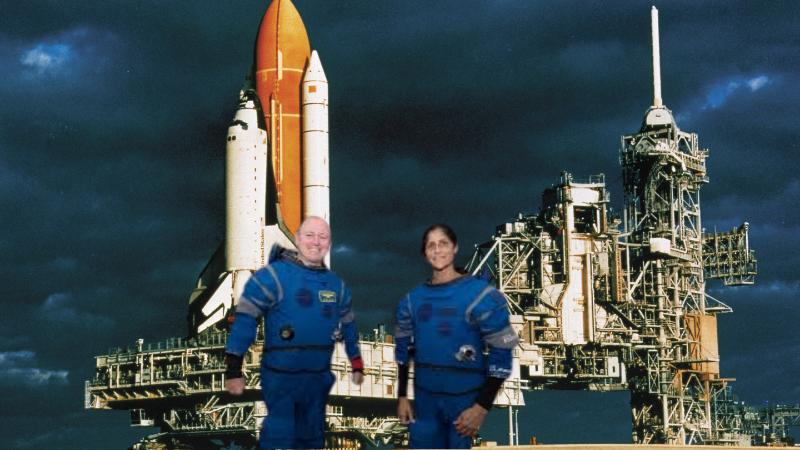
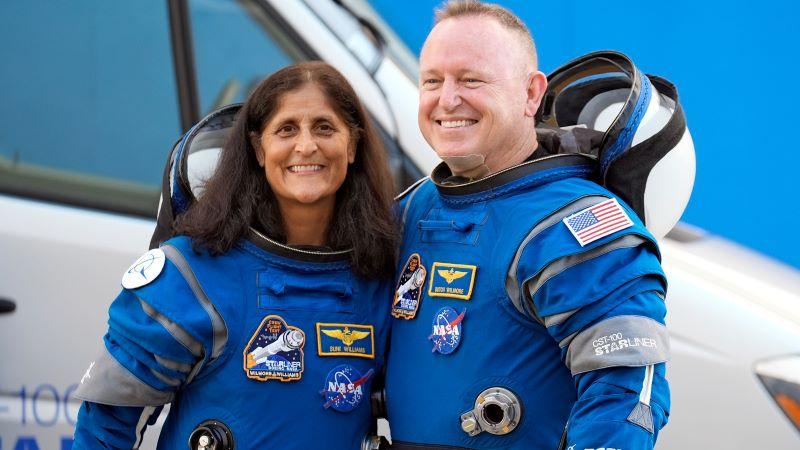
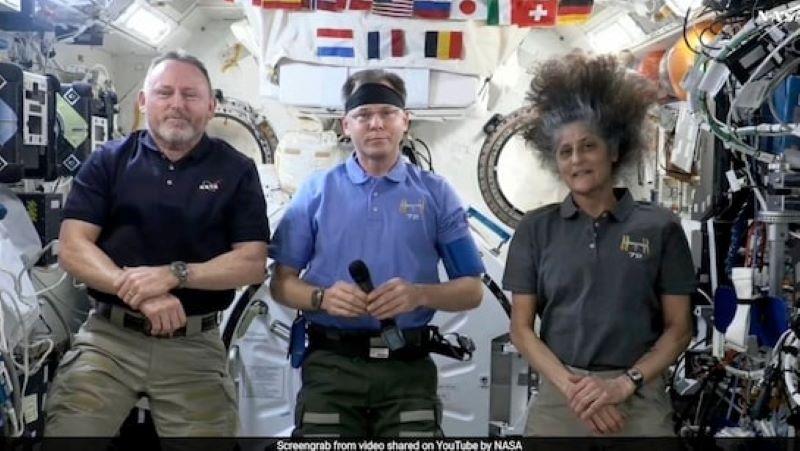
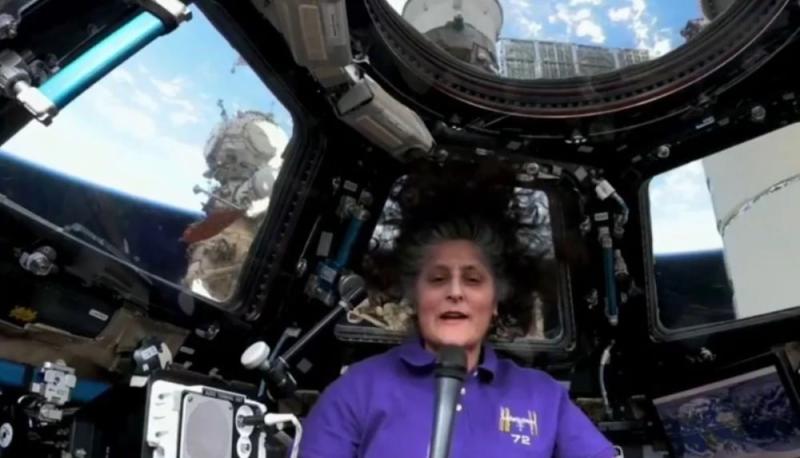
Sunita Williams and Butch Wilmore, the two American astronauts who spent an unexpected nine months aboard the International Space Station following issues with Boeing's Starliner capsule, are gradually transitioning back to life on Earth. After their return in March, the duo has been undergoing a rigorous rehabilitation phase to recover from the physical toll of extended microgravity exposure. Now, they’re emerging stronger, participating in post-mission responsibilities with both N