




















#opec
Saudi oil price cut signals Asia crude demand pressure
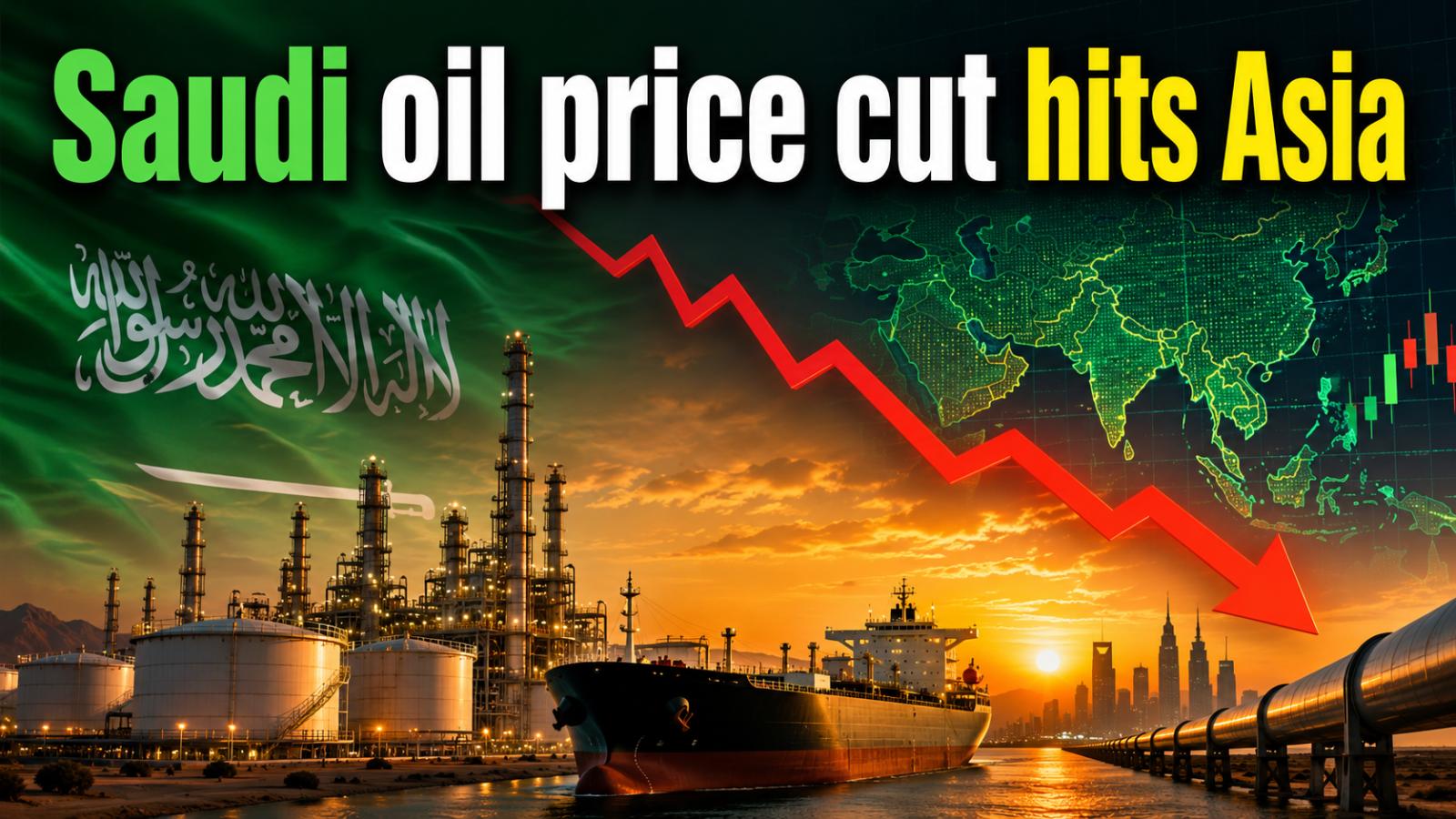
Saudi Arabia’s latest oil price cut has turned attention back to Asia, where refiners are getting more room to negotiate as Gulf crude supply improves. Saudi Aramco has reduced the August official selling price of Arab Light crude for Asian buyers by $11 per barrel, placing the grade at a $1.50 discount to the Oman-Dubai benchmark. The sharp move shows how quickly the market has shifted from supply fear to buyer advantage. The cut is imp
Saudi oil price cut signals Asia crude demand pressure
Saudi Arabia’s latest oil price cut has turned attention back to Asia, where refiners are getting more room to negotiate as Gulf crude supply improves. Saudi Aramco has reduced the August official selling price of Arab Light crude for Asian buyers by $11 per barrel, placing the grade at a $1.50 discount to the Oman-Dubai benchmark. The sharp move shows how quickly the market has shifted from supply fear to buyer advantage. The cut is imp
US Shale Oil Exports Hit May Record as America Tops Saudi Arabia, Russia
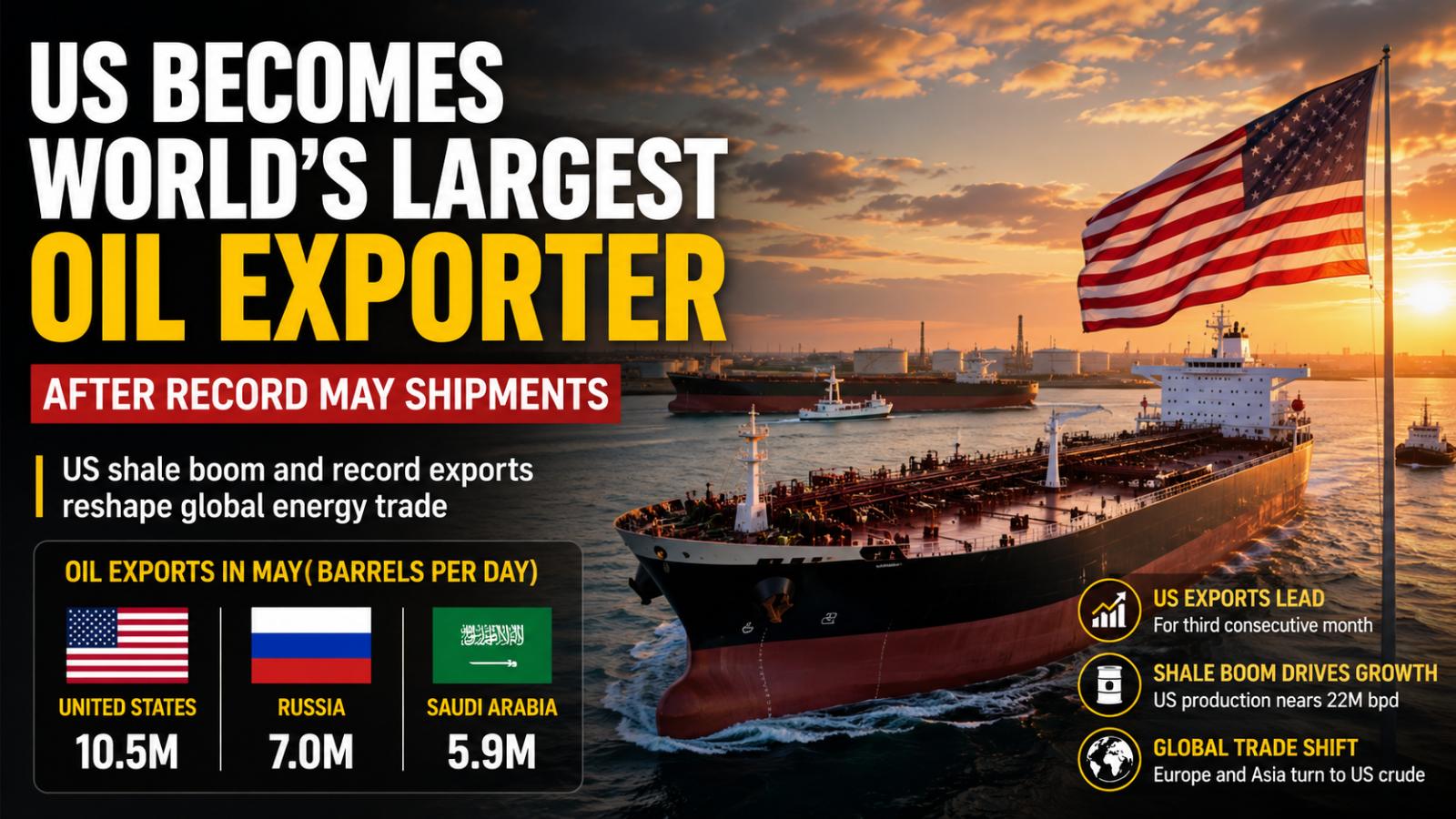
US shale oil exports reached a new milestone in May, pushing the United States ahead of Saudi Arabia and Russia in global crude oil and refined fuel shipments. The shift marks a major reversal for a country that once depended heavily on West Asian oil and was deeply affected by the 1973 Arab oil embargo. US Shale Oil Exports Reach May Record Ship-tracking data cited by Reuters showed U.S. exports of crude oil and refined fuels reached about 10.
US Shale Oil Exports Hit May Record as America Tops Saudi Arabia, Russia
US shale oil exports reached a new milestone in May, pushing the United States ahead of Saudi Arabia and Russia in global crude oil and refined fuel shipments. The shift marks a major reversal for a country that once depended heavily on West Asian oil and was deeply affected by the 1973 Arab oil embargo. US Shale Oil Exports Reach May Record Ship-tracking data cited by Reuters showed U.S. exports of crude oil and refined fuels reached about 10.
Indian Techies Race Against 60-Day H-1B Visa Deadline Amid US Tech Layoffs
The latest wave of Silicon Valley layoffs affecting Indian H-1B visa holders has put thousands of Indian techies under extreme pressure. Professionals working at major companies like Meta, Amazon, and LinkedIn now face a ticking 60-day clock to either find a new employer willing to sponsor their visa, switch to another legal status, or leave the United States. In today’s slowing US tech job market, securing H-1B visa transfers or completing interviews and background checks within this short
Indian Techies Race Against 60-Day H-1B Visa Deadline Amid US Tech Layoffs
The latest wave of Silicon Valley layoffs affecting Indian H-1B visa holders has put thousands of Indian techies under extreme pressure. Professionals working at major companies like Meta, Amazon, and LinkedIn now face a ticking 60-day clock to either find a new employer willing to sponsor their visa, switch to another legal status, or leave the United States. In today’s slowing US tech job market, securing H-1B visa transfers or completing interviews and background checks within this short
Oil prices surge over 6% as Trump maintains naval blockade on Iran
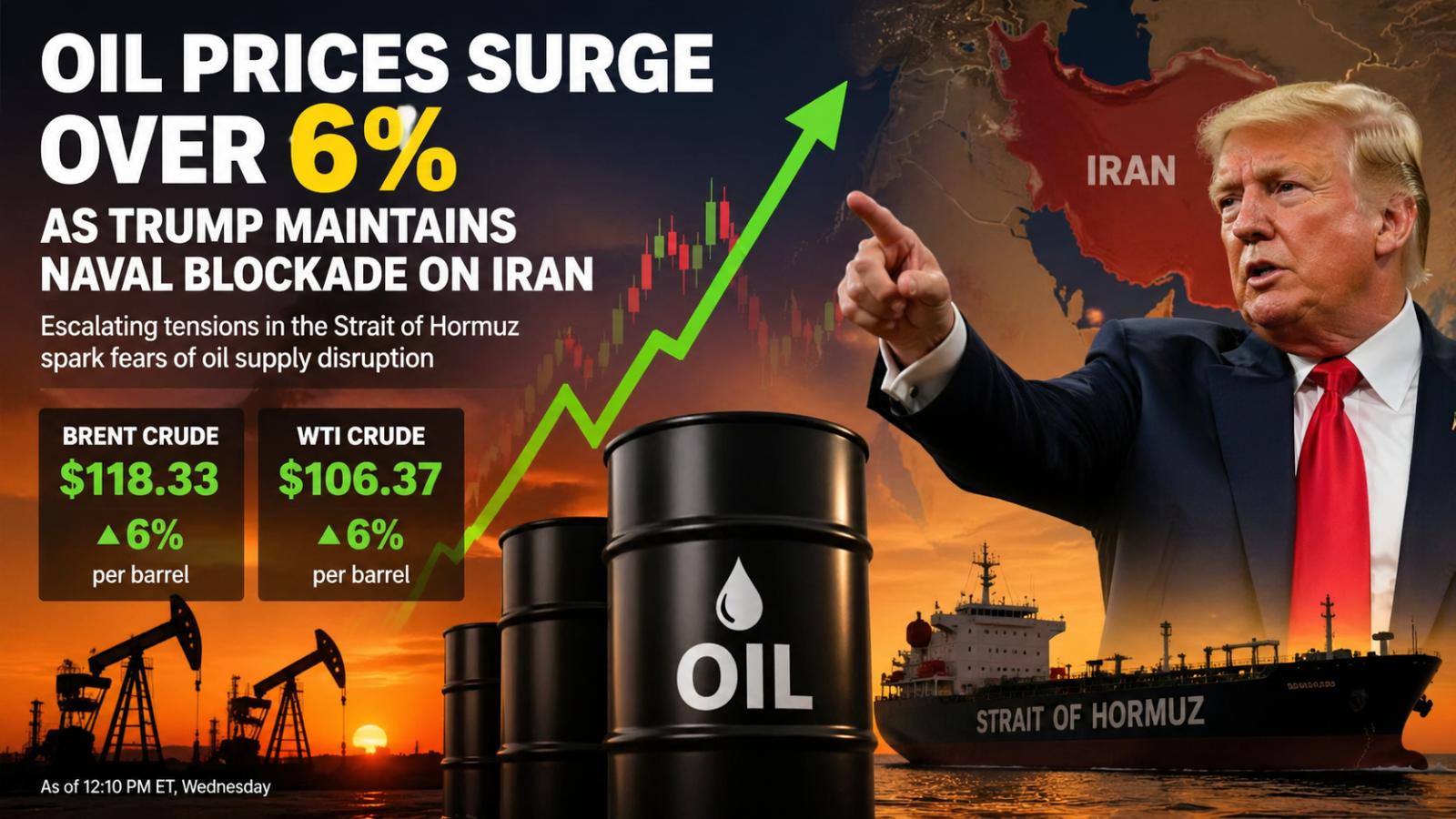
Oil prices jumped over 6% after President Donald Trump confirmed the U.S. will maintain its blockade on Iran, raising concerns over disrupted supply and escalating tensions in the Strait of Hormuz. Oil prices surge over 6% as Trump maintains naval blockade on Iran, sending shockwaves through global energy markets and intensifying concerns about supply disruptions in the Middle East. By 12:10 PM Eastern Time on Wednesday April 29, 2026, international benchmark Brent crude futures climbed more than 6% to $118.33 per barrel, while U.S. West Texas Intermediate futures rose over 6% to $106.37 per barrel. The sharp increase followed comments from Donald Trump, who confirmed that the United States would continue its naval blockade against Iran until a nuclear agreement is reached. Trump described the blockade as highly effective, signaling a firm stance amid stalled diplomatic efforts. Negotiations aimed at easing tensions have made little progress in recent days, further escalating uncertainty in global markets. Iran has refused to reopen the Strait of Hormuz—a critical passage for global oil shipments—unless the United States lifts its blockade. Tehran’s control over the strait has significantly restricted oil exports from the region, tightening supply and driving prices higher. Market analysts note that developments in the Persian Gulf remain the dominant factor influencing oil price volatility. Adding to market complexity, the United Arab Emirates recently announced its decision to exit OPEC. While strategists at ING described the move as a substantial setback for the producer alliance, they indicated its immediate impact on prices would likely be limited compared to ongoing geopolitical tensions. Analysts suggest that while the UAE’s departure could weaken OPEC’s long-term influence, the near-term trajectory of oil markets will depend largely on whether oil flows resume through the Strait of Hormuz. Until then, geopolitical risks and supply constraints are expected to keep prices elevated and markets volatile.
Oil prices surge over 6% as Trump maintains naval blockade on Iran
Oil prices jumped over 6% after President Donald Trump confirmed the U.S. will maintain its blockade on Iran, raising concerns over disrupted supply and escalating tensions in the Strait of Hormuz. Oil prices surge over 6% as Trump maintains naval blockade on Iran, sending shockwaves through global energy markets and intensifying concerns about supply disruptions in the Middle East. By 12:10 PM Eastern Time on Wednesday April 29, 2026, international benchmark Brent crude futures climbed more than 6% to $118.33 per barrel, while U.S. West Texas Intermediate futures rose over 6% to $106.37 per barrel. The sharp increase followed comments from Donald Trump, who confirmed that the United States would continue its naval blockade against Iran until a nuclear agreement is reached. Trump described the blockade as highly effective, signaling a firm stance amid stalled diplomatic efforts. Negotiations aimed at easing tensions have made little progress in recent days, further escalating uncertainty in global markets. Iran has refused to reopen the Strait of Hormuz—a critical passage for global oil shipments—unless the United States lifts its blockade. Tehran’s control over the strait has significantly restricted oil exports from the region, tightening supply and driving prices higher. Market analysts note that developments in the Persian Gulf remain the dominant factor influencing oil price volatility. Adding to market complexity, the United Arab Emirates recently announced its decision to exit OPEC. While strategists at ING described the move as a substantial setback for the producer alliance, they indicated its immediate impact on prices would likely be limited compared to ongoing geopolitical tensions. Analysts suggest that while the UAE’s departure could weaken OPEC’s long-term influence, the near-term trajectory of oil markets will depend largely on whether oil flows resume through the Strait of Hormuz. Until then, geopolitical risks and supply constraints are expected to keep prices elevated and markets volatile.
UAE leaves OPEC bloc amid Gulf tensions and shifting global currency trends
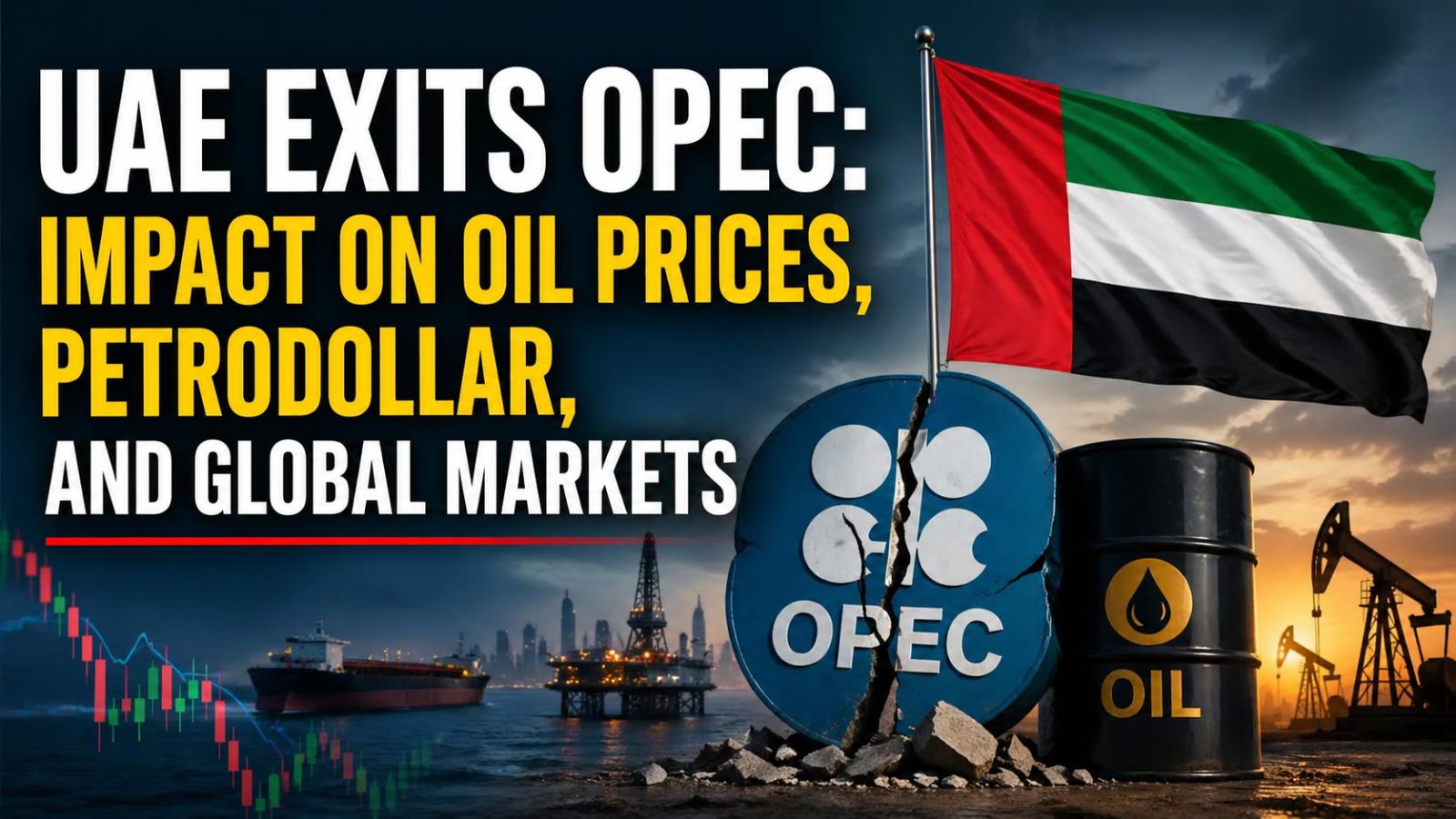
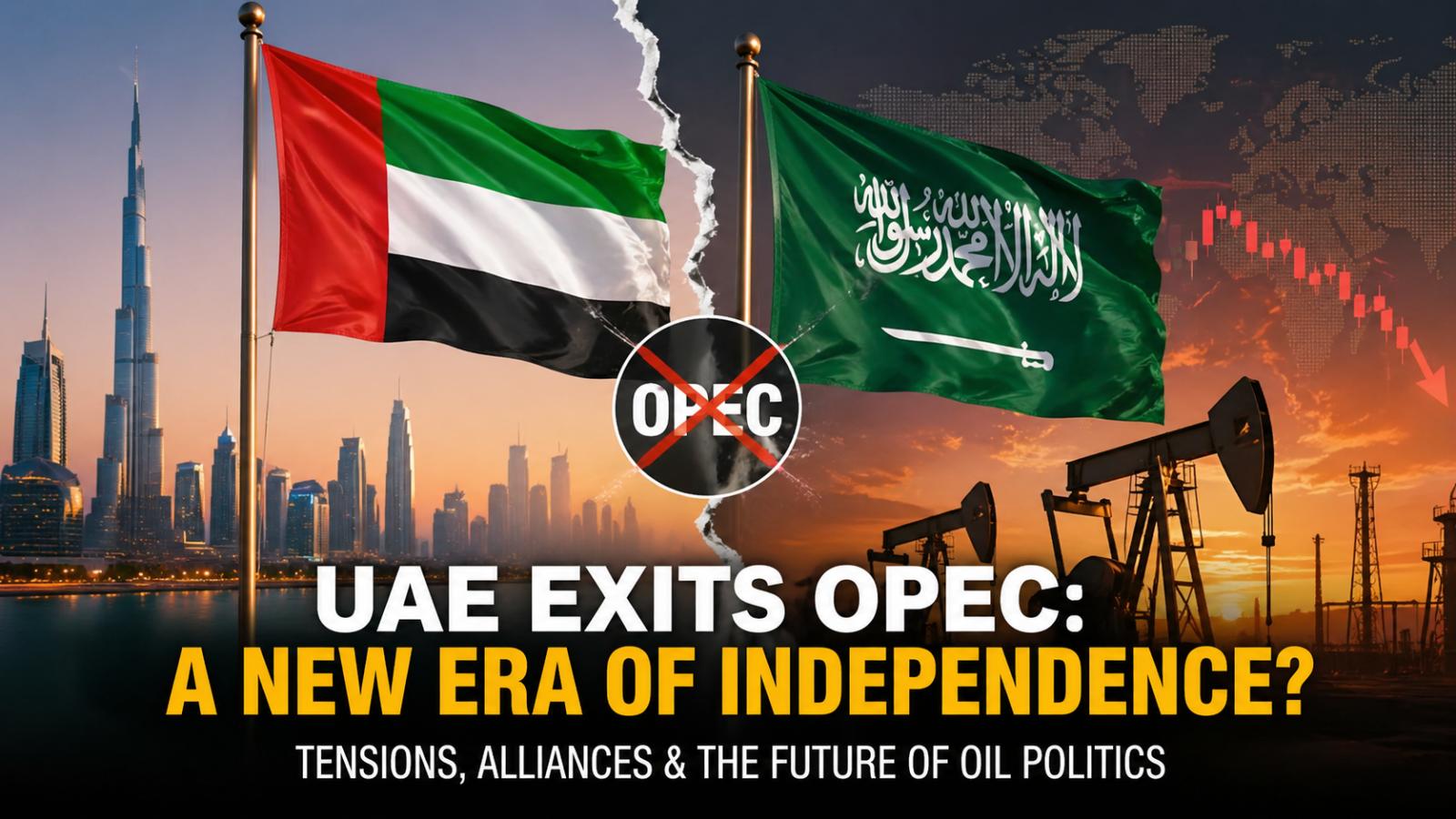
UAE exits OPEC and reshapes global oil and currency dynamics The decision by the United Arab Emirates to exit OPEC and OPEC+ marks a major shift in global energy markets. This move could increase oil price volatility, weaken OPEC’s control, and challenge the dominance of the US dollar in global oil trade. The timing is critical, coming amid rising oil prices, a growing dollar shortage in Gulf countries, and escalating tensions around the Strait of Hormuz. What does thi
UAE leaves OPEC bloc amid Gulf tensions and shifting global currency trends
UAE exits OPEC and reshapes global oil and currency dynamics The decision by the United Arab Emirates to exit OPEC and OPEC+ marks a major shift in global energy markets. This move could increase oil price volatility, weaken OPEC’s control, and challenge the dominance of the US dollar in global oil trade. The timing is critical, coming amid rising oil prices, a growing dollar shortage in Gulf countries, and escalating tensions around the Strait of Hormuz. What does thi
Is UAE leaving OPEC to counter Saudi influence? Yes, it signals strategic independence
Is UAE leaving OPEC to counter Saudi influence? Yes, it signals strategic independence. The United Arab Emirates’ decision to exit the Organization of the Petroleum Exporting Countries marks a pivotal shift in Gulf geopolitics, reflecting rising tensions with Saudi Arabia and broader regional realignments. Escalating tensions following Iran strikes on UAE infrastructure As of Tuesday, April 8, 2026, the UAE reported intercepting 537 ballistic missiles,
Is UAE leaving OPEC to counter Saudi influence? Yes, it signals strategic independence
Is UAE leaving OPEC to counter Saudi influence? Yes, it signals strategic independence. The United Arab Emirates’ decision to exit the Organization of the Petroleum Exporting Countries marks a pivotal shift in Gulf geopolitics, reflecting rising tensions with Saudi Arabia and broader regional realignments. Escalating tensions following Iran strikes on UAE infrastructure As of Tuesday, April 8, 2026, the UAE reported intercepting 537 ballistic missiles,
Can India benefit from UAE exiting OPEC? Yes, through better crude access and pricing
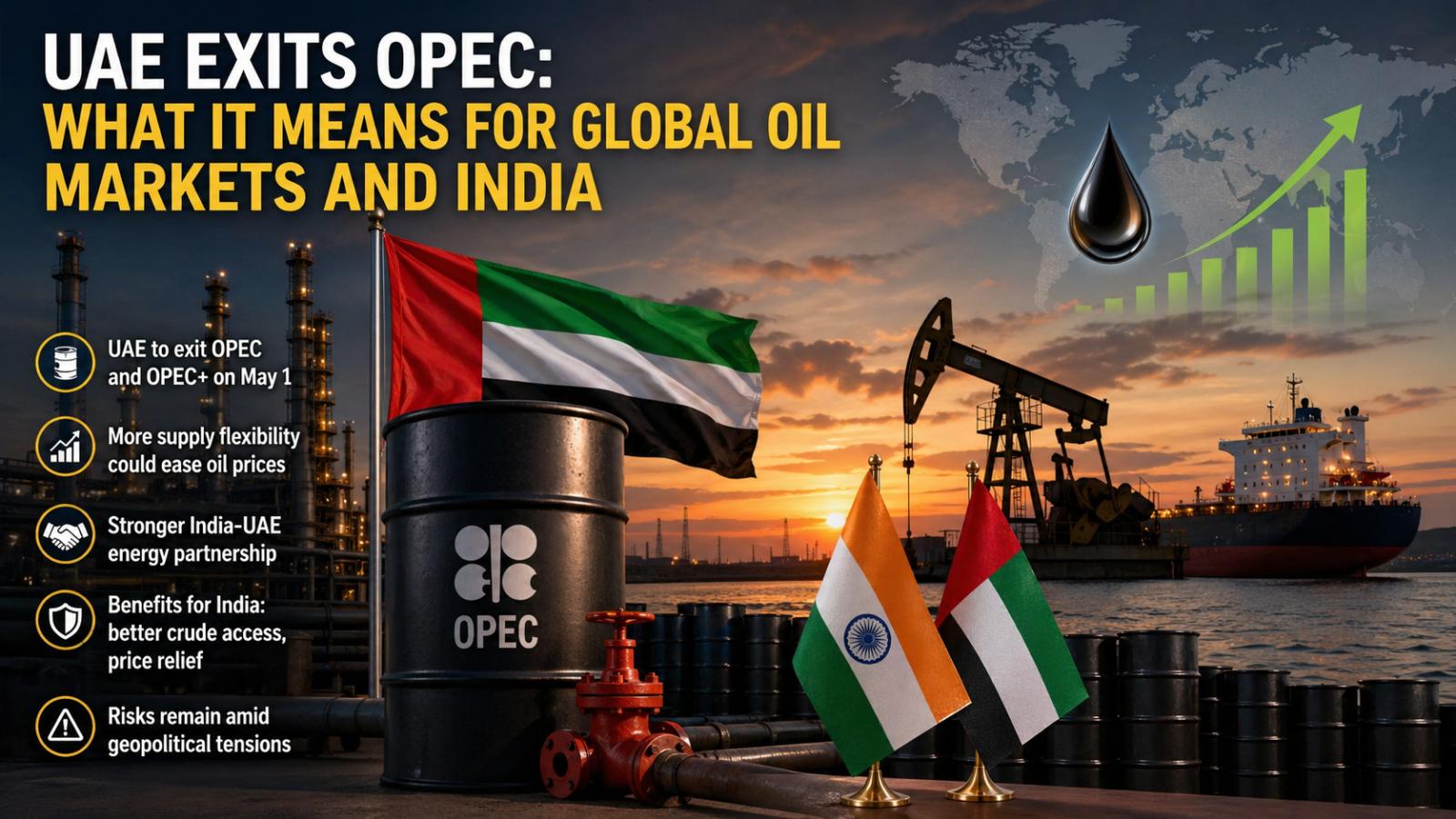
UAE’s exit from OPEC may boost oil supply, ease prices, and strengthen India energy ties, while raising volatility risks in global markets amid geopolitical tensions. Will UAE leaving OPEC lower oil prices? Yes, it could ease global supply pressure as the United Arab Emirates prepares to formally exit Organization of the Petroleum Exporting Countries and OPEC+ on May 1,
Can India benefit from UAE exiting OPEC? Yes, through better crude access and pricing
UAE’s exit from OPEC may boost oil supply, ease prices, and strengthen India energy ties, while raising volatility risks in global markets amid geopolitical tensions. Will UAE leaving OPEC lower oil prices? Yes, it could ease global supply pressure as the United Arab Emirates prepares to formally exit Organization of the Petroleum Exporting Countries and OPEC+ on May 1,
UAE to exit OPEC, signaling shift in global oil power balance
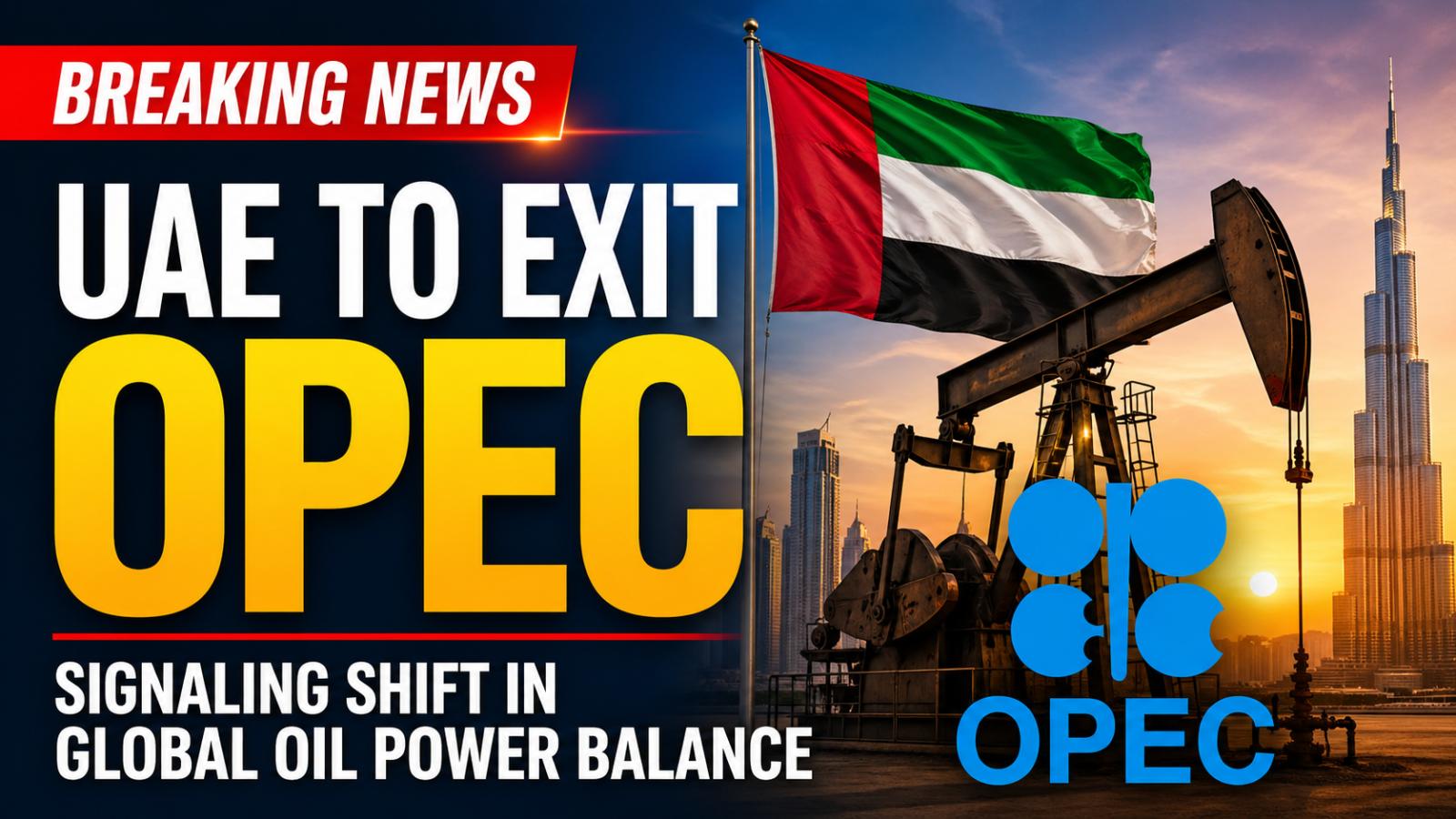
The UAE will exit OPEC on May 1 after nearly six decades, aiming for greater control over oil production and energy strategy. The move may weaken OPEC’s influence, raise concerns about supply coordination, and reshape global oil market dynamics. UAE to exit OPEC, signaling shift in global oil power balance is set to take effect May 1, marking a major change in the structure of global energy coordination. The decision reflects Abu Dhabi’s broader strategy to gai
UAE to exit OPEC, signaling shift in global oil power balance
The UAE will exit OPEC on May 1 after nearly six decades, aiming for greater control over oil production and energy strategy. The move may weaken OPEC’s influence, raise concerns about supply coordination, and reshape global oil market dynamics. UAE to exit OPEC, signaling shift in global oil power balance is set to take effect May 1, marking a major change in the structure of global energy coordination. The decision reflects Abu Dhabi’s broader strategy to gai
Japan Leads G7 Nations by Releasing Strategic Oil Reserves Amid Middle East Crisis
In a significant move amid the ongoing Middle East crisis, Japan has become the first G7 nation to announce the release of its strategic oil reserves. This decision comes in response to the geopolitical tensions affecting the global oil market and concerns over potential disruptions in the supply of crude oil. Japan's action is aimed at maintaining energy security and stabilizing oil prices, which have been fluctuating due to the crisis in the Middle East. As one of the world's larg
Japan Leads G7 Nations by Releasing Strategic Oil Reserves Amid Middle East Crisis
In a significant move amid the ongoing Middle East crisis, Japan has become the first G7 nation to announce the release of its strategic oil reserves. This decision comes in response to the geopolitical tensions affecting the global oil market and concerns over potential disruptions in the supply of crude oil. Japan's action is aimed at maintaining energy security and stabilizing oil prices, which have been fluctuating due to the crisis in the Middle East. As one of the world's larg
Oil prices sink to seven-year low as surplus fears and Ukraine peace hopes grow
U.S. crude oil prices fell to their lowest level since May on Tuesday, deepening a prolonged downturn that has put the market on track for its weakest annual performance in seven years. The decline reflects growing concerns over a looming supply surplus and shifting expectations around geopolitical risks, particularly the possibility of a peace agreement between Ukraine and Russia. West Texas Intermediate crude briefly dropped to $55.69 per barrel, while global benchmark Brent crude
Oil prices sink to seven-year low as surplus fears and Ukraine peace hopes grow
U.S. crude oil prices fell to their lowest level since May on Tuesday, deepening a prolonged downturn that has put the market on track for its weakest annual performance in seven years. The decline reflects growing concerns over a looming supply surplus and shifting expectations around geopolitical risks, particularly the possibility of a peace agreement between Ukraine and Russia. West Texas Intermediate crude briefly dropped to $55.69 per barrel, while global benchmark Brent crude
US tariffs on India and China energy trade spark global concerns
US Secretary of State Marco Rubio has acknowledged that the idea of imposing secondary sanctions on China for refining Russian oil carries serious risks for the global economy, warning that such measures could drive up energy prices at a time when the market is already under strain. His remarks come amid ongoing friction over India’s continued oil trade with Moscow, which has led Washington to impose additional tariffs on New Delhi. The dual focus on China
US tariffs on India and China energy trade spark global concerns
US Secretary of State Marco Rubio has acknowledged that the idea of imposing secondary sanctions on China for refining Russian oil carries serious risks for the global economy, warning that such measures could drive up energy prices at a time when the market is already under strain. His remarks come amid ongoing friction over India’s continued oil trade with Moscow, which has led Washington to impose additional tariffs on New Delhi. The dual focus on China
Crude oil rises amid hopes of US-China trade deal and stable global supply
Oil prices rose on Monday as encouraging signs from trade talks between the United States and China improved market sentiment. Over the weekend, both sides reported progress in negotiations, helping ease concerns in global markets and fueling optimism that the two largest crude consumers are moving closer to resolving their long-running trade dispute. Brent crude futures increased by 43 cents, or 0.67%, reaching $64.34 per barrel in early Asian trading. At the same time, U.S. West
Crude oil rises amid hopes of US-China trade deal and stable global supply
Oil prices rose on Monday as encouraging signs from trade talks between the United States and China improved market sentiment. Over the weekend, both sides reported progress in negotiations, helping ease concerns in global markets and fueling optimism that the two largest crude consumers are moving closer to resolving their long-running trade dispute. Brent crude futures increased by 43 cents, or 0.67%, reaching $64.34 per barrel in early Asian trading. At the same time, U.S. West
Oil Prices Rangebound Ahead of OPEC+ Decision and Trump Risks
Oil prices have shown remarkable stability, remaining in a narrow range since mid-October, with West Texas Intermediate (WTI) crude fluctuating around $70 per barrel. This rangebound trend has been characterized by a significant drop in volatility, with recent levels at their lowest since August. Despite ongoing geopolitical risks, such as the tensions between Iran and Israel and the potential impacts of a second Donald Trump presidency, traders have remained cautious. The market's curren
Oil Prices Rangebound Ahead of OPEC+ Decision and Trump Risks
Oil prices have shown remarkable stability, remaining in a narrow range since mid-October, with West Texas Intermediate (WTI) crude fluctuating around $70 per barrel. This rangebound trend has been characterized by a significant drop in volatility, with recent levels at their lowest since August. Despite ongoing geopolitical risks, such as the tensions between Iran and Israel and the potential impacts of a second Donald Trump presidency, traders have remained cautious. The market's curren


