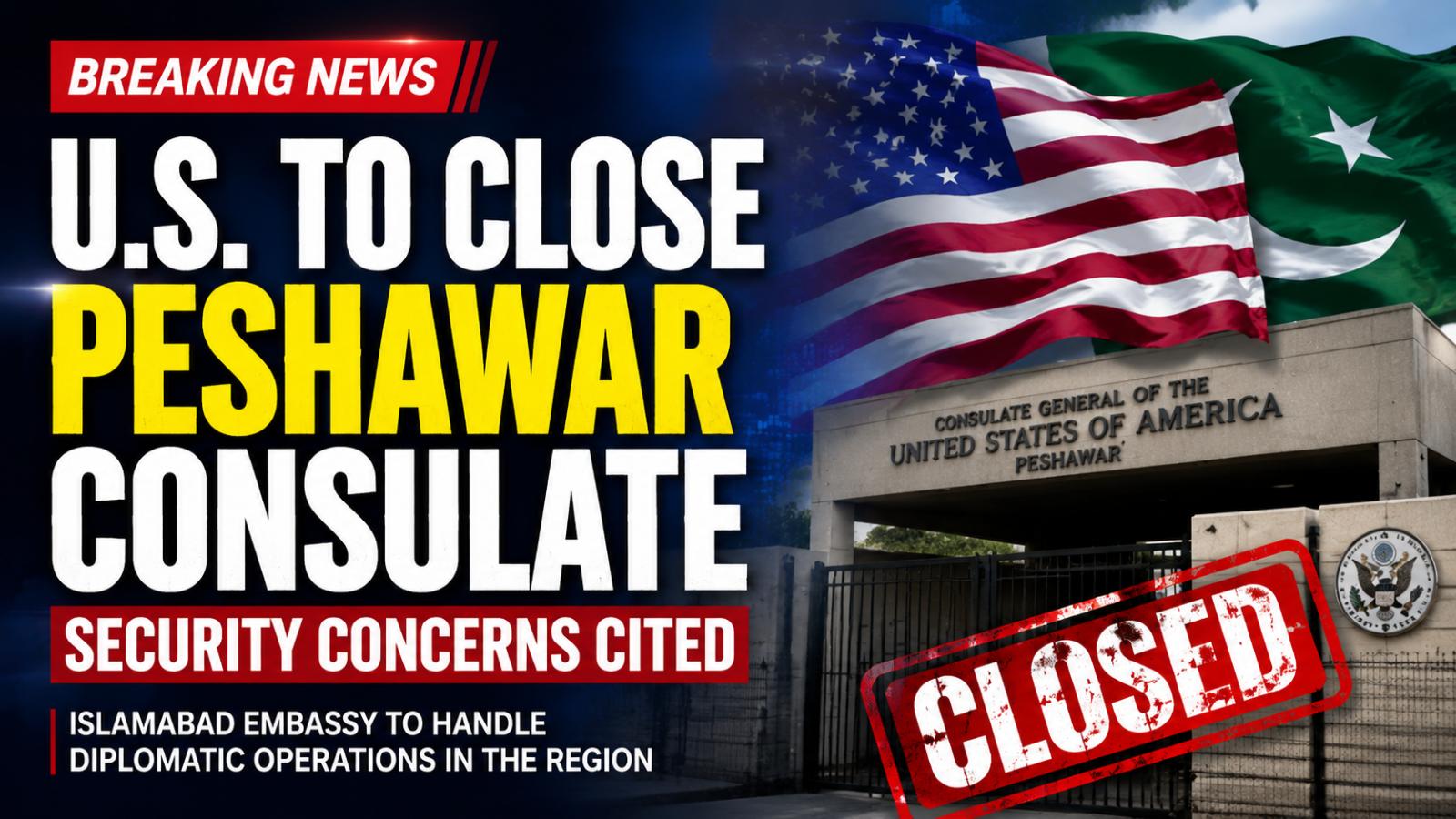
The United States announced on May 6 that it will close its consulate in Peshawar, Pakistan, citing safety concerns for its diplomats. The U.S. State Department released a notice explaining that the decision was made in response to the region's security conditions. The embassy in Islamabad will now handle all diplomatic engagements with Khyber Pakhtunkhwa province, where Peshawar is the capital. This shift reflects the United States' commitment to the safety of its diplomatic personnel while optimizing resources.
The State Department clarified that the closure is only related to the physical presence in Peshawar. U.S. policy priorities in Pakistan, however, remain unchanged. The U.S. will continue to engage with the people and officials of Khyber Pakhtunkhwa to enhance economic ties, promote regional security, and advance American interests in the region.
Despite the consulate closure, the U.S. Mission to Pakistan will maintain a strong presence and continue to foster relations through its remaining diplomatic posts in Islamabad, Karachi, and Lahore. Khyber Pakhtunkhwa, which borders Afghanistan, has seen numerous security incidents due to ongoing conflicts between Pakistan's military forces and Afghan-backed militants. These tensions have heightened security concerns in the area.
Additionally, protests occurred outside the U.S. consulate in Karachi following the death of Iranian Supreme Leader Ayatollah Ali Khamenei in U.S.-Israeli airstrikes. The incident led to the deaths of at least ten people in Pakistan, prompting President Asif Ali Zardari to express Pakistan's solidarity with Iran in this time of grief. Despite this, Pakistan has taken on the role of mediator in the ongoing conflict between Iran and the United States.
The shift in U.S. diplomatic presence in Pakistan is part of a broader strategy to ensure safety while continuing to support strategic relationships in the region.
The United States announced on May 6 that it will close its consulate in Peshawar, Pakistan, citing safety concerns for its diplomats. The U.S. State Department released a notice explaining that the decision was made in response to the region's security conditions. The embassy in Islamabad will now handle all diplomatic engagements with Khyber Pakhtunkhwa province, where Peshawar is the capital. This shift reflects the United States' commitment to the safety of its diplomatic personnel while optimizing resources.
The State Department clarified that the closure is only related to the physical presence in Peshawar. U.S. policy priorities in Pakistan, however, remain unchanged. The U.S. will continue to engage with the people and officials of Khyber Pakhtunkhwa to enhance economic ties, promote regional security, and advance American interests in the region.
Despite the consulate closure, the U.S. Mission to Pakistan will maintain a strong presence and continue to foster relations through its remaining diplomatic posts in Islamabad, Karachi, and Lahore. Khyber Pakhtunkhwa, which borders Afghanistan, has seen numerous security incidents due to ongoing conflicts between Pakistan's military forces and Afghan-backed militants. These tensions have heightened security concerns in the area.
Additionally, protests occurred outside the U.S. consulate in Karachi following the death of Iranian Supreme Leader Ayatollah Ali Khamenei in U.S.-Israeli airstrikes. The incident led to the deaths of at least ten people in Pakistan, prompting President Asif Ali Zardari to express Pakistan's solidarity with Iran in this time of grief. Despite this, Pakistan has taken on the role of mediator in the ongoing conflict between Iran and the United States.
The shift in U.S. diplomatic presence in Pakistan is part of a broader strategy to ensure safety while continuing to support strategic relationships in the region.
A newly released video by United States Central Command highlights continued US military readiness and naval operations in the North Arabian Sea, even as a ceasefire extension remains in place. The footage, published shortly after Donald Trump announced an extension of the truce, underscores the United Sta
A newly released video by United States Central Command highlights continued US military readiness and naval operations in the North Arabian Sea, even as a ceasefire extension remains in place. The footage, published shortly after Donald Trump announced an extension of the truce, underscores the United Sta
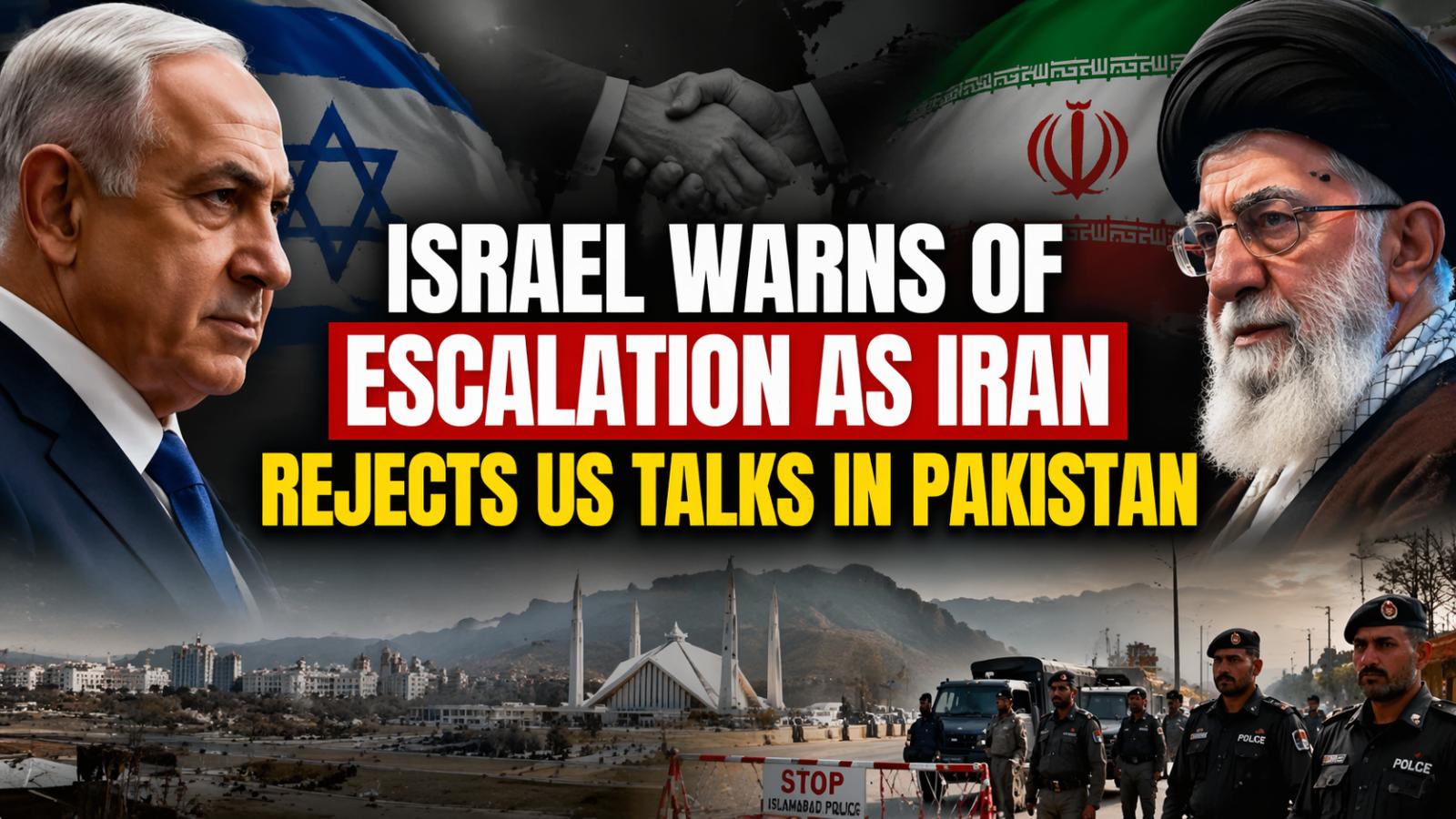
Israeli Prime Minister Benjamin Netanyahu has warned that tensions with Iran could escalate rapidly, underscoring the fragile state of the ongoing geopolitical situation. Speaking alongside Javier Milei, Netanyahu said the conflict remains unpredictable and developments could unfold at any moment. He empha
Israeli Prime Minister Benjamin Netanyahu has warned that tensions with Iran could escalate rapidly, underscoring the fragile state of the ongoing geopolitical situation. Speaking alongside Javier Milei, Netanyahu said the conflict remains unpredictable and developments could unfold at any moment. He empha
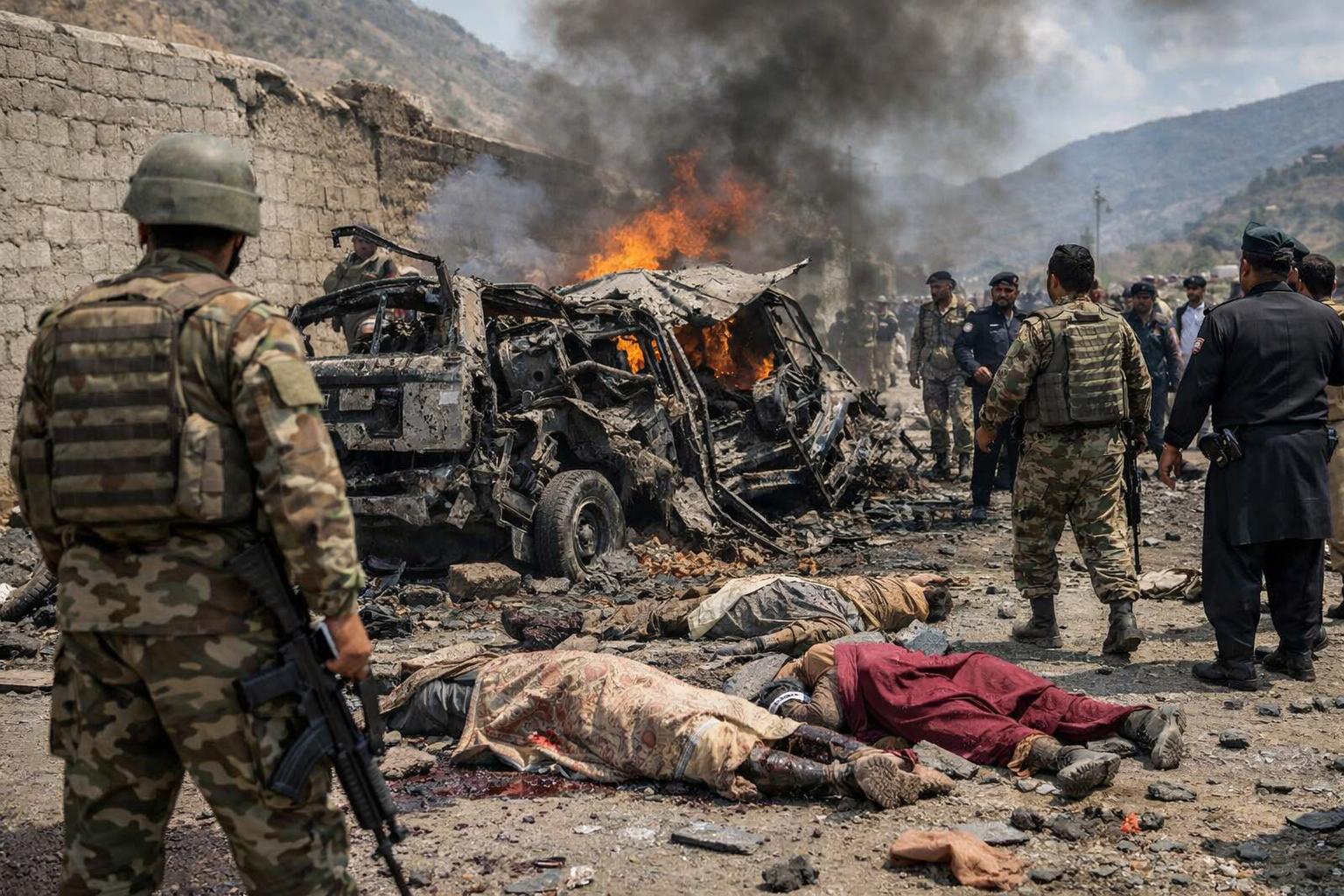
At least 14 military personnel, 18 militants and three civilians, including a child, were killed in a series of coordinated attacks in Pakistan’s northwestern Khyber Pakhtunkhwa province, according to military and police officials. The violence, which involved two bomb explosions and a subsequent gunfight near a security checkpoint, also left at least 12 people injured.
Security officials said the deadliest incident occurred near a military check post in Bajaur district on Monday when militants rammed an explosive-laden vehicle into a wall close to the facility. The powerful blast killed 11 members of the security forces and a young girl who was nearby at the time of the explosion. Authorities described the attack as a deliberate attempt to breach the checkpoint’s defenses.
In a statement issued Tuesday, the military’s media wing said troops responded swiftly after the blast. According to the statement, security personnel engaged the attackers who attempted to flee the scene. The military reported that 12 militants were killed during the follow-up operation, crediting what it called a “vigilant and resolute response” by troops on the ground. Officials maintained that the attackers’ plan to overrun the check post was successfully thwarted.
In a separate operation in Shangla district, police confirmed that three security personnel and three militants were killed during what was described as a search-and-rescue mission. Authorities said the militants involved in that encounter had been linked to plots targeting Chinese nationals working in the region, highlighting ongoing concerns about the safety of foreign workers in Pakistan’s sensitive border areas.
The latest violence comes amid a broader surge in militant activity across Pakistan, particularly in Khyber Pakhtunkhwa and adjoining tribal regions. Security analysts note that attacks have increased since the Taliban returned to power in neighboring Afghanistan in 2021. Official data indicates that more than 2,400 people were killed in terror-related incidents during the first three quarters of 2025, reflecting a sharp rise in militant violence compared with previous years.
Pakistani authorities have blamed the Tehrik-i-Taliban Pakistan (TTP) for many of the recent attacks. The group, whose fighters largely originate from Pakistan’s tribal belt near the Afghan border, has intensified operations against security forces and government targets. Officials say counterterror operations will continue as security agencies attempt to contain the growing threat.
Investigations into both incidents are ongoing, and additional security measures have been reinforced across vulnerable districts in Khyber Pakhtunkhwa.
At least 14 military personnel, 18 militants and three civilians, including a child, were killed in a series of coordinated attacks in Pakistan’s northwestern Khyber Pakhtunkhwa province, according to military and police officials. The violence, which involved two bomb explosions and a subsequent gunfight near a security checkpoint, also left at least 12 people injured.
Security officials said the deadliest incident occurred near a military check post in Bajaur district on Monday when militants rammed an explosive-laden vehicle into a wall close to the facility. The powerful blast killed 11 members of the security forces and a young girl who was nearby at the time of the explosion. Authorities described the attack as a deliberate attempt to breach the checkpoint’s defenses.
In a statement issued Tuesday, the military’s media wing said troops responded swiftly after the blast. According to the statement, security personnel engaged the attackers who attempted to flee the scene. The military reported that 12 militants were killed during the follow-up operation, crediting what it called a “vigilant and resolute response” by troops on the ground. Officials maintained that the attackers’ plan to overrun the check post was successfully thwarted.
In a separate operation in Shangla district, police confirmed that three security personnel and three militants were killed during what was described as a search-and-rescue mission. Authorities said the militants involved in that encounter had been linked to plots targeting Chinese nationals working in the region, highlighting ongoing concerns about the safety of foreign workers in Pakistan’s sensitive border areas.
The latest violence comes amid a broader surge in militant activity across Pakistan, particularly in Khyber Pakhtunkhwa and adjoining tribal regions. Security analysts note that attacks have increased since the Taliban returned to power in neighboring Afghanistan in 2021. Official data indicates that more than 2,400 people were killed in terror-related incidents during the first three quarters of 2025, reflecting a sharp rise in militant violence compared with previous years.
Pakistani authorities have blamed the Tehrik-i-Taliban Pakistan (TTP) for many of the recent attacks. The group, whose fighters largely originate from Pakistan’s tribal belt near the Afghan border, has intensified operations against security forces and government targets. Officials say counterterror operations will continue as security agencies attempt to contain the growing threat.
Investigations into both incidents are ongoing, and additional security measures have been reinforced across vulnerable districts in Khyber Pakhtunkhwa.