

















#regionalcrisis
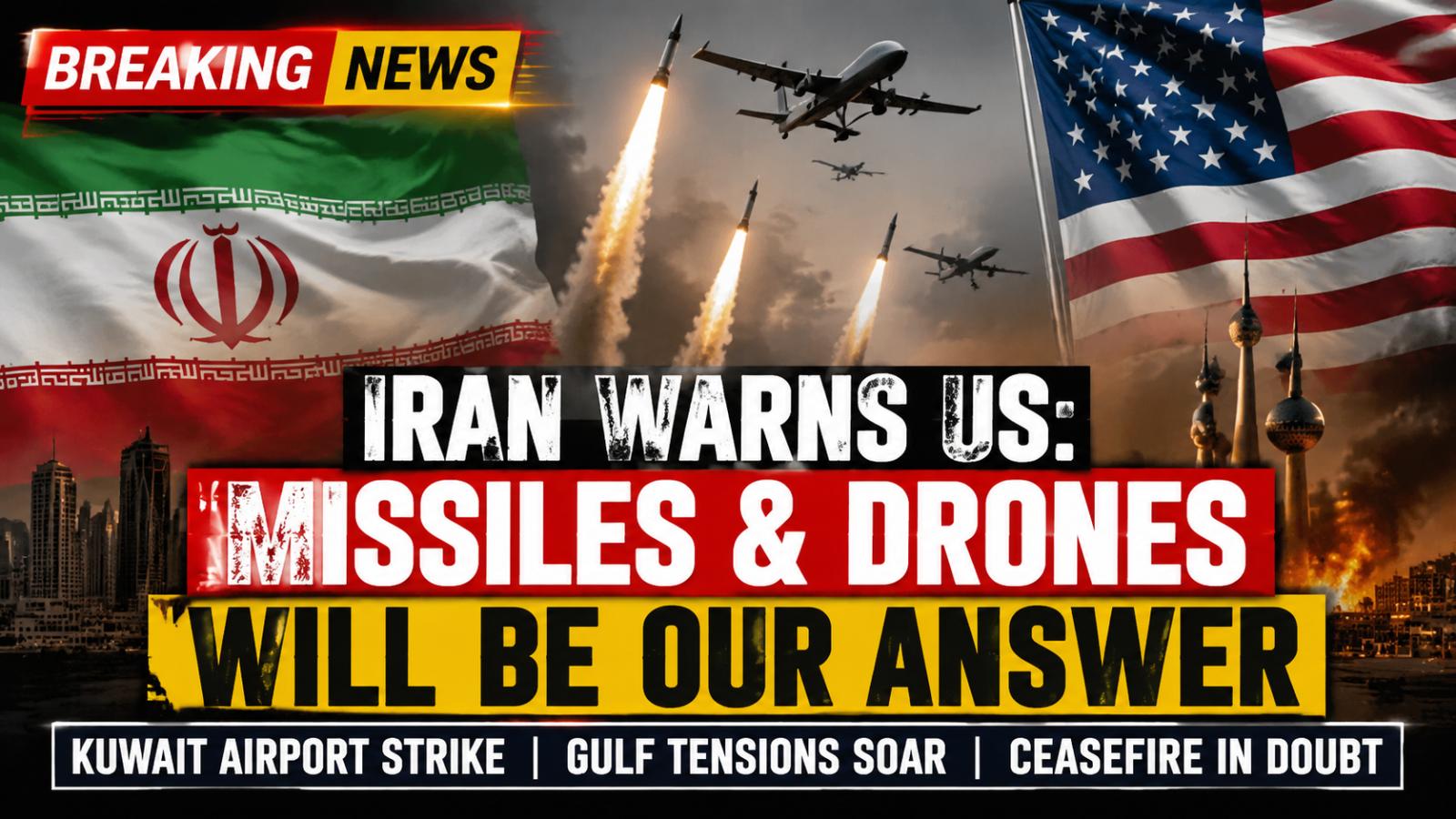
Iran Warns US of Missile & Drone Retaliation After Kuwait Airport Attack
Iran has issued a stern warning that any renewed U.S. military action will trigger a swift response using missiles and drones. Senior military adviser Mohsen Rezaei, speaking amid rising Gulf tensions, emphasized that Iran is prepared to defend itself against what it considers aggressive overreach. The statement underlines the fragile state of regional diplomacy and the challenges facing efforts to secure a ceasefire.
Iran Warns US of Missile & Drone Retaliation After Kuwait Airport Attack
Iran has issued a stern warning that any renewed U.S. military action will trigger a swift response using missiles and drones. Senior military adviser Mohsen Rezaei, speaking amid rising Gulf tensions, emphasized that Iran is prepared to defend itself against what it considers aggressive overreach. The statement underlines the fragile state of regional diplomacy and the challenges facing efforts to secure a ceasefire.
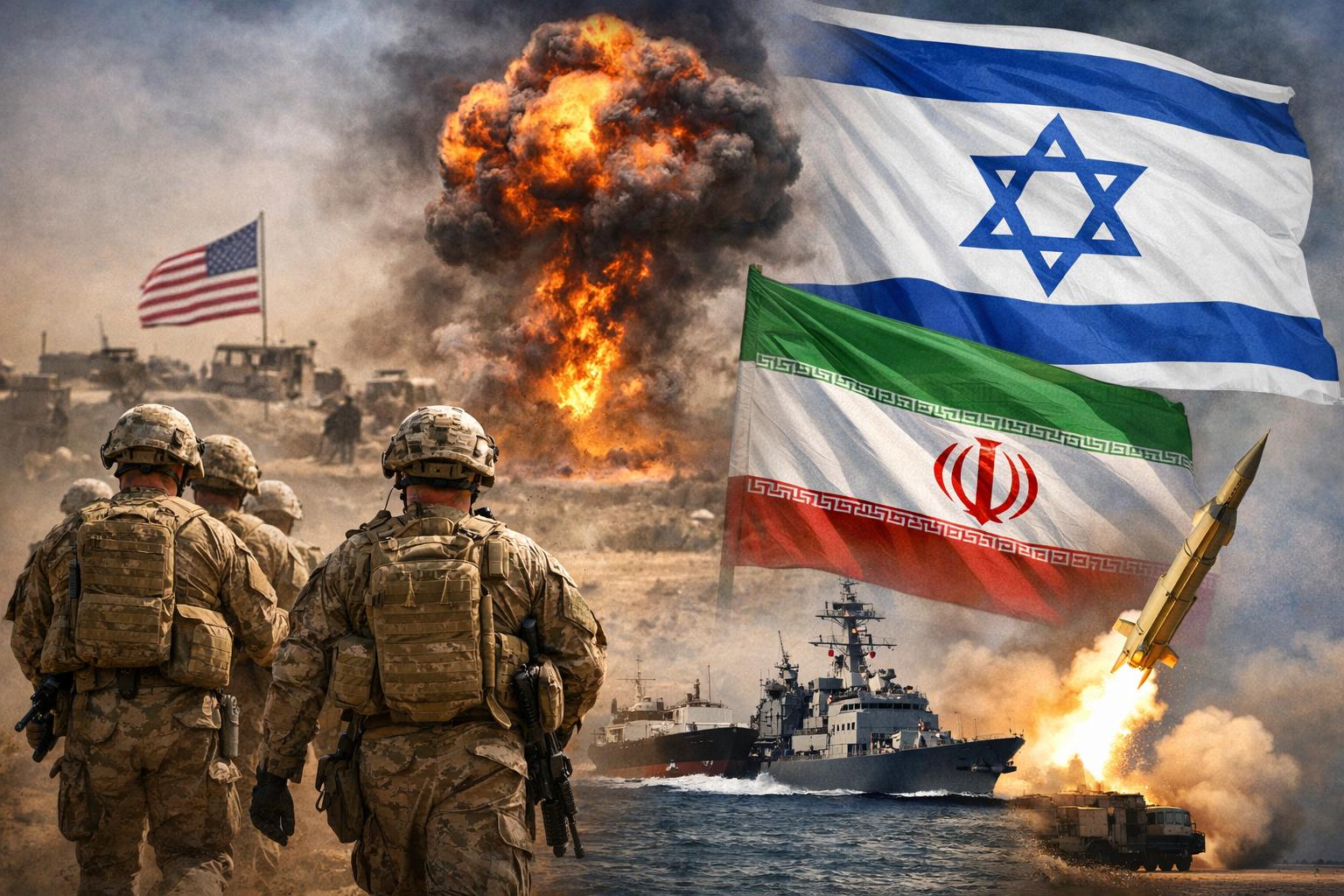
US-Israel-Iran tensions escalate as troop levels rise in Middle East
Tensions between the United States, Israel, and Iran are intensifying, with multiple developments across the Middle East signaling a potentially dangerous escalation in the ongoing conflict. The situation has drawn increased global attention as military activity expands and diplomatic efforts continue behind the scenes. Hundreds of US Special Operations forces have recently been deployed to the region, pushing total American troop levels beyond 50,000. The expanded presence reflects growing concerns in Washington over regional stability and the need to safeguard critical maritime routes, including the strategically vital Strait of Hormuz. US officials are also weighing a range of military and strategic options, including potential actions targeting Iran’s nuclear capabilities and energy infrastructure. Amid these developments, discussions have reportedly included the possibility of securing or seizing Iranian oil facilities and enriched uranium assets. At the same time, diplomatic channels remain active, with regional intermediaries attempting to ease tensions and prevent further escalation. Uncertainty surrounding Iran’s leadership has added another layer of complexity. Supreme Leader Mojtaba Khamenei has not appeared publicly in recent days, fueling speculation about his health and control over internal decision-making during a critical period. The conflict is also beginning to extend beyond traditional battle zones. A recent Iranian strike in Kuwait resulted in the death of an Indian worker, underscoring the growing risks to civilians and foreign nationals in the region. Analysts warn that such incidents highlight the vulnerability of critical infrastructure and the potential for unintended consequences as hostilities widen. Security experts caution that the situation remains highly volatile, with the possibility of broader regional fallout if tensions continue to rise. As military posturing increases alongside fragile diplomatic efforts, the coming days are expected to be crucial in determining whether the conflict can be contained or escalates further.
US-Israel-Iran tensions escalate as troop levels rise in Middle East
Tensions between the United States, Israel, and Iran are intensifying, with multiple developments across the Middle East signaling a potentially dangerous escalation in the ongoing conflict. The situation has drawn increased global attention as military activity expands and diplomatic efforts continue behind the scenes. Hundreds of US Special Operations forces have recently been deployed to the region, pushing total American troop levels beyond 50,000. The expanded presence reflects growing concerns in Washington over regional stability and the need to safeguard critical maritime routes, including the strategically vital Strait of Hormuz. US officials are also weighing a range of military and strategic options, including potential actions targeting Iran’s nuclear capabilities and energy infrastructure. Amid these developments, discussions have reportedly included the possibility of securing or seizing Iranian oil facilities and enriched uranium assets. At the same time, diplomatic channels remain active, with regional intermediaries attempting to ease tensions and prevent further escalation. Uncertainty surrounding Iran’s leadership has added another layer of complexity. Supreme Leader Mojtaba Khamenei has not appeared publicly in recent days, fueling speculation about his health and control over internal decision-making during a critical period. The conflict is also beginning to extend beyond traditional battle zones. A recent Iranian strike in Kuwait resulted in the death of an Indian worker, underscoring the growing risks to civilians and foreign nationals in the region. Analysts warn that such incidents highlight the vulnerability of critical infrastructure and the potential for unintended consequences as hostilities widen. Security experts caution that the situation remains highly volatile, with the possibility of broader regional fallout if tensions continue to rise. As military posturing increases alongside fragile diplomatic efforts, the coming days are expected to be crucial in determining whether the conflict can be contained or escalates further.
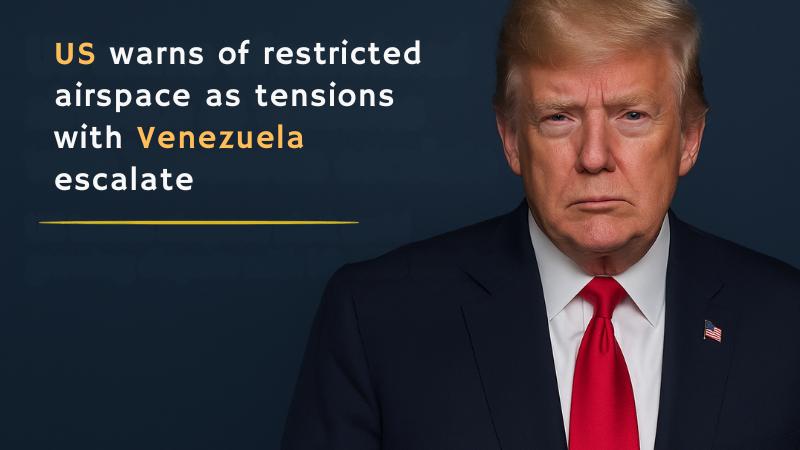
US warns of restricted airspace as tensions with Venezuela escalate
Amid heightened tensions in Latin America, the United States has issued a strong warning advising pilots, airlines, and operators to treat the airspace over and around Venezuela as closed. The statement was delivered by US President Donald Trump, who posted the alert during a period of intensified American counterdrug operations targeting trafficking networks operating near Venezuelan borders. His message underscored what officials describe as an increasingly unstable security climate, citing
US warns of restricted airspace as tensions with Venezuela escalate
Amid heightened tensions in Latin America, the United States has issued a strong warning advising pilots, airlines, and operators to treat the airspace over and around Venezuela as closed. The statement was delivered by US President Donald Trump, who posted the alert during a period of intensified American counterdrug operations targeting trafficking networks operating near Venezuelan borders. His message underscored what officials describe as an increasingly unstable security climate, citing
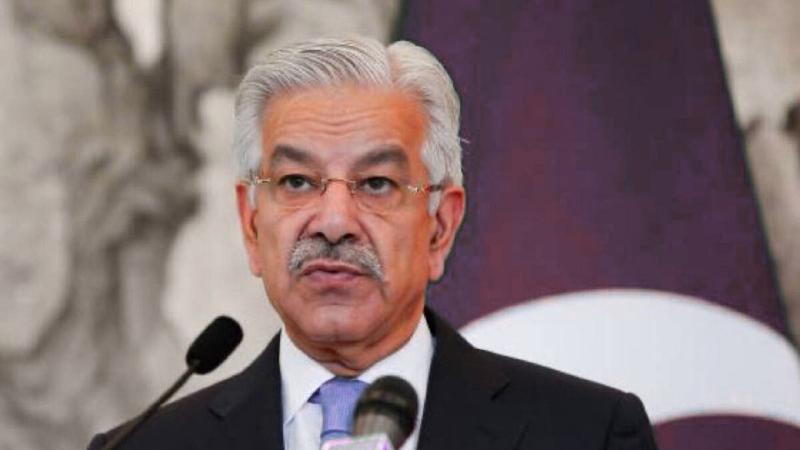
Pakistan On Full Alert As Khawaja Asif Says He Can’t Rule Out War With India
Pakistan’s Defence Minister Khawaja Asif has issued a sharp warning that the country cannot rule out the possibility of an all-out war with India, stating that Islamabad remains on full alert as tensions rise across the region. Speaking to Samaa TV, Asif said his analysis suggested India could adopt hostile strategies, including border incursions or coordinated attacks, and stressed the need for complete preparedness. His remarks follow Indian Army Chief General Upendra Dwivedi’
Pakistan On Full Alert As Khawaja Asif Says He Can’t Rule Out War With India
Pakistan’s Defence Minister Khawaja Asif has issued a sharp warning that the country cannot rule out the possibility of an all-out war with India, stating that Islamabad remains on full alert as tensions rise across the region. Speaking to Samaa TV, Asif said his analysis suggested India could adopt hostile strategies, including border incursions or coordinated attacks, and stressed the need for complete preparedness. His remarks follow Indian Army Chief General Upendra Dwivedi’


