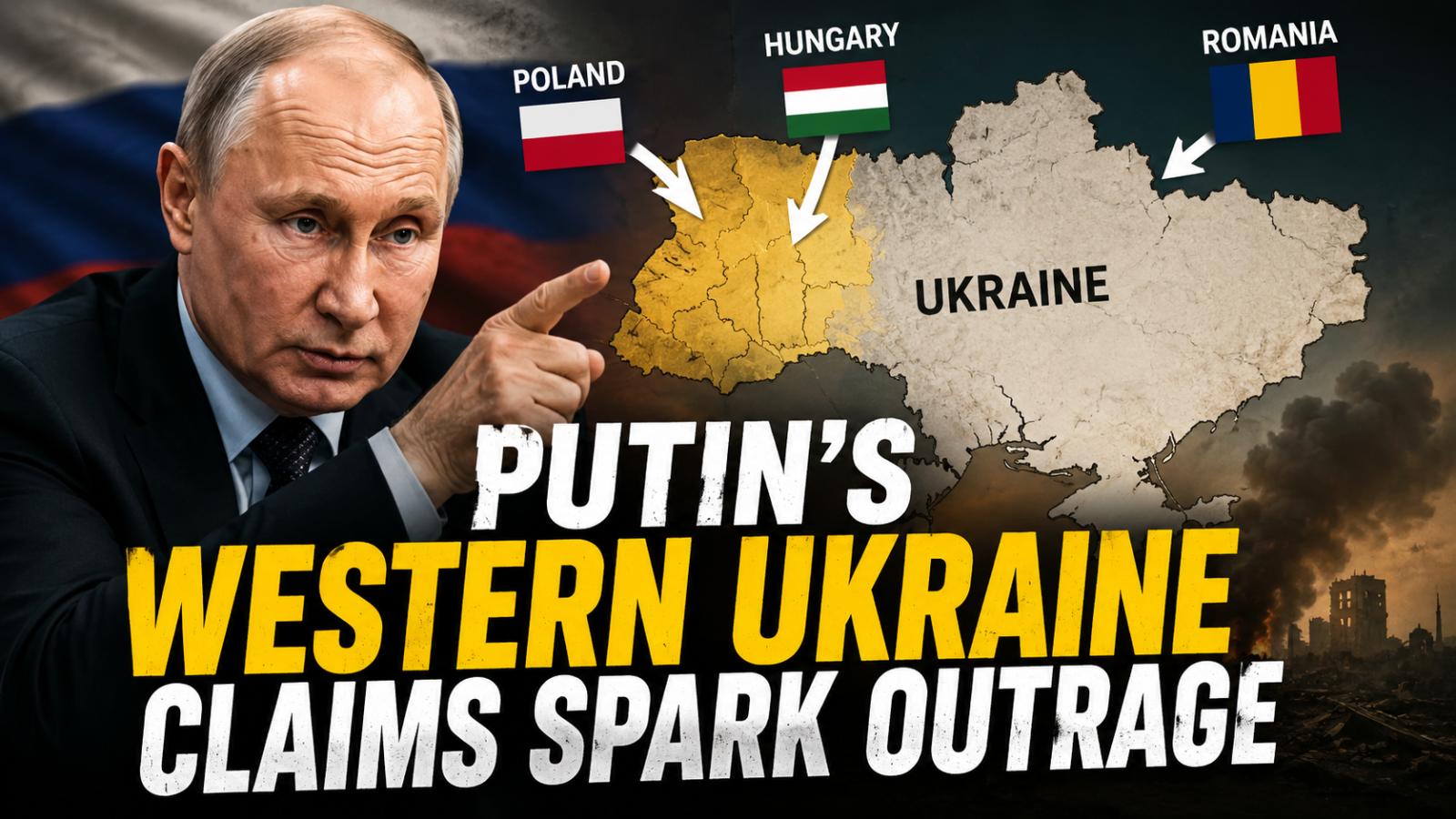
Russian President Vladimir Putin has revived disputed historical arguments about western Ukraine, suggesting that some territories could eventually pass to Poland, Hungary and Romania. His remarks came during a televised meeting with Russian Navy personnel on July 26, 2026, as Moscow held scaled-down Navy Day observances.
Putin’s Western Ukraine Claims
During the meeting, Putin described part
Russian President Vladimir Putin has revived disputed historical arguments about western Ukraine, suggesting that some territories could eventually pass to Poland, Hungary and Romania. His remarks came during a televised meeting with Russian Navy personnel on July 26, 2026, as Moscow held scaled-down Navy Day observances.
Putin’s Western Ukraine Claims
During the meeting, Putin described part
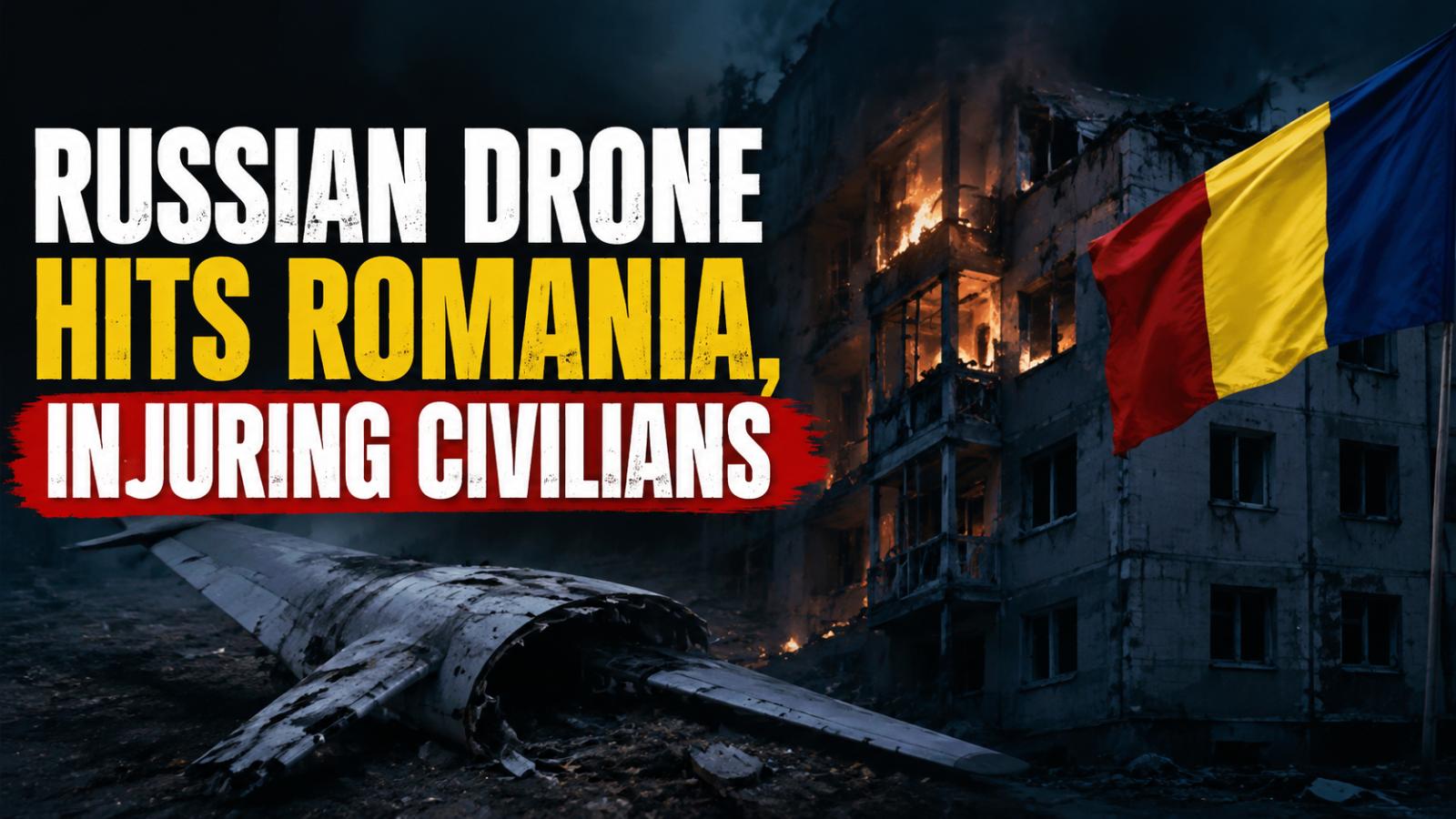
Late on May 28-29, a Russian drone struck a residential building in Galati, Romania, causing a fire and injuring two civilians. Romanian authorities described the event as extremely serious and summoned the Russian ambassador for explanation. The strike marks a notable escalation of regional tensions and highlights risks to civilian areas in Eastern Europe.
Romanian Government Response
President Nicusor Dan convened the
Late on May 28-29, a Russian drone struck a residential building in Galati, Romania, causing a fire and injuring two civilians. Romanian authorities described the event as extremely serious and summoned the Russian ambassador for explanation. The strike marks a notable escalation of regional tensions and highlights risks to civilian areas in Eastern Europe.
Romanian Government Response
President Nicusor Dan convened the
Drone Hits Building In Galati
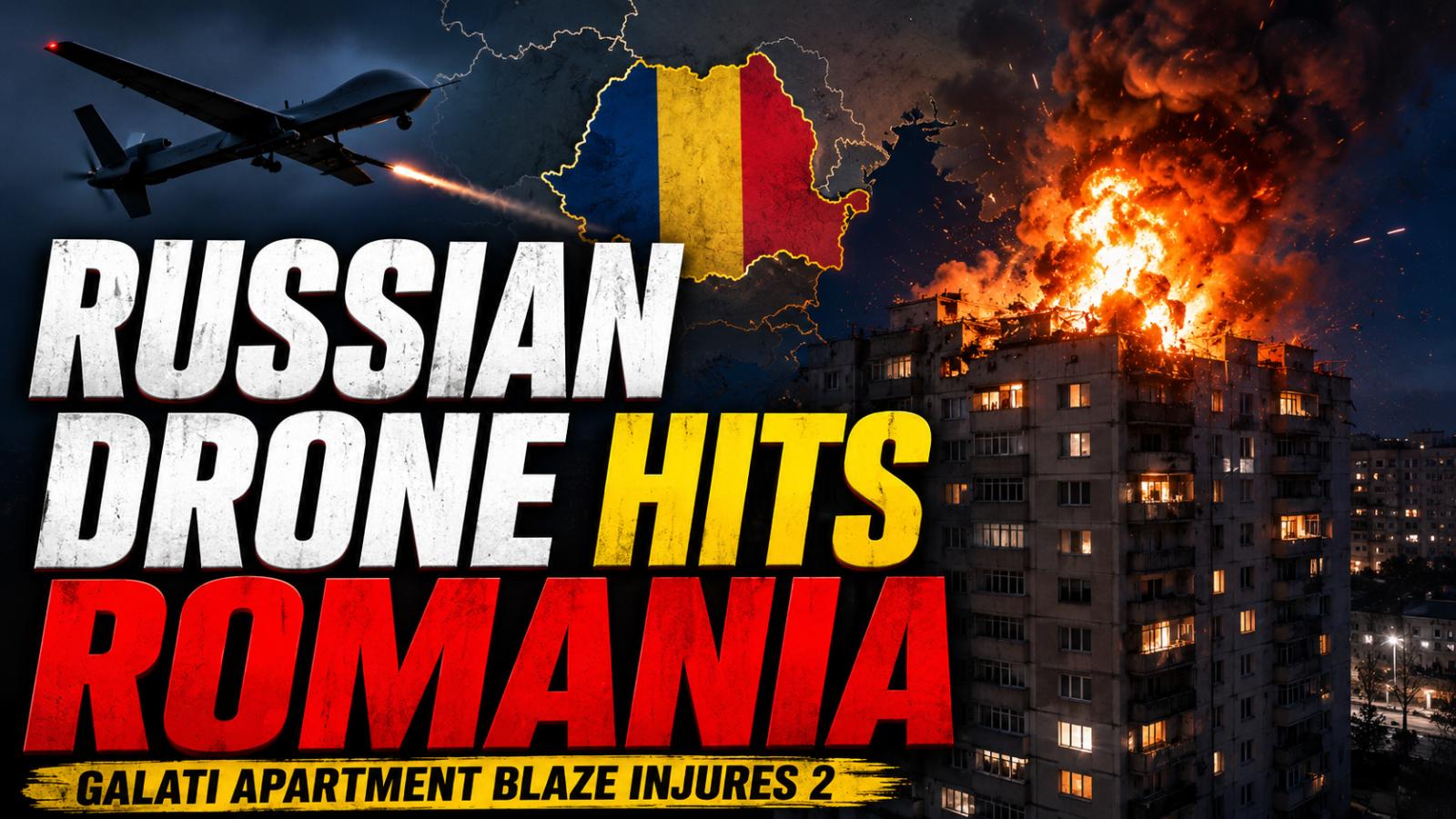
A Russian drone struck an apartment building in the Romanian city of Galati early Friday, May 29, causing a fire and injuring two people, Romania’s defence ministry said. The incident took place near the country’s river border with Ukraine during a renewed wave of Russian drone attacks on civilian and infrastructure targets across Ukraine. Videos shared online showed an explosion at the moment of impact, though authorities have not provided further details on the full extent of the damage.
Romania Reports Airspace Breach
According to Romania’s defence ministry, one of the drones entered Romanian airspace during the overnight attack and was tracked by radar as it moved toward the southern part of Galati. The drone later crashed onto the roof of an apartment building, where the impact triggered a fire. The ministry said the aircraft was linked to Russia’s wider drone operations targeting areas in Ukraine close to Romania’s border.
War Spillover Raises Concern
The strike has renewed concerns about the risk of the Russia-Ukraine war spilling into NATO territory. Romania, a NATO member, has previously reported drone fragments and airspace violations linked to Russian attacks near the Ukrainian border. However, an impact on a residential building inside Romania adds a more serious civilian safety concern and raises questions about border security, air defence monitoring and the growing risks faced by communities near the conflict zone.
The Galati incident comes as Russian forces continue to use drones against Ukrainian civilian and infrastructure targets close to Romania. Romanian officials said the drone was tracked before it crashed, but did not immediately say whether it was intercepted or whether further military action was considered. The immediate priority remained firefighting, medical response and damage assessment at the apartment building. The event is likely to increase pressure on Romanian and NATO authorities to strengthen surveillance and response systems along the border while avoiding any escalation beyond defensive security measures.
Drone Hits Building In Galati
A Russian drone struck an apartment building in the Romanian city of Galati early Friday, May 29, causing a fire and injuring two people, Romania’s defence ministry said. The incident took place near the country’s river border with Ukraine during a renewed wave of Russian drone attacks on civilian and infrastructure targets across Ukraine. Videos shared online showed an explosion at the moment of impact, though authorities have not provided further details on the full extent of the damage.
Romania Reports Airspace Breach
According to Romania’s defence ministry, one of the drones entered Romanian airspace during the overnight attack and was tracked by radar as it moved toward the southern part of Galati. The drone later crashed onto the roof of an apartment building, where the impact triggered a fire. The ministry said the aircraft was linked to Russia’s wider drone operations targeting areas in Ukraine close to Romania’s border.
War Spillover Raises Concern
The strike has renewed concerns about the risk of the Russia-Ukraine war spilling into NATO territory. Romania, a NATO member, has previously reported drone fragments and airspace violations linked to Russian attacks near the Ukrainian border. However, an impact on a residential building inside Romania adds a more serious civilian safety concern and raises questions about border security, air defence monitoring and the growing risks faced by communities near the conflict zone.
The Galati incident comes as Russian forces continue to use drones against Ukrainian civilian and infrastructure targets close to Romania. Romanian officials said the drone was tracked before it crashed, but did not immediately say whether it was intercepted or whether further military action was considered. The immediate priority remained firefighting, medical response and damage assessment at the apartment building. The event is likely to increase pressure on Romanian and NATO authorities to strengthen surveillance and response systems along the border while avoiding any escalation beyond defensive security measures.
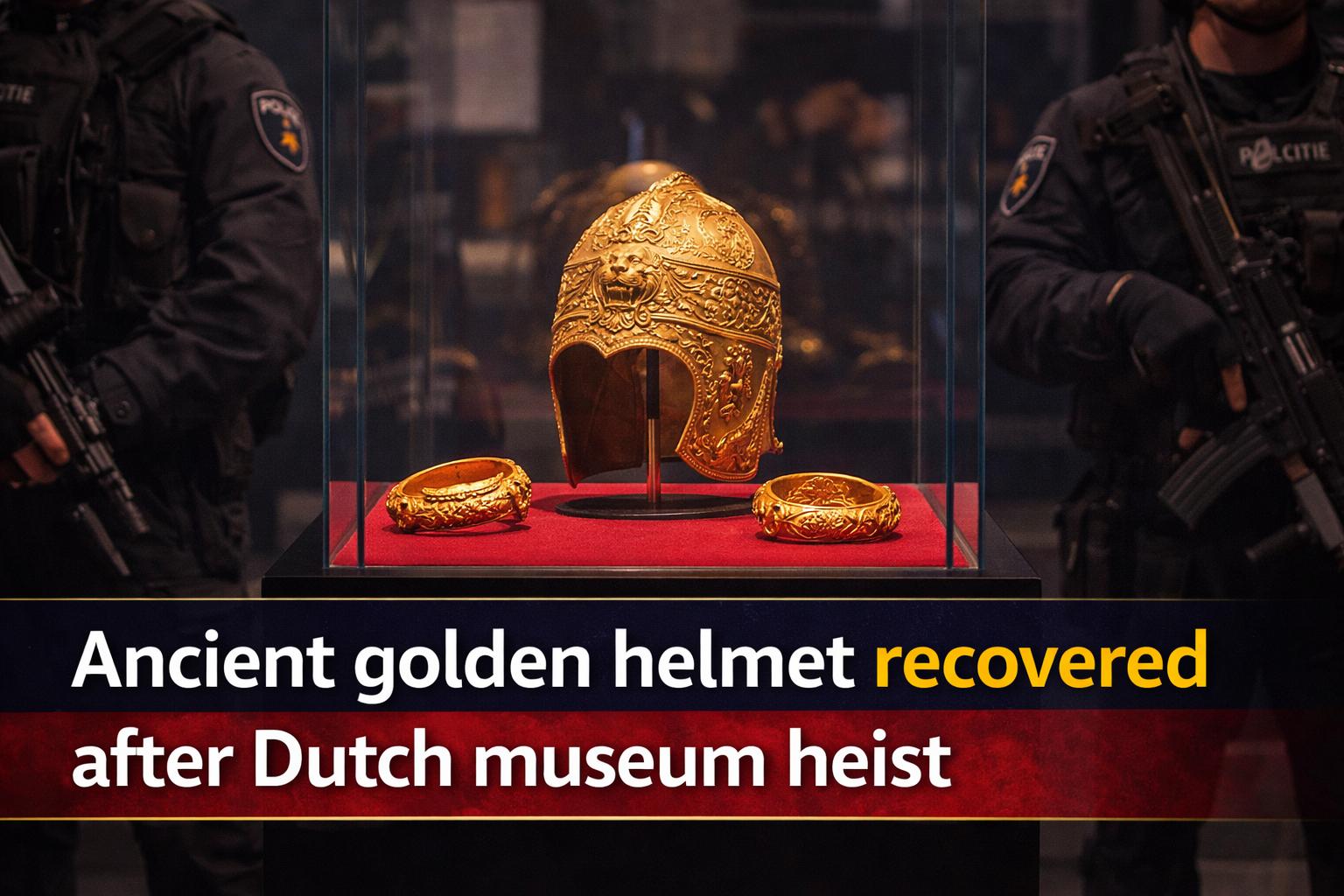
A 2,500-year-old golden helmet, regarded as one of Romania’s most valuable cultural treasures, has been recovered more than a year after it was stolen from a museum in the Netherlands. The artifact, along with two gold bracelets dating to around 450 BC, was officially unveiled on Thursday, April 3, 2026, at the Drents Museum in Assen, where it is now displayed under tight security.
The items had been taken during a high-profile armed robbery while on loan from Romania’s National
A 2,500-year-old golden helmet, regarded as one of Romania’s most valuable cultural treasures, has been recovered more than a year after it was stolen from a museum in the Netherlands. The artifact, along with two gold bracelets dating to around 450 BC, was officially unveiled on Thursday, April 3, 2026, at the Drents Museum in Assen, where it is now displayed under tight security.
The items had been taken during a high-profile armed robbery while on loan from Romania’s National
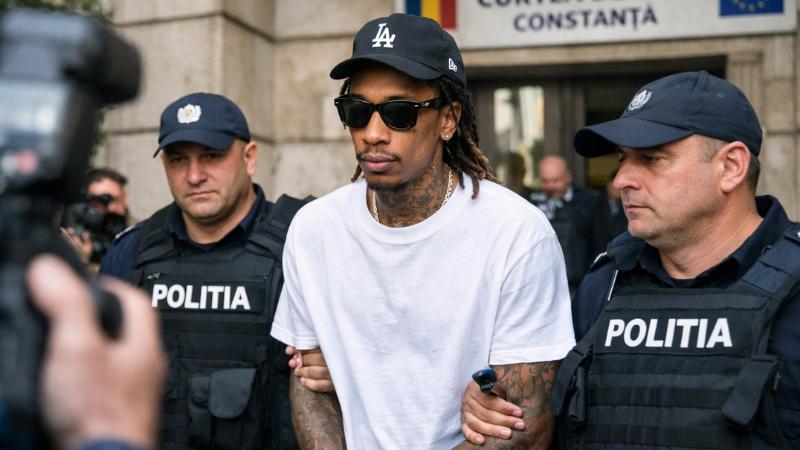
An appellate court in Romania has sentenced American rapper Wiz Khalifa to nine months in prison for drug possession, bringing a legal case tied to a 2024 music festival appearance to a close more than a year after the incident occurred. The ruling was delivered on Thursday by the Constanta Court of Appeal and represents a final decision under Romanian law.
The case stems from events at the Beach, Please! Festival, held in July 2024 in Costinesti, a popular coastal resort in Constanta County along the Black Sea. Romanian authorities stopped the artist after he allegedly consumed cannabis while performing on stage during the festival. Prosecutors later stated that Khalifa was found in possession of more than 18 grams of cannabis and that part of the substance had been used publicly during his performance.
Court documents identified the artist by his legal name, Cameron Jibril Thomaz, and confirmed that he was convicted of possession of dangerous drugs without legal authorization for personal use. Under Romania’s criminal code, cannabis remains classified as an illegal substance, and possession for personal consumption is treated as a criminal offense rather than a civil violation.
The appellate ruling followed an earlier decision by a lower court in Constanta County, which in April imposed a criminal fine of 3,600 lei, equivalent to approximately $830. Prosecutors challenged that outcome, arguing that the penalty did not reflect the seriousness of the offense or the circumstances under which it occurred. The appeal sought a custodial sentence, which the higher court ultimately approved.
Romania is known for maintaining some of the stricter drug laws in Europe. Even small quantities of cannabis intended for personal use can lead to criminal prosecution, with penalties ranging from fines to prison terms of up to two years. Legal experts note that public consumption, particularly in a high-profile setting, can be viewed as an aggravating factor under Romanian law.
It remains unclear whether Romanian authorities will pursue extradition, as Khalifa is a U.S. citizen and does not reside in Romania. Officials have not publicly confirmed whether further legal steps will be taken to enforce the sentence outside the country’s borders.
Wiz Khalifa, 38, rose to international fame with his breakout mixtape “Kush + Orange Juice” and later achieved mainstream success with chart-topping singles and collaborations. During his performance at the Romanian festival last summer, he was seen smoking a large hand-rolled cigarette while performing his hit song “Young, Wild & Free,” a moment that later became central to the criminal investigation.
The case has drawn attention to the legal risks artists face when performing abroad, particularly in countries with stringent drug policies. Legal analysts say the ruling underscores the importance of understanding local laws, as actions that may be tolerated or legal in one jurisdiction can carry serious consequences in another.
An appellate court in Romania has sentenced American rapper Wiz Khalifa to nine months in prison for drug possession, bringing a legal case tied to a 2024 music festival appearance to a close more than a year after the incident occurred. The ruling was delivered on Thursday by the Constanta Court of Appeal and represents a final decision under Romanian law.
The case stems from events at the Beach, Please! Festival, held in July 2024 in Costinesti, a popular coastal resort in Constanta County along the Black Sea. Romanian authorities stopped the artist after he allegedly consumed cannabis while performing on stage during the festival. Prosecutors later stated that Khalifa was found in possession of more than 18 grams of cannabis and that part of the substance had been used publicly during his performance.
Court documents identified the artist by his legal name, Cameron Jibril Thomaz, and confirmed that he was convicted of possession of dangerous drugs without legal authorization for personal use. Under Romania’s criminal code, cannabis remains classified as an illegal substance, and possession for personal consumption is treated as a criminal offense rather than a civil violation.
The appellate ruling followed an earlier decision by a lower court in Constanta County, which in April imposed a criminal fine of 3,600 lei, equivalent to approximately $830. Prosecutors challenged that outcome, arguing that the penalty did not reflect the seriousness of the offense or the circumstances under which it occurred. The appeal sought a custodial sentence, which the higher court ultimately approved.
Romania is known for maintaining some of the stricter drug laws in Europe. Even small quantities of cannabis intended for personal use can lead to criminal prosecution, with penalties ranging from fines to prison terms of up to two years. Legal experts note that public consumption, particularly in a high-profile setting, can be viewed as an aggravating factor under Romanian law.
It remains unclear whether Romanian authorities will pursue extradition, as Khalifa is a U.S. citizen and does not reside in Romania. Officials have not publicly confirmed whether further legal steps will be taken to enforce the sentence outside the country’s borders.
Wiz Khalifa, 38, rose to international fame with his breakout mixtape “Kush + Orange Juice” and later achieved mainstream success with chart-topping singles and collaborations. During his performance at the Romanian festival last summer, he was seen smoking a large hand-rolled cigarette while performing his hit song “Young, Wild & Free,” a moment that later became central to the criminal investigation.
The case has drawn attention to the legal risks artists face when performing abroad, particularly in countries with stringent drug policies. Legal analysts say the ruling underscores the importance of understanding local laws, as actions that may be tolerated or legal in one jurisdiction can carry serious consequences in another.
The United States Embassy in Romania has announced an important procedural change for all nonimmigrant visa applicants. Effective April 7, all applicants must present a printed copy of their DS-160 confirmation page with a barcode to confirm that the same DS-160 form was used to schedule their visa appointment.
Before attending their visa interview, applicants must ensure that the barcode number on the DS-160 form exactly matches the one used to book their appointment on USTrav
The United States Embassy in Romania has announced an important procedural change for all nonimmigrant visa applicants. Effective April 7, all applicants must present a printed copy of their DS-160 confirmation page with a barcode to confirm that the same DS-160 form was used to schedule their visa appointment.
Before attending their visa interview, applicants must ensure that the barcode number on the DS-160 form exactly matches the one used to book their appointment on USTrav