


































How much does it cost to open a convenience store in the US?
The cost to open a convenience store in the US can vary widely by location, size and product mix. A no-fuel store may require roughly $100,000 to $450,000 in startup capital, with rent, buildout, refrigeration, inventory, permits, insurance and working capital among the biggest expenses. Opening a convenience store in the United States can require a substantial investment. There is no government-set national startup price
How much does it cost to open a convenience store in the US?
The cost to open a convenience store in the US can vary widely by location, size and product mix. A no-fuel store may require roughly $100,000 to $450,000 in startup capital, with rent, buildout, refrigeration, inventory, permits, insurance and working capital among the biggest expenses. Opening a convenience store in the United States can require a substantial investment. There is no government-set national startup price
How to open a convenience store in the US as an Indian
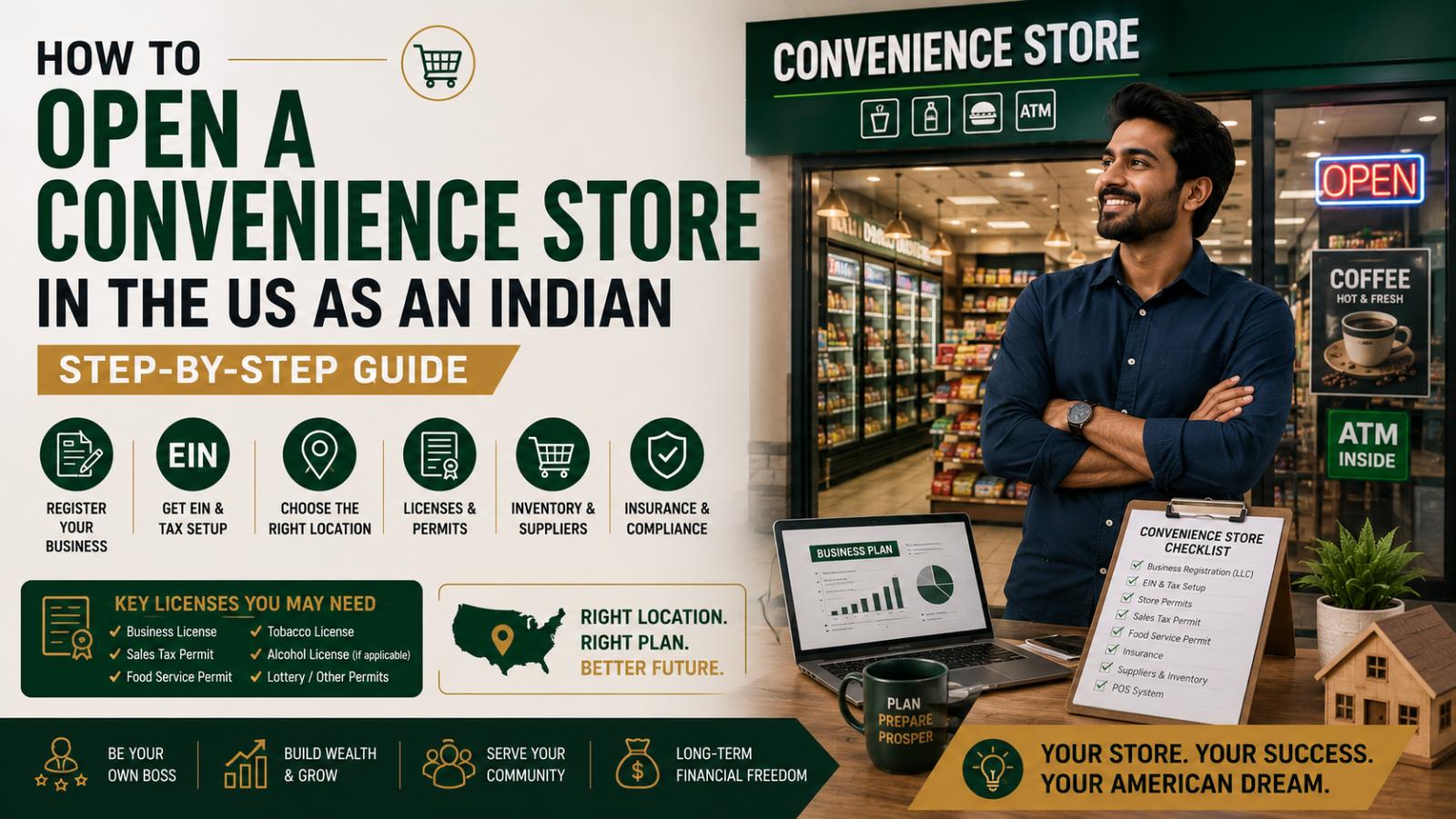
Want to open a convenience store in the US as an Indian? This guide explains business formation, EIN registration, choosing a location, retail and food permits, insurance, inventory, employees and the immigration rules Indian entrepreneurs must consider. Indian citizens can generally own convenience stores in the United States, but opening one involves more than registering a company. Location, licenses, taxes, food regula
How to open a convenience store in the US as an Indian
Want to open a convenience store in the US as an Indian? This guide explains business formation, EIN registration, choosing a location, retail and food permits, insurance, inventory, employees and the immigration rules Indian entrepreneurs must consider. Indian citizens can generally own convenience stores in the United States, but opening one involves more than registering a company. Location, licenses, taxes, food regula
How to start an LLC in the US from India: Step-by-step guide
Want to start an LLC in the US from India? Indian citizens can generally own U.S. LLCs without being U.S. residents. This guide explains state selection, registered agents, formation documents, EIN applications, tax reporting and key immigration considerations. An Indian citizen can generally form and own a limited liability company in the United States without being a U.S. citizen or Green Card holder. The IRS says most s
How to start an LLC in the US from India: Step-by-step guide
Want to start an LLC in the US from India? Indian citizens can generally own U.S. LLCs without being U.S. residents. This guide explains state selection, registered agents, formation documents, EIN applications, tax reporting and key immigration considerations. An Indian citizen can generally form and own a limited liability company in the United States without being a U.S. citizen or Green Card holder. The IRS says most s
Can an Indian citizen start a business in the US? Complete guide
Can an Indian citizen start a business in the US? Yes, but business ownership and permission to work are separate issues. This guide explains LLC registration, EIN requirements, taxes, immigration limits and why Indian nationals should check visa rules before operating a U.S. business. An Indian citizen can start or own a business in the United States, including while living in India. But ownership and permission t
Can an Indian citizen start a business in the US? Complete guide
Can an Indian citizen start a business in the US? Yes, but business ownership and permission to work are separate issues. This guide explains LLC registration, EIN requirements, taxes, immigration limits and why Indian nationals should check visa rules before operating a U.S. business. An Indian citizen can start or own a business in the United States, including while living in India. But ownership and permission t
Illinois Swipe Fee Law Delay Pushes IFPA Fight Over Tips and Taxes Toward 2027
Illinois lawmakers voted to delay the state’s swipe fee law for another year, keeping the fight over card fees on sales taxes and tips in court and before federal regulators. The delay affects the Interchange Fee Prohibition Act, or IFPA, a first-of-its-kind Illinois law that would restrict banks, credit unions and card companies from collecting interchange fees on the tax and tip portions of debit and credit card transactions. Illinois Swipe Fee Law Delay Exten
Illinois Swipe Fee Law Delay Pushes IFPA Fight Over Tips and Taxes Toward 2027
Illinois lawmakers voted to delay the state’s swipe fee law for another year, keeping the fight over card fees on sales taxes and tips in court and before federal regulators. The delay affects the Interchange Fee Prohibition Act, or IFPA, a first-of-its-kind Illinois law that would restrict banks, credit unions and card companies from collecting interchange fees on the tax and tip portions of debit and credit card transactions. Illinois Swipe Fee Law Delay Exten
Credit Card Swipe Fees Raise Costs for U.S. Shoppers and Stores
Credit Card Swipe Fees Raise Costs for U.S. Shoppers and Stores Credit card swipe fees are adding pressure on U.S. shoppers and small businesses as more purchases move away from cash. Retailers say the fees charged on card transactions are becoming a larger cost of doing business, with some of that burden reflected in everyday prices. At a Tiger Fuel gas station and convenience store near the Blue Ridge Mountains in Ruckersville, Virginia, managers say t
Credit Card Swipe Fees Raise Costs for U.S. Shoppers and Stores
Credit Card Swipe Fees Raise Costs for U.S. Shoppers and Stores Credit card swipe fees are adding pressure on U.S. shoppers and small businesses as more purchases move away from cash. Retailers say the fees charged on card transactions are becoming a larger cost of doing business, with some of that burden reflected in everyday prices. At a Tiger Fuel gas station and convenience store near the Blue Ridge Mountains in Ruckersville, Virginia, managers say t
Pacific Café faces possible closure without buyer after decades of service
Historic Pacific Café may close as owners retire after 51 years. A well-known San Francisco seafood restaurant recognized for its classic menu and complimentary wine service may soon shut its doors as its longtime owners prepare to retire. Pacific Café, located on Geary Boulevard, has been listed for sale for $195,000, raising concerns about the future of the decades-old establishment if a buyer is not secured. Co-owners Frank Gundry and Ross Warren, who have operated the restaur
Pacific Café faces possible closure without buyer after decades of service
Historic Pacific Café may close as owners retire after 51 years. A well-known San Francisco seafood restaurant recognized for its classic menu and complimentary wine service may soon shut its doors as its longtime owners prepare to retire. Pacific Café, located on Geary Boulevard, has been listed for sale for $195,000, raising concerns about the future of the decades-old establishment if a buyer is not secured. Co-owners Frank Gundry and Ross Warren, who have operated the restaur
Why is Lammes Candies closing after 141 years? Texas chain cites economic pressures
Legacy Texas chocolatier begins winding down operations A historic Texas confectionery business, Lammes Candies, is closing its operations after more than a century in business, citing mounting economic pressures and changing market conditions. The Austin-based company confirmed it will begin an orderly wind-down process after evaluating long-term sustainability challenges affecting the retail and confectionery sectors in the United States. Store closures confirmed across Austin and nearby cities The company has already shut down its Round Rock location as of Thursday, April 24, though the year was not specified. Additional closures include stores in Hillside and Lakeline Mall. Its flagship store in Austin will remain open temporarily, but no official closing date has been announced, leaving customers uncertain about final operations. Economic pressures and market shifts drive decision Lammes Candies stated that “unprecedented economic pressures and current market conditions” led to the decision. The company emphasized that it had carefully assessed shifts in consumer behavior, rising operational costs, and broader challenges facing family-owned retail businesses before deciding to cease operations. A family legacy spanning generations Founded in 1878 by William Wirt Lamme as the Red Front Candy Factory in Austin, the business officially became Lammes Candies on Thursday, July 10, 1885. After a temporary loss of the company due to a gambling debt, founder David Turner Lamme Sr. reclaimed it, establishing a legacy that continued for five generations. The company became known for handcrafted sweets, including its signature Texas Chewie Pecan Praline introduced in 1892. Final operations and transition for employees The company said it will fulfill remaining orders while supporting employees during the transition period. Ownership described the decision as difficult, highlighting the brand’s deep connection to the local community and its long-standing customer base. Since 2004, the business has been operated by fifth-generation family members, marking the end of a significant chapter in Texas retail history.
Why is Lammes Candies closing after 141 years? Texas chain cites economic pressures
Legacy Texas chocolatier begins winding down operations A historic Texas confectionery business, Lammes Candies, is closing its operations after more than a century in business, citing mounting economic pressures and changing market conditions. The Austin-based company confirmed it will begin an orderly wind-down process after evaluating long-term sustainability challenges affecting the retail and confectionery sectors in the United States. Store closures confirmed across Austin and nearby cities The company has already shut down its Round Rock location as of Thursday, April 24, though the year was not specified. Additional closures include stores in Hillside and Lakeline Mall. Its flagship store in Austin will remain open temporarily, but no official closing date has been announced, leaving customers uncertain about final operations. Economic pressures and market shifts drive decision Lammes Candies stated that “unprecedented economic pressures and current market conditions” led to the decision. The company emphasized that it had carefully assessed shifts in consumer behavior, rising operational costs, and broader challenges facing family-owned retail businesses before deciding to cease operations. A family legacy spanning generations Founded in 1878 by William Wirt Lamme as the Red Front Candy Factory in Austin, the business officially became Lammes Candies on Thursday, July 10, 1885. After a temporary loss of the company due to a gambling debt, founder David Turner Lamme Sr. reclaimed it, establishing a legacy that continued for five generations. The company became known for handcrafted sweets, including its signature Texas Chewie Pecan Praline introduced in 1892. Final operations and transition for employees The company said it will fulfill remaining orders while supporting employees during the transition period. Ownership described the decision as difficult, highlighting the brand’s deep connection to the local community and its long-standing customer base. Since 2004, the business has been operated by fifth-generation family members, marking the end of a significant chapter in Texas retail history.
Dining costs surge in Houston as restaurants adjust pricing strategies
HOUSTON – The cost of dining out in Houston is increasing at a pace that outstrips many other major cities across the United States, reflecting broader economic pressures affecting both consumers and the food service industry. Recent industry data indicates that restaurant prices in Houston have risen by approximately 4.6% over the past year. This increase is placing additional strain on household budgets, particularly for individuals already managing tight financial conditions. What was once considered an affordable leisure activity is becoming more difficult for many residents to justify as everyday expenses continue to climb. The impact is being felt across the restaurant sector, from established businesses to newly launched ventures. Rising operational expenses, including rent, labor, and supply costs, are forcing business owners to rethink pricing strategies and overall operations. Many are working to balance the need to remain competitive with the necessity of maintaining profitability in a challenging market environment. For newer establishments, the financial burden can be especially significant. Initial cost projections for launching and maintaining a restaurant have increased sharply compared to previous years, making it more difficult for entrepreneurs to enter the market or sustain early operations. Higher monthly overheads are now a common concern, often exceeding earlier expectations by a substantial margin. Despite these challenges, restaurant operators are exploring ways to adapt. Adjustments may include revising menus, optimizing supply chains, and implementing cost-control measures aimed at preserving customer demand while managing expenses. However, the continued rise in prices suggests that both businesses and consumers will need to navigate ongoing economic uncertainty in the months ahead. As Houston’s dining landscape evolves, the interplay between rising costs and consumer spending habits will likely shape the future of the city’s restaurant industry.
Dining costs surge in Houston as restaurants adjust pricing strategies
HOUSTON – The cost of dining out in Houston is increasing at a pace that outstrips many other major cities across the United States, reflecting broader economic pressures affecting both consumers and the food service industry. Recent industry data indicates that restaurant prices in Houston have risen by approximately 4.6% over the past year. This increase is placing additional strain on household budgets, particularly for individuals already managing tight financial conditions. What was once considered an affordable leisure activity is becoming more difficult for many residents to justify as everyday expenses continue to climb. The impact is being felt across the restaurant sector, from established businesses to newly launched ventures. Rising operational expenses, including rent, labor, and supply costs, are forcing business owners to rethink pricing strategies and overall operations. Many are working to balance the need to remain competitive with the necessity of maintaining profitability in a challenging market environment. For newer establishments, the financial burden can be especially significant. Initial cost projections for launching and maintaining a restaurant have increased sharply compared to previous years, making it more difficult for entrepreneurs to enter the market or sustain early operations. Higher monthly overheads are now a common concern, often exceeding earlier expectations by a substantial margin. Despite these challenges, restaurant operators are exploring ways to adapt. Adjustments may include revising menus, optimizing supply chains, and implementing cost-control measures aimed at preserving customer demand while managing expenses. However, the continued rise in prices suggests that both businesses and consumers will need to navigate ongoing economic uncertainty in the months ahead. As Houston’s dining landscape evolves, the interplay between rising costs and consumer spending habits will likely shape the future of the city’s restaurant industry.
Santa Clara shopping center tenants sue amid redevelopment dispute
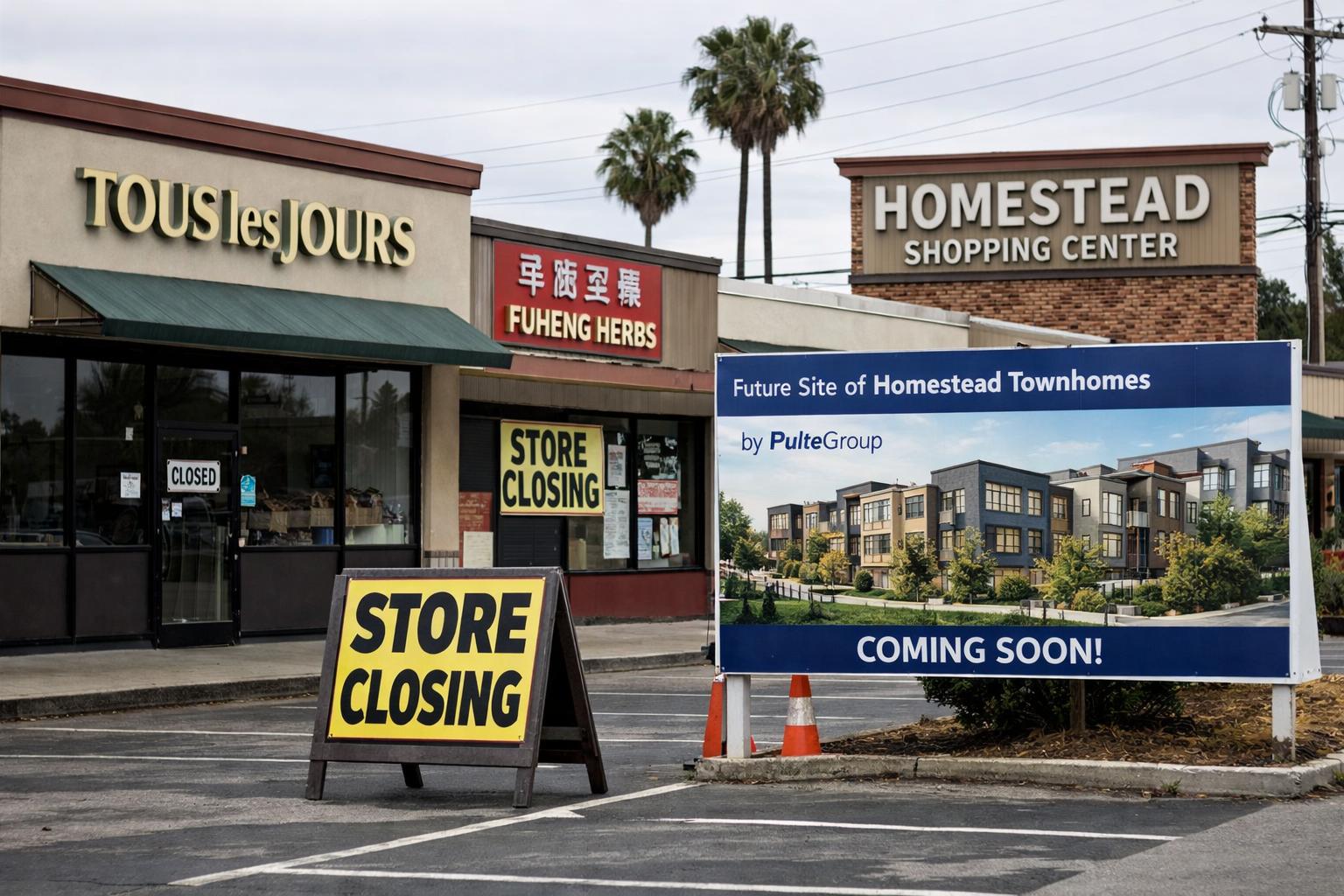
A once-thriving retail hub in Santa Clara, California, is rapidly emptying as redevelopment plans move forward, prompting legal action from displaced business owners who allege unfair treatment by the property’s former landlord. Two tenants from the Homestead Shopping Center — Tous les Jours bakery and Fuheng Herbs — have filed separate lawsuits against former property owner David Bider and Cypress Investments, claiming they were misled and pressured into leaving prior to the si
Santa Clara shopping center tenants sue amid redevelopment dispute
A once-thriving retail hub in Santa Clara, California, is rapidly emptying as redevelopment plans move forward, prompting legal action from displaced business owners who allege unfair treatment by the property’s former landlord. Two tenants from the Homestead Shopping Center — Tous les Jours bakery and Fuheng Herbs — have filed separate lawsuits against former property owner David Bider and Cypress Investments, claiming they were misled and pressured into leaving prior to the si
Green card holders barred from SBA small business loans under new US rules
Green card holders will no longer be eligible for government-backed small business loans in the United States beginning March 1, 2026, following a policy change by the US Small Business Administration that tightens citizenship and residency requirements for borrowers. The revised rules limit access to key SBA lending programs exclusively to US citizens and nationals who maintain their principal residence within the country or its territories, effectively barring lawful permanent residents from participation. According to an official policy notice issued in early February, the agency updated its Standard Operating Procedure 50 10 8, the framework that governs lender and development company loan programs. The revision rescinds earlier procedural guidance that permitted limited ownership by foreign nationals or certain residents living outside the United States. Under the new language, every direct and indirect owner of a small business applicant must meet the citizenship criteria. The SBA said the updated rules require 100 percent of ownership interests in any applicant or borrowing entity to be held by eligible US citizens or nationals. As a result, even minority ownership by a legal permanent resident will disqualify a company from receiving SBA-backed financing. The policy applies broadly to applicants, operating companies, and entities tied to the loan structure, leaving little flexibility for mixed-ownership businesses. The change is expected to affect a wide range of small and early-stage firms that rely on SBA loans for working capital, equipment purchases, and expansion. Many startups and family-owned enterprises depend on these lending programs because they offer lower interest rates and government guarantees that make financing more accessible. With the new restrictions in place, businesses that include green card holders among their owners may need to reconsider ownership arrangements or seek alternative sources of credit from private lenders. Agency officials indicated that the revisions align loan eligibility standards with existing federal regulations and a recent executive directive emphasizing stricter residency compliance. The policy will take effect for all new applications submitted on or after the effective date. Existing and prospective borrowers are being advised to review their ownership structures carefully to ensure continued eligibility under the updated requirements. The move marks a significant shift in how federal small business lending programs define qualification, narrowing access to public funds and reshaping the financing landscape for immigrant entrepreneurs. As the implementation date approaches, legal and financial advisers expect increased demand for guidance from affected business owners who must evaluate their options within the new framework.
Green card holders barred from SBA small business loans under new US rules
Green card holders will no longer be eligible for government-backed small business loans in the United States beginning March 1, 2026, following a policy change by the US Small Business Administration that tightens citizenship and residency requirements for borrowers. The revised rules limit access to key SBA lending programs exclusively to US citizens and nationals who maintain their principal residence within the country or its territories, effectively barring lawful permanent residents from participation. According to an official policy notice issued in early February, the agency updated its Standard Operating Procedure 50 10 8, the framework that governs lender and development company loan programs. The revision rescinds earlier procedural guidance that permitted limited ownership by foreign nationals or certain residents living outside the United States. Under the new language, every direct and indirect owner of a small business applicant must meet the citizenship criteria. The SBA said the updated rules require 100 percent of ownership interests in any applicant or borrowing entity to be held by eligible US citizens or nationals. As a result, even minority ownership by a legal permanent resident will disqualify a company from receiving SBA-backed financing. The policy applies broadly to applicants, operating companies, and entities tied to the loan structure, leaving little flexibility for mixed-ownership businesses. The change is expected to affect a wide range of small and early-stage firms that rely on SBA loans for working capital, equipment purchases, and expansion. Many startups and family-owned enterprises depend on these lending programs because they offer lower interest rates and government guarantees that make financing more accessible. With the new restrictions in place, businesses that include green card holders among their owners may need to reconsider ownership arrangements or seek alternative sources of credit from private lenders. Agency officials indicated that the revisions align loan eligibility standards with existing federal regulations and a recent executive directive emphasizing stricter residency compliance. The policy will take effect for all new applications submitted on or after the effective date. Existing and prospective borrowers are being advised to review their ownership structures carefully to ensure continued eligibility under the updated requirements. The move marks a significant shift in how federal small business lending programs define qualification, narrowing access to public funds and reshaping the financing landscape for immigrant entrepreneurs. As the implementation date approaches, legal and financial advisers expect increased demand for guidance from affected business owners who must evaluate their options within the new framework.
Jersey City Bangladeshi restaurant earns national recognition
A small family-run restaurant in Jersey City has become a standout success story in the local dining scene, driven by determination, cultural pride, and an unlikely culinary journey. Korai Kitchen, the city’s first Bangladeshi restaurant, is operated by a mother-daughter duo whose path to national recognition began without formal training or professional kitchen experience. Chef and owner Nur-E Gulshan Rahman opened Korai Kitchen alongside her daughter, Nur-E Farhana, in February
Jersey City Bangladeshi restaurant earns national recognition
A small family-run restaurant in Jersey City has become a standout success story in the local dining scene, driven by determination, cultural pride, and an unlikely culinary journey. Korai Kitchen, the city’s first Bangladeshi restaurant, is operated by a mother-daughter duo whose path to national recognition began without formal training or professional kitchen experience. Chef and owner Nur-E Gulshan Rahman opened Korai Kitchen alongside her daughter, Nur-E Farhana, in February
Chicago Fatburger owner fights crime challenges while supporting her community
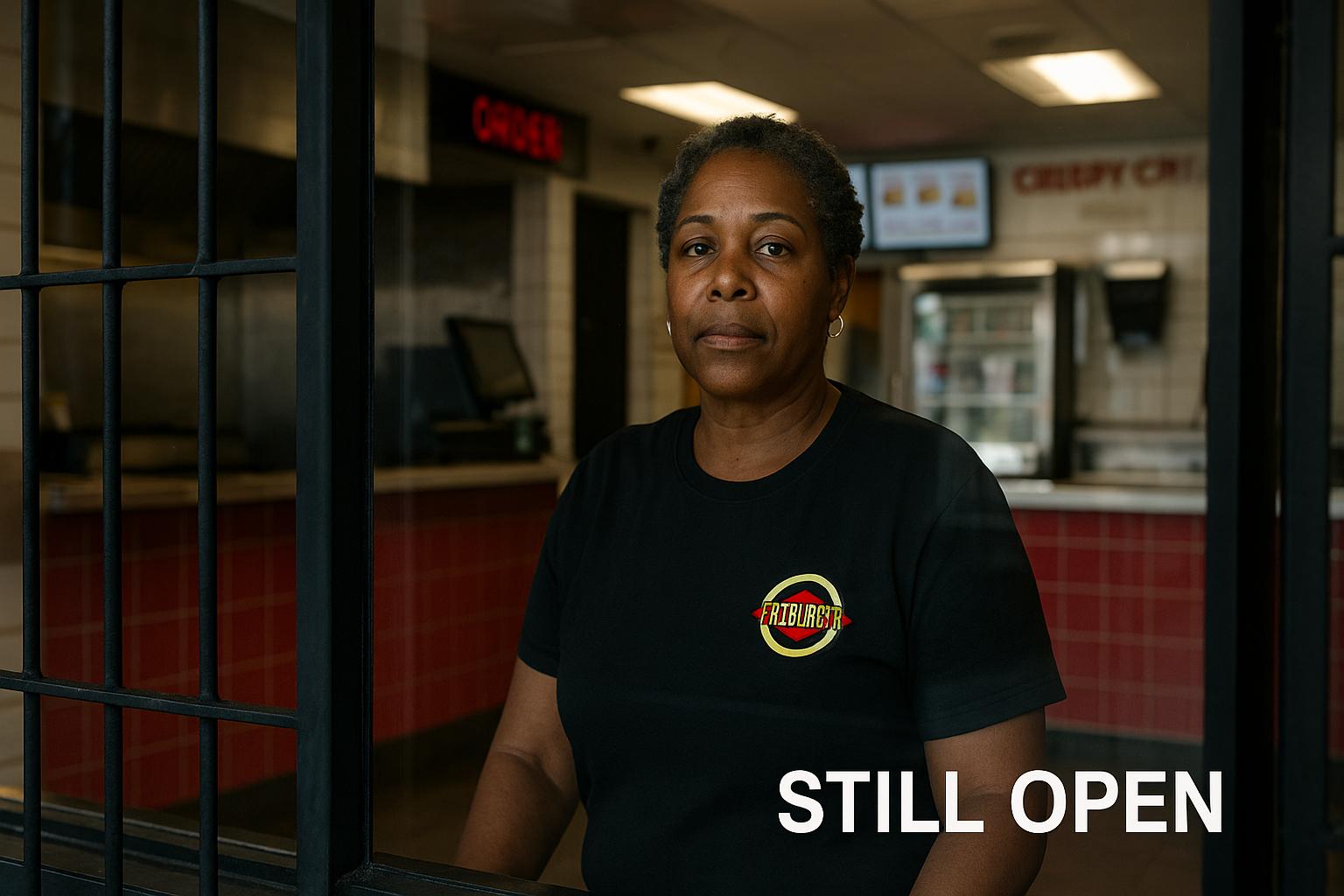
A Chicago business owner is speaking out about the challenges she faces as crime and violence continue to impact her livelihood. Jackie Jackson, the owner of Fatburger in Chatham, has shared her story of struggle, resilience, and determination to keep her restaurant open while giving back to the South Side neighborhood she calls home. Jackson opened the Fatburger location at 825 E. 87th Street in November of last year. Since then, she has invested in extensive safety measures to pro
Chicago Fatburger owner fights crime challenges while supporting her community
A Chicago business owner is speaking out about the challenges she faces as crime and violence continue to impact her livelihood. Jackie Jackson, the owner of Fatburger in Chatham, has shared her story of struggle, resilience, and determination to keep her restaurant open while giving back to the South Side neighborhood she calls home. Jackson opened the Fatburger location at 825 E. 87th Street in November of last year. Since then, she has invested in extensive safety measures to pro
Witch Baby Closes Cranford Store After Six Years to Focus on Online Orders
After six years of serving customers in Cranford, Witch Baby has officially closed the doors of its Eastman Street brick-and-mortar store. The closure, which came just before the busy holiday shopping season, reflects the mounting challenges faced by small businesses in New Jersey and beyond. Owners cited rising electricity costs and tariffs as the key reasons for the difficult decision, underscoring the financial pressures that continue to weigh heavily on independent retailers. Wi
Witch Baby Closes Cranford Store After Six Years to Focus on Online Orders
After six years of serving customers in Cranford, Witch Baby has officially closed the doors of its Eastman Street brick-and-mortar store. The closure, which came just before the busy holiday shopping season, reflects the mounting challenges faced by small businesses in New Jersey and beyond. Owners cited rising electricity costs and tariffs as the key reasons for the difficult decision, underscoring the financial pressures that continue to weigh heavily on independent retailers. Wi
Dallas Rowlett Caterer Suffers $21K Loss After AT&T Phone Service Switch Fails
In Rowlett, Texas, a small catering business owner says her livelihood was nearly brought to a halt when a phone service switch went terribly wrong. Nikki Jackson, who has operated her catering company from the same location for 21 years, says the steady ring of her business phone — a sound that once meant constant orders — has been silent for almost a month. She claims it all started when she tried to move her phone service to AT&T after being
Dallas Rowlett Caterer Suffers $21K Loss After AT&T Phone Service Switch Fails
In Rowlett, Texas, a small catering business owner says her livelihood was nearly brought to a halt when a phone service switch went terribly wrong. Nikki Jackson, who has operated her catering company from the same location for 21 years, says the steady ring of her business phone — a sound that once meant constant orders — has been silent for almost a month. She claims it all started when she tried to move her phone service to AT&T after being
DC celebrates vibrant women-led businesses thriving on Upshur Street
A single block of Upshur Street NW in Washington, DC’s Petworth neighborhood has become a thriving example of community, culture, and entrepreneurship. Home to several Black women-owned businesses, this block stands out not only for its vibrancy but also as a model of how shared values, legacy, and mutual support can fuel success. As DC celebrates Black Business Month, this stretch of Petworth is getting well-deserved attention. Amid concerns over rising inflation and unpred
DC celebrates vibrant women-led businesses thriving on Upshur Street
A single block of Upshur Street NW in Washington, DC’s Petworth neighborhood has become a thriving example of community, culture, and entrepreneurship. Home to several Black women-owned businesses, this block stands out not only for its vibrancy but also as a model of how shared values, legacy, and mutual support can fuel success. As DC celebrates Black Business Month, this stretch of Petworth is getting well-deserved attention. Amid concerns over rising inflation and unpred
Hoboken restaurant temporarily shuts down after fire, plans to reopen soon
A popular Hoboken restaurant is working toward reopening after a fire temporarily shut down its operations on Thursday evening. The incident occurred around 6:45 p.m. when heavy smoke was reported coming from the building. Both the restaurant and the residential units located above were promptly evacuated as emergency responders arrived on the scene. More than 30 firefighters responded swiftly and were able to locate the fire within the walls of the structure. The fire was quickly
Hoboken restaurant temporarily shuts down after fire, plans to reopen soon
A popular Hoboken restaurant is working toward reopening after a fire temporarily shut down its operations on Thursday evening. The incident occurred around 6:45 p.m. when heavy smoke was reported coming from the building. Both the restaurant and the residential units located above were promptly evacuated as emergency responders arrived on the scene. More than 30 firefighters responded swiftly and were able to locate the fire within the walls of the structure. The fire was quickly
Bay Area bakery lost $100K due to DoorDash fee error, finally reimbursed
A small family-run bakery in California’s Bay Area faced an unexpected financial crisis that went undetected for nearly a decade. La Patisserie, a popular shop in Cupertino known for its elegant pastries and intricate wedding cakes, was unknowingly overcharged by its delivery partner for more than eight years. What was believed to be a fruitful partnership with a major food delivery platform turned into a long-term financial drain costing the business over $100,000 in commission fees.
Bay Area bakery lost $100K due to DoorDash fee error, finally reimbursed
A small family-run bakery in California’s Bay Area faced an unexpected financial crisis that went undetected for nearly a decade. La Patisserie, a popular shop in Cupertino known for its elegant pastries and intricate wedding cakes, was unknowingly overcharged by its delivery partner for more than eight years. What was believed to be a fruitful partnership with a major food delivery platform turned into a long-term financial drain costing the business over $100,000 in commission fees.
Big GST Reforms Coming Soon, PMO Signals Green Light
The Prime Minister’s Office (PMO) has approved a significant overhaul of India’s Goods and Services Tax (GST) system, paving the way for major reforms to simplify the tax structure. The proposal is set to be discussed in the upcoming GST Council meeting in August. The finance ministry has already initiated discussions on the changes, which are expected to streamline the GST system and ease compliance for businesses and consumers alike.
Big GST Reforms Coming Soon, PMO Signals Green Light
The Prime Minister’s Office (PMO) has approved a significant overhaul of India’s Goods and Services Tax (GST) system, paving the way for major reforms to simplify the tax structure. The proposal is set to be discussed in the upcoming GST Council meeting in August. The finance ministry has already initiated discussions on the changes, which are expected to streamline the GST system and ease compliance for businesses and consumers alike.
Campbell summer concerts return with boost to downtown businesses
Campbell is ready to bring back the beat this summer as the city’s much-loved free concert series returns after a one-year hiatus. The summer music series, held in Orchard City Green every Thursday evening starting July 10 through August 28, is expected to draw large crowds, helping reinvigorate the heart of downtown and bring new momentum to local businesses. The concert series, a community staple for years, was canceled last summer due to major construction projects next t
Campbell summer concerts return with boost to downtown businesses
Campbell is ready to bring back the beat this summer as the city’s much-loved free concert series returns after a one-year hiatus. The summer music series, held in Orchard City Green every Thursday evening starting July 10 through August 28, is expected to draw large crowds, helping reinvigorate the heart of downtown and bring new momentum to local businesses. The concert series, a community staple for years, was canceled last summer due to major construction projects next t


