Explosion kills 14 IRGC members in northwestern Iran
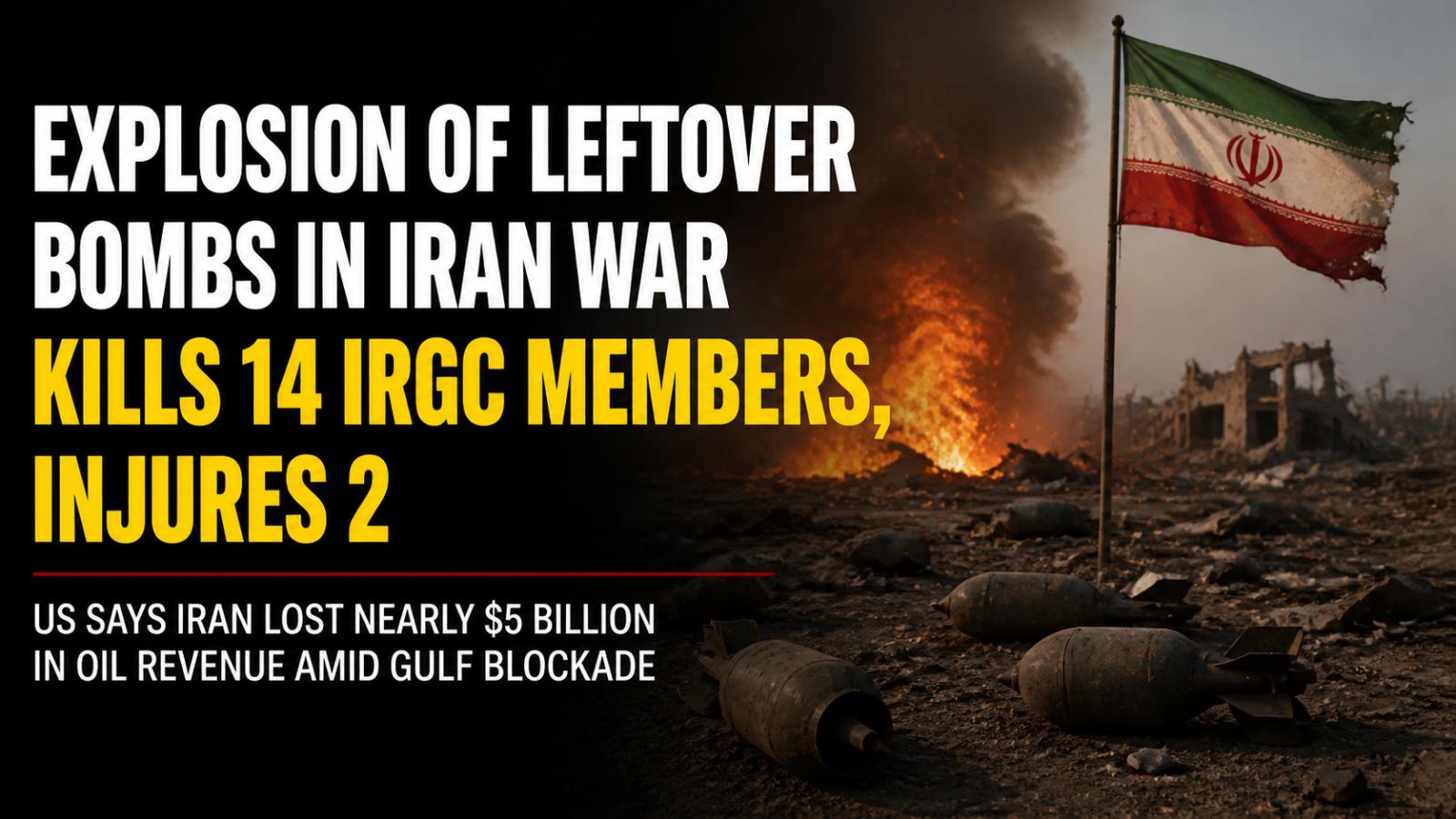
On Friday, May 1, 14 members of Iran's Islamic Revolutionary Guard Corps (IRGC) were killed in an explosion caused by leftover bombs from the ongoing war. The explosion took place in Zanjan Province, a region in northwestern Iran. This incident marks the largest number of casualties for the IRGC since the US-Iran ceasefi
Explosion kills 14 IRGC members in northwestern Iran
On Friday, May 1, 14 members of Iran's Islamic Revolutionary Guard Corps (IRGC) were killed in an explosion caused by leftover bombs from the ongoing war. The explosion took place in Zanjan Province, a region in northwestern Iran. This incident marks the largest number of casualties for the IRGC since the US-Iran ceasefi
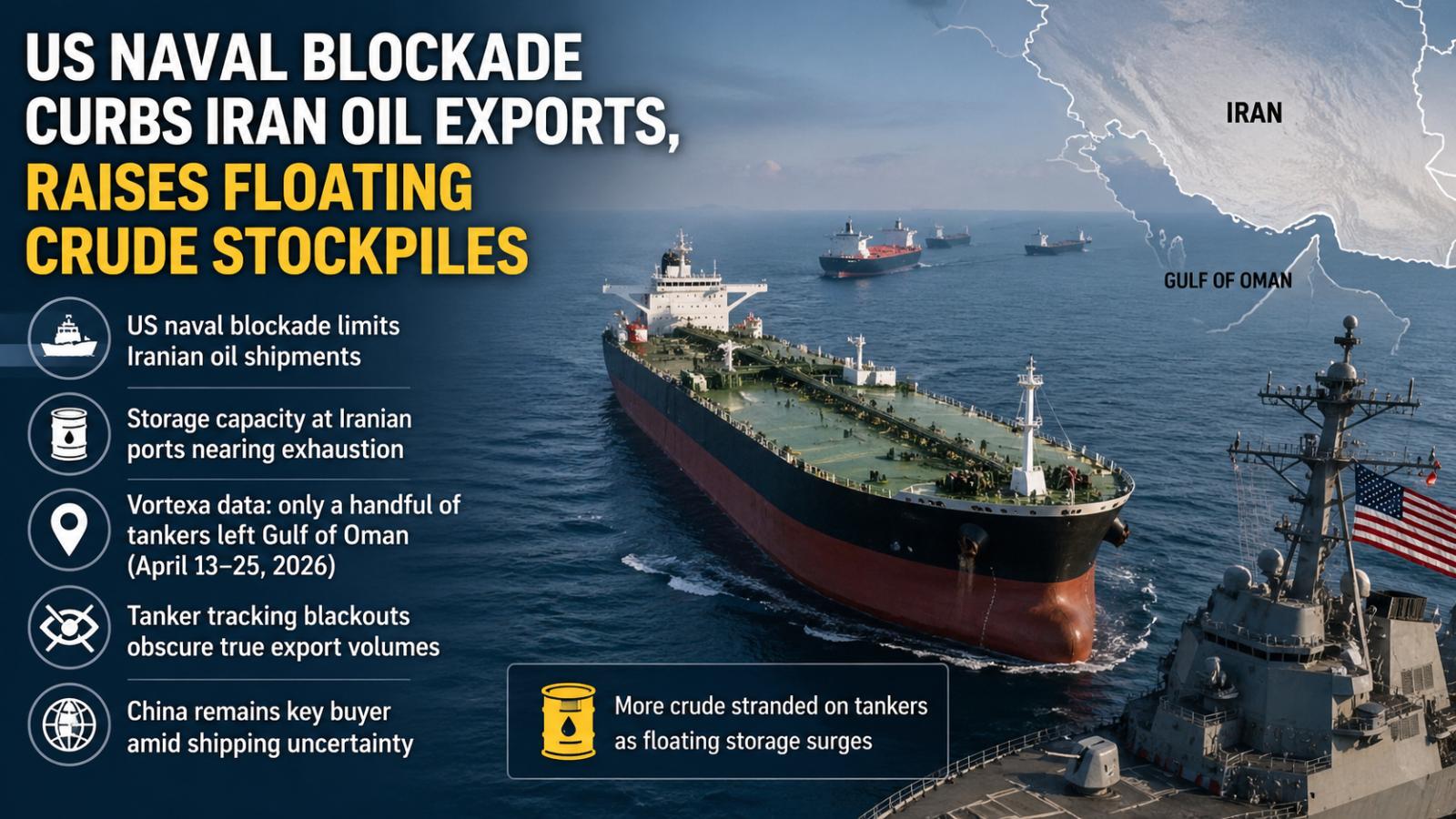
The US naval blockade has sharply reduced Iran’s oil exports, forcing crude into floating storage as onshore capacity fills. Limited tanker movement and tracking blackouts obscure shipments, raising concerns over global supply transparency and market stability
US naval blockade curbs Iran oil exports, raises floating crude stockpiles has significantly reduced Tehran’s oil shipments, leaving large volumes stranded at sea as storage capacity tightens. Analysts citing shipping data report that Iranian crude exports have dropped sharply due to heightened maritime restrictions and operational risks in key transit routes.
According to data from oil analytics firm Vortexa, only a limited number of tankers carrying Iranian crude departed the Gulf of Oman between Sunday, April 13, 2026, and Friday, April 25, 2026. This decline underscores the growing impact of the blockade, which has disrupted traditional export channels and created uncertainty across global energy markets. The situation is further complicated by tanker operators switching off tracking systems to avoid detection, making it difficult to accurately measure export volumes.
China remains Iran’s primary buyer, but the opacity surrounding shipments has increased as vessels attempt to evade monitoring systems. Analysts note that this lack of transparency could distort global supply assessments and complicate pricing trends in international oil markets. As Iranian onshore storage facilities reach capacity, more crude is being held on tankers, effectively turning them into floating storage units.
The blockade’s ripple effects extend beyond oil logistics. Broader policy measures tied to the maritime restrictions have contributed to operational challenges within U.S. federal systems. Since Friday, February 14, 2026, certain agencies have faced funding interruptions, leading to disruptions including extended wait times at major U.S. airports. While a recent measure supported by President Donald Trump has reopened the Department of Homeland Security, it does not allocate additional funding for Immigration and Customs Enforcement or the U.S. Border Patrol.
The evolving situation highlights the intersection of geopolitical strategy and global energy flows, with analysts warning that prolonged disruptions could tighten supply chains and influence oil prices worldwide.
The US naval blockade has sharply reduced Iran’s oil exports, forcing crude into floating storage as onshore capacity fills. Limited tanker movement and tracking blackouts obscure shipments, raising concerns over global supply transparency and market stability
US naval blockade curbs Iran oil exports, raises floating crude stockpiles has significantly reduced Tehran’s oil shipments, leaving large volumes stranded at sea as storage capacity tightens. Analysts citing shipping data report that Iranian crude exports have dropped sharply due to heightened maritime restrictions and operational risks in key transit routes.
According to data from oil analytics firm Vortexa, only a limited number of tankers carrying Iranian crude departed the Gulf of Oman between Sunday, April 13, 2026, and Friday, April 25, 2026. This decline underscores the growing impact of the blockade, which has disrupted traditional export channels and created uncertainty across global energy markets. The situation is further complicated by tanker operators switching off tracking systems to avoid detection, making it difficult to accurately measure export volumes.
China remains Iran’s primary buyer, but the opacity surrounding shipments has increased as vessels attempt to evade monitoring systems. Analysts note that this lack of transparency could distort global supply assessments and complicate pricing trends in international oil markets. As Iranian onshore storage facilities reach capacity, more crude is being held on tankers, effectively turning them into floating storage units.
The blockade’s ripple effects extend beyond oil logistics. Broader policy measures tied to the maritime restrictions have contributed to operational challenges within U.S. federal systems. Since Friday, February 14, 2026, certain agencies have faced funding interruptions, leading to disruptions including extended wait times at major U.S. airports. While a recent measure supported by President Donald Trump has reopened the Department of Homeland Security, it does not allocate additional funding for Immigration and Customs Enforcement or the U.S. Border Patrol.
The evolving situation highlights the intersection of geopolitical strategy and global energy flows, with analysts warning that prolonged disruptions could tighten supply chains and influence oil prices worldwide.
NetApp, a global leader in intelligent data infrastructure, has been honored with the prestigious 2025 Google Cloud Infrastructure Modernization Partner of the Year for Storage award. This recognition highlights NetApp’s pivotal role in transforming data management in the cloud through innovative storage solutions, and its deep collaboration with Google Cloud to meet the evolving needs of enterprises adopting artificial intelligence (AI) and modern workloads. The award recognizes NetApp
NetApp, a global leader in intelligent data infrastructure, has been honored with the prestigious 2025 Google Cloud Infrastructure Modernization Partner of the Year for Storage award. This recognition highlights NetApp’s pivotal role in transforming data management in the cloud through innovative storage solutions, and its deep collaboration with Google Cloud to meet the evolving needs of enterprises adopting artificial intelligence (AI) and modern workloads. The award recognizes NetApp