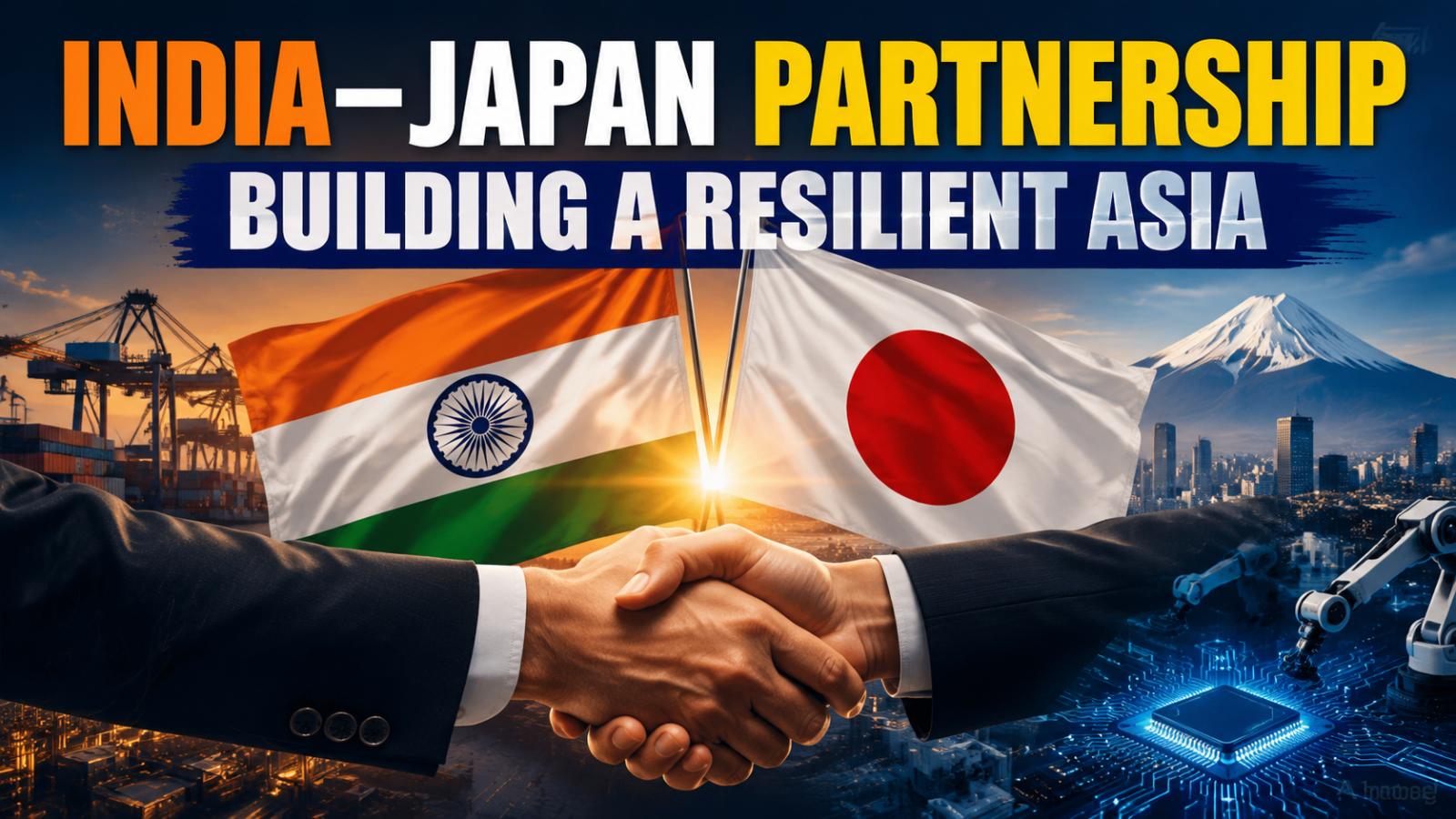
India and Japan are steadily moving their partnership beyond routine trade discussions into a broader realignment shaped by global risk and industrial restructuring. What looks like increased investment flows is actually part of a deeper repositioning of how both countries want to secure long-term economic stability in an uncertain global environment.
Investment growth driven by risk recalibration
Japanese companies are expanding their footprint in India not only for growth but also to reduce exposure to concentrated supply networks in East Asia. Rising geopolitical friction and periodic trade restrictions have forced firms to reconsider how dependent they are on single-country manufacturing systems. India is increasingly viewed as a viable diversification hub due to its scale, labor availability, and expanding industrial base.
Supply chain restructuring becomes the core driver
The most significant shift is happening in supply chains rather than headline investment figures. Japanese manufacturers are gradually redesigning sourcing and production models to reduce vulnerabilities in electronics, automotive components, and precision engineering. India fits into this transition as an alternative production and assembly base, especially for sectors where demand is growing but diversification is still limited.
Technology and industrial cooperation deepen
Cooperation is also expanding into advanced sectors such as semiconductors, digital systems, and artificial intelligence. These areas are no longer treated as purely commercial exchanges but as strategic capabilities. Both countries are aligning on technology resilience, where production continuity and security of supply matter as much as cost efficiency.
Rare earths and critical materials gain importance
Another emerging focus is critical minerals and rare earth supply chains. These materials are essential for electronics, renewable energy systems, and defence manufacturing. Dependence on concentrated suppliers has pushed both India and Japan to explore alternative sourcing strategies and joint development frameworks to reduce long-term risk.
Financial flows signal long-term positioning
Japanese capital inflows into Indian financial institutions and industrial projects suggest more than short-term investment interest. Financial participation typically indicates long-term confidence in policy stability and market expansion. However, the real test will be whether this capital flow expands into deeper manufacturing integration rather than remaining portfolio-based exposure.
Economic security becomes the defining theme
At the core of this evolving relationship is economic security. Trade decisions are increasingly shaped by geopolitical uncertainty rather than pure cost advantage. This marks a shift from efficiency-driven globalization to resilience-driven partnerships, where countries prioritize stability over optimization.
A cautious but strategic realignment
The India–Japan partnership is gradually becoming a case study in how middle and advanced economies adjust to global fragmentation. While the direction is clear—greater cooperation in technology, investment, and supply chains—the pace will depend on regulatory alignment, infrastructure readiness, and how effectively both sides manage external geopolitical pressures.
India and Japan are steadily moving their partnership beyond routine trade discussions into a broader realignment shaped by global risk and industrial restructuring. What looks like increased investment flows is actually part of a deeper repositioning of how both countries want to secure long-term economic stability in an uncertain global environment.
Investment growth driven by risk recalibration
Japanese companies are expanding their footprint in India not only for growth but also to reduce exposure to concentrated supply networks in East Asia. Rising geopolitical friction and periodic trade restrictions have forced firms to reconsider how dependent they are on single-country manufacturing systems. India is increasingly viewed as a viable diversification hub due to its scale, labor availability, and expanding industrial base.
Supply chain restructuring becomes the core driver
The most significant shift is happening in supply chains rather than headline investment figures. Japanese manufacturers are gradually redesigning sourcing and production models to reduce vulnerabilities in electronics, automotive components, and precision engineering. India fits into this transition as an alternative production and assembly base, especially for sectors where demand is growing but diversification is still limited.
Technology and industrial cooperation deepen
Cooperation is also expanding into advanced sectors such as semiconductors, digital systems, and artificial intelligence. These areas are no longer treated as purely commercial exchanges but as strategic capabilities. Both countries are aligning on technology resilience, where production continuity and security of supply matter as much as cost efficiency.
Rare earths and critical materials gain importance
Another emerging focus is critical minerals and rare earth supply chains. These materials are essential for electronics, renewable energy systems, and defence manufacturing. Dependence on concentrated suppliers has pushed both India and Japan to explore alternative sourcing strategies and joint development frameworks to reduce long-term risk.
Financial flows signal long-term positioning
Japanese capital inflows into Indian financial institutions and industrial projects suggest more than short-term investment interest. Financial participation typically indicates long-term confidence in policy stability and market expansion. However, the real test will be whether this capital flow expands into deeper manufacturing integration rather than remaining portfolio-based exposure.
Economic security becomes the defining theme
At the core of this evolving relationship is economic security. Trade decisions are increasingly shaped by geopolitical uncertainty rather than pure cost advantage. This marks a shift from efficiency-driven globalization to resilience-driven partnerships, where countries prioritize stability over optimization.
A cautious but strategic realignment
The India–Japan partnership is gradually becoming a case study in how middle and advanced economies adjust to global fragmentation. While the direction is clear—greater cooperation in technology, investment, and supply chains—the pace will depend on regulatory alignment, infrastructure readiness, and how effectively both sides manage external geopolitical pressures.
US President Donald Trump has issued an executive order removing import tariffs on a broad selection of food products in an effort to curb rising grocery costs and ease pressure on consumers. The decision marks one of the most significant adjustments to his trade policy since tariffs were introduced as a central feature of his economic agenda. The order comes at a moment when Americans have voiced growing frustration over inflation, particularly food prices, following last we
US President Donald Trump has issued an executive order removing import tariffs on a broad selection of food products in an effort to curb rising grocery costs and ease pressure on consumers. The decision marks one of the most significant adjustments to his trade policy since tariffs were introduced as a central feature of his economic agenda. The order comes at a moment when Americans have voiced growing frustration over inflation, particularly food prices, following last we
Pakistan has offered Bangladesh the use of its Karachi port for exporting jute and other goods, marking a significant geopolitical move amid deteriorating India-Bangladesh relations. The offer comes shortly after India banned the import of jute products through land routes, a major blow to Bangladesh’s export sector. The development was formalized during the Pakistan-Bangladesh Joint Economic Commission (JEC) meeting in Dhaka, held after a gap of nearly 20 years, signaling a thaw in relatio
Pakistan has offered Bangladesh the use of its Karachi port for exporting jute and other goods, marking a significant geopolitical move amid deteriorating India-Bangladesh relations. The offer comes shortly after India banned the import of jute products through land routes, a major blow to Bangladesh’s export sector. The development was formalized during the Pakistan-Bangladesh Joint Economic Commission (JEC) meeting in Dhaka, held after a gap of nearly 20 years, signaling a thaw in relatio
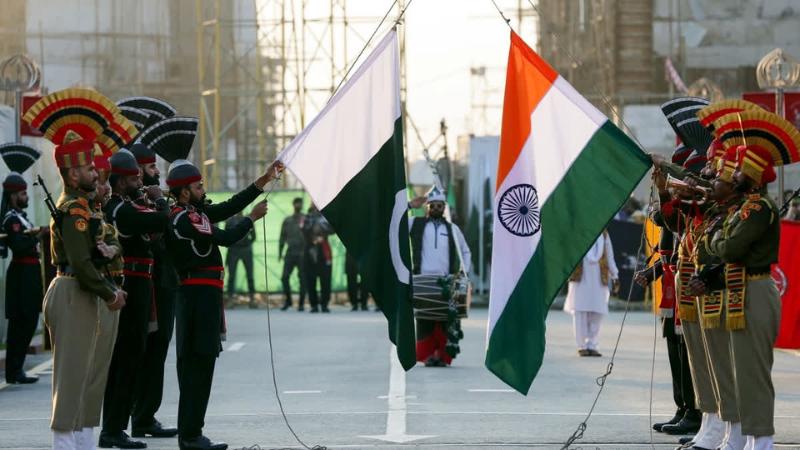
In a significant escalation of tensions following the deadly terror attack in Pahalgam, the Indian government has announced a complete ban on all imports from Pakistan. The decision, announced by the Ministry of Commerce, comes in the wake of mounting national security concerns and is seen as part of a broader strategy to isolate Pakistan diplomatically and economically on the global stage.
The notification issued by the Indian government clearly states that "direct or indirect
In a significant escalation of tensions following the deadly terror attack in Pahalgam, the Indian government has announced a complete ban on all imports from Pakistan. The decision, announced by the Ministry of Commerce, comes in the wake of mounting national security concerns and is seen as part of a broader strategy to isolate Pakistan diplomatically and economically on the global stage.
The notification issued by the Indian government clearly states that "direct or indirect
The World Bank has advised India to lower import tariffs, ease regulatory restrictions, and simplify trade processes to enhance its global trade competitiveness and attract foreign investment. In a report released on Friday titled the Economic Memorandum on India, the World Bank highlighted that high trade costs caused by import tariffs on intermediate and capital goods, as well as non-tariff barriers, are limiting India's participation in global value chains (GVCs).The report emphasized
The World Bank has advised India to lower import tariffs, ease regulatory restrictions, and simplify trade processes to enhance its global trade competitiveness and attract foreign investment. In a report released on Friday titled the Economic Memorandum on India, the World Bank highlighted that high trade costs caused by import tariffs on intermediate and capital goods, as well as non-tariff barriers, are limiting India's participation in global value chains (GVCs).The report emphasized
Impact of China’s Export Restrictions on Indian Manufacturing:
India’s manufacturing industry is facing significant disruptions due to China’s export restrictions, which are part of the ongoing trade tensions between the United States and China. These curbs primarily affect industries in India that rely on raw materials, machinery, and components from China, such as the solar po
Impact of China’s Export Restrictions on Indian Manufacturing:
India’s manufacturing industry is facing significant disruptions due to China’s export restrictions, which are part of the ongoing trade tensions between the United States and China. These curbs primarily affect industries in India that rely on raw materials, machinery, and components from China, such as the solar po
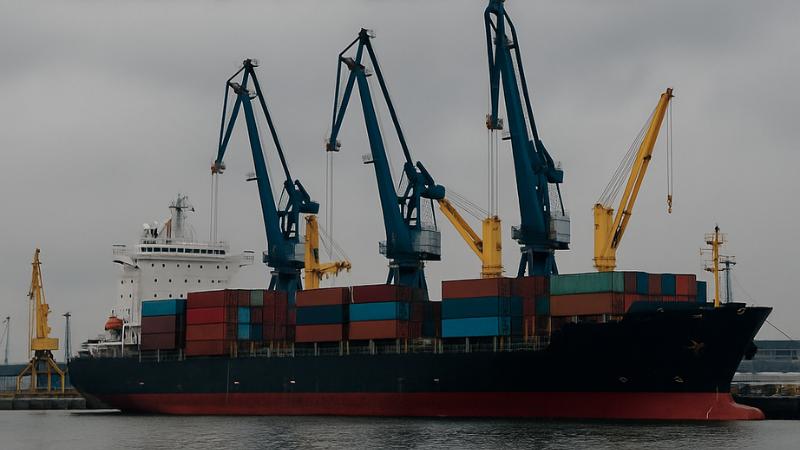
Trade and maritime ties between Pakistan and Bangladesh have been strengthening recently, raising concerns for India. A second cargo vessel, 'MV Yuan Xiang Fa Zhan,' from Karachi arrived at Chittagong port carrying essential industrial materials and consumer goods. This is part of a broader trend of increased trade between the two countries, which has coincided with a diplomatic push by Bangladesh's interim leader Muhammad Yunus to improve relations with Pakistan.
This s
Trade and maritime ties between Pakistan and Bangladesh have been strengthening recently, raising concerns for India. A second cargo vessel, 'MV Yuan Xiang Fa Zhan,' from Karachi arrived at Chittagong port carrying essential industrial materials and consumer goods. This is part of a broader trend of increased trade between the two countries, which has coincided with a diplomatic push by Bangladesh's interim leader Muhammad Yunus to improve relations with Pakistan.
This s
In a significant escalation of trade tensions, China announced on Tuesday that it would ban the export of several key materials, including gallium, germanium, and antimony, to the United States. These materials are vital for high-tech applications, including advanced electronics and military technologies. The Chinese Commerce Ministry's decision follows a recent expansion of the U.S. “entity list,” which now includes 140 Chinese companies—many based in China, though some
In a significant escalation of trade tensions, China announced on Tuesday that it would ban the export of several key materials, including gallium, germanium, and antimony, to the United States. These materials are vital for high-tech applications, including advanced electronics and military technologies. The Chinese Commerce Ministry's decision follows a recent expansion of the U.S. “entity list,” which now includes 140 Chinese companies—many based in China, though some