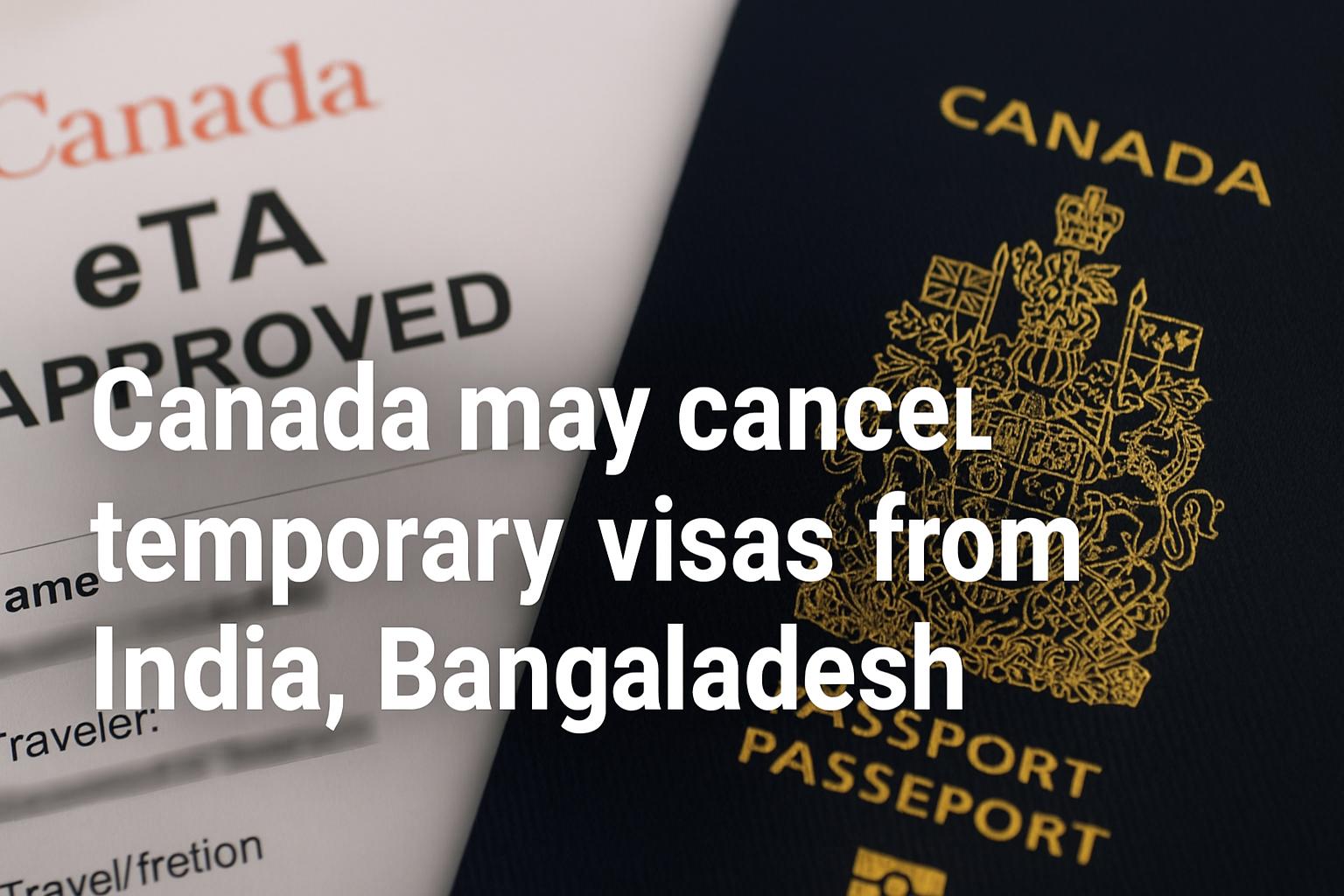
Canada’s immigration authorities are reportedly moving toward adopting new powers that could allow them to cancel temporary visas on a large scale — a policy shift that may disproportionately affect applicants from India and Bangladesh. According to internal government documents, the initiative is part of a broader partnership between Canadian agencies and their U.S. counterparts to strengthen border controls and address rising concerns over fraudulent applications.
The document
Canada’s immigration authorities are reportedly moving toward adopting new powers that could allow them to cancel temporary visas on a large scale — a policy shift that may disproportionately affect applicants from India and Bangladesh. According to internal government documents, the initiative is part of a broader partnership between Canadian agencies and their U.S. counterparts to strengthen border controls and address rising concerns over fraudulent applications.
The document
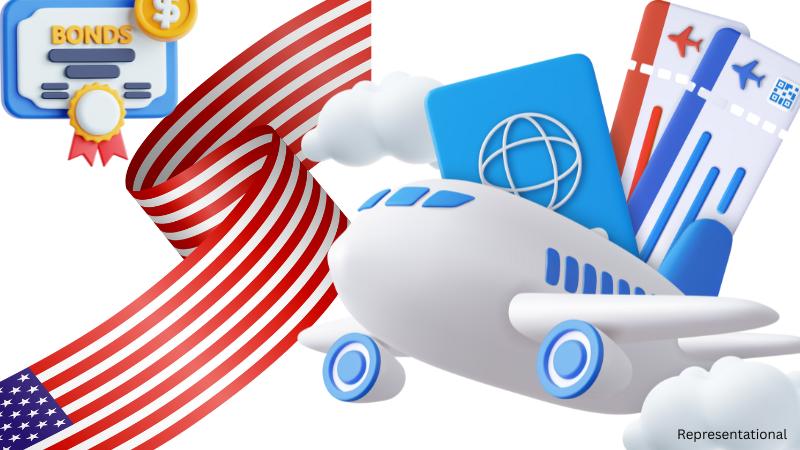
The United States is set to introduce a new visa bond program that could require tourists and business travelers from selected countries to pay bonds of up to $15,000. This pilot program, which will begin on August 20, aims to curb the problem of visitors who overstay their visas and is part of ongoing measures to strengthen immigration enforcement. According to a notice in the Federal Register, the policy grants US consular officers the discretion to impose bonds on individuals coming from nations with high overstay rates or where information for screening and vetting is considered insufficient. This program is scheduled to run for approximately one year.
President Donald Trump has consistently made immigration control a hallmark of his administration. His previous measures have included heightened border security and stricter enforcement against illegal immigration. The president also issued a travel ban affecting citizens from 12 nations on national security grounds, illustrating the administration’s aggressive approach toward regulating entry into the United States. The visa bond policy is seen as a continuation of these hardline efforts. The bonds, intended as a financial guarantee to ensure compliance with visa terms, are refundable if the traveler leaves the US within the allowed timeframe. However, if the individual overstays, the bond is forfeited, adding a significant financial penalty to the immigration violation.
The new initiative bears similarities to a pilot program launched in November 2020 during Trump’s first term. That earlier version, however, was never fully implemented due to the drastic reduction in global travel caused by the COVID-19 pandemic. With international travel now recovering, the administration has revived the concept, signaling a renewed focus on using economic measures to enforce immigration compliance. This latest move underscores the belief within the administration that stricter measures are needed to deter overstays and protect national security.
Under the new policy, US consular officers will have considerable discretion in deciding when to impose bonds and the amounts to be required, up to a maximum of $15,000. The bonds are expected to target visitors from countries identified as having high rates of visa overstays, though specific nations were not named in the initial announcement. Additionally, travelers from countries where authorities cannot adequately provide screening or vetting information may also face these financial requirements. While the program is described as temporary, lasting one year, it could be extended or expanded based on its results.
Critics argue that such a measure could discourage legitimate travel, harm tourism, and create additional bureaucratic hurdles for businesses that rely on international visitors. Concerns have also been raised about fairness, as travelers from affected countries may feel unfairly targeted by the new rule. Supporters of the policy, on the other hand, view it as a practical tool to ensure visitors abide by the terms of their stay and reduce instances of unauthorized immigration. The use of financial incentives as a compliance mechanism is expected to be closely monitored by immigration analysts and advocacy groups throughout the duration of the program.
The implementation of visa bonds comes at a time when global mobility is slowly returning to pre-pandemic levels. International travelers are expected to navigate an increasingly complex landscape of entry requirements, with nations adopting new measures in response to security and migration concerns. The United States, under the Trump administration, has consistently prioritized stricter immigration rules, framing them as necessary for protecting domestic interests. The decision to enforce bonds reflects this ongoing trend and may set a precedent for future immigration control strategies.
The program also highlights the delicate balance between safeguarding borders and maintaining open pathways for tourism and business, both of which contribute significantly to the US economy. Analysts suggest that while the measure may achieve short-term compliance, it could also strain diplomatic relations with countries whose citizens are subjected to the bonds. As the program rolls out, affected nations may seek to negotiate exemptions or push back against what they may perceive as punitive measures.
The next year will be critical in determining whether this policy meets its objectives. If the bonds successfully reduce visa overstays without significantly harming tourism or business, they may become a permanent feature of US immigration enforcement. Conversely, if the program creates more complications than benefits, it may face pressure to be scaled back or abandoned. The policy’s impact on travel patterns, international relations, and domestic politics will likely be scrutinized as it unfolds.
In summary, the United States’ decision to introduce up to $15,000 visa bonds for certain tourists and business visitors is a bold step in the ongoing effort to tighten immigration control. With the program taking effect on August 20 and running for a year, its success or failure will have wide-reaching implications for travelers, businesses, and the global perception of US immigration policies. As the world watches, this pilot initiative may either serve as a model for future strategies or as an example of the challenges inherent in balancing security with openness.
The United States is set to introduce a new visa bond program that could require tourists and business travelers from selected countries to pay bonds of up to $15,000. This pilot program, which will begin on August 20, aims to curb the problem of visitors who overstay their visas and is part of ongoing measures to strengthen immigration enforcement. According to a notice in the Federal Register, the policy grants US consular officers the discretion to impose bonds on individuals coming from nations with high overstay rates or where information for screening and vetting is considered insufficient. This program is scheduled to run for approximately one year.
President Donald Trump has consistently made immigration control a hallmark of his administration. His previous measures have included heightened border security and stricter enforcement against illegal immigration. The president also issued a travel ban affecting citizens from 12 nations on national security grounds, illustrating the administration’s aggressive approach toward regulating entry into the United States. The visa bond policy is seen as a continuation of these hardline efforts. The bonds, intended as a financial guarantee to ensure compliance with visa terms, are refundable if the traveler leaves the US within the allowed timeframe. However, if the individual overstays, the bond is forfeited, adding a significant financial penalty to the immigration violation.
The new initiative bears similarities to a pilot program launched in November 2020 during Trump’s first term. That earlier version, however, was never fully implemented due to the drastic reduction in global travel caused by the COVID-19 pandemic. With international travel now recovering, the administration has revived the concept, signaling a renewed focus on using economic measures to enforce immigration compliance. This latest move underscores the belief within the administration that stricter measures are needed to deter overstays and protect national security.
Under the new policy, US consular officers will have considerable discretion in deciding when to impose bonds and the amounts to be required, up to a maximum of $15,000. The bonds are expected to target visitors from countries identified as having high rates of visa overstays, though specific nations were not named in the initial announcement. Additionally, travelers from countries where authorities cannot adequately provide screening or vetting information may also face these financial requirements. While the program is described as temporary, lasting one year, it could be extended or expanded based on its results.
Critics argue that such a measure could discourage legitimate travel, harm tourism, and create additional bureaucratic hurdles for businesses that rely on international visitors. Concerns have also been raised about fairness, as travelers from affected countries may feel unfairly targeted by the new rule. Supporters of the policy, on the other hand, view it as a practical tool to ensure visitors abide by the terms of their stay and reduce instances of unauthorized immigration. The use of financial incentives as a compliance mechanism is expected to be closely monitored by immigration analysts and advocacy groups throughout the duration of the program.
The implementation of visa bonds comes at a time when global mobility is slowly returning to pre-pandemic levels. International travelers are expected to navigate an increasingly complex landscape of entry requirements, with nations adopting new measures in response to security and migration concerns. The United States, under the Trump administration, has consistently prioritized stricter immigration rules, framing them as necessary for protecting domestic interests. The decision to enforce bonds reflects this ongoing trend and may set a precedent for future immigration control strategies.
The program also highlights the delicate balance between safeguarding borders and maintaining open pathways for tourism and business, both of which contribute significantly to the US economy. Analysts suggest that while the measure may achieve short-term compliance, it could also strain diplomatic relations with countries whose citizens are subjected to the bonds. As the program rolls out, affected nations may seek to negotiate exemptions or push back against what they may perceive as punitive measures.
The next year will be critical in determining whether this policy meets its objectives. If the bonds successfully reduce visa overstays without significantly harming tourism or business, they may become a permanent feature of US immigration enforcement. Conversely, if the program creates more complications than benefits, it may face pressure to be scaled back or abandoned. The policy’s impact on travel patterns, international relations, and domestic politics will likely be scrutinized as it unfolds.
In summary, the United States’ decision to introduce up to $15,000 visa bonds for certain tourists and business visitors is a bold step in the ongoing effort to tighten immigration control. With the program taking effect on August 20 and running for a year, its success or failure will have wide-reaching implications for travelers, businesses, and the global perception of US immigration policies. As the world watches, this pilot initiative may either serve as a model for future strategies or as an example of the challenges inherent in balancing security with openness.
The Trump administration is reportedly considering a major expansion of its travel ban, potentially adding 36 countries to the list of those restricted from entering the United States. This move comes amid President Donald Trump’s broader immigration crackdown, which began in earnest during his second term. Earlier this month, Trump signed a proclamation banning travelers from 12 countries, citing national security concerns and threats posed by foreign t
The Trump administration is reportedly considering a major expansion of its travel ban, potentially adding 36 countries to the list of those restricted from entering the United States. This move comes amid President Donald Trump’s broader immigration crackdown, which began in earnest during his second term. Earlier this month, Trump signed a proclamation banning travelers from 12 countries, citing national security concerns and threats posed by foreign t
Washington: In a major policy move reminiscent of his earlier presidency, US President Donald Trump has signed a sweeping new executive order placing fresh travel restrictions on citizens of 12 countries and partial limitations on seven others. The directive, which the White House confirmed will go into effect on Monday, targets nationals of Afghanistan, Iran, Yemen, Myanmar, Chad, the Republic of the Congo, Equatorial Guinea, Eritrea, Haiti, Libya, Somalia, and Sudan. A separate but related
Washington: In a major policy move reminiscent of his earlier presidency, US President Donald Trump has signed a sweeping new executive order placing fresh travel restrictions on citizens of 12 countries and partial limitations on seven others. The directive, which the White House confirmed will go into effect on Monday, targets nationals of Afghanistan, Iran, Yemen, Myanmar, Chad, the Republic of the Congo, Equatorial Guinea, Eritrea, Haiti, Libya, Somalia, and Sudan. A separate but related