





















#underwater
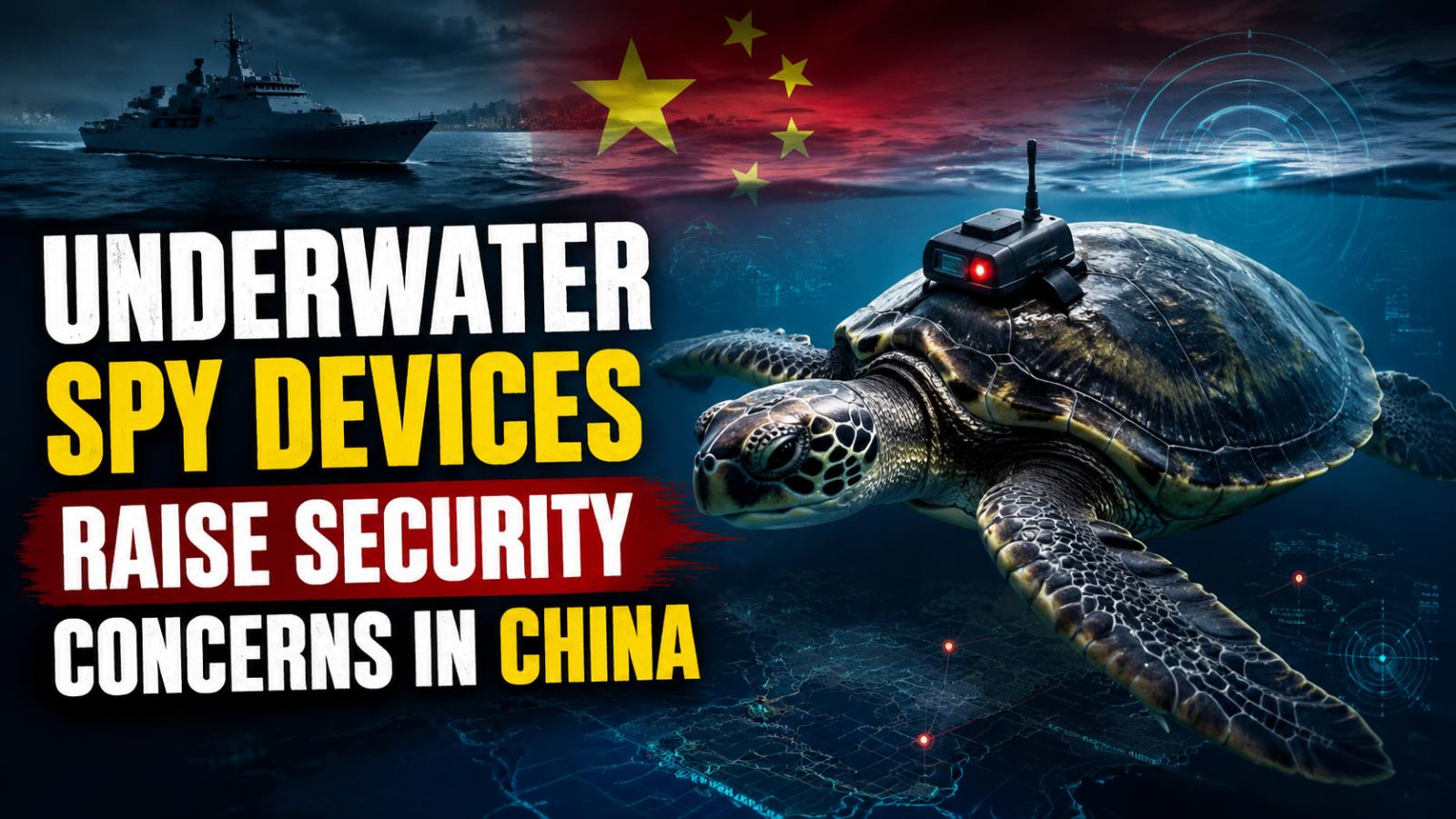
China marine surveillance claims raise coastal security debate
Reports emerging from Chinese security authorities have triggered discussion over the growing use of advanced underwater monitoring systems along coastal regions. The claims suggest that various marine-based platforms, including sensor-equipped aquatic life and autonomous devices, may be collecting detailed ocean data near sensitive shoreline zones. This includes measurements such as temperature shifts, salinity levels, and underwater current behavior, which can collectively reveal patterns of coastal activity. How ocean data becomes strategically sensitive Even basic environmental data, when collected continuously and processed at scale, can create highly detailed digital maps of underwater geography. These maps may outline seabed structures, shipping lanes, and depth variations close to ports. Security analysts note that such information, if accessed by external actors, could potentially be used to study movement patterns of naval or commercial vessels and identify infrastructure vulnerabilities without direct physical intrusion. Expanding role of autonomous maritime technology Modern ocean monitoring has moved far beyond traditional ship-based surveys. Technologies such as wave gliders, drifting sensor buoys, and autonomous underwater vehicles are now widely used for scientific research and environmental tracking. However, the same systems can also be adapted for intelligence collection, depending on their configuration and intent. This overlap between civilian research tools and security applications is creating growing uncertainty in how maritime technology is regulated and interpreted. Security implications and policy response Authorities have reportedly increased attention toward unusual devices and foreign-operated equipment in coastal waters. Guidance has been issued to local maritime workers to report unidentified floating or submerged objects that appear out of place. The situation reflects a broader global trend where environmental monitoring technologies are increasingly viewed through a security lens. As multiple nations expand their ocean data capabilities, the line between scientific exploration and strategic surveillance continues to blur, raising new challenges for coastal defense planning and international maritime trust.
China marine surveillance claims raise coastal security debate
Reports emerging from Chinese security authorities have triggered discussion over the growing use of advanced underwater monitoring systems along coastal regions. The claims suggest that various marine-based platforms, including sensor-equipped aquatic life and autonomous devices, may be collecting detailed ocean data near sensitive shoreline zones. This includes measurements such as temperature shifts, salinity levels, and underwater current behavior, which can collectively reveal patterns of coastal activity. How ocean data becomes strategically sensitive Even basic environmental data, when collected continuously and processed at scale, can create highly detailed digital maps of underwater geography. These maps may outline seabed structures, shipping lanes, and depth variations close to ports. Security analysts note that such information, if accessed by external actors, could potentially be used to study movement patterns of naval or commercial vessels and identify infrastructure vulnerabilities without direct physical intrusion. Expanding role of autonomous maritime technology Modern ocean monitoring has moved far beyond traditional ship-based surveys. Technologies such as wave gliders, drifting sensor buoys, and autonomous underwater vehicles are now widely used for scientific research and environmental tracking. However, the same systems can also be adapted for intelligence collection, depending on their configuration and intent. This overlap between civilian research tools and security applications is creating growing uncertainty in how maritime technology is regulated and interpreted. Security implications and policy response Authorities have reportedly increased attention toward unusual devices and foreign-operated equipment in coastal waters. Guidance has been issued to local maritime workers to report unidentified floating or submerged objects that appear out of place. The situation reflects a broader global trend where environmental monitoring technologies are increasingly viewed through a security lens. As multiple nations expand their ocean data capabilities, the line between scientific exploration and strategic surveillance continues to blur, raising new challenges for coastal defense planning and international maritime trust.
What Scuba Diving Does To Your Body Underwater: A Simple Science Explainer
Your Body Changes Underwater A Different World Beneath The Waves Scuba diving is more than an adventure; it is a science lesson happening inside the human body. The moment a diver enters the ocean, pressure, breathing, and movement begin to change. The sounds of the surface fade, the body slows down, and every breath becomes more controlled. How Pressure Affects The Body As a di
What Scuba Diving Does To Your Body Underwater: A Simple Science Explainer
Your Body Changes Underwater A Different World Beneath The Waves Scuba diving is more than an adventure; it is a science lesson happening inside the human body. The moment a diver enters the ocean, pressure, breathing, and movement begin to change. The sounds of the surface fade, the body slows down, and every breath becomes more controlled. How Pressure Affects The Body As a di
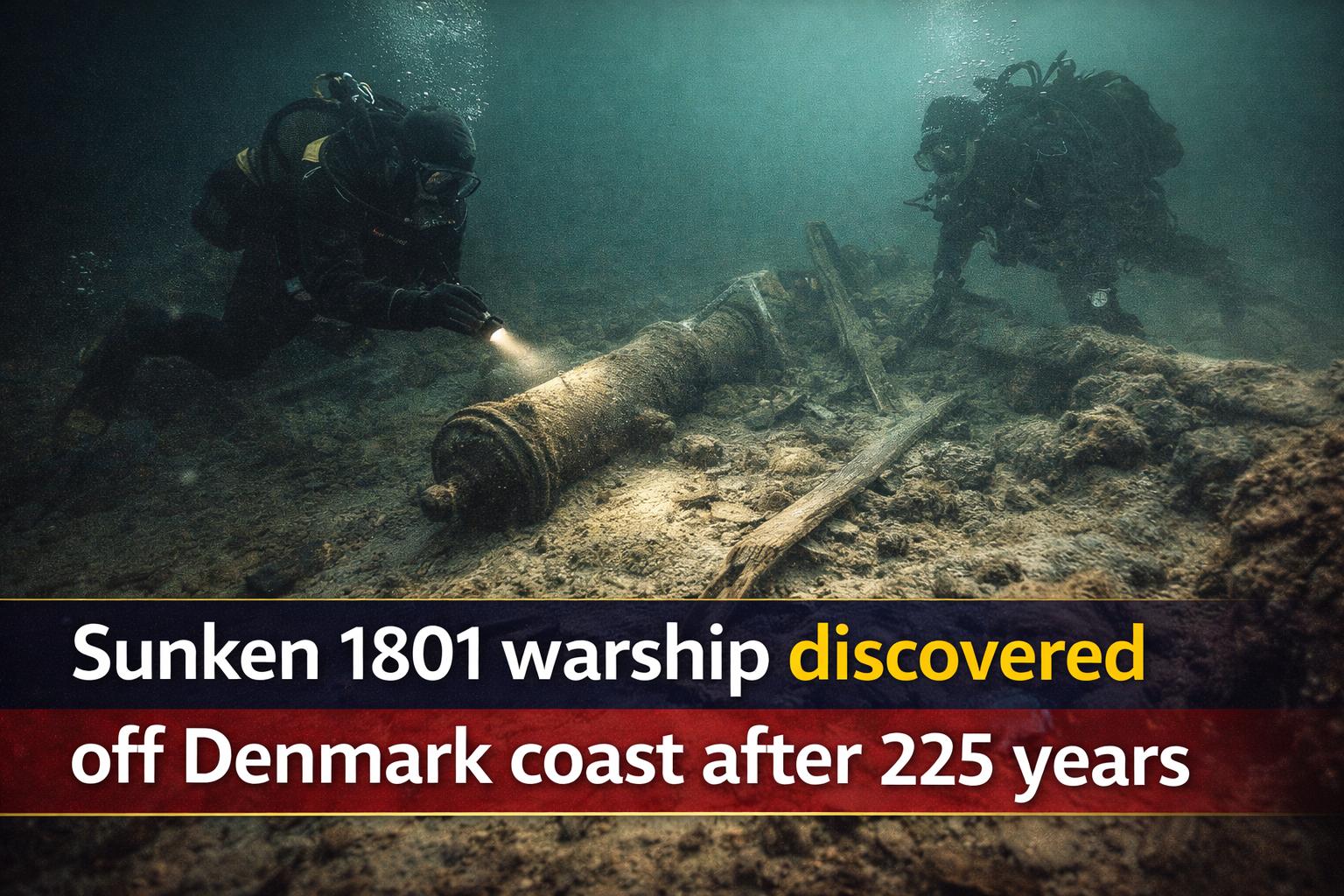
225-year-old Danish warship located beneath Copenhagen harbor
A warship lost during the Battle of Copenhagen in 1801 has been discovered off the coast of Denmark, marking a significant archaeological breakthrough more than two centuries after it sank. Maritime archaeologists confirmed the find on Thursday, April 3, 2026, following months of underwater excavation in Copenhagen Harbor. The vessel, identified as the Dannebroge, was located about 15 meters below the seabed during surveys conducted ahead of a planned infrastructure project. The shi
225-year-old Danish warship located beneath Copenhagen harbor
A warship lost during the Battle of Copenhagen in 1801 has been discovered off the coast of Denmark, marking a significant archaeological breakthrough more than two centuries after it sank. Maritime archaeologists confirmed the find on Thursday, April 3, 2026, following months of underwater excavation in Copenhagen Harbor. The vessel, identified as the Dannebroge, was located about 15 meters below the seabed during surveys conducted ahead of a planned infrastructure project. The shi
China Deploys Underwater AI Data Center with Power of 30,000 PCs Off Hainan Coast
In a bold move showcasing its expanding technological capabilities, China has deployed an advanced underwater data center near the coast of Hainan province. This pioneering facility not only redefines data infrastructure with its cutting-edge AI processing capabilities but also sets a benchmark in environmental sustainability and energy efficiency. At the core of this initiative is DeepSeek technology, China’s powerful AI assistant platform that recently drew global attention for its ab
China Deploys Underwater AI Data Center with Power of 30,000 PCs Off Hainan Coast
In a bold move showcasing its expanding technological capabilities, China has deployed an advanced underwater data center near the coast of Hainan province. This pioneering facility not only redefines data infrastructure with its cutting-edge AI processing capabilities but also sets a benchmark in environmental sustainability and energy efficiency. At the core of this initiative is DeepSeek technology, China’s powerful AI assistant platform that recently drew global attention for its ab
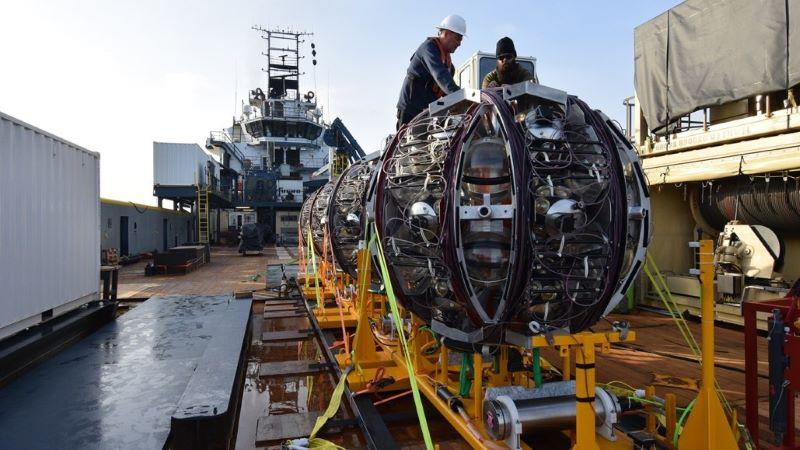
Deploying KM3NeT: Underwater Neutrino Telescope
The KM3NeT (Cubic Kilometre Neutrino Telescope) is an innovative scientific project aimed at detecting high-energy neutrinos in the Mediterranean Sea. This project involves deploying two massive underwater telescopes equipped with photomultiplier tubes to capture light from neutrinos interacting with seawater. One telescope is located off the coast of Sicily to observe cosmic neutrinos, while the other off the French coast focuses on studying atmospheric neutrinos and their o
Deploying KM3NeT: Underwater Neutrino Telescope
The KM3NeT (Cubic Kilometre Neutrino Telescope) is an innovative scientific project aimed at detecting high-energy neutrinos in the Mediterranean Sea. This project involves deploying two massive underwater telescopes equipped with photomultiplier tubes to capture light from neutrinos interacting with seawater. One telescope is located off the coast of Sicily to observe cosmic neutrinos, while the other off the French coast focuses on studying atmospheric neutrinos and their o


