#uttarpradeshnews
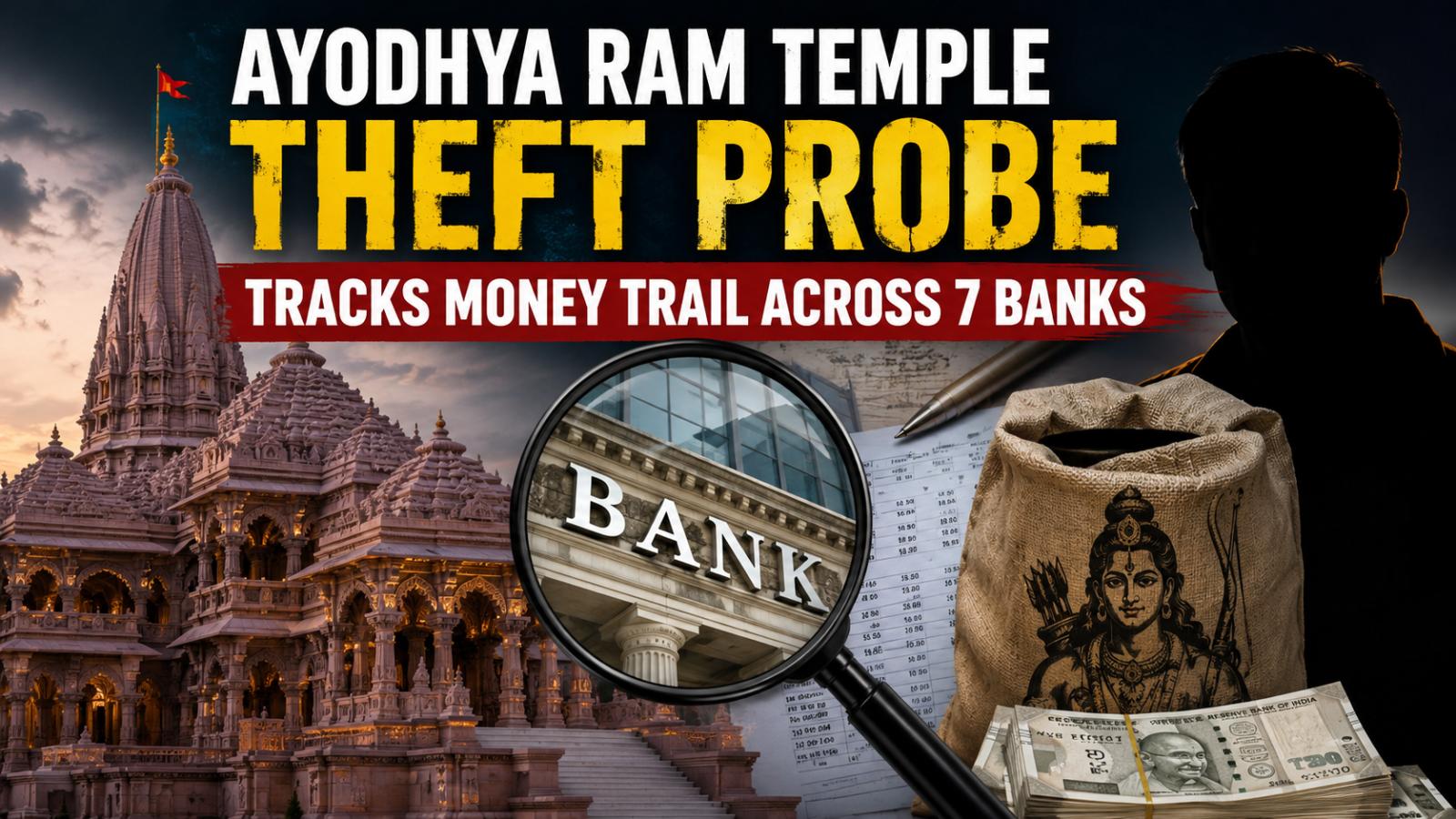
Ayodhya Ram Temple Theft Probe Tracks Money Trail Across 7 Banks
The investigation into the Ayodhya Ram Temple donation theft case has widened into a detailed financial probe, with police seeking five years of banking records from seven banks connected to the eight arrested accused and the Shri Ram Janmabhoomi Teerth Kshetra Trust. Police sources said investigators have asked banks to provide account statements, transaction histories, KYC records, deposit details and other financial documents. The objective is to reconstruct the money trail and e
Ayodhya Ram Temple Theft Probe Tracks Money Trail Across 7 Banks
The investigation into the Ayodhya Ram Temple donation theft case has widened into a detailed financial probe, with police seeking five years of banking records from seven banks connected to the eight arrested accused and the Shri Ram Janmabhoomi Teerth Kshetra Trust. Police sources said investigators have asked banks to provide account statements, transaction histories, KYC records, deposit details and other financial documents. The objective is to reconstruct the money trail and e
Noida Workers Protest Case Sparks NSA Debate In UP
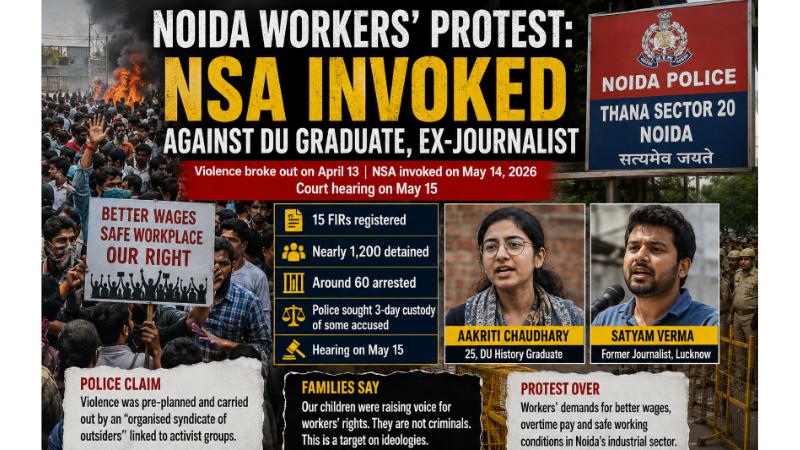
The Noida workers’ protest case intensified on May 14, 2026, exactly one month after violence broke out during labour demonstrations in the industrial hub on April 13. Uttar Pradesh Police invoked the stringent National Security Act (NSA) against Delhi University history graduate Aakriti Chaudhary, 25, and former journalist Satyam Verma, alleging their involvement in organising unrest, arson, and public disorder during the protests. Police claimed the violence was not spontaneous but part of a pre-planned operation carried out by an “organised syndicate of outsiders” linked to labour activist groups, an allegation strongly denied by the families of those arrested. The protests initially began over workers’ demands for better wages, overtime payments, and safer working conditions in Noida’s industrial sector before escalating into clashes and police action. Authorities registered 15 FIRs, detained nearly 1,200 people, and jailed around 60 accused under charges ranging from rioting to attempted murder. Police also sought a three-day custody of several accused, while the court scheduled the hearing for May 15. Along with Chaudhary and Verma, several students, labour activists, and workers from different states were arrested, including NIT graduates, research aspirants, and daily wage earners accused of supporting the demonstrations. Families of the accused alleged that many were targeted for supporting workers’ rights and labour movements. Chaudhary’s father defended her activism and questioned how she could be blamed for violence that allegedly occurred after she was detained. Friends and supporters of Verma highlighted his background in journalism, translation work, and social activism. Human rights groups, labour unions, and opposition leaders have meanwhile criticized the use of NSA in a labour protest case, raising concerns over freedom of expression, preventive detention laws, and the treatment of labour activists in India. The controversy has triggered nationwide political and legal debate over balancing public order with democratic rights during industrial unrest. Security has been tightened across sensitive industrial zones in Noida as investigations continue. Analysts believe the case could have long-term implications for labour movements, workers’ rights campaigns, and the future use of stringent security laws during protests across India.
Noida Workers Protest Case Sparks NSA Debate In UP
The Noida workers’ protest case intensified on May 14, 2026, exactly one month after violence broke out during labour demonstrations in the industrial hub on April 13. Uttar Pradesh Police invoked the stringent National Security Act (NSA) against Delhi University history graduate Aakriti Chaudhary, 25, and former journalist Satyam Verma, alleging their involvement in organising unrest, arson, and public disorder during the protests. Police claimed the violence was not spontaneous but part of a pre-planned operation carried out by an “organised syndicate of outsiders” linked to labour activist groups, an allegation strongly denied by the families of those arrested. The protests initially began over workers’ demands for better wages, overtime payments, and safer working conditions in Noida’s industrial sector before escalating into clashes and police action. Authorities registered 15 FIRs, detained nearly 1,200 people, and jailed around 60 accused under charges ranging from rioting to attempted murder. Police also sought a three-day custody of several accused, while the court scheduled the hearing for May 15. Along with Chaudhary and Verma, several students, labour activists, and workers from different states were arrested, including NIT graduates, research aspirants, and daily wage earners accused of supporting the demonstrations. Families of the accused alleged that many were targeted for supporting workers’ rights and labour movements. Chaudhary’s father defended her activism and questioned how she could be blamed for violence that allegedly occurred after she was detained. Friends and supporters of Verma highlighted his background in journalism, translation work, and social activism. Human rights groups, labour unions, and opposition leaders have meanwhile criticized the use of NSA in a labour protest case, raising concerns over freedom of expression, preventive detention laws, and the treatment of labour activists in India. The controversy has triggered nationwide political and legal debate over balancing public order with democratic rights during industrial unrest. Security has been tightened across sensitive industrial zones in Noida as investigations continue. Analysts believe the case could have long-term implications for labour movements, workers’ rights campaigns, and the future use of stringent security laws during protests across India.