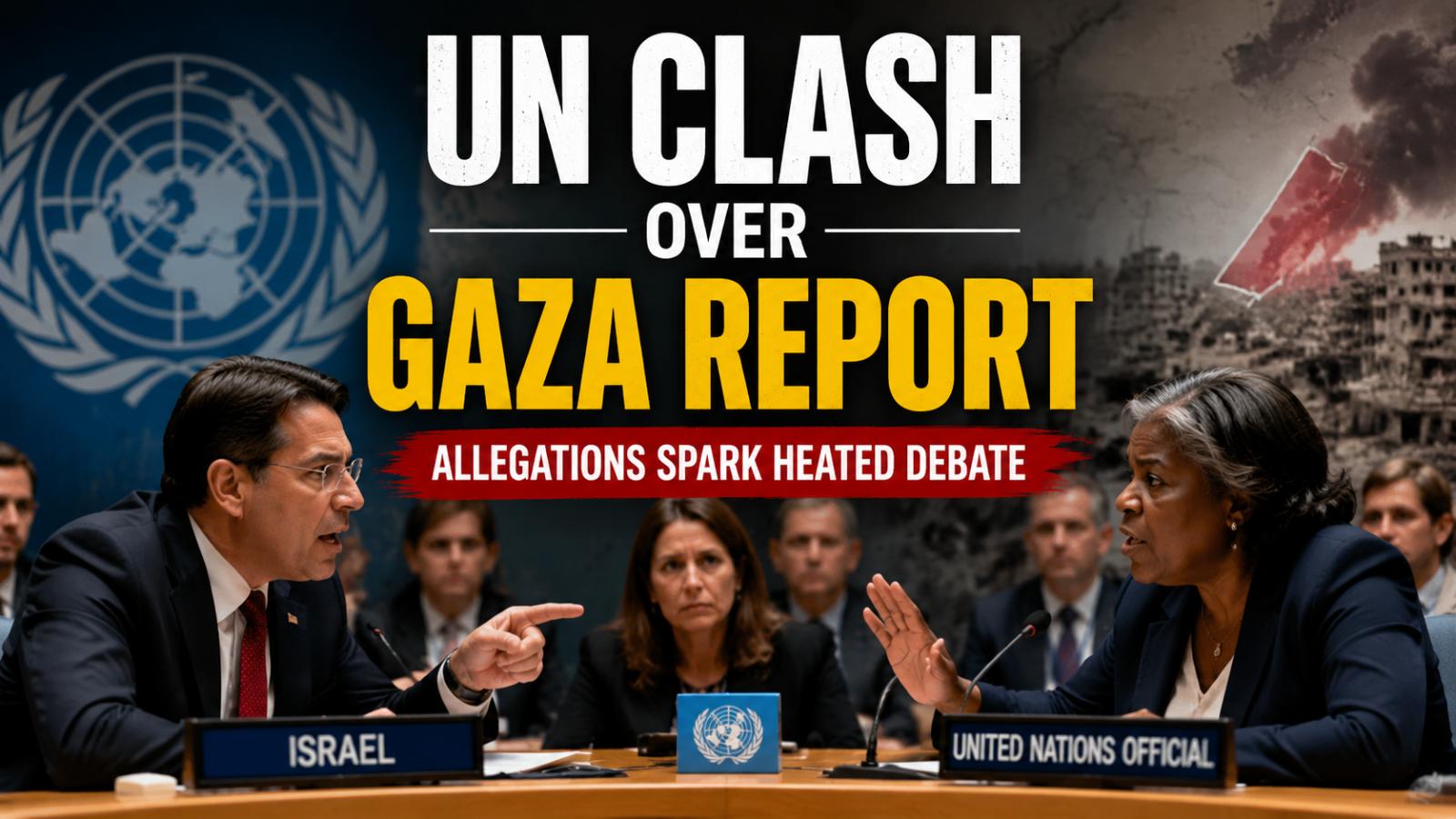
A United Nations discussion intended to review conflict-related sexual violence and child protection issues turned sharply contentious in New York, as disagreements over a Gaza-focused report escalated between Israel’s delegation and senior UN officials. What began as a policy review quickly shifted into a direct diplomatic exchange over credibility, methodology, and political framing of the findings.
Dispute over credibility of conflict data
The tension intensified when Israel’s representative, Danny Danon, challenged the validity of a UN monitoring report that documented violations affecting children in multiple conflict zones, including Gaza. He argued that the findings reflected institutional bias and selective interpretation of incidents involving Israeli forces and related actors. His remarks prompted immediate pushback from UN officials present in the session.
Sharp exchange between diplomats and UN officials
UN representative Vanessa Frazier responded by rejecting the criticism of the report’s integrity, stressing that the data was compiled through established verification mechanisms used in conflict monitoring worldwide. She objected to what she described as personal accusations directed at UN personnel, which further escalated the exchange. The discussion momentarily lost procedural focus as both sides defended their positions more forcefully.
Findings highlight scale of child impact in conflict zones
The report at the center of the debate outlined thousands of grave violations affecting children across active conflict regions during the year. It attributed a significant portion of documented incidents to multiple parties operating in high-intensity zones, while also calling attention to the broader deterioration of child safety in war-affected areas. UN Secretary-General António Guterres has previously expressed concern over rising figures and warned that persistent patterns of violations could trigger stronger international accountability measures.
Broader diplomatic divide over accountability frameworks
The confrontation reflects a continuing divide between Israel and United Nations institutions regarding how conflict data is collected, interpreted, and publicly presented. Israel has consistently rejected allegations of bias in UN reporting, while UN bodies maintain that standardized monitoring systems are essential for documenting humanitarian conditions in active war zones. The latest exchange underscores how reporting on civilian harm has become a recurring point of friction in international diplomacy, particularly in relation to Gaza.
A United Nations discussion intended to review conflict-related sexual violence and child protection issues turned sharply contentious in New York, as disagreements over a Gaza-focused report escalated between Israel’s delegation and senior UN officials. What began as a policy review quickly shifted into a direct diplomatic exchange over credibility, methodology, and political framing of the findings.
Dispute over credibility of conflict data
The tension intensified when Israel’s representative, Danny Danon, challenged the validity of a UN monitoring report that documented violations affecting children in multiple conflict zones, including Gaza. He argued that the findings reflected institutional bias and selective interpretation of incidents involving Israeli forces and related actors. His remarks prompted immediate pushback from UN officials present in the session.
Sharp exchange between diplomats and UN officials
UN representative Vanessa Frazier responded by rejecting the criticism of the report’s integrity, stressing that the data was compiled through established verification mechanisms used in conflict monitoring worldwide. She objected to what she described as personal accusations directed at UN personnel, which further escalated the exchange. The discussion momentarily lost procedural focus as both sides defended their positions more forcefully.
Findings highlight scale of child impact in conflict zones
The report at the center of the debate outlined thousands of grave violations affecting children across active conflict regions during the year. It attributed a significant portion of documented incidents to multiple parties operating in high-intensity zones, while also calling attention to the broader deterioration of child safety in war-affected areas. UN Secretary-General António Guterres has previously expressed concern over rising figures and warned that persistent patterns of violations could trigger stronger international accountability measures.
Broader diplomatic divide over accountability frameworks
The confrontation reflects a continuing divide between Israel and United Nations institutions regarding how conflict data is collected, interpreted, and publicly presented. Israel has consistently rejected allegations of bias in UN reporting, while UN bodies maintain that standardized monitoring systems are essential for documenting humanitarian conditions in active war zones. The latest exchange underscores how reporting on civilian harm has become a recurring point of friction in international diplomacy, particularly in relation to Gaza.
In response to growing concerns over liquor shops charging more than the Maximum Retail Price (MRP) for bottled liquor, the Andhra Pradesh government has introduced strict corrective measures. A new Government Order (G.O.) has been released, which imposes a fine of Rs 5 lakh for the first offense if liquor stores are found violating MRP regulations. The government aims to ensure that consumers are not charged unfair prices and that liquor sales are conducted with transparency.
The n
In response to growing concerns over liquor shops charging more than the Maximum Retail Price (MRP) for bottled liquor, the Andhra Pradesh government has introduced strict corrective measures. A new Government Order (G.O.) has been released, which imposes a fine of Rs 5 lakh for the first offense if liquor stores are found violating MRP regulations. The government aims to ensure that consumers are not charged unfair prices and that liquor sales are conducted with transparency.
The n