







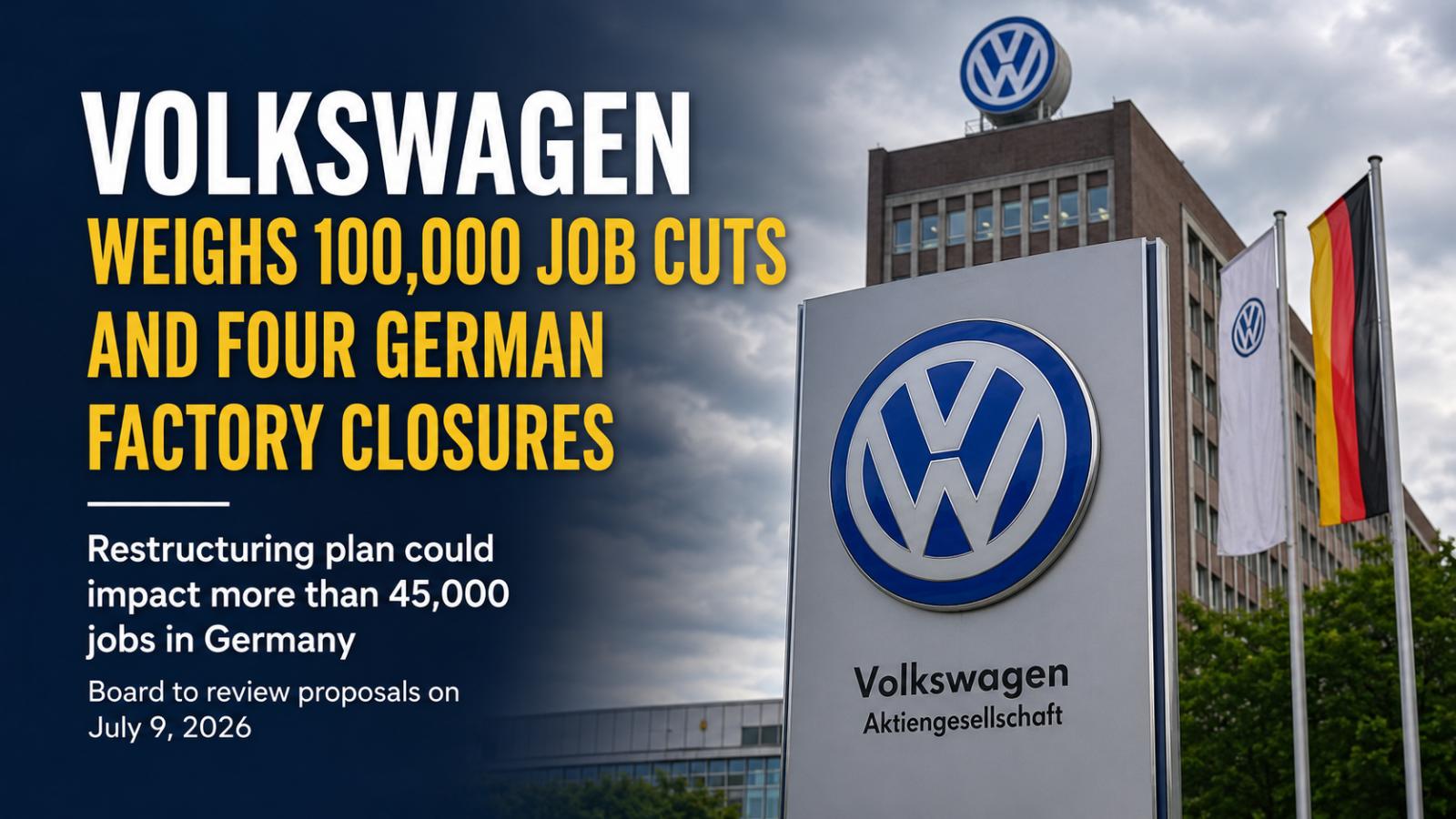












BERLIN — Proposed Volkswagen German plant closures could affect more than 45,000 workers as the automaker considers a restructuring that may raise total job reductions to about 100,000 worldwide. Reuters reported on Friday, June 26, 2026, that Volkswagen is reviewing possible closures of plants in Hanover, Zwickau and Emden, as well as Audi’s factory in Neckarsulm. The proposals have not been approved. Volkswagen declined to discuss confidential documents but acknowled
Volkswagen is currently facing a major legal challenge in India after the Indian government refused to cancel a $1.4 billion tax bill imposed on the carmaker. The government argued in the Bombay High Court that overturning the tax demand would set a dangerous precedent, warning that such a move could have catastrophic consequences. Officials claimed that doing so might encourage other companies to withhold critical information and deliberately delay tax inquiries, ultimately exploiting legal
The global automotive industry is facing yet another wave of trade uncertainty following the reintroduction of tariffs by former U.S. President Donald Trump. His latest move to impose a 25% tariff on imported cars has sent shockwaves across international markets, particularly affecting European carmakers. While some automakers have successfully maneuvered through these trade barriers, others are grappling with the economic repercussions.
Volkswagen has filed a lawsuit against Indian authorities, contesting a $1.4 billion tax demand that the company describes as "impossibly enormous" and in violation of India’s import tax regulations. The dispute centers around the classification of car imports, with Indian officials accusing Volkswagen of misclassifying imports to avoid higher customs duties. In particular, Volkswagen allegedly broke down nearly complete vehicles into individual parts, which are subject to low