



















#wageincrease
What is the Living Wage for All Act? It aims to raise minimum wage to $25
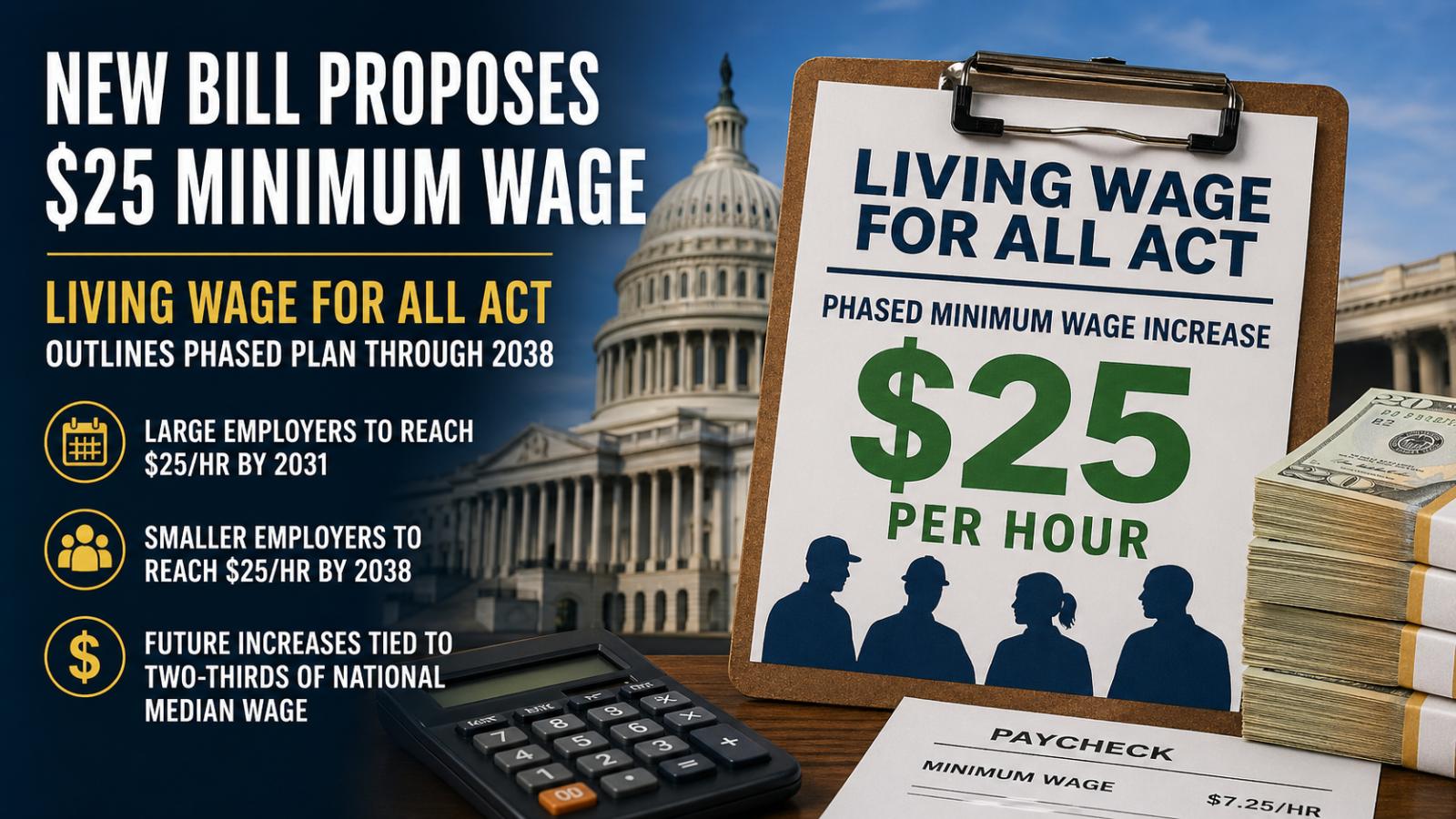
What is the Living Wage for All Act? It aims to raise minimum wage to $25 A new legislative proposal introduced on Tuesday seeks to significantly raise the federal minimum wage in the United States, setting a long-term target of $25 per hour through a phased implementation plan. The measure, known as the Living Wage for All Act, was introduced by a group of Democratic lawmakers aiming to address ongoing affordability concerns and wage stagnation.
What is the Living Wage for All Act? It aims to raise minimum wage to $25
What is the Living Wage for All Act? It aims to raise minimum wage to $25 A new legislative proposal introduced on Tuesday seeks to significantly raise the federal minimum wage in the United States, setting a long-term target of $25 per hour through a phased implementation plan. The measure, known as the Living Wage for All Act, was introduced by a group of Democratic lawmakers aiming to address ongoing affordability concerns and wage stagnation.
Why the 50% Wage Rule is Impacting Your Take-Home Pay
You might be receiving the same CTC as before, but a closer look at your bank account could reveal that your take-home pay has dropped. This change is likely due to the new 50% wage rule, which has been introduced under India's revised Labour Codes. While the Cost to Company (CTC) remains unchanged, this rule is quietly reshaping how salaries are structured, particularly the proportion allocated to basic pay, dearness allowance, and retaining allowance. Under the new rule, basic pay
Why the 50% Wage Rule is Impacting Your Take-Home Pay
You might be receiving the same CTC as before, but a closer look at your bank account could reveal that your take-home pay has dropped. This change is likely due to the new 50% wage rule, which has been introduced under India's revised Labour Codes. While the Cost to Company (CTC) remains unchanged, this rule is quietly reshaping how salaries are structured, particularly the proportion allocated to basic pay, dearness allowance, and retaining allowance. Under the new rule, basic pay


