


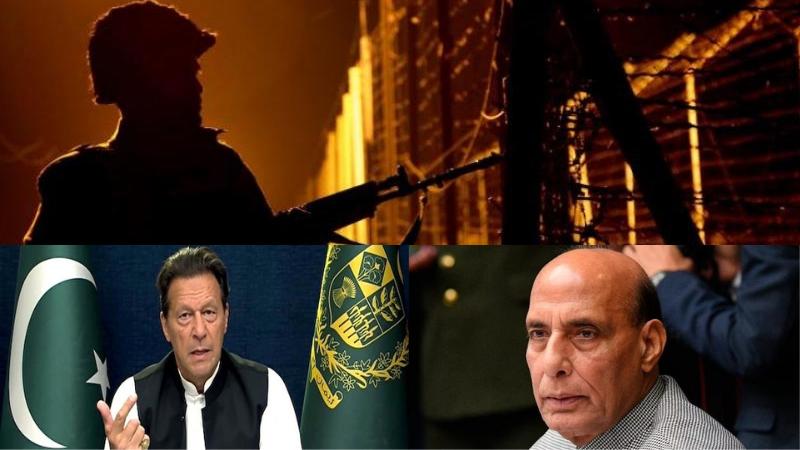
#worldleaders
Modi G7 Group Photo: Indian Leader Joins Trump, Macron in Evian
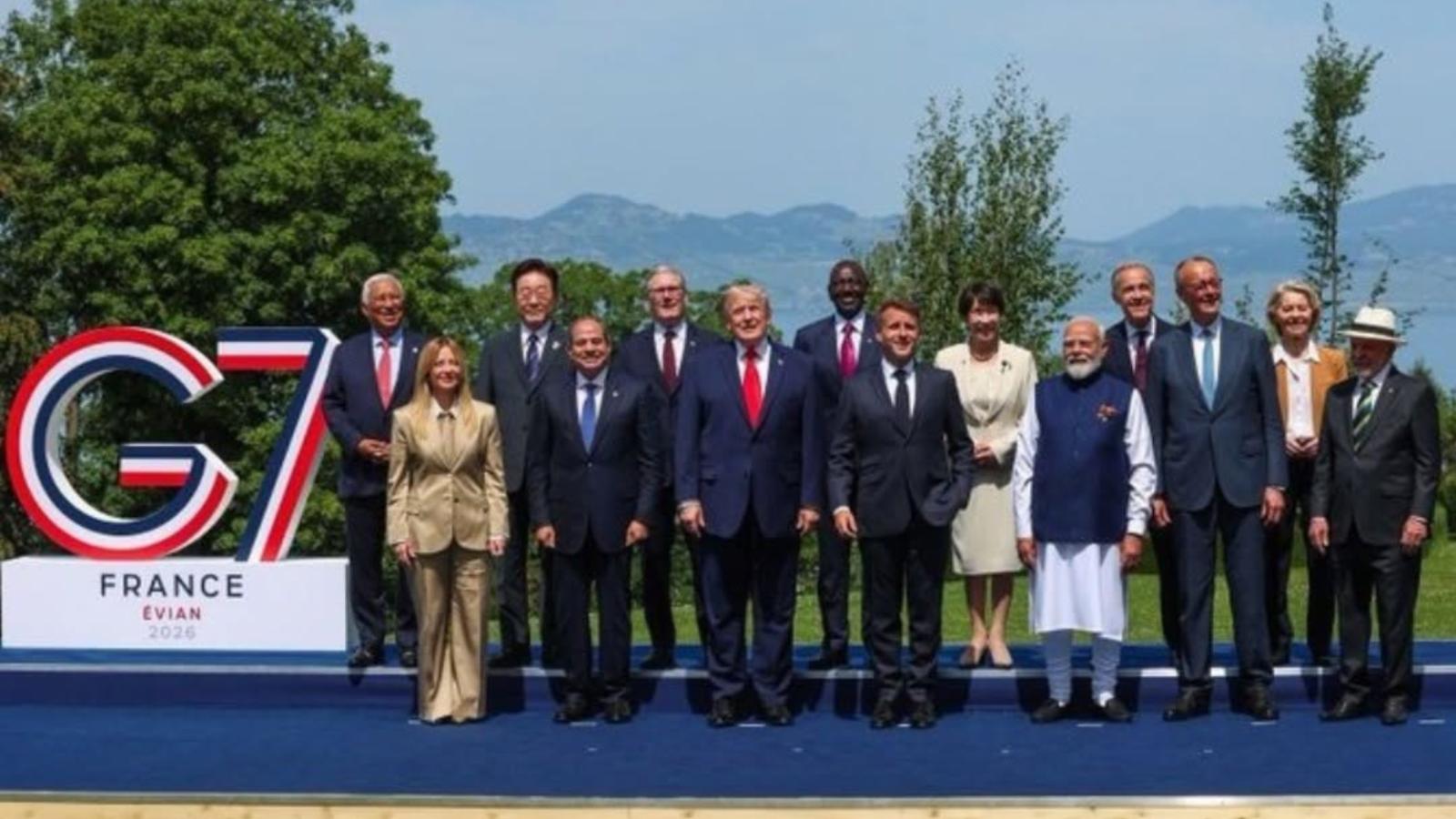
The Modi G7 group photo in Evian placed India’s prime minister beside U.S. President Donald Trump and French President Emmanuel Macron during the summit’s official leaders’ portrait. Narendra Modi’s front-row position on Tuesday, June 16, 2026, became one of the most visible moments of India’s participation in the G7 Summit in Évian-les-Bains, France. Why the Modi G7 Group Photo in Evian Drew Attention India is not a
Modi G7 Group Photo: Indian Leader Joins Trump, Macron in Evian
The Modi G7 group photo in Evian placed India’s prime minister beside U.S. President Donald Trump and French President Emmanuel Macron during the summit’s official leaders’ portrait. Narendra Modi’s front-row position on Tuesday, June 16, 2026, became one of the most visible moments of India’s participation in the G7 Summit in Évian-les-Bains, France. Why the Modi G7 Group Photo in Evian Drew Attention India is not a
PM Narendra Modi Gifts Indian Heritage To World Leaders On Five-Nation Tour
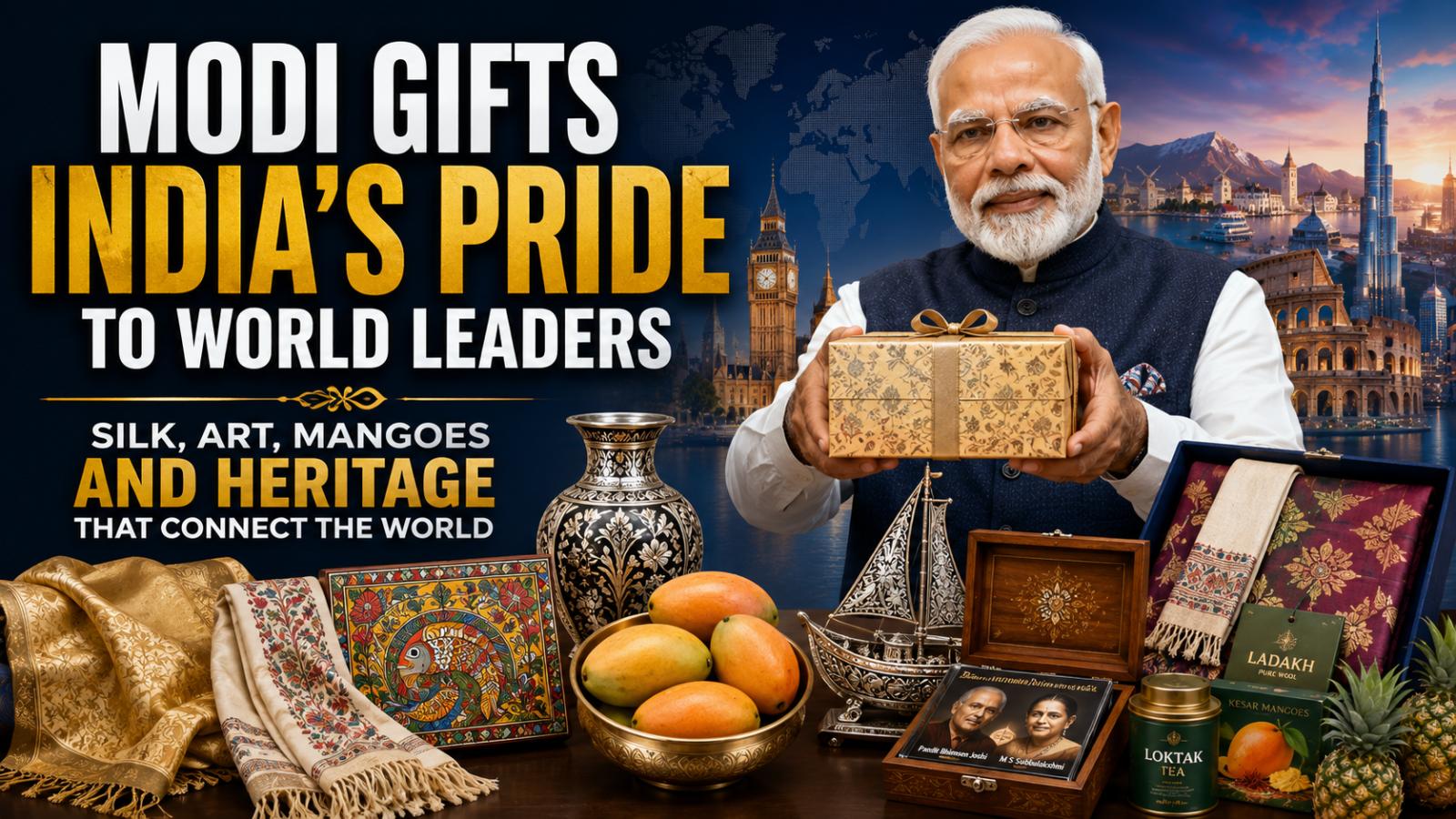
May 22, 2026 Prime Minister Narendra Modi’s five-nation tour highlighted India’s cultural diplomacy through gifts such as Muga silk, Ladakhi wool, Kesar mangoes, Madhubani art, Bidri work and regional rice varieties. Prime Minister Narendra Modi’s recently concluded five-nation tour was not just about diplomacy and high-level meetings. It also became a carefully curated showcase of India’s cultural diversity, traditional craftsmanship and regional pride. During his visit to the United Arab Emirates, the Netherlands, Sweden, Norway and Italy, Modi presented world leaders with gifts that reflected India’s textiles, art forms, agricultural heritage and spiritual traditions. The gifts were chosen not merely as ceremonial items but as cultural messages. From Assam’s golden Muga silk to Rajasthan’s Madhubani painting, from Ladakh’s pure wool stole to Gujarat’s Kesar mangoes, each item carried a story of Indian identity. The selection also appeared to match the recipient country’s cultural background, creating a bridge between Indian traditions and the heritage of the host nations. Indian textiles and art take centre stage Italian Prime Minister Giorgia Meloni received a Muga silk stole, one of Assam’s most prestigious textiles. Known as the golden silk of Assam, Muga silk is valued for its natural golden sheen, durability and understated elegance. The gift was seen as a meaningful cultural connection with Italy, a country famous for luxury textiles, fashion and refined design. Meloni was also given a packet of Melody toffees, a lighter personal gesture that quickly attracted attention online. A video shared by Meloni showed her appreciating the toffee, calling it “very, very good.” The moment gained extra traction because many social media users have already used the popular term “Melodi” to describe the equation between Modi and Meloni. The Italian Prime Minister also received a Shirui Lily silk stole inspired by the rare Shirui Lily of Manipur. The flower, which blooms only in the misty heights of Shirui Kashong peak, has deep cultural significance for the Tangkhul Naga community. It symbolises purity, identity and pride. The choice also carried a connection to Italy, where lilies have long been associated with grace, purity and artistic refinement. Italian President Sergio Mattarella was gifted a marble inlay work box along with CDs of legendary Indian classical musicians Pandit Bhimsen Joshi and M S Subbulakshmi. The box represented the Pacchikari or Pietra Dura tradition, closely associated with Agra’s master craftsmen. The art form has a historical connection to Florence and later flourished in India under royal patronage, making it a symbolic bridge between India and Italy. In the Netherlands, King Willem-Alexander received Jaipur blue pottery, a GI-tagged art form known for its cobalt blue, white and yellow designs. This was a clever diplomatic choice because the Netherlands has its own celebrated Delft Blue pottery tradition. Queen Maxima received Meenakari and Kundan earrings, representing the royal jewellery traditions of Rajasthan. Dutch Prime Minister Rob Jetten was gifted a Madhubani painting featuring a fish motif. Madhubani painting, a GI-tagged folk art from Bihar’s Mithila region, is known for vibrant colours, geometric patterns and symbolic themes. The fish motif is often linked to prosperity, fertility and good fortune. Norwegian Prime Minister Jonas Gahr Støre received a pressed orchid painting and orchid paperweights made from real pressed orchids and ferns from Sikkim. These gifts highlighted the biodiversity of the Eastern Himalayas. King Harald V of Norway was presented with a silver sailboat model made using Tarakasi, the ancient silver filigree art of Cuttack in Odisha. Queen Sonja received a palm leaf Pattachitra, one of Odisha’s oldest and most intricate art forms. Food, craft and heritage used as diplomacy Swedish Prime Minister Ulf Kristersson received a Ladakhi pure wool stole, along with Loktak tea and a handcrafted Santiniketan messenger bag. The Ladakhi stole represented India’s high-altitude textile heritage, while Loktak tea brought attention to the northeast’s artisanal tea culture. The Santiniketan bag reflected Bengal’s craft traditions and the cultural legacy associated with the region. Iceland’s Prime Minister Kristrun Frostadottir was gifted a replica of the ice axe used by Sherpa Tenzing Norgay during the historic first ascent of Mount Everest in 1953 with Sir Edmund Hillary. This gift was one of the most symbolic items on the list, connecting adventure, mountaineering history and Himalayan pride. Denmark’s Prime Minister Mette Frederiksen received a Bidri silver work vase. Bidri work, rooted in the Deccan, is known for its blackened metal base and intricate silver inlay. It remains one of India’s most refined metal craft traditions. Finland’s Prime Minister Petteri Orpo was gifted a Kamal Talai Pichwai painting from Rajasthan’s Nathdwara tradition, known for devotional themes and delicate artistic detailing. In the UAE, President Sheikh Mohamed bin Zayed Al Nahyan received a Rogan painting featuring the tree of life. Rogan art is a rare textile painting tradition from Gujarat’s Kutch region. He was also given Kesar mangoes, the GI-tagged mango variety known as Gujarat’s “Queen of Mangoes,” and Meghalaya pineapples, which are among India’s most admired fruit varieties. The UAE Crown Prince received a ceremonial dagger with Koftgari work, representing India’s martial and metalwork heritage. He was also gifted Mithila makhana, a premium agricultural product from Bihar. The UAE Queen Mother received Maheshwari silk fabric from Madhya Pradesh and Chak Hao rice, the famous black rice of Manipur. Modi also presented a wide selection of Indian rice varieties to Qu Dongyu, Director-General of the Food and Agriculture Organisation of the United Nations. The gifts included red rice from Palakkad in Kerala, Gobindobhog rice from West Bengal, Basmati rice from the Indo-Gangetic plains, Joha rice from Assam and Kalanamak rice from Uttar Pradesh, often known as “Buddha Rice.” He was also given millet bars, underlining India’s ongoing push to promote millets as nutritious and climate-resilient grains. The gift diplomacy during Modi’s tour served a clear purpose. It promoted Indian handlooms, GI-tagged products, traditional art forms and regional agricultural produce on a global stage. It also projected India as a country with deep cultural roots and enormous regional diversity. However, the real value of such diplomatic gifting depends on follow-through. If India wants these products to gain global visibility beyond ceremonial exchanges, it must invest more in international branding, artisan support, export channels and digital storytelling. A Muga silk stole or Madhubani painting can create diplomatic symbolism, but the bigger opportunity is to convert that visibility into global market demand for Indian artisans, farmers and craft communities. Modi’s latest gift list shows how cultural diplomacy can be used as soft power. Each gift carried a message: India is not just negotiating with the world politically and economically, but also introducing its regional stories, craft traditions, foods and artistic identity to global leaders. For audiences in India and abroad, the tour offered a reminder that diplomacy is not only built through agreements and speeches. Sometimes, it is also carried through silk, mangoes, paintings, rice and handcrafted symbols of heritage.
PM Narendra Modi Gifts Indian Heritage To World Leaders On Five-Nation Tour
May 22, 2026 Prime Minister Narendra Modi’s five-nation tour highlighted India’s cultural diplomacy through gifts such as Muga silk, Ladakhi wool, Kesar mangoes, Madhubani art, Bidri work and regional rice varieties. Prime Minister Narendra Modi’s recently concluded five-nation tour was not just about diplomacy and high-level meetings. It also became a carefully curated showcase of India’s cultural diversity, traditional craftsmanship and regional pride. During his visit to the United Arab Emirates, the Netherlands, Sweden, Norway and Italy, Modi presented world leaders with gifts that reflected India’s textiles, art forms, agricultural heritage and spiritual traditions. The gifts were chosen not merely as ceremonial items but as cultural messages. From Assam’s golden Muga silk to Rajasthan’s Madhubani painting, from Ladakh’s pure wool stole to Gujarat’s Kesar mangoes, each item carried a story of Indian identity. The selection also appeared to match the recipient country’s cultural background, creating a bridge between Indian traditions and the heritage of the host nations. Indian textiles and art take centre stage Italian Prime Minister Giorgia Meloni received a Muga silk stole, one of Assam’s most prestigious textiles. Known as the golden silk of Assam, Muga silk is valued for its natural golden sheen, durability and understated elegance. The gift was seen as a meaningful cultural connection with Italy, a country famous for luxury textiles, fashion and refined design. Meloni was also given a packet of Melody toffees, a lighter personal gesture that quickly attracted attention online. A video shared by Meloni showed her appreciating the toffee, calling it “very, very good.” The moment gained extra traction because many social media users have already used the popular term “Melodi” to describe the equation between Modi and Meloni. The Italian Prime Minister also received a Shirui Lily silk stole inspired by the rare Shirui Lily of Manipur. The flower, which blooms only in the misty heights of Shirui Kashong peak, has deep cultural significance for the Tangkhul Naga community. It symbolises purity, identity and pride. The choice also carried a connection to Italy, where lilies have long been associated with grace, purity and artistic refinement. Italian President Sergio Mattarella was gifted a marble inlay work box along with CDs of legendary Indian classical musicians Pandit Bhimsen Joshi and M S Subbulakshmi. The box represented the Pacchikari or Pietra Dura tradition, closely associated with Agra’s master craftsmen. The art form has a historical connection to Florence and later flourished in India under royal patronage, making it a symbolic bridge between India and Italy. In the Netherlands, King Willem-Alexander received Jaipur blue pottery, a GI-tagged art form known for its cobalt blue, white and yellow designs. This was a clever diplomatic choice because the Netherlands has its own celebrated Delft Blue pottery tradition. Queen Maxima received Meenakari and Kundan earrings, representing the royal jewellery traditions of Rajasthan. Dutch Prime Minister Rob Jetten was gifted a Madhubani painting featuring a fish motif. Madhubani painting, a GI-tagged folk art from Bihar’s Mithila region, is known for vibrant colours, geometric patterns and symbolic themes. The fish motif is often linked to prosperity, fertility and good fortune. Norwegian Prime Minister Jonas Gahr Støre received a pressed orchid painting and orchid paperweights made from real pressed orchids and ferns from Sikkim. These gifts highlighted the biodiversity of the Eastern Himalayas. King Harald V of Norway was presented with a silver sailboat model made using Tarakasi, the ancient silver filigree art of Cuttack in Odisha. Queen Sonja received a palm leaf Pattachitra, one of Odisha’s oldest and most intricate art forms. Food, craft and heritage used as diplomacy Swedish Prime Minister Ulf Kristersson received a Ladakhi pure wool stole, along with Loktak tea and a handcrafted Santiniketan messenger bag. The Ladakhi stole represented India’s high-altitude textile heritage, while Loktak tea brought attention to the northeast’s artisanal tea culture. The Santiniketan bag reflected Bengal’s craft traditions and the cultural legacy associated with the region. Iceland’s Prime Minister Kristrun Frostadottir was gifted a replica of the ice axe used by Sherpa Tenzing Norgay during the historic first ascent of Mount Everest in 1953 with Sir Edmund Hillary. This gift was one of the most symbolic items on the list, connecting adventure, mountaineering history and Himalayan pride. Denmark’s Prime Minister Mette Frederiksen received a Bidri silver work vase. Bidri work, rooted in the Deccan, is known for its blackened metal base and intricate silver inlay. It remains one of India’s most refined metal craft traditions. Finland’s Prime Minister Petteri Orpo was gifted a Kamal Talai Pichwai painting from Rajasthan’s Nathdwara tradition, known for devotional themes and delicate artistic detailing. In the UAE, President Sheikh Mohamed bin Zayed Al Nahyan received a Rogan painting featuring the tree of life. Rogan art is a rare textile painting tradition from Gujarat’s Kutch region. He was also given Kesar mangoes, the GI-tagged mango variety known as Gujarat’s “Queen of Mangoes,” and Meghalaya pineapples, which are among India’s most admired fruit varieties. The UAE Crown Prince received a ceremonial dagger with Koftgari work, representing India’s martial and metalwork heritage. He was also gifted Mithila makhana, a premium agricultural product from Bihar. The UAE Queen Mother received Maheshwari silk fabric from Madhya Pradesh and Chak Hao rice, the famous black rice of Manipur. Modi also presented a wide selection of Indian rice varieties to Qu Dongyu, Director-General of the Food and Agriculture Organisation of the United Nations. The gifts included red rice from Palakkad in Kerala, Gobindobhog rice from West Bengal, Basmati rice from the Indo-Gangetic plains, Joha rice from Assam and Kalanamak rice from Uttar Pradesh, often known as “Buddha Rice.” He was also given millet bars, underlining India’s ongoing push to promote millets as nutritious and climate-resilient grains. The gift diplomacy during Modi’s tour served a clear purpose. It promoted Indian handlooms, GI-tagged products, traditional art forms and regional agricultural produce on a global stage. It also projected India as a country with deep cultural roots and enormous regional diversity. However, the real value of such diplomatic gifting depends on follow-through. If India wants these products to gain global visibility beyond ceremonial exchanges, it must invest more in international branding, artisan support, export channels and digital storytelling. A Muga silk stole or Madhubani painting can create diplomatic symbolism, but the bigger opportunity is to convert that visibility into global market demand for Indian artisans, farmers and craft communities. Modi’s latest gift list shows how cultural diplomacy can be used as soft power. Each gift carried a message: India is not just negotiating with the world politically and economically, but also introducing its regional stories, craft traditions, foods and artistic identity to global leaders. For audiences in India and abroad, the tour offered a reminder that diplomacy is not only built through agreements and speeches. Sometimes, it is also carried through silk, mangoes, paintings, rice and handcrafted symbols of heritage.
Will Donald Trump win Nobel Peace Prize 2026? Key facts and timeline
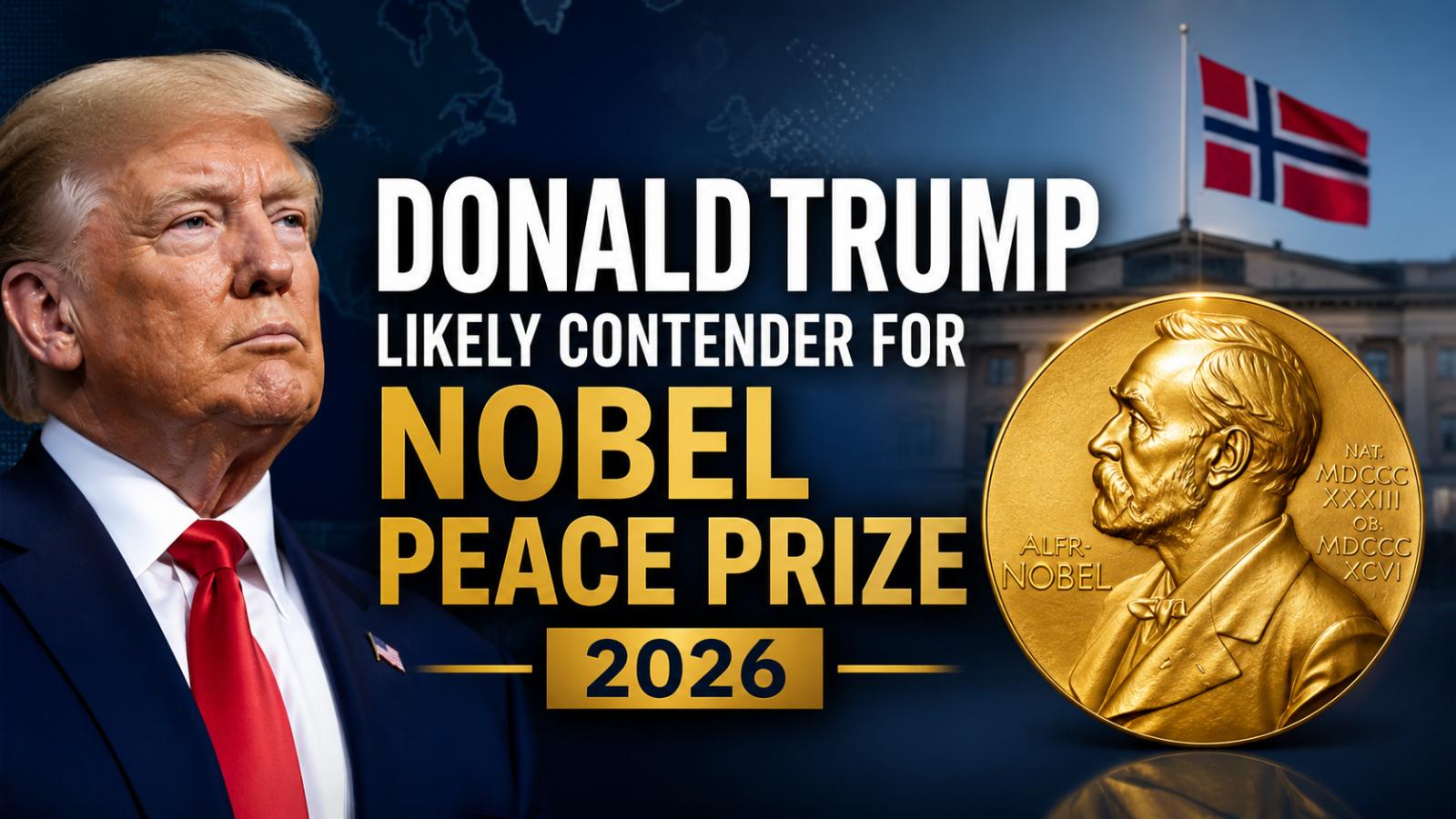
Nobel Peace Prize 2026: Trump emerges as likely contender Donald Trump is being seen as a likely contender for the Nobel Peace Prize 2026, with 287 candidates under review, but the final list remains strictly confidential. Kristian Berg Harpviken, secretary of the Norwegian Nobel Committee, confirmed that the total nominations include 208 individuals and 79 organisations, highlighting strong global participation despite ongoing conf
Will Donald Trump win Nobel Peace Prize 2026? Key facts and timeline
Nobel Peace Prize 2026: Trump emerges as likely contender Donald Trump is being seen as a likely contender for the Nobel Peace Prize 2026, with 287 candidates under review, but the final list remains strictly confidential. Kristian Berg Harpviken, secretary of the Norwegian Nobel Committee, confirmed that the total nominations include 208 individuals and 79 organisations, highlighting strong global participation despite ongoing conf
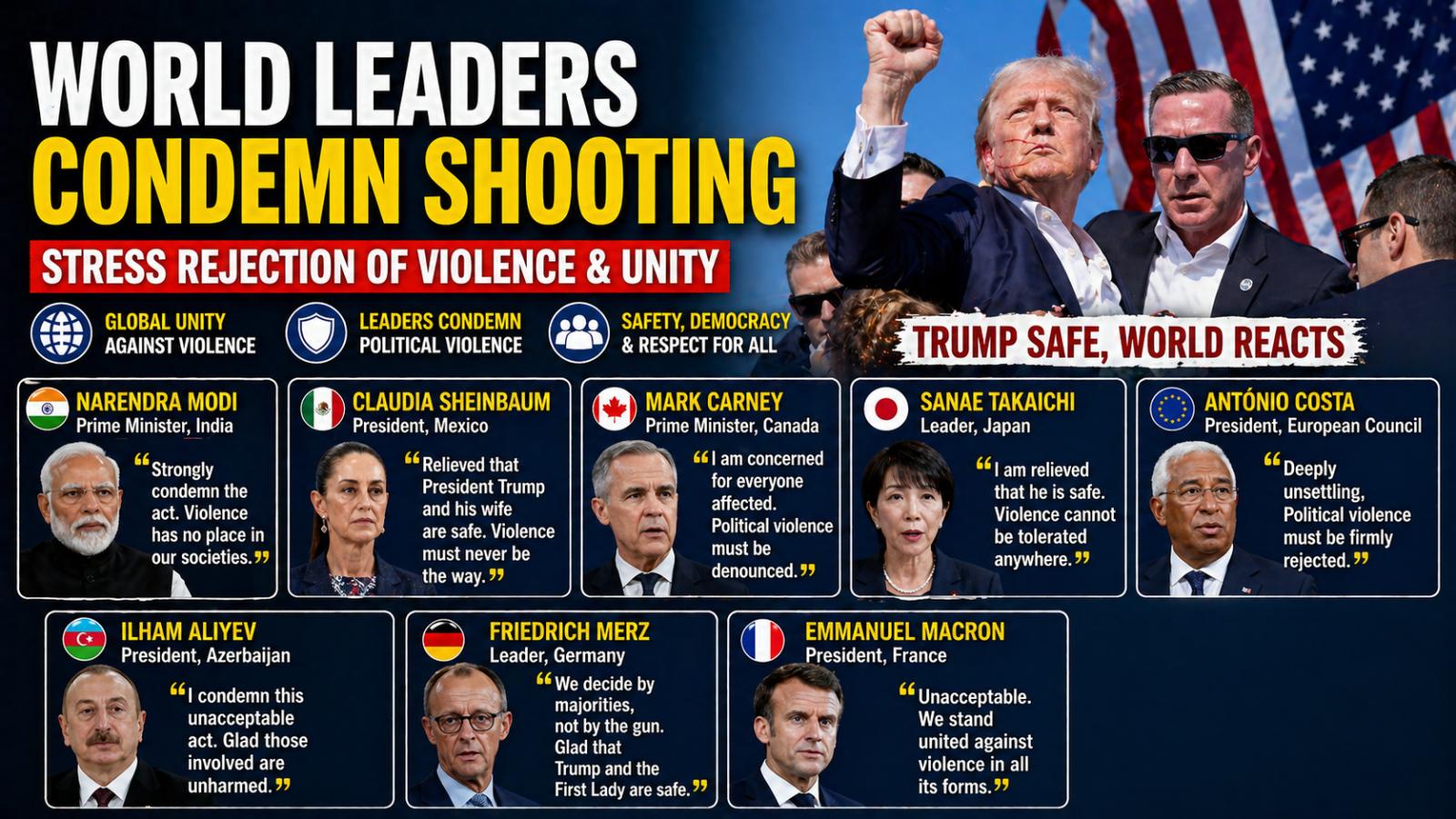
World leaders denounce shooting targeting Trump, stress rejection of violence
Global leaders condemn shooting incident involving President Trump as a wave of international reactions underscored a shared rejection of political violence and relief that the former U.S. president and other attendees were unharmed. The incident prompted swift responses from leaders across continents, reflecting concern over rising threats to public figures and democratic processes. Narendra Modi Indian Prime Minister
World leaders denounce shooting targeting Trump, stress rejection of violence
Global leaders condemn shooting incident involving President Trump as a wave of international reactions underscored a shared rejection of political violence and relief that the former U.S. president and other attendees were unharmed. The incident prompted swift responses from leaders across continents, reflecting concern over rising threats to public figures and democratic processes. Narendra Modi Indian Prime Minister
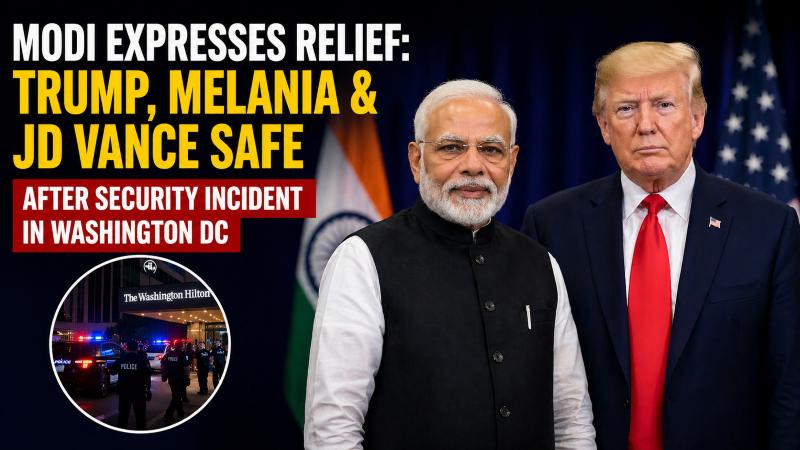
Narendra Modi Reacts to Washington DC Incident: Trump, Melania, JD Vance Safe
Prime Minister Narendra Modi expressed relief that Donald Trump, Melania Trump, and
Narendra Modi Reacts to Washington DC Incident: Trump, Melania, JD Vance Safe
Prime Minister Narendra Modi expressed relief that Donald Trump, Melania Trump, and
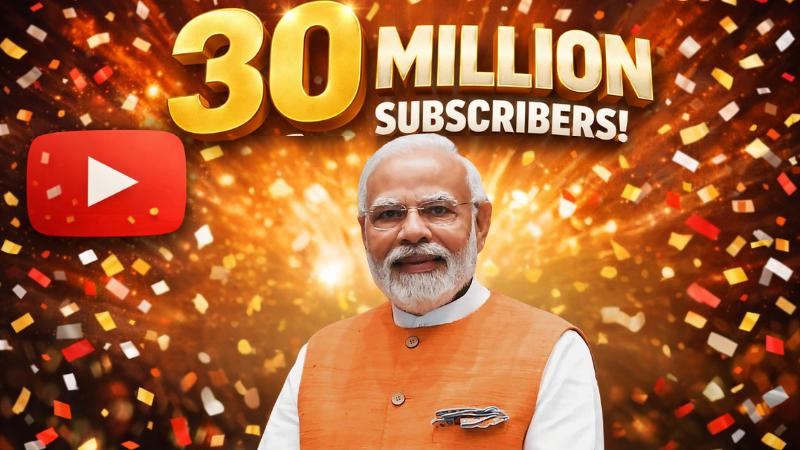
PM Narendra Modi YouTube Channel Crosses 30 Million Subscribers, Highest Among World Leaders
Prime Minister Narendra Modi has achieved a major digital milestone as his official YouTube channel surpassed 30 million subscribers, making him the most followed world leader on the platform. The achievement highlights the Prime Minister’s unmatched global digital presence and reinforces his dominance across social media platforms. According to official sources, the subscriber count places Narendra Modi well ahead of other prominent international leaders. Former Brazilian President Jair Bolsonaro, who holds the second-highest subscriber base among world leaders on YouTube, has only about one-fourth of Modi’s subscribers. Similarly, US President Donald Trump trails far behind, with Modi reportedly having more than seven times the number of subscribers. The Prime Minister’s strong presence on YouTube reflects his strategic use of digital platforms to connect directly with citizens in India and audiences worldwide. His channel features speeches, policy announcements, live event broadcasts, campaign messages, and cultural highlights, drawing millions of views regularly. The content appeals not only to domestic supporters but also to the Indian diaspora and global viewers interested in India’s political landscape. Within India, Modi’s digital reach also surpasses that of his political rivals. His YouTube subscriber base is around three times larger than that of Congress leader Rahul Gandhi. It is also more than four times higher than the subscriber counts of the Aam Aadmi Party and the Indian National Congress when considered individually. This gap underscores the Bharatiya Janata Party leader’s commanding influence in the digital political arena. The YouTube milestone comes just weeks after Modi became the first world leader to cross 100 million followers on Instagram. Having joined the platform in 2014, his Instagram account has evolved into one of the most engaging profiles among global political figures. Over the past decade, he has consistently leveraged visual storytelling, behind-the-scenes moments, diplomatic engagements, and public outreach initiatives to maintain high engagement rates. Political analysts note that Modi’s digital strategy has played a crucial role in shaping modern political communication in India. By effectively utilizing social media platforms such as YouTube and Instagram, he has managed to bypass traditional media channels and communicate directly with the public. With 30 million YouTube subscribers and 100 million Instagram followers, Narendra Modi continues to set new benchmarks for digital engagement among world leaders. The milestone not only reflects his popularity but also signals the growing importance of online platforms in global politics and governance.
PM Narendra Modi YouTube Channel Crosses 30 Million Subscribers, Highest Among World Leaders
Prime Minister Narendra Modi has achieved a major digital milestone as his official YouTube channel surpassed 30 million subscribers, making him the most followed world leader on the platform. The achievement highlights the Prime Minister’s unmatched global digital presence and reinforces his dominance across social media platforms. According to official sources, the subscriber count places Narendra Modi well ahead of other prominent international leaders. Former Brazilian President Jair Bolsonaro, who holds the second-highest subscriber base among world leaders on YouTube, has only about one-fourth of Modi’s subscribers. Similarly, US President Donald Trump trails far behind, with Modi reportedly having more than seven times the number of subscribers. The Prime Minister’s strong presence on YouTube reflects his strategic use of digital platforms to connect directly with citizens in India and audiences worldwide. His channel features speeches, policy announcements, live event broadcasts, campaign messages, and cultural highlights, drawing millions of views regularly. The content appeals not only to domestic supporters but also to the Indian diaspora and global viewers interested in India’s political landscape. Within India, Modi’s digital reach also surpasses that of his political rivals. His YouTube subscriber base is around three times larger than that of Congress leader Rahul Gandhi. It is also more than four times higher than the subscriber counts of the Aam Aadmi Party and the Indian National Congress when considered individually. This gap underscores the Bharatiya Janata Party leader’s commanding influence in the digital political arena. The YouTube milestone comes just weeks after Modi became the first world leader to cross 100 million followers on Instagram. Having joined the platform in 2014, his Instagram account has evolved into one of the most engaging profiles among global political figures. Over the past decade, he has consistently leveraged visual storytelling, behind-the-scenes moments, diplomatic engagements, and public outreach initiatives to maintain high engagement rates. Political analysts note that Modi’s digital strategy has played a crucial role in shaping modern political communication in India. By effectively utilizing social media platforms such as YouTube and Instagram, he has managed to bypass traditional media channels and communicate directly with the public. With 30 million YouTube subscribers and 100 million Instagram followers, Narendra Modi continues to set new benchmarks for digital engagement among world leaders. The milestone not only reflects his popularity but also signals the growing importance of online platforms in global politics and governance.

Trump criticizes Time cover photo after Gaza peace deal earns global praise
President Donald Trump is earning rare praise from across the political spectrum for brokering a landmark peace agreement between Israel and Hamas, but the president is directing his ire toward Time magazine for what he described as an “unflattering” cover photo. In a post early Tuesday on his Truth Social platform, President Trump complained about the image featured on Time’s upcoming November 10 issue, which includes an in-depth story on the Gaza peace deal. “Time Magazine
Trump criticizes Time cover photo after Gaza peace deal earns global praise
President Donald Trump is earning rare praise from across the political spectrum for brokering a landmark peace agreement between Israel and Hamas, but the president is directing his ire toward Time magazine for what he described as an “unflattering” cover photo. In a post early Tuesday on his Truth Social platform, President Trump complained about the image featured on Time’s upcoming November 10 issue, which includes an in-depth story on the Gaza peace deal. “Time Magazine
G7 Summit: Meaning, members, and global importance
The G7 Summit is an annual meeting of leaders from seven of the world’s largest and most advanced democratic economies. These include the United States, the United Kingdom, Canada, France, Germany, Italy, and Japan. The European Union also takes part in the discussions as a non-enumerated participant. Together, these nations represent a small portion of the world’s population but command nearly one-third of the global GDP, giving them substantial i
G7 Summit: Meaning, members, and global importance
The G7 Summit is an annual meeting of leaders from seven of the world’s largest and most advanced democratic economies. These include the United States, the United Kingdom, Canada, France, Germany, Italy, and Japan. The European Union also takes part in the discussions as a non-enumerated participant. Together, these nations represent a small portion of the world’s population but command nearly one-third of the global GDP, giving them substantial i










