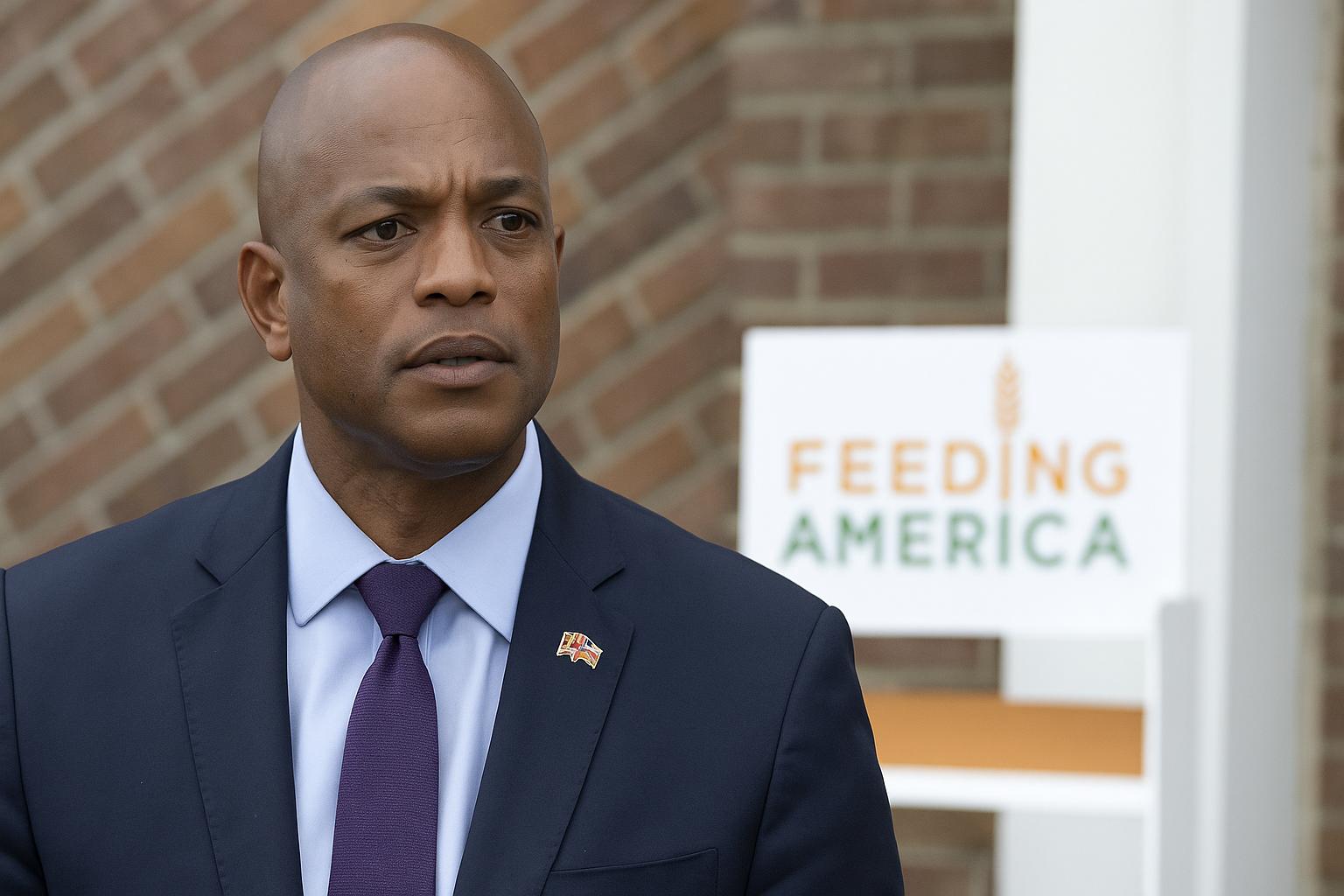
Maryland’s governor has warned that hundreds of thousands of residents could soon lose access to food assistance because the federal government has refused to release Supplemental Nutrition Assistance Program (SNAP) funds. He said that an official communication from Washington ordered the state not to issue new benefits beginning November 1, potentially leaving 680,000 residents, including nearly 270,000 children, without the support they need to eat.
Speaking from Annapolis, the governor expressed deep concern about the impact this decision could have on families, schools, and communities across Maryland. He explained that his administration had been preparing for a possible disruption in federal support, but the total suspension of SNAP benefits represents an unprecedented crisis. The directive also withholds contingency funds that states typically rely on during budget disputes or federal shutdowns, increasing the risk of hunger for many low-income households.
According to the governor, the letter from federal officials arrived on October 10 and explicitly instructed Maryland to stop processing new SNAP payments. Without immediate action to reverse the decision, electronic benefit cards that families depend on for groceries will not be reloaded for the month of November. The governor said the outcome would be devastating for vulnerable populations, especially children, seniors, and working families who live paycheck to paycheck. “When food stops reaching families, children stand to go hungry, and that cannot happen in Maryland,” he stated.
He explained that in previous shutdowns, Maryland and other states were allowed to use reserve funds temporarily or receive reimbursement later when the federal government resumed normal operations. However, current officials have refused to give any guarantees that the state would be repaid if it chose to advance benefits on its own. This lack of assurance has placed state leaders in a difficult position—balancing the need to feed residents against the risk of losing billions of dollars in unreimbursed spending.
The governor described this situation as part of a larger breakdown in cooperation between state and federal governments. He warned that the refusal to release funds could create a cascading effect on Maryland’s economy, with local grocers, food pantries, and community organizations all facing financial strain if residents suddenly lose their purchasing power. The SNAP program injects millions of dollars into local businesses each month, and any interruption would affect both families and small retailers.
Despite the financial pressure, Maryland has made major strides in improving its fiscal stability. The state has transformed a $3 billion deficit into a $321 million structural surplus through responsible budgeting and cost management. However, even with a stable budget, Maryland cannot sustain SNAP coverage indefinitely without federal support. The state treasury currently holds about $3.5 billion in short-term cash to handle emergency expenses and federal reimbursements, but the governor said there is no confidence that any of this money would be reimbursed if spent on programs that rely on federal funding.
He also pointed out that uncertainty surrounding federal programs creates challenges beyond food aid, potentially affecting health, education, and disaster recovery funds. Without reliable federal reimbursement, states are forced to divert resources from other critical areas, increasing financial instability and reducing their ability to respond to emergencies. The governor said his administration is reviewing every available option to provide short-term relief for families, but he admitted that state resources can only cover a fraction of the need.
The state’s leader has called on national policymakers to end what he described as a “senseless shutdown” and restore essential funding for programs that millions of Americans depend on. He emphasized that the issue is not about political rivalry or partisanship but about protecting families from unnecessary hardship. “No child in Maryland should ever go hungry because of gridlock in Washington,” he said. “Our responsibility is to the people, not politics.”
In recent months, Maryland officials have expressed frustration over other federal funding disputes involving disaster recovery and infrastructure support. State leaders have argued that these delays harm local economies and hinder rebuilding efforts. The current freeze on food assistance, however, poses a more immediate humanitarian threat, as it directly affects access to meals for hundreds of thousands of residents.
The governor reaffirmed that Maryland will continue to advocate for its people and coordinate with community organizations to fill the gap wherever possible. Food banks, religious institutions, and nonprofit groups are preparing to expand emergency operations if benefits are not restored quickly. However, these groups also acknowledge that their resources are limited compared to the scale of the SNAP program.
As November approaches, the uncertainty surrounding the release of funds has created widespread anxiety among families who rely on monthly benefits to buy groceries. The state continues to press federal officials for clarity and urges residents to stay informed through official updates. The governor closed his statement with a plea for compassion and action, saying that political disputes should never come at the expense of a child’s meal or a family’s security.
If the standoff continues, Maryland could face one of the largest disruptions to food assistance in its history. The decision will not only test the resilience of local communities but also highlight the critical importance of cooperation between state and federal governments in addressing basic human needs. For now, the state’s message is clear: Maryland will do everything possible to keep its residents fed, but without federal cooperation, the risk of widespread hunger remains a growing and immediate concern.
Speaking from Annapolis, the governor expressed deep concern about the impact this decision could have on families, schools, and communities across Maryland. He explained that his administration had been preparing for a possible disruption in federal support, but the total suspension of SNAP benefits represents an unprecedented crisis. The directive also withholds contingency funds that states typically rely on during budget disputes or federal shutdowns, increasing the risk of hunger for many low-income households.
According to the governor, the letter from federal officials arrived on October 10 and explicitly instructed Maryland to stop processing new SNAP payments. Without immediate action to reverse the decision, electronic benefit cards that families depend on for groceries will not be reloaded for the month of November. The governor said the outcome would be devastating for vulnerable populations, especially children, seniors, and working families who live paycheck to paycheck. “When food stops reaching families, children stand to go hungry, and that cannot happen in Maryland,” he stated.
He explained that in previous shutdowns, Maryland and other states were allowed to use reserve funds temporarily or receive reimbursement later when the federal government resumed normal operations. However, current officials have refused to give any guarantees that the state would be repaid if it chose to advance benefits on its own. This lack of assurance has placed state leaders in a difficult position—balancing the need to feed residents against the risk of losing billions of dollars in unreimbursed spending.
The governor described this situation as part of a larger breakdown in cooperation between state and federal governments. He warned that the refusal to release funds could create a cascading effect on Maryland’s economy, with local grocers, food pantries, and community organizations all facing financial strain if residents suddenly lose their purchasing power. The SNAP program injects millions of dollars into local businesses each month, and any interruption would affect both families and small retailers.
Despite the financial pressure, Maryland has made major strides in improving its fiscal stability. The state has transformed a $3 billion deficit into a $321 million structural surplus through responsible budgeting and cost management. However, even with a stable budget, Maryland cannot sustain SNAP coverage indefinitely without federal support. The state treasury currently holds about $3.5 billion in short-term cash to handle emergency expenses and federal reimbursements, but the governor said there is no confidence that any of this money would be reimbursed if spent on programs that rely on federal funding.
He also pointed out that uncertainty surrounding federal programs creates challenges beyond food aid, potentially affecting health, education, and disaster recovery funds. Without reliable federal reimbursement, states are forced to divert resources from other critical areas, increasing financial instability and reducing their ability to respond to emergencies. The governor said his administration is reviewing every available option to provide short-term relief for families, but he admitted that state resources can only cover a fraction of the need.
The state’s leader has called on national policymakers to end what he described as a “senseless shutdown” and restore essential funding for programs that millions of Americans depend on. He emphasized that the issue is not about political rivalry or partisanship but about protecting families from unnecessary hardship. “No child in Maryland should ever go hungry because of gridlock in Washington,” he said. “Our responsibility is to the people, not politics.”
In recent months, Maryland officials have expressed frustration over other federal funding disputes involving disaster recovery and infrastructure support. State leaders have argued that these delays harm local economies and hinder rebuilding efforts. The current freeze on food assistance, however, poses a more immediate humanitarian threat, as it directly affects access to meals for hundreds of thousands of residents.
The governor reaffirmed that Maryland will continue to advocate for its people and coordinate with community organizations to fill the gap wherever possible. Food banks, religious institutions, and nonprofit groups are preparing to expand emergency operations if benefits are not restored quickly. However, these groups also acknowledge that their resources are limited compared to the scale of the SNAP program.
As November approaches, the uncertainty surrounding the release of funds has created widespread anxiety among families who rely on monthly benefits to buy groceries. The state continues to press federal officials for clarity and urges residents to stay informed through official updates. The governor closed his statement with a plea for compassion and action, saying that political disputes should never come at the expense of a child’s meal or a family’s security.
If the standoff continues, Maryland could face one of the largest disruptions to food assistance in its history. The decision will not only test the resilience of local communities but also highlight the critical importance of cooperation between state and federal governments in addressing basic human needs. For now, the state’s message is clear: Maryland will do everything possible to keep its residents fed, but without federal cooperation, the risk of widespread hunger remains a growing and immediate concern.