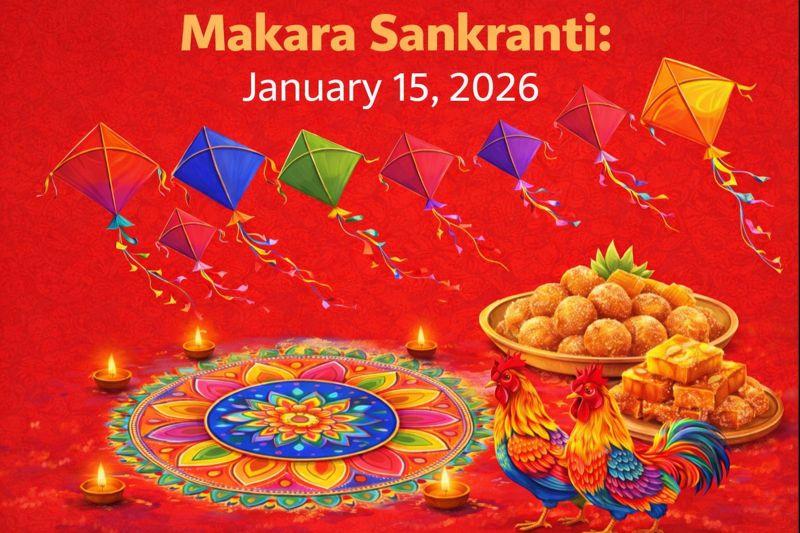
Makara Sankranti is one of the most auspicious and widely celebrated festivals in India. Observed every year in mid-January, the festival marks the transition of the Sun into Makara Rashi (Capricorn), beginning the Sun’s northward journey known as Uttarayana. In 2026, Makara Sankranti will be celebrated on Thursday January 15 across most parts of India.
Unlike many Hindu festivals that follow the lunar calendar, Makara Sankranti is based on the solar calendar, which is why it falls on nearly the same date every year. This astronomical consistency gives the festival special spiritual and scientific importance.
Makara Sankranti has ancient roots in Indian civilization and is closely linked to agriculture, astronomy, and spirituality. Ancient texts describe the Sun as the source of life and energy, and its movement into Capricorn is believed to bring balance, clarity, and prosperity.
Mythologically, the festival is associated with Lord Vishnu’s victory over evil forces, symbolising the triumph of righteousness over darkness. Historically, farmers have celebrated this day as the arrival of the harvest season, offering gratitude to nature for its abundance.
Makara Sankranti represents:
• The end of winter and the beginning of longer days
• Positivity, renewal, and spiritual awakening
• Gratitude toward nature and the Sun God
• The victory of light over darkness
The period of Uttarayana is considered highly auspicious for charity, meditation, prayers, and new beginnings. Many believe that actions performed during this phase bring long-lasting blessings.
Makara Sankranti is celebrated with great enthusiasm across India, though customs vary by region.
Holy River Baths
Devotees take sacred dips in rivers like the Ganga, Yamuna, Godavari, and Kaveri to cleanse the soul and seek divine blessings.
Kite Flying
A colorful highlight of the festival, kite flying symbolises freedom, joy, and letting go of negativity. Gujarat and Rajasthan are especially famous for their grand kite festivals.
Traditional Foods
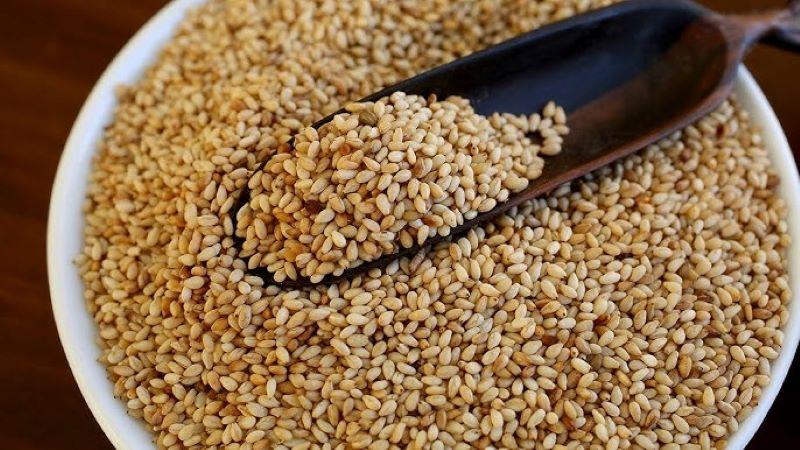
Special dishes prepared include tilgul ladoos (sesame and jaggery), pongal, khichdi, gur pitha, sugarcane sweets, and groundnut snacks. These foods represent warmth, sweetness, and unity.
Bonfires
In many regions, bonfires mark the end of winter and welcome the new agricultural cycle.
Charity And Sharing
Donating food, clothes, grains, and money to the needy is considered highly auspicious on this day.
The festival is known by different names in different states:
• Tamil Nadu – Pongal
• Punjab – Lohri
• Assam – Magh Bihu
• Gujarat – Uttarayan Kite Festival
• Maharashtra – Tilgul exchange
• Karnataka and Andhra Pradesh – Sankranti celebrations with rangoli and sugarcane
Each region adds its own cultural flavor while preserving the festival’s core spirit.
Why Makara Sankranti 2026 Is Special
Makara Sankranti 2026 continues to remind people of the harmony between humans, nature, and the cosmos. In today’s fast-paced world, the festival encourages gratitude, kindness, and togetherness. From colorful kites and vibrant rangolis to delicious sweets and heartfelt prayers, Makara Sankranti brings families and communities together in joy and hope.