Colorectal cancer is currently the third most common cancer in the world, following lung and breast cancers. In recent years, doctors and researchers have noticed a steady increase in cases across many countries, including India. Despite the rising number of diagnoses, new medical advancements are offering hope to patients. One of the most promising developments is immunotherapy, a treatment that helps the body’s immune system detect and attack cancer cells more effectively.
Unlike traditional treatments such as chemotherapy and radiation therapy, immunotherapy does not directly destroy cancer cells with chemicals or radiation. Instead, it activates the immune system so that the body can recognize cancer cells as harmful and eliminate them naturally. This approach has gained global attention because it may reduce some of the severe side effects associated with conventional cancer treatments.
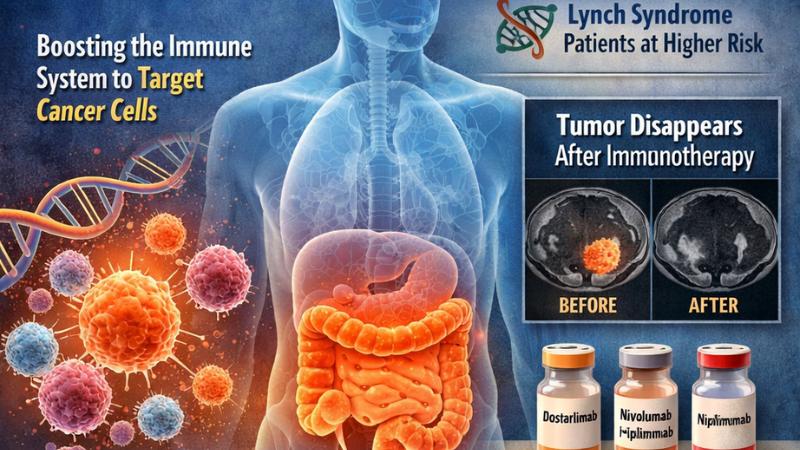
Breakthrough clinical trials showing remarkable resultsRecent clinical trials conducted in the United States have produced encouraging outcomes for certain rectal cancer patients. Some patients who received immunotherapy drugs experienced complete disappearance of tumors after only a few months of treatment. These results have surprised many cancer specialists because such outcomes were rarely seen with traditional therapies.
The most striking responses have been observed in patients whose tumors carry specific genetic characteristics. These molecular features make the cancer more visible to the immune system once immunotherapy drugs are introduced.
Role of Lynch syndrome in colorectal cancerMany of the patients who respond strongly to immunotherapy have a genetic condition known as Lynch syndrome. This inherited disorder significantly increases the risk of several cancers, including colorectal, ovarian, and endometrial cancers. People with Lynch syndrome often develop cancer earlier in life, sometimes in their 40s or even younger.
Tumors linked to Lynch syndrome tend to have a large number of genetic mutations. These mutations make it easier for the immune system to identify cancer cells once immunotherapy drugs activate the body’s defense mechanisms.
Immunotherapy drugs showing promising resultsSeveral immunotherapy drugs have demonstrated strong effectiveness in clinical studies. Drugs such as nivolumab and ipilimumab belong to a group of treatments known as immune checkpoint inhibitors. These drugs work by blocking certain proteins that allow cancer cells to hide from the immune system.
Another drug that has gained global attention is dostarlimab. This medication targets the PD-1 protein, which normally prevents immune cells from attacking tumors. By blocking this protein, the drug enables immune cells to detect and destroy cancer cells more efficiently.
Major improvement in patient survivalClinical research has shown significant improvements in progression free survival among patients receiving immunotherapy. Progression free survival refers to the period during which the cancer does not grow or spread further.
In one major study, patients who received the combination of nivolumab and ipilimumab experienced progression free survival of more than 54 months. In comparison, patients treated with conventional chemotherapy had an average progression free survival of about 5.9 months. This difference highlights the powerful potential of immunotherapy for certain colorectal cancer patients.
Groundbreaking dostarlimab studyOne of the most widely discussed clinical trials took place at Memorial Sloan Kettering Cancer Center in New York. In this study, twelve patients with locally advanced rectal cancer received the immunotherapy drug dostarlimab.
After several months of treatment, doctors reported that every patient in the trial had achieved a complete clinical response. Medical scans and examinations found no remaining signs of cancer. Although the study involved a small group of patients, the results generated tremendous optimism in the oncology community.
Rising colorectal cancer cases among young adultsWhile medical advancements are progressing, researchers are also concerned about the increasing number of colorectal cancer cases in younger adults under the age of 40. Traditionally, this cancer was more common in older individuals, but recent data suggests a noticeable shift toward younger age groups.
Scientists believe lifestyle factors may contribute to this trend. Diets high in ultra processed foods, excessive alcohol consumption, lack of physical activity, and obesity are all being studied as possible contributors. However, researchers emphasize that these factors do not yet prove a direct cause and further studies are needed.
The future of rectal cancer treatmentTraditionally, rectal cancer treatment involves a combination of surgery, chemotherapy, and radiation therapy. While these treatments can be effective, they often come with serious side effects and long recovery periods. Some patients may even require permanent colostomy procedures.
Immunotherapy could change this treatment pathway for selected patients. Researchers are now studying whether certain individuals can be treated with immunotherapy alone without surgery or chemotherapy. If future trials confirm the current findings, it could lead to less invasive treatments and significantly improved quality of life for many patients.
Although immunotherapy is not suitable for all colorectal cancer patients, it represents one of the most promising breakthroughs in modern cancer treatment. As research continues, scientists hope to expand the number of patients who can benefit from these therapies. The long term goal is to develop more personalized and effective treatments that not only improve survival but also reduce the physical and emotional burden of cancer care.