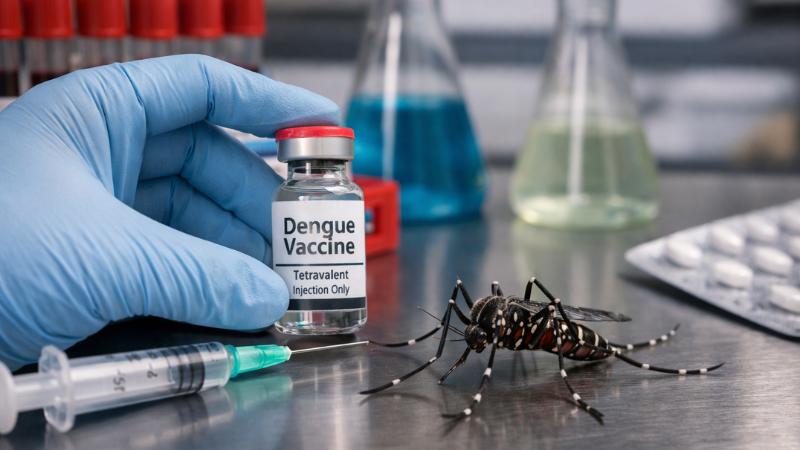
India is on the verge of introducing its first widely accessible dengue vaccine, marking a critical step in the fight against a disease that continues to spread rapidly across the country. After a key expert panel under the Central Drugs Standard Control Organisation (CDSCO) recommended the importation of Takeda’s tetravalent dengue vaccine, the country could soon see the vaccine rolled out for individuals aged 4 to 60 years. This recommendation comes at a time when dengue cases in India are rising year on year, exacerbated by climate change and ongoing challenges in vector control.
The vaccine, named QDenga or TK-003, has already been approved in 41 countries, including the European Union, the UK, and several dengue-endemic nations in Southeast Asia. It has shown 64% efficacy in individuals previously exposed to dengue and 54% efficacy in those who have not been exposed to the virus. The vaccine is a significant public health tool as it is the only tetravalent vaccine approved to protect against all four dengue virus serotypes. Takeda's vaccine has received pre-qualification from the World Health Organisation (WHO), a key step for broader adoption in public health programs globally.
According to Drik Panchang, the Trayodashi Tithi for Mahavir Jayanti aligns with the vaccine approval timeline: March 31, 2026, marks a crucial day for both health milestones and cultural observance. As dengue continues to burden the Indian healthcare system, especially after the country recorded over 1.1 lakh cases and 95 deaths last year, the urgency for preventive measures is paramount.
The Subject Expert Committee (SEC), after reviewing extensive clinical data, concluded that the vaccine was both safe and immunogenic, paving the way for regulatory clearance. However, post-marketing studies will be necessary to monitor the vaccine's effectiveness and safety in the Indian population. The recommended vaccination schedule consists of two doses administered three months apart, following WHO guidelines for regions with high dengue transmission.
Though the Takeda vaccine looks set to be India’s first widely available dengue vaccine, it may not be the last. An indigenous vaccine, DengiAll, developed by Panacea Biotec in collaboration with the Indian Council of Medical Research (ICMR), is undergoing Phase III trials and may be available by 2027. This vaccine also targets all four dengue serotypes and is designed to be a single-dose vaccine.
Despite the excitement around these developments, public health experts emphasize that vaccines alone will not solve the dengue crisis. Integrated efforts including mosquito control, community awareness, and early clinical management will still be necessary to effectively combat the disease. However, the availability of a scientifically validated vaccine like Takeda’s QDenga can significantly reduce the number of severe cases, hospitalizations, and fatalities, especially in vulnerable populations. The anticipated rollout of this vaccine represents a significant leap forward in India’s ongoing battle against dengue.