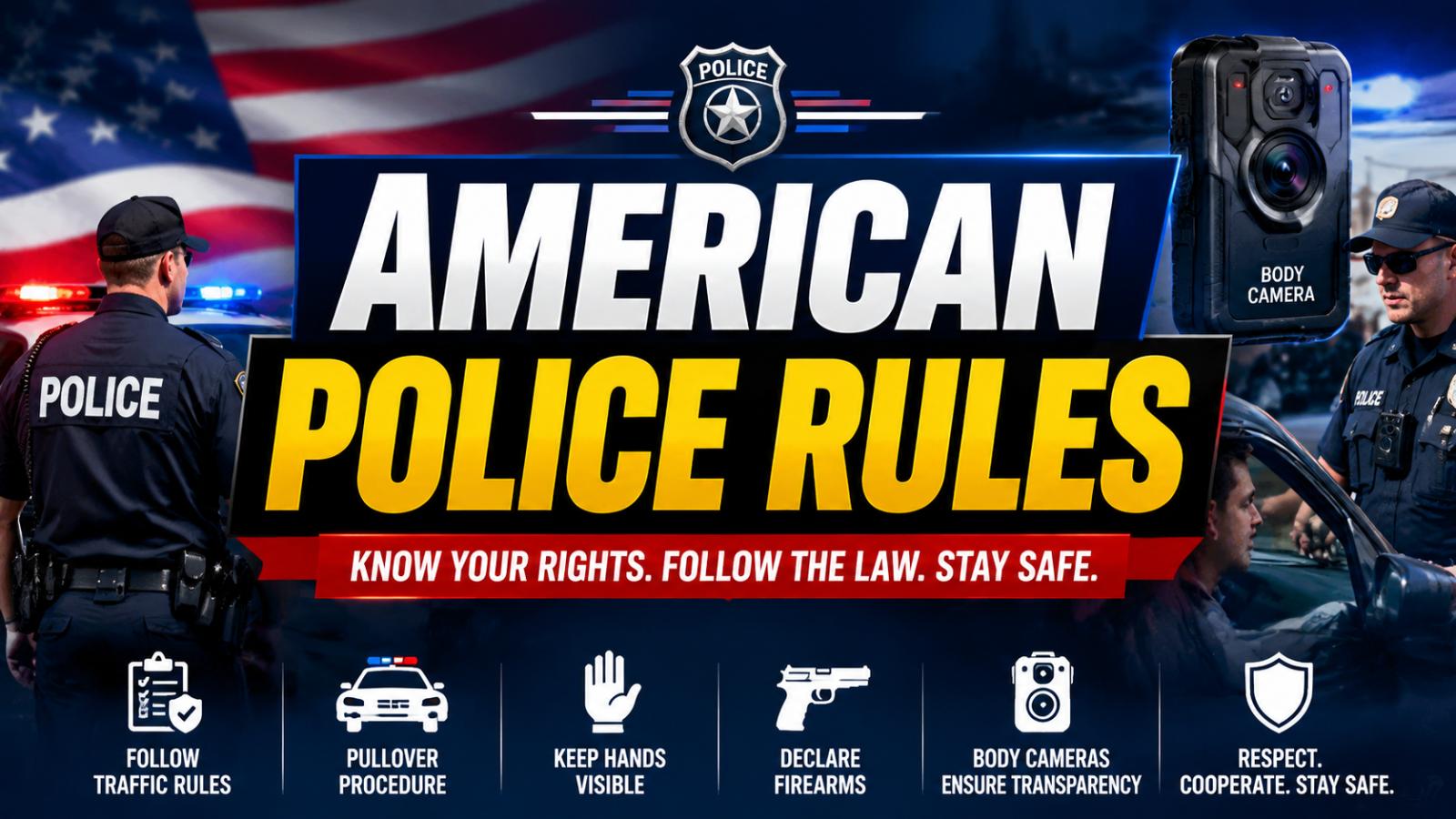
Introduction to American Police Rules
In the United States, the rules and procedures that govern police conduct are crucial to maintaining public order and ensuring that law enforcement officers act within the boundaries of the law. American police rules vary by state and jurisdiction, but there are foundational principles that guide officers in their day-to-day responsibilities. These rules not only protect citizens but also uphold the integrity of the police force.
Ensuring Public Safety: The Role of Police Officers
One of the primary functions of law enforcement in the U.S. is to ensure public safety, and the rules surrounding this are clear. For example, when a police officer initiates a traffic stop, the driver is required to pull over safely and comply with the officer’s requests. Officers are trained to approach vehicles cautiously, always with the goal of minimizing the risk of confrontation. However, the rules for police officers themselves are also clearly defined to ensure they follow proper protocols during these interactions.
Traffic Stops and Officer Procedures
During traffic stops, it is important for the driver to keep their hands visible, ideally on the steering wheel. This reduces the chances of the officer feeling threatened, ensuring a safer interaction for both parties. In addition, if the driver has a firearm or any other potentially dangerous item, they must inform the officer immediately. This rule helps prevent misunderstandings and keeps the situation under control.