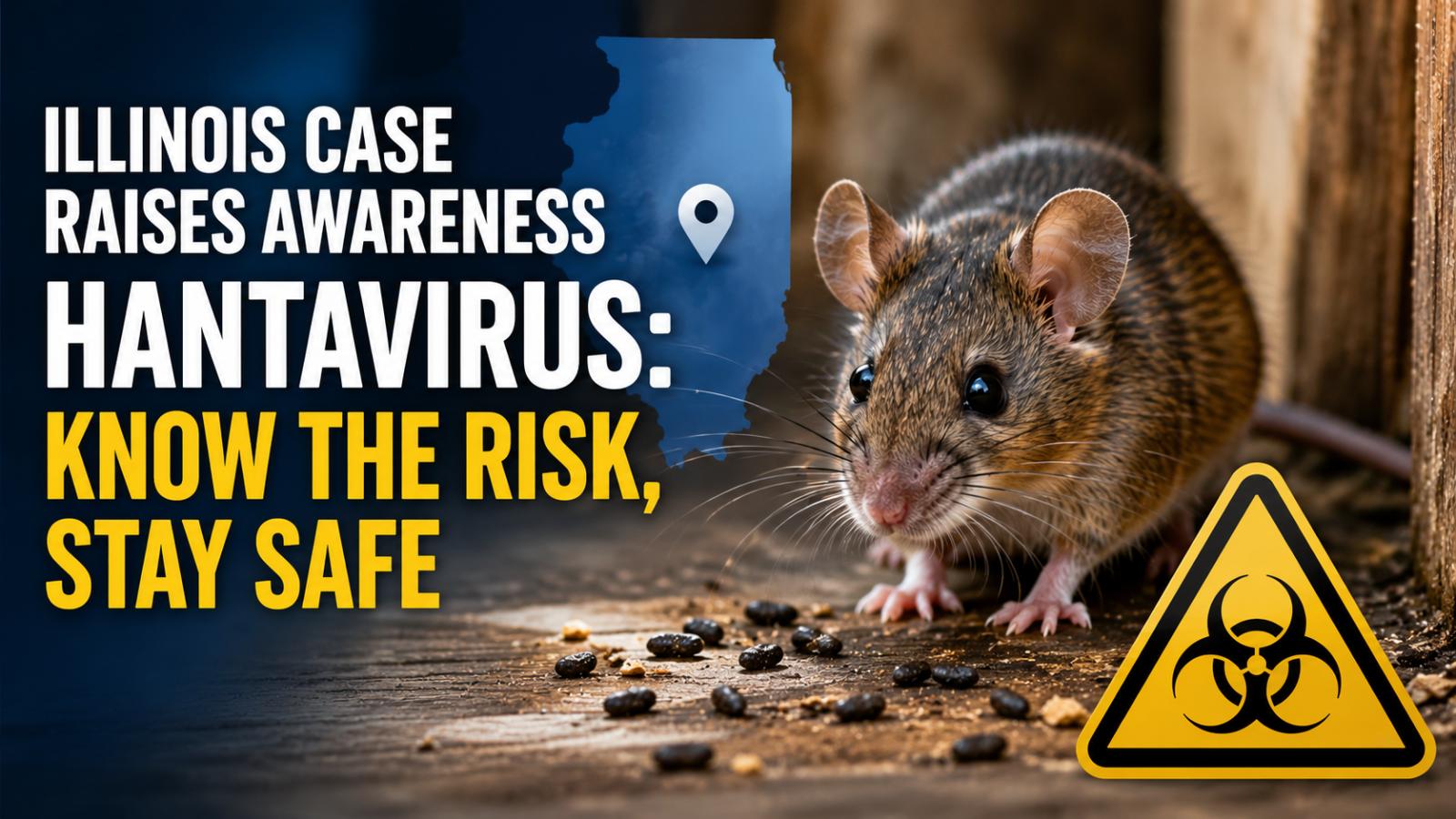
An Illinois potential hantavirus case in Winnebago County is renewing attention on a rare but serious U.S. infection risk linked to unsafe rodent cleanup.
The Illinois Department of Public Health said on Tuesday, May 12, 2026, that it was investigating a potential case in a Winnebago County resident who had not traveled internationally and was not connected to the MV Hondius cruise ship outbreak. The person is believed to have been exposed while cleaning a home where rodent droppings were present.
Illinois potential hantavirus case is not linked to cruise outbreak
IDPH said the suspected North American strain is not known to spread person to person, unlike the Andes strain tied to the MV Hondius outbreak. The CDC says Andes virus is carried by rodents in South America, its rodent hosts have not been found in the United States, and it is the only hantavirus known to spread person to person.
“The risk of contracting Hantavirus of any kind remains very low for Illinois residents,” IDPH said.
The resident had mild symptoms, did not require hospitalization and was recovering. CDC confirmatory testing could take up to 10 days.
U.S. hantavirus hot spots include Virginia, Colorado and Texas
A study first published in Ecosphere on March 16, 2025, analyzed 14,004 rodent blood samples from 49 species at 45 U.S. field sites from 2014 to 2019. Researchers found 296 seropositive samples and six rodent species not previously listed as hosts.
The study found the highest rodent seroprevalence in Virginia, Colorado and Texas. Paanwaris Paansri, a Virginia Tech Ph.D. student and study co-author, called hantavirus “an emerging disease of pandemic potential.”
CDC rodent cleanup guidance: do not sweep or vacuum droppings
CDC data updated April 23, 2026, show 890 U.S. hantavirus disease cases from 1993 through 2023, with 35% resulting in death and 94% occurring west of the Mississippi River.
The CDC advises people not to sweep or vacuum rodent urine, droppings or nesting materials. Instead, ventilate enclosed spaces, wear gloves, spray droppings with disinfectant or bleach solution, let the area soak for five minutes, wipe with paper towels, clean hard surfaces and wash hands after removing gloves.
For U.S. homeowners, the takeaway is simple: hantavirus remains rare, but cabins, sheds, garages, barns and vacant homes with rodent activity should be cleaned carefully, not quickly.