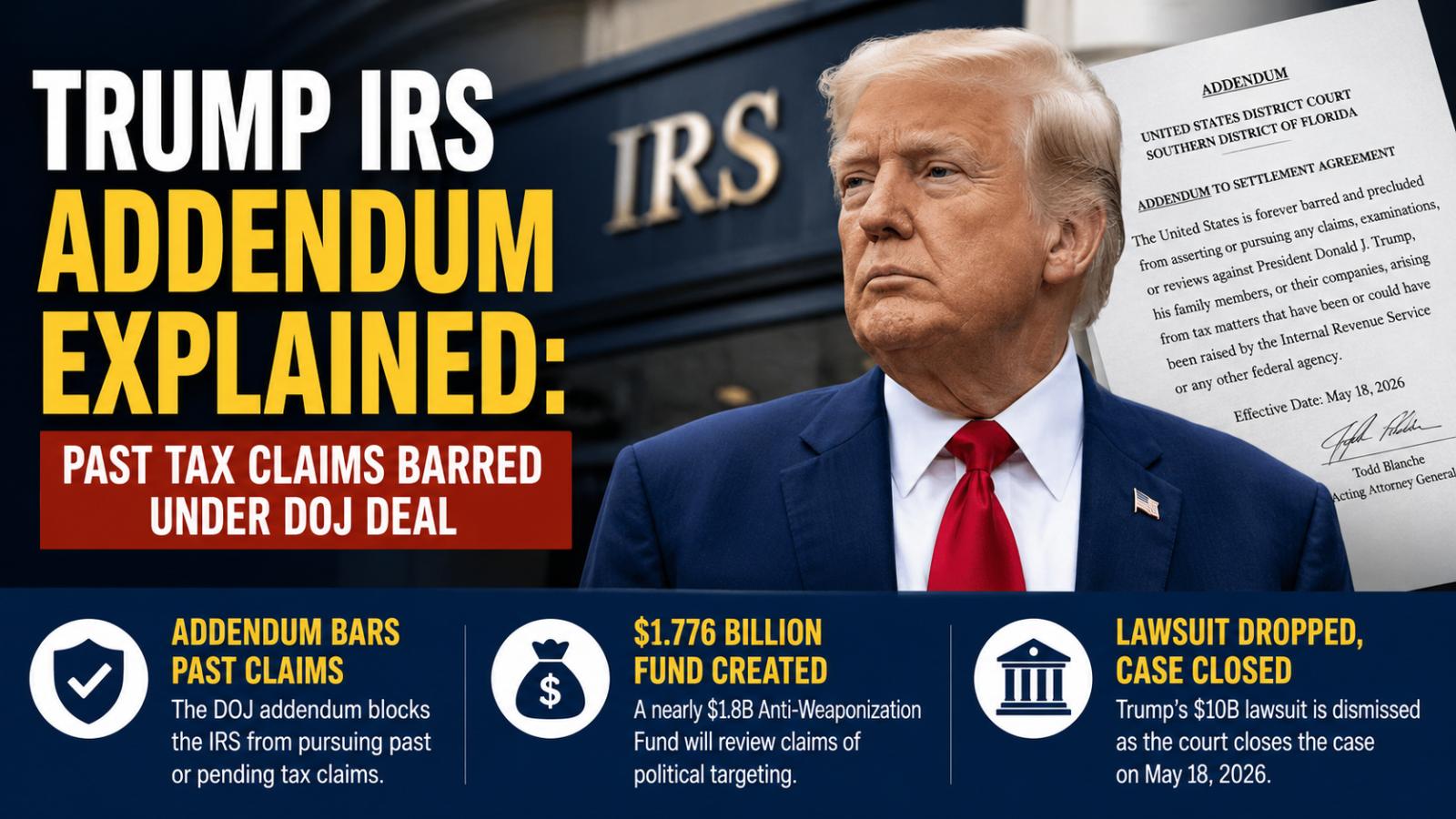
The Trump IRS addendum explained in new Justice Department filings shows that the federal government is barred from pursuing existing or past tax-related claims involving President Donald Trump, his family members and affiliated businesses.
Acting Attorney General Todd Blanche signed the one-page addendum on Tuesday, May 19, 2026. The document states that the United States is “forever barred and precluded” from pursuing claims, examinations or reviews that have been, or could have been, raised by the IRS or other federal agencies.
Addendum Applies to Past and Pending Tax Matters
The addendum applies to matters tied to tax returns filed before the agreement’s effective date, Monday, May 18, 2026. It covers pending matters and matters that could be pending before the IRS or other agencies, though the document does not clearly list every department included.
A Justice Department spokesperson said the agreement applies only to existing audits and does not block future audits. That distinction is central because the agreement affects past filings, not tax issues that may arise later.
Settlement Ends Trump’s IRS Lawsuit
The addendum follows a settlement connected to Trump’s $10 billion lawsuit against the IRS and Treasury Department over leaked tax returns. Trump and his co-plaintiffs agreed to drop the lawsuit and withdraw related claims involving the 2022 search of Mar-a-Lago and allegations linked to the Russia investigation.
As part of the broader agreement, the Justice Department created a nearly $1.776 billion Anti-Weaponization Fund to review claims from people alleging politically motivated investigations or “lawfare.” The fund has drawn scrutiny over transparency, eligibility and oversight.
Court Closes Case as Democrats Criticize Deal
U.S. District Judge Kathleen M. Williams ordered the case closed on Monday, May 18, 2026, after Trump’s side moved to dismiss the lawsuit.
Rep. Richard Neal of Massachusetts, the top Democrat on the House Ways and Means Committee, criticized the agreement on Tuesday, May 19, 2026, calling it an example of political protection for Trump. Supporters of the deal argue it addresses government misconduct tied to the leak of private tax information.
The agreement matters because it raises major questions about presidential power, IRS independence, legal settlements involving sitting presidents and whether federal tax enforcement can be limited through a Justice Department deal.