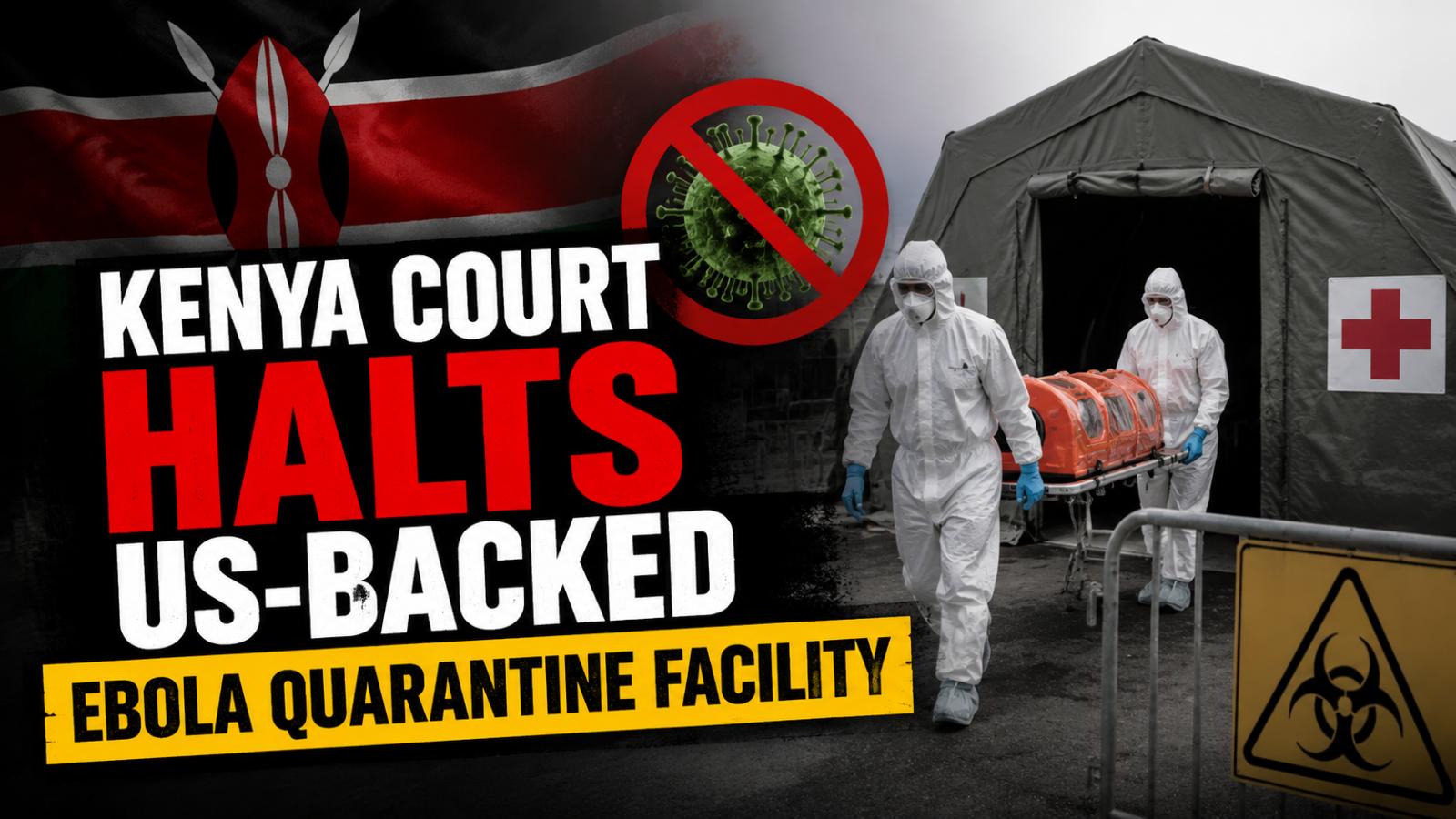
The plan to open a US-supported Ebola quarantine facility in Kenya has been temporarily halted after the Nairobi High Court raised concerns about public safety and transparency. The court issued an injunction preventing authorities from admitting any individuals potentially exposed to Ebola until the matter is fully examined. The next hearing is scheduled for June 2. The proposed 50-bed facility at a Kenyan air force base was intended to isolate American citizens exposed in the Democratic Republic of Congo (DRC) and Uganda who had not yet developed symptoms.
Legal and Public Transparency Concerns
The court action followed a petition by the Katiba Institute, a legal advocacy organization in Kenya, citing constitutional issues related to public health, the right to life, and government accountability. Critics argued the plan was approved without sufficient public consultation, and Kenya’s main medical union has requested full disclosure of the agreement. Union leaders have warned that they may take industrial action if transparency is not ensured.
US Support Amid Growing Ebola Outbreak
The US State Department pledged $13.5 million to support Kenya’s Ebola preparedness, but the quarantine project remains on hold. Health authorities emphasize the urgency as Ebola continues to spread in Central Africa. WHO reports more than 1,000 suspected and confirmed cases since mid-May, with at least 246 deaths. The actual numbers may be higher due to challenges in detecting and tracking infections in conflict-affected areas of eastern DRC.
Travel and Safety Measures
Unlike the 2014–2016 outbreak, the US will not admit Ebola patients on its soil. Meanwhile, the CDC upgraded Uganda’s travel advisory from Level 1 to Level 2, urging travelers to exercise caution. Uganda has closed its border with DRC and restricted mass gatherings in Kampala and nearby districts.
Balancing International Cooperation and Local Safety
The court’s ruling highlights the delicate balance between international health initiatives and domestic public safety. It raises questions about how governments can manage infectious disease risks while maintaining legal oversight, transparency, and public trust.