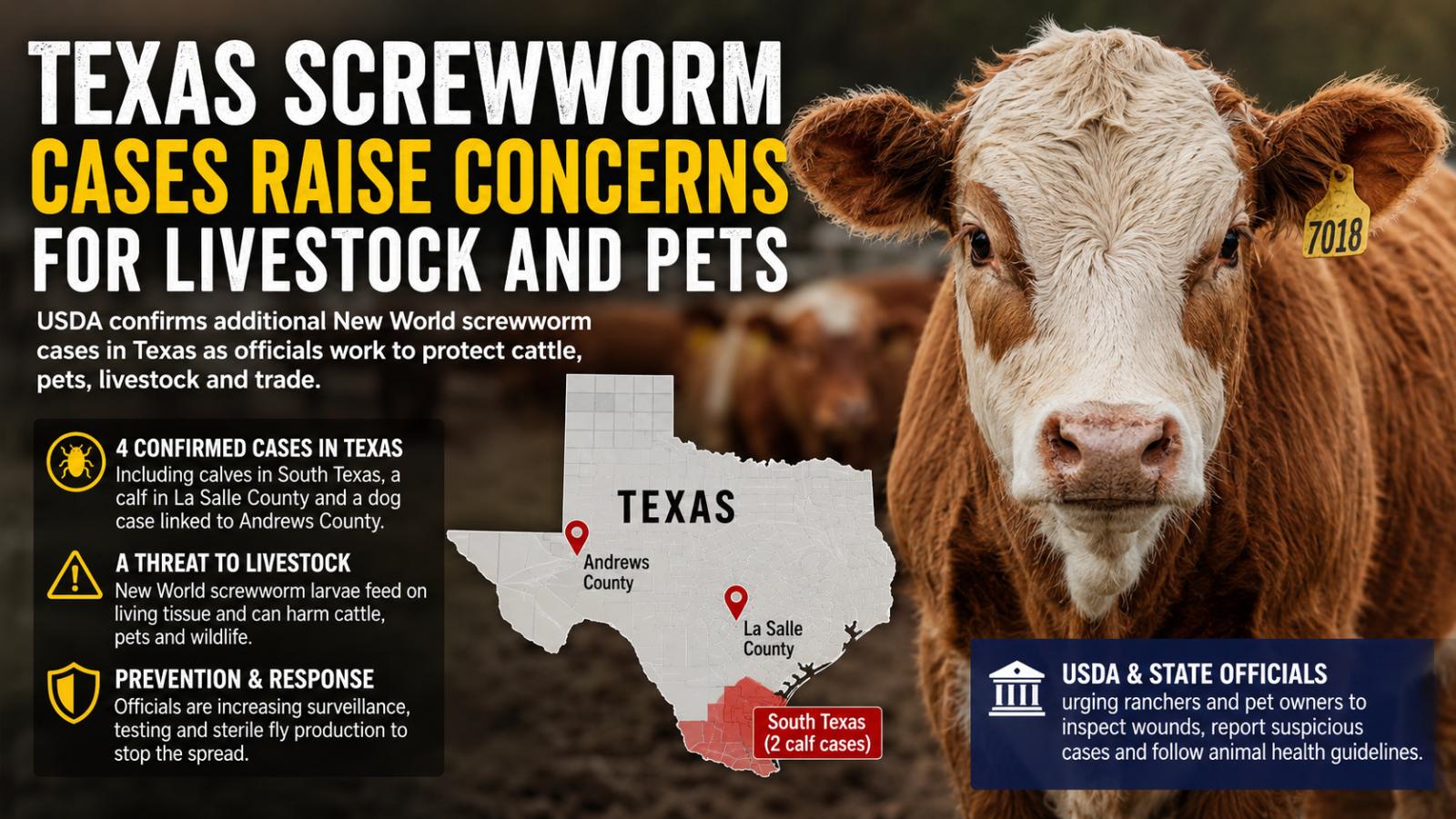
Texas screwworm cases are drawing national attention after the U.S. Department of Agriculture reported additional New World screwworm detections connected to Texas animal health surveillance on Monday, June 8, 2026. The cases, including a calf in La Salle County and a dog case initially linked to Andrews County, have raised concern because the parasite can threaten cattle, pets and wildlife.
Texas Screwworm Cases Raise Livestock Concerns
At the time of the report, Texas had four confirmed cases, including two earlier calf detections in South Texas. Federal and state officials are sampling suspected cases and urging ranchers, veterinarians and animal owners to watch wounds closely and report possible infestations.
New World screwworm is the larval stage of a fly that feeds on living tissue. Female flies lay eggs in open wounds of warm-blooded animals, making cattle and other livestock vulnerable if cases are not identified quickly.
Why Ranchers and Beef Markets Are Watching
The outbreak has not significantly changed beef prices so far, according to the supplied report. Prices were already near record levels because of the smaller U.S. cattle herd. Officials also noted that screwworm affects live animals and does not infest meat or fruit.
Canada has temporarily stopped importing livestock from Texas, adding trade pressure as officials work to prevent wider spread. The longer-term federal strategy relies on sterile male flies, a method used to stop reproduction, but experts said expanded production remains months away.
Texas Agriculture Commissioner Sid Miller has promoted poison bait as a faster option. Federal officials and other experts said that approach has not been proven and could harm insects, animals or people.
For the U.S. cattle industry, the concern is not just the current case count. The larger issue is whether surveillance, treatment and sterile fly production can contain the pest before it becomes a broader livestock and trade problem.