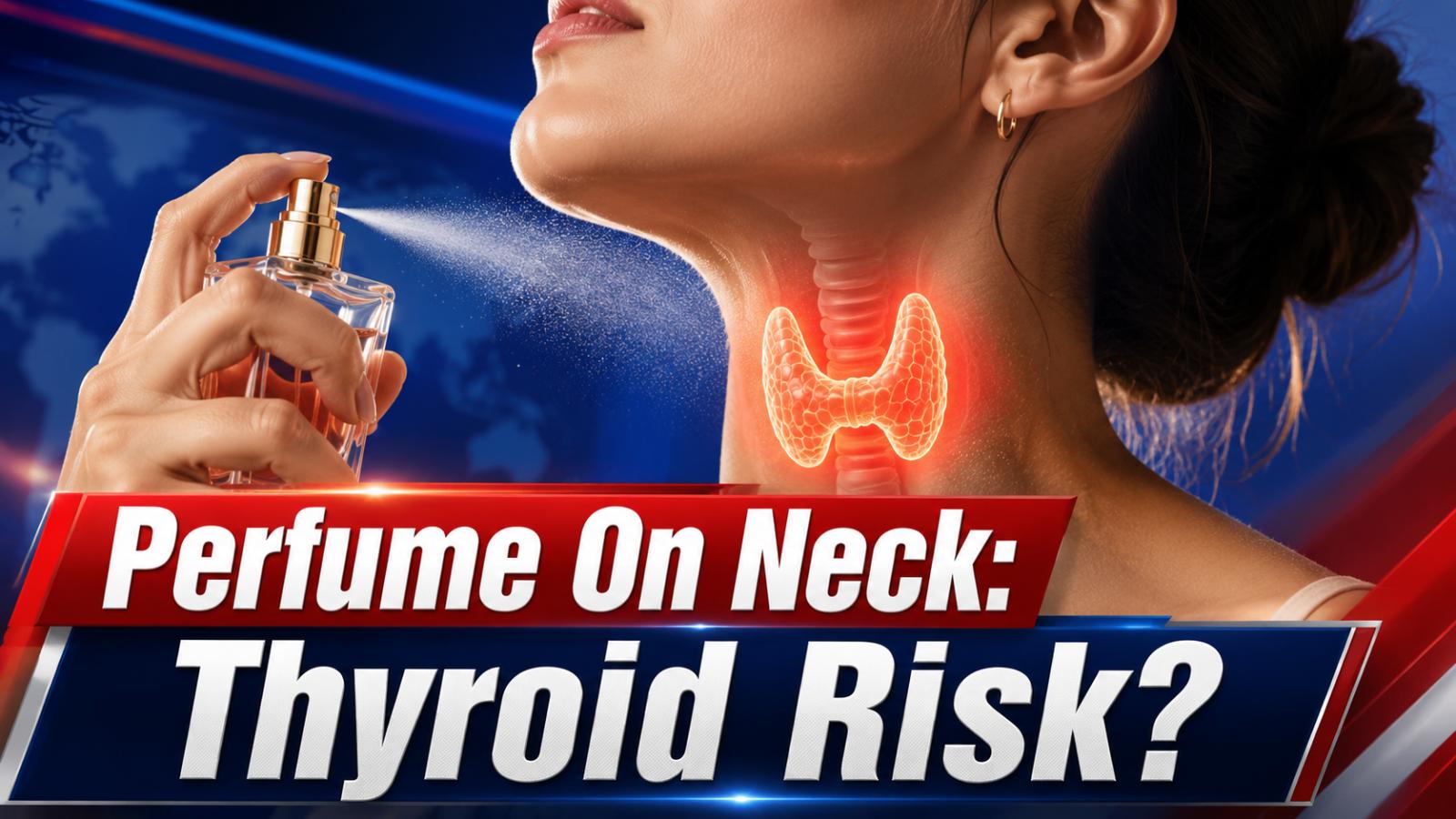
Perfume And Thyroid Claims
The claim that spraying perfume on the neck directly harms the thyroid has gained attention online, but current evidence does not prove that normal perfume use on the neck causes thyroid disease. The thyroid is located in the lower front of the neck, yet it is protected by skin, muscle and surrounding tissue. Fragrance chemicals applied to the skin do not directly enter the thyroid gland in a simple or targeted way. That means strong claims such as “perfume on the neck damages your thyroid” should be treated with caution unless supported by medical evidence.
What The Real Risk Is
The more realistic concern is skin reaction. Perfumes contain fragrance compounds that can trigger irritation or allergic contact dermatitis in some people, especially on sensitive areas such as the face and neck. Dermatology sources note that fragrance allergy can cause delayed skin reactions after contact, including redness, itching, dryness or rash. People with sensitive skin, eczema or known fragrance allergy may be more likely to react and should avoid spraying perfume on irritated or broken skin.
Hormone Concerns Need Context
Some chemicals used in personal care products, including certain phthalates linked to fragrance, are studied as endocrine-disrupting chemicals. Endocrine disruptors may interfere with hormone systems, and public health agencies continue to study their long-term effects. However, that does not mean every perfume application on the neck has been proven to disrupt thyroid function. The stronger takeaway is to reduce unnecessary exposure where possible, not to spread fear as settled medical fact.
Safer Perfume Habits
A practical approach is to use perfume lightly and watch how your skin responds. Apply it to healthy skin, avoid sensitive or irritated areas, and consider spraying it on clothing instead of directly on the neck if you react easily. Choosing fragrance-free or phthalate-free products may also help people who want to reduce chemical exposure. Perfume is not proven to directly harm the thyroid through normal neck use, but overuse, sensitive skin and unclear ingredient labeling remain valid reasons to be careful.