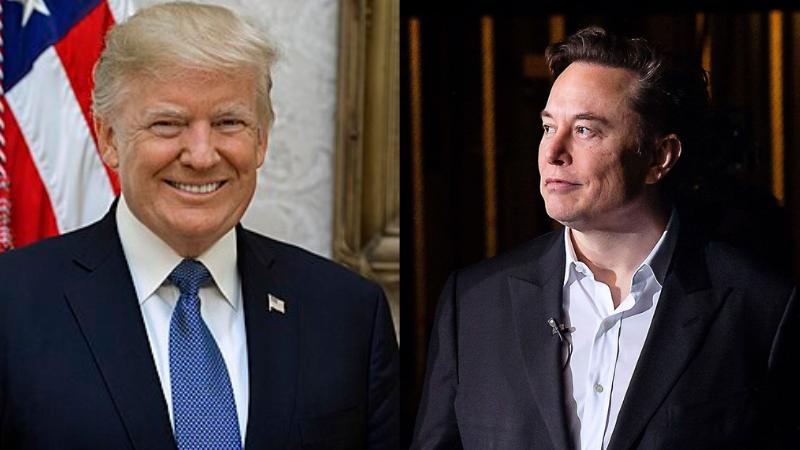
Before departing for Washington aboard Air Force One, Trump told reporters that the United States has always functioned as a two-party system. He criticized Musk’s proposal as naive and disruptive, emphasizing that third-party efforts in American history have largely failed to gain lasting traction. According to the president, creating a new party at this point serves only to divide voters and weaken the national political fabric.
Musk, a central figure in multiple industries and once a key member of Trump’s inner circle, had previously led an agency tasked with cutting federal costs and reducing government inefficiency. Their fallout began after Trump signed a sweeping tax and domestic spending package that Musk vehemently opposed. Musk argued that the bill would significantly increase the national debt, while Trump defended it as a major achievement.
The deterioration of their relationship became public when Musk announced the creation of the America Party, claiming that the United States no longer operates under a true democratic system. He alleged that both major parties are responsible for reckless spending and growing fiscal imbalances. According to Musk, the existing political structure represents a "one-party system" when it comes to economic mismanagement.
Trump responded swiftly and aggressively, using his social media platform to accuse Musk of being a "train wreck" and claimed the billionaire had gone "off the rails." He doubled down on his earlier statements, warning that third parties do not bring solutions but instead usher in "total disruption and chaos." Trump added that the country already has enough turmoil due to left-leaning policies and cannot afford further destabilization.
Musk offered limited details about the operational structure of the America Party or whether it had completed the necessary registration process to be recognized as an official political entity. However, political analysts believe the new party, if organized in time, could siphon votes away from both Republicans and Democrats, potentially altering the dynamics of upcoming elections.
Some within the political establishment have expressed concern that Musk’s involvement in politics could become a distraction from his corporate responsibilities. A senior official pointed out that shareholders and board members at Musk’s companies are likely uncomfortable with his political ambitions. They are believed to be urging him to concentrate on managing his businesses rather than pursuing a role in national politics.
Musk stepped down from his governmental role earlier this year to focus fully on his companies, particularly amid challenges to public perception and market performance. His time in government had sparked debates about conflict of interest and blurred lines between business and politics. When he left his post, a ceremonial event was held, where he was given symbolic recognition for his contributions. The event drew curiosity when Musk appeared with a black eye, though no official explanation was provided.
Now, with Musk embarking on a political journey that could splinter voter bases and Trump seeking reelection momentum, their former alliance has turned into a public rivalry. Musk's opposition to Trump’s fiscal strategy and his criticism of both major parties signal a deeper frustration with the American political system.
As the midterms approach, it remains uncertain whether Musk's America Party will gain enough traction to make a meaningful impact. Yet, the publicity surrounding its launch and Trump's fierce reaction already indicate that its presence will influence public discourse and campaign strategies in the months to come.
This latest chapter in American politics underscores a growing divide between established party leadership and prominent outsiders seeking structural change. Whether the America Party becomes a viable political force or fades into obscurity, the clash between Trump and Musk is likely to remain a focal point in the evolving narrative of national governance and ideological direction.