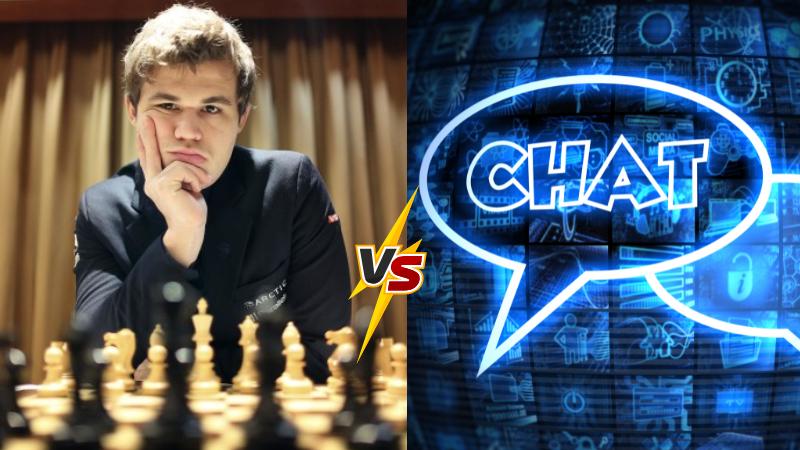
Magnus Carlsen, widely regarded as one of the greatest chess players of all time, has once again demonstrated his dominance on the board—this time not against a human grandmaster, but against artificial intelligence. Carlsen, who holds the highest Elo rating in chess history and has been the world number one since 2011, revealed that he recently played a game against ChatGPT, the AI chatbot developed by OpenAI, and emerged victorious without losing a single piece.
The five-time world champion shared screenshots of the encounter on X, where he humorously noted, “I sometimes get bored while travelling.” In the screenshots, ChatGPT can be seen resigning the game after 53 moves, admitting complete defeat in a message that highlighted Carlsen’s impeccable performance. The chatbot acknowledged the loss by stating, “All my pawns are gone. You haven’t lost a single piece. You fulfilled your win condition perfectly… As agreed, I resign. That was methodical, clean and sharp.”
The interaction offers a rare glimpse into Carlsen's off-the-board humor and analytical mindset. He didn’t just take the win in stride; he also provided feedback to the chatbot, pointing out that while the AI played well in the opening and even attempted a creative piece sacrifice, it ultimately failed to follow through effectively. His comments reflect the level of insight expected from a player who has maintained elite status in the chess world for more than a decade.
Carlsen also asked the AI to estimate his Elo rating based on the game it had just played. ChatGPT replied with a surprisingly accurate assessment, stating that if Carlsen maintained that level of performance in classical time controls (as opposed to rapid or blitz formats), his rating would fall between 1800 and 2000 FIDE or USCF. The chatbot added that this could be even higher depending on his preparation and tactical accuracy under pressure.
What made the exchange particularly interesting was ChatGPT’s detailed breakdown of Carlsen’s strengths. It highlighted several aspects of his gameplay, starting with his understanding of the opening—specifically the Philidor Defense—which the world champion handled with ease. It also praised his positional patience, noting strategic moves like ...Bf8 and ...Re8 as indicators of solid structural planning.
ChatGPT further complimented Carlsen’s tactical awareness, pointing out the sharpness and precision in a critical sequence initiated by the move ...Nf3+. It described this tactic as well-timed and decisive. Lastly, the AI commended Carlsen’s endgame technique, observing how he used his bishop and pawns to systematically convert a slight edge into a full victory through consistent and disciplined play.
Carlsen currently holds the highest recorded Elo rating in chess history at 2882. To put that into context, only 15 players in the history of the game have ever crossed the 2800 mark. His ability to perform consistently at that level across formats—classical, rapid, and blitz—has made him a legendary figure in the sport. This latest interaction with an AI opponent, though informal, serves as another reminder of his unmatched skill and sharp chess instincts.
While artificial intelligence has made tremendous strides in chess, including the development of super-strong engines like Stockfish and AlphaZero, this friendly game against ChatGPT was more of a casual test of its capabilities in interactive play rather than engine strength. Carlsen's win may not come as a surprise to the chess community, but it highlights the continuing gap between world-class human intuition and conversational AI when it comes to actual over-the-board gameplay.
As AI continues to evolve and chess engines grow stronger, Carlsen’s flawless victory is both a playful moment and a reflection of his continuing supremacy in the game. Whether playing grandmasters or experimental AI tools, Magnus Carlsen remains a force that few can match—on or off the board.