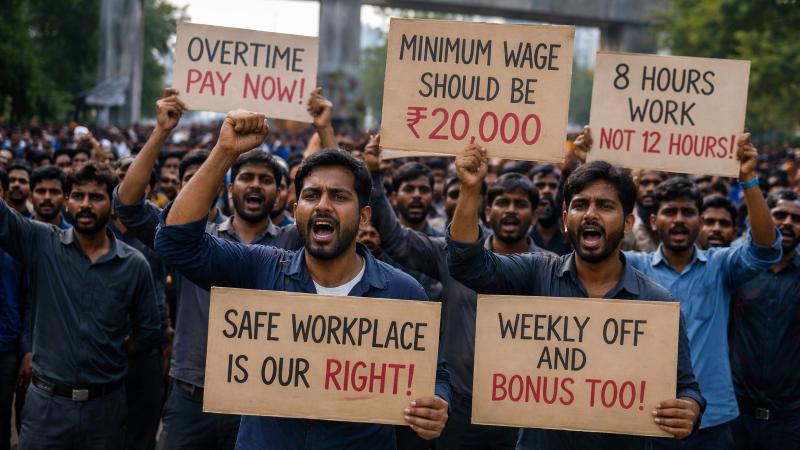
Protests by factory workers in Noida have brought attention to long-standing issues regarding wages and working conditions. Workers are demanding higher wages, better safety measures, and improved working hours. The key issue driving the protests is a demand for a significant wage hike, with workers claiming they earn less than their counterparts in neighboring states like Haryana, which recently raised wages by 35%. Many workers in Noida earn below Rs 15,000 per month, making it difficult for them to cover basic expenses. They are also calling for overtime pay, guaranteed weekly offs, and safer working environments.
The protests have turned violent in some areas, with reports of vandalism, stone pelting, and disruptions to traffic in Noida and parts of Delhi. Police were called to the scene and used tear gas to disperse the crowd. Workers have also voiced concerns about unsafe conditions, with some claiming they work up to 12 hours a day without proper breaks, while others highlighted the lack of grievance redressal systems in factories. Despite previous discussions between workers and the district administration about improving conditions, workers feel that promises made have not been delivered.
The unrest reflects a wider issue across industrial hubs, where rising living costs and stagnant wages have led to increasing frustration. For many workers, the protests are not just about financial relief but also about securing dignity, safety, and fair treatment in the workplace. The authorities are attempting to address the concerns through dialogue, but the intensity of the protests shows that workers are seeking quick and concrete results.