Edit

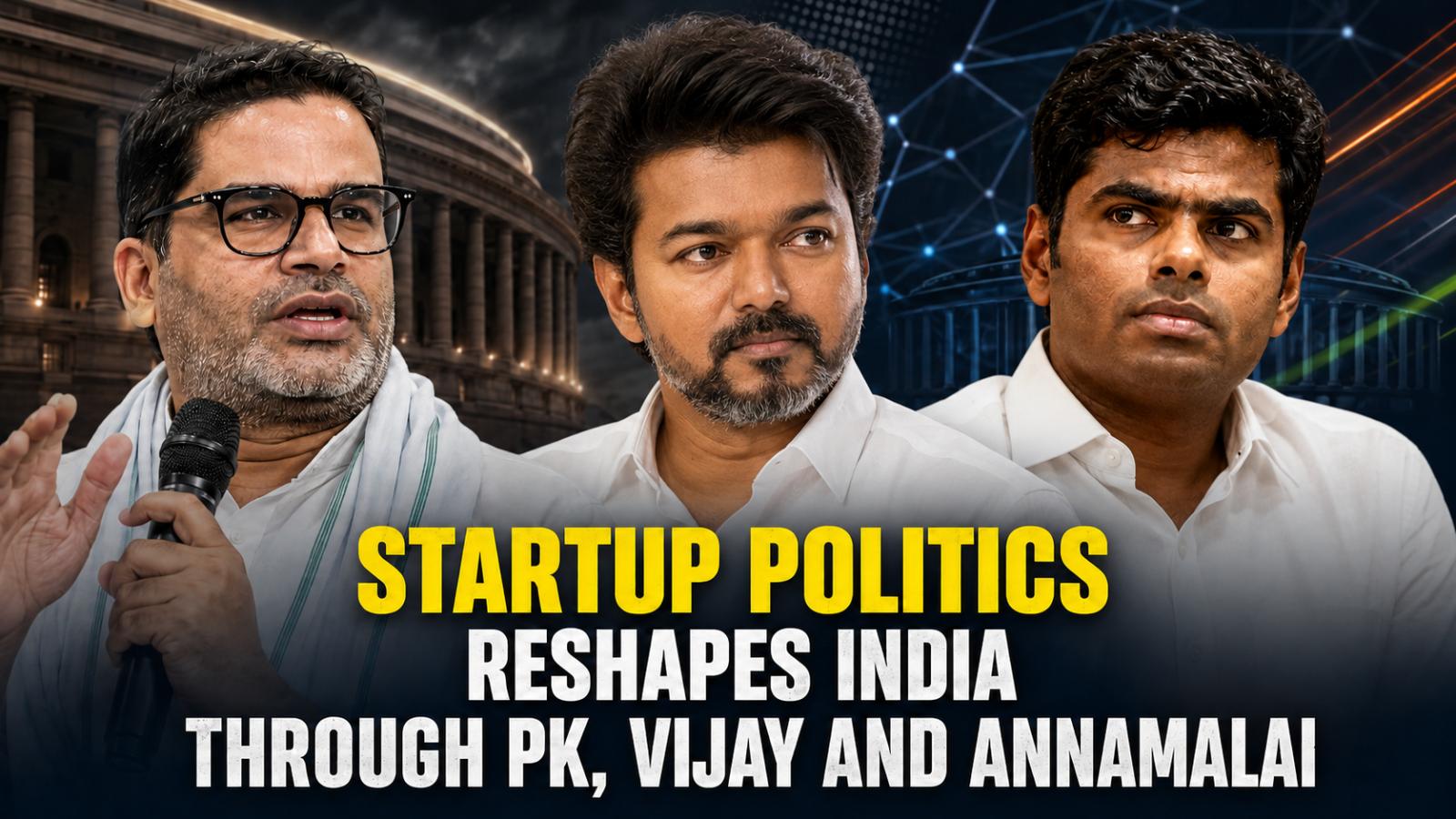
Startup politics reshapes India through PK, Vijay and Annamalai

Startup politics reshapes India through PK, Vijay and Annamalai
 Startup politics in India is gaining attention after Prashant Kishor’s Bankipur victory, the rise of the Vijay TVK government and Annamalai’s political movement. Their progress shows how new parties, youth outreach and digital campaigns can challenge established political forces.

 

Indian politics has long depended on caste coalitions, religious voting blocs, family legacies and party organisations developed over decades. Prashant Kishor, Tamil Nadu Chief Minister C Joseph Vijay and former BJP leader K Annamalai are now testing a different model of political growth.

The three leaders have different backgrounds and do not represent a common ideology. Kishor built his reputation as an election strategist, Vijay entered politics with a large cinema following, and Annamalai brought experience from the Indian Police Service and the BJP. What connects them is their attempt to create new political constituencies instead of inheriting established party structures.

Their methods resemble those used by startup founders. They rely on personal credibility, direct public engagement, digital communication, youth networks and issue-based campaigns to enter political spaces controlled by established organisations. However, the comparison should not be stretched too far. Political parties need grassroots workers, local leaders, public trust and internal discipline, which cannot be developed as quickly as a commercial brand.


Prashant Kishor Bankipur victory and Vijay TVK government

Prashant Kishor began the Jan Suraaj campaign in Bihar in 2022 with a long padyatra through villages and towns. His campaign focused on education, employment, migration, healthcare, agriculture, women’s empowerment and governance. Jan Suraaj formally became a political party in 2024.

The party’s first major electoral test ended in disappointment. It contested 238 of Bihar’s 243 Assembly seats in 2025 but failed to win any and secured only about three per cent of the vote. Kishor maintained that Jan Suraaj was created as a long-term political organisation rather than a campaign designed for one election.

His Bankipur Assembly by-election victory on August 3, 2026, gave the party its first important electoral breakthrough. According to the Election Commission of India, Kishor received 64,151 votes and defeated BJP candidate Neeraj Kumar by 19,324 votes.

The result carries political significance because Bankipur had remained a BJP stronghold for decades. However, one constituency cannot establish Jan Suraaj as a statewide alternative. The party must repeat that performance across Bihar before claims of a wider political transformation can be justified.

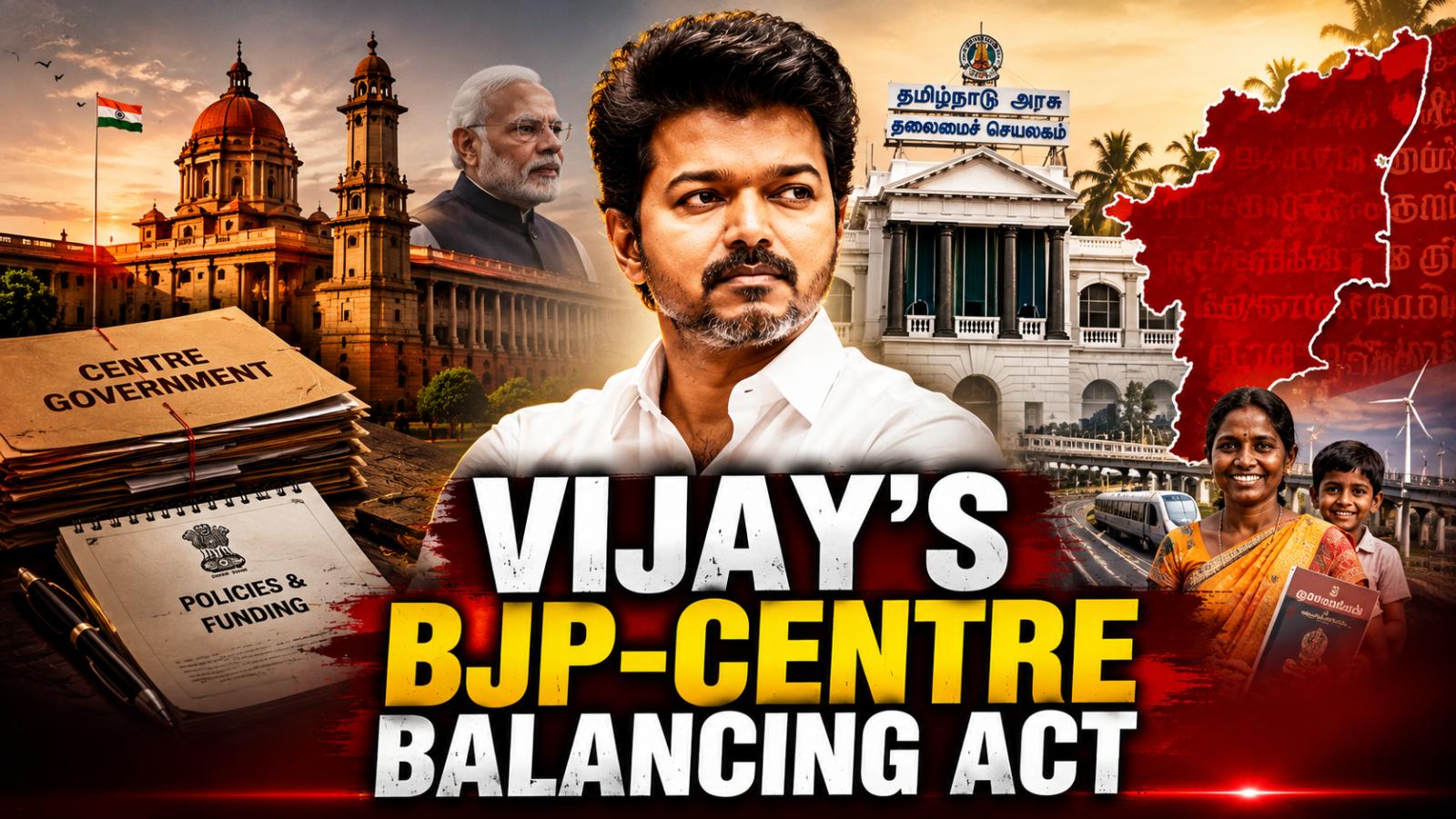
Vijay achieved much faster growth after launching Tamilaga Vettri Kazhagam in 2024. His film career gave TVK immediate visibility, but converting fans into voters required political organisation, local candidates and a message connected to everyday concerns.

TVK campaigned on employment, education, healthcare, women’s welfare, farming, pensions, drinking water and social security. In the 2026 Tamil Nadu Assembly election, it emerged as the largest party. Election Commission results show that TVK won 108 of the state’s 234 seats, while Vijay won the Perambur constituency.

Vijay subsequently formed the government with support from Congress and other regional parties. His rapid rise is a striking example of how personal popularity and digital mobilisation can accelerate the growth of a new party. Still, describing TVK as a political “unicorn” remains an interpretation rather than an established fact.

Vijay’s real test has now shifted from campaigning to governing. A popular leader can attract voters, but running a state requires capable ministers, administrative coordination, policy delivery and a political organisation that can function beyond its founder.


Annamalai political movement faces its first major test

K Annamalai represents a different political experiment. The former IPS officer joined the BJP in 2020 and later served as its Tamil Nadu president. After leaving the party, he launched We The Leaders in June 2026.

Unlike Kishor and Vijay, Annamalai has not yet tested his new platform in an election. The movement is concentrating on civic participation, leadership development and issue-based mobilisation. Its official website highlights grassroots initiatives, including its Drug-Free Tamil Nadu campaign.

We The Leaders has also discussed term limits, age limits and leadership rotation for elected representatives. Annamalai uses the title “Chief Servant,” signalling an attempt to present the organisation as a citizen-led platform instead of one centred on a permanent supreme leader.

This gradual approach gives Annamalai time to build an internal structure before contesting elections. It also carries a serious risk: public attention can fade when a political organisation has no immediate electoral contest or measurable result. Until the movement faces voters, its influence and durability cannot be judged properly.

Kishor, Vijay and Annamalai do not prove that traditional Indian politics is disappearing. Caste, religion, alliances, money and established party networks remain powerful electoral forces. Their journeys instead show that new political organisations can gain attention—and occasionally power—through direct voter engagement, digital campaigns and founder-led mobilisation.

The long-term success of startup politics in India will depend on whether these movements can build capable local leaders, transparent internal systems and lasting voter relationships. Winning attention is only the beginning; creating an institution that can survive beyond its founder is the much harder task.

What is your response?

joyful Joyful 0%
cool Cool 0%
thrilled Thrilled 0%
upset Upset 0%
unhappy Unhappy 0%
AD
AD
AD
AD
AD
AD
AD
AD
AD