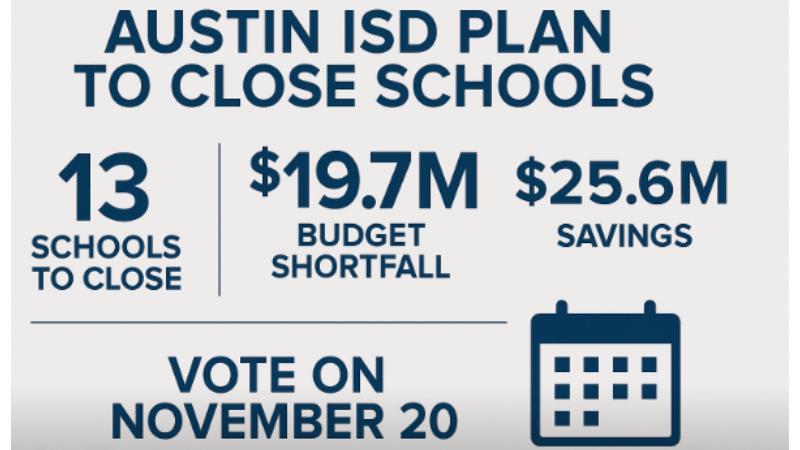
Under the draft proposal, 98 percent of schools in the district would see boundary changes, a move district officials say is necessary to create clearer feeder patterns and balance the uneven distribution of students across campuses. The district has lost more than 10,000 students in the past decade, leaving an estimated 25,000 empty seats. This decline, combined with ongoing financial challenges, has placed the district in a position where, according to leadership, bold and difficult decisions must be made to ensure stability. Despite trimming $100 million in areas outside of the classroom in recent years, the system is still facing a $19.7 million budget shortfall.
Board leadership underscored the urgency of the situation, noting that the financial reality has become unsustainable. District administration echoed this sentiment, emphasizing that doing nothing is not an option. They stressed that any delay could threaten both the district’s values and its ability to govern itself effectively under accountability standards. Officials made clear that decisive action is needed to protect resources for students and teachers.
The centerpiece of the proposal is the closure of 13 schools, including 11 elementary schools and two middle schools. Elementary campuses slated for closure include Barrington, Becker, Bryker Woods, Dawson, Maplewood, Oak Springs, Palm, Ridgetop, Sunset Valley, Widen, and Winn Montessori. The middle schools facing closure are Martin and Bedicheck. For many families, these closures mark not just a shift in where their children will attend school but also the loss of long-standing community institutions.
In addition to closures, the plan calls for repurposing certain schools to serve districtwide programs. Four campuses would transition into non-zoned, Spanish dual-language programs, while another would become an application-based language immersion school. One school would be redesigned as the districtwide Montessori program, and International High School would be merged into Navarro Early College High School. District leaders say these changes are designed to expand access to specialized programs while making better use of existing facilities.
Financially, the district estimates that the proposed changes would generate $25.6 million in annual savings, with $20 million of that coming from staffing adjustments and the remainder from closing facilities and cutting related transportation costs. Officials argue that these savings will allow the system to redirect resources toward strengthening the schools that remain open, ensuring more equitable access to teachers, technology, and extracurricular programs.
The plan has been shaped using data rubrics that evaluate student populations, facility usage, and demographic trends. However, while district leaders stress that the process has been data-driven, they acknowledge the emotional and social impact such closures will have on families and neighborhoods. Schools often serve as anchors for communities, and the decision to close them brings both logistical challenges and deep feelings of loss for many residents.
Parents and community advocates are already voicing concerns, arguing that the closures disproportionately affect certain neighborhoods and could lead to longer commutes for students. Others worry that the loss of familiar schools could undermine community cohesion. At the same time, some educators and parents acknowledge the need for action and support the idea of consolidating resources to create stronger, more stable campuses.
The board of trustees is expected to vote on the plan on November 20. In the coming weeks, community engagement meetings are planned to gather feedback and answer questions. While the final outcome remains uncertain, the draft proposal makes clear that the district is prepared to make sweeping changes in an effort to secure its financial future and better serve its students.
As the debate unfolds, the district finds itself at a crossroads. The decision will shape not only the financial trajectory of the school system but also the educational experiences of thousands of children. For families, teachers, and community members, the weeks leading up to the November vote will be a time of difficult conversations, weighing the realities of fiscal responsibility against the deep emotional bonds tied to neighborhood schools.