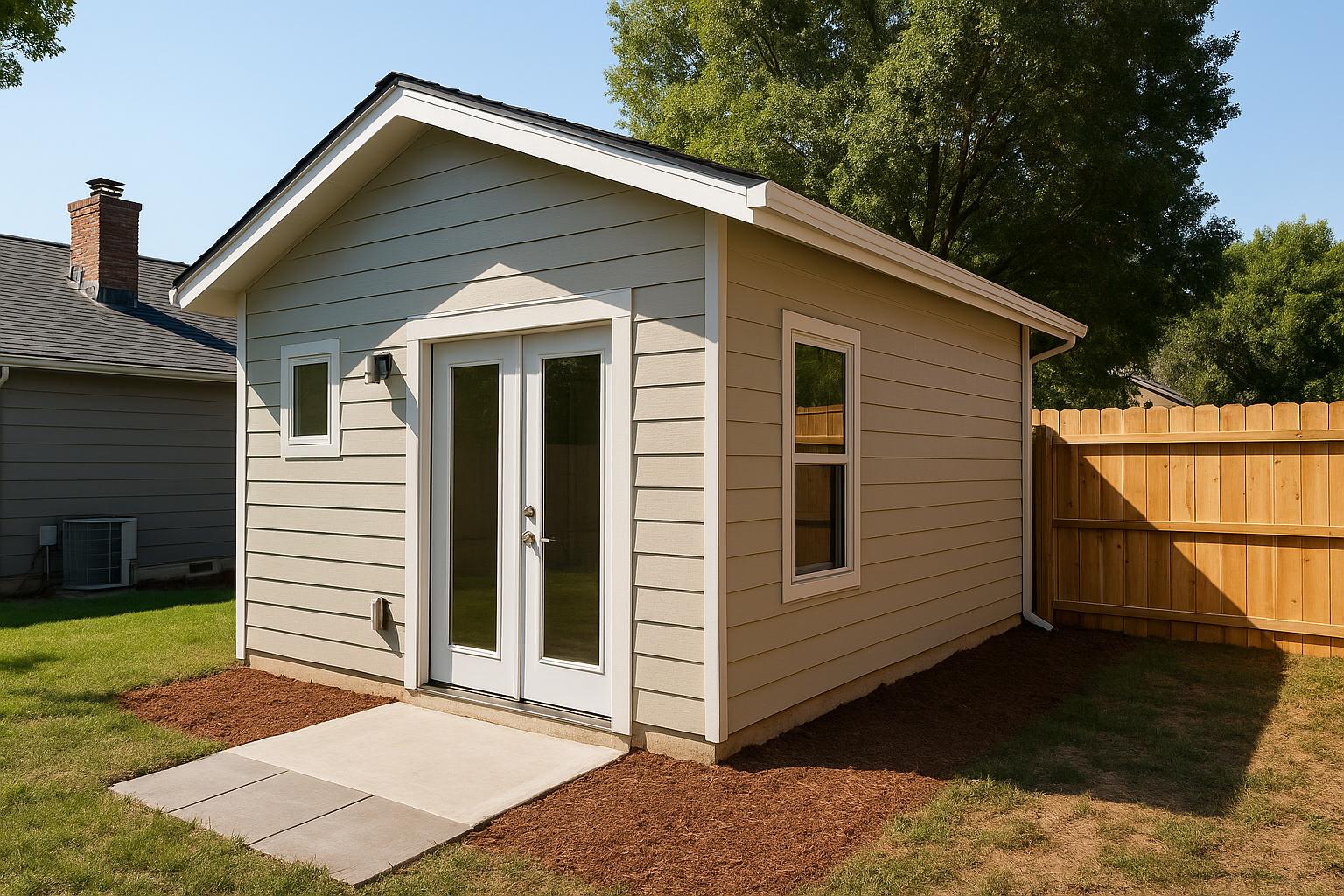
San Jose’s cooling pipeline for conventional homebuilding has put unusual emphasis on one small-scale format that continues to deliver results: accessory dwelling units. Backed by a wave of California legislation that curbed local barriers and clarified property rights, ADUs—once a niche backyard project—have evolved into a central element of the city’s growth strategy. Because they are constructed on existing lots and typically require fewer discretionary approvals than multifamily projects, they can move from concept to construction more quickly and, in some cases, avoid fees that apply to larger developments.
City officials have leaned into this momentum. So far this year, San Jose has issued permits for more than 400 ADUs, most under 700 square feet, reflecting strong homeowner interest in compact studios, cottages and above-garage apartments. To improve transparency, the city publishes progress through an interactive dashboard, and it has stocked its website with step-by-step guides, pre-approved plan sets and vendor referrals intended to reduce design costs and shorten review timelines. Certain straightforward projects qualify for same-day permitting, a rarity in California’s complex development environment.
A 2023 state law, Assembly Bill 1033, is now broadening the stakes by allowing cities to permit the separate sale of ADUs. San Jose moved quickly to implement the statute with a local ordinance that sets rules for creating a fee-simple interest for the secondary dwelling—an approach often described as “condoizing” the lot. The policy is designed to open a path to first-time ownership in one of the country’s priciest housing markets by enabling buyers to purchase a smaller, more attainable home located on a previously single-family parcel. In August, AlphaX RE Capital became the first project approved under the new framework, offering an early test of how ADU sales might work in practice.
City leaders frame the initiative as an affordability lever that complements rental supply. Mayor Matt Mahan has argued that ADUs are “affordable by design,” noting their small footprints, use of existing land and reliance on homeowner initiative rather than large developers. The separate-sale option adds an ownership rung to that ladder, potentially turning backyards into starter-home sites and giving families a way to build equity while adding gentle density to established neighborhoods.
Financing remains a pivotal hurdle, and the market is still catching up. Many traditional lenders lack standardized underwriting for ADU projects, in part because comparable sales data are thin and appraisals can be complex when a unit is newly built on an existing parcel. Nonetheless, targeted products are emerging. Meriwest Credit Union’s Home Fast ADU loan, for instance, offers interest-only payments during the first year of construction before converting to a fixed-rate schedule over the remaining term. That structure aims to bridge the period when owners face construction costs but have not yet begun collecting rent or completing a sale. Industry watchers expect more institutions to test similar products as demand grows.
Even with streamlined rules, ADUs are not universal solutions. Site conditions—such as lot size, setbacks, access for construction, slopes, and the capacity of water, sewer and electrical service—can determine feasibility. Owners are encouraged to consult licensed designers and contractors early, verify zoning and utility constraints, and model total project costs, including contingency and carrying expenses. Because a new unit typically increases assessed value, property taxes tend to rise after completion, though owners may offset some of that cost through rental income or proceeds from a sale where allowed.
AB 1033’s promise comes with added procedural steps for would-be sellers. To create a legally distinct home, utilities usually must be separated, common areas documented, and a condominium map recorded. Title, insurance and association documents have to be drafted with care to set maintenance responsibilities and preserve access. Those requirements add professional fees and time, but they also provide consumer protections and clarity when two households share what was once a single lot.
San Jose’s approach fits within a broader statewide effort to diversify housing types, add “missing middle” options and distribute growth more evenly. Whereas large apartment projects can take years to entitle, finance and build, ADUs disperse production across thousands of parcels and harness private capital and sweat equity. They also offer flexible outcomes: long-term rentals for steady income, intergenerational housing that keeps families close, or, under AB 1033, a for-sale product sized for first-time buyers.
Still, policymakers and practitioners caution against assuming ADUs can replace larger projects. The city’s long-term housing needs will require continued investment in multifamily and mixed-use development near transit, along corridors and in urban villages. ADUs, they say, are best viewed as a durable supplement that can smooth cyclical dips in construction and expand choices within established neighborhoods without dramatically changing their character.
For now, the trend line is clear: even as traditional permits waver, San Jose’s backyard building boom is holding up, supported by streamlined rules, early financing tools and a new legal pathway to ownership. If the separate-sale model proves workable and lenders scale dedicated products, the city could unlock a new tranche of attainable homes while empowering homeowners to participate directly in solving the region’s housing shortage.