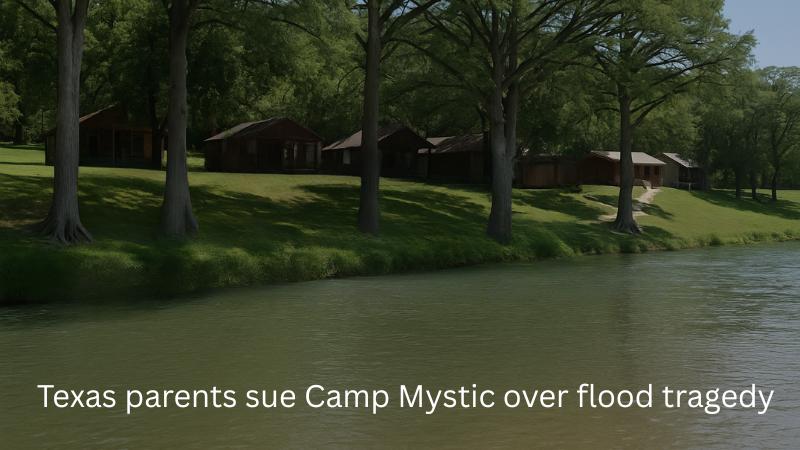
The parents of 8-year-old Eloise “Lulu” Peck have filed a wrongful death lawsuit against Camp Mystic, its owners, and affiliated entities, alleging gross negligence and disregard for safety that led to their daughter’s death during the devastating July 4 flash flood that swept through the Guadalupe River in Texas, killing 27 campers and counselors. The lawsuit, filed in Travis County District Court on Monday, accuses the camp of knowingly operating within a high-risk flood zone without adequate emergency plans, staff training, or evacuation procedures.
According to court filings, the Peck family claims that Camp Mystic, a long-standing girls’ camp near Hunt, Texas, failed to take meaningful precautions despite decades of documented flooding along the Guadalupe River. The petition alleges that camp owners and directors, members of the Eastland family, were aware of the recurring danger but continued to house children in cabins directly within the river’s floodway.
The 31-page petition, filed by Timothy and Melissa Peck of Dallas County, details what the family calls “foreseeable and preventable” circumstances. Their daughter, Eloise Peck, was staying in a cabin known as the Bubble Inn, which had been identified by FEMA as sitting squarely within a high-risk flood zone. The family’s attorneys argue that Camp Mystic prioritized cost savings and convenience over safety, even seeking to alter FEMA floodplain maps to reduce insurance costs instead of relocating cabins to higher ground.
“This was not an unforeseeable act of nature,” attorney Randy Howry stated. “What happened at Camp Mystic was preventable, and no parent should have to endure the pain of sending their child to a place of safety only to face tragedy.”
The lawsuit alleges that in the hours leading up to the deadly flood, Camp Mystic received several urgent weather warnings, including a National Weather Service flash flood alert at 1:14 a.m. on July 4. Despite the escalating danger, camp staff allegedly instructed counselors and campers to remain inside their cabins, even as floodwaters began rising and power was lost. “Camp Mystic had no plan, no training, and no urgency,” the lawsuit states. “The result was chaos, darkness, and unimaginable fear for children left alone as floodwaters tore through their cabins.”
The Peck family’s legal claims include negligence for failing to assess flood risks or implement safe evacuation protocols, gross negligence for showing “conscious indifference” toward campers’ safety, and premises liability for maintaining cabins in a known danger zone. Additional claims of joint enterprise, ratification, and vicarious liability seek to hold all camp entities collectively accountable for the tragedy.
The Pecks are seeking over $1 million in damages, including compensation for wrongful death, funeral costs, and punitive damages intended to prevent future negligence. “Today is a difficult but necessary step for our family,” Tim Peck said in a statement. “We are pursuing legal action not out of anger, but out of love for our daughter and a desire for truth and accountability.”
Court documents describe Camp Mystic as a “for-profit family business” that ignored multiple warnings over decades. The lawsuit notes that one former camp director, Richard “Dick” Eastland, previously served on the Upper Guadalupe River Authority, giving him firsthand knowledge of the region’s flood risks. Yet, the camp allegedly continued to operate without sufficient flood detection systems, emergency drills, or designated escape routes.
Nearby Mo-Ranch, a separate youth camp located upstream, successfully evacuated more than 70 individuals during the same storm, a decision the lawsuit highlights as evidence that timely action could have saved lives.
The filing also references personal details about Eloise Peck, including her drawings depicting fear of storms and darkness in the weeks leading up to her death, calling them “a haunting echo of what was to come.”
This case follows another lawsuit filed earlier in November on behalf of families of seven other victims, also in Travis County District Court. Both filings allege that Camp Mystic failed to protect campers despite receiving clear and repeated flood warnings. Attorneys representing the victims’ families say more lawsuits are expected in the coming weeks as additional families seek justice.
In response, Camp Mystic issued a brief statement expressing sympathy for those affected: “We continue to pray for the grieving families and ask for God’s healing and comfort.”
Camp Mystic’s legal counsel, Jeff Ray, maintained that the flooding was unprecedented and far beyond the camp’s control. “We intend to demonstrate that this surge of floodwaters exceeded any previous flood in the region by several magnitudes,” Ray said. “We disagree with several accusations and misinformation contained in the filings, and we will address them in due course.”
Founded in 1926, Camp Mystic sits along the South Fork of the Guadalupe River in an area often referred to as “Flash Flood Alley,” one of the most flood-prone regions in Texas. The July 4 storm led to one of the deadliest flash floods in the area’s history, claiming 27 lives, including campers and counselors, and prompting statewide reviews of youth camp safety standards.
The lawsuit represents another chapter in a growing wave of legal and public scrutiny directed at private youth camps operating near high-risk floodplains. For the Peck family, however, it remains a deeply personal mission to honor the memory of their daughter and ensure no other parent faces the same loss.