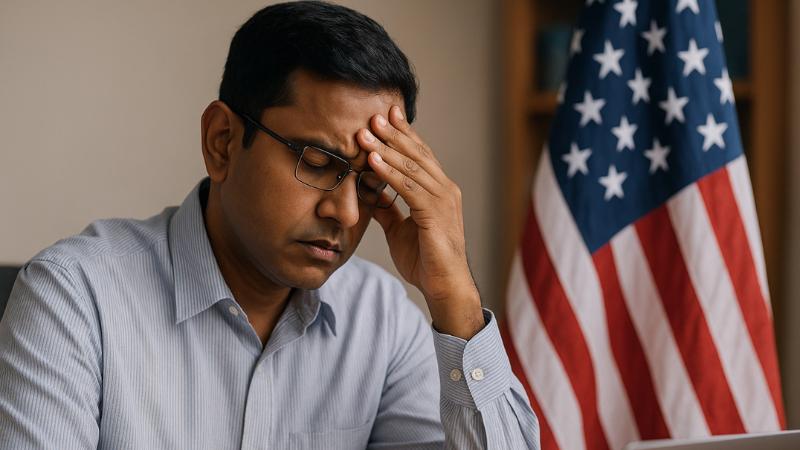
The issue gained widespread attention after an emotional appeal posted on an online discussion forum went viral. Titled “Humble request from a stranded Indian to fellow Indians in USA,” the post was written by an Indian professional unable to secure a visa interview slot. In the message, the individual urged fellow Indians currently in the US to avoid booking appointments for January and February or to cancel existing bookings if possible. The appeal highlighted that stranded workers had no alternatives and were facing severe stress, along with growing anxiety among their families, as they waited for new interview slots to become available.
The message resonated strongly within the Indian community abroad, prompting an outpouring of support. Many individuals responded by stating that they had already cancelled or postponed their own appointments to help free up slots for those stuck in India. Several commenters explained that remaining outside the US for extended periods could result in job losses, as many American employers do not permit remote work from outside the country due to legal and compliance restrictions. Others shared personal experiences of friends and colleagues facing similar situations, emphasizing the collective nature of the crisis.
The discussion also shed light on the emotional toll of the delays. Numerous responses expressed relief and encouragement at seeing people come together during a difficult time. Some said the interactions restored their faith in humanity, while others noted that such solidarity is rare around immigration-related issues, which are often marked by division and hostility. Within a short period, the post attracted hundreds of comments and a large number of endorsements, reflecting both the scale of the problem and the depth of concern within the community.
At the same time, the situation drew sharp reactions from critics of the H-1B visa program. Supporters of hardline immigration policies portrayed the chaos as evidence that the program could be disrupted with minimal effort and argued that it disadvantages American workers. Influential commentators circulated images of the viral appeal online, framing the delays as a victory against what they describe as an exploitative system. Such responses highlighted the deeply polarized views surrounding employment-based visas in the US.
Criticism of the H-1B program has intensified in recent months, with opponents claiming it enables companies to replace domestic workers with cheaper foreign labor. These arguments have been amplified on social platforms, often accompanied by calls for stricter rules or the dismantling of the program altogether. Some voices have even spoken openly about reducing the presence of Indian professionals in major US corporations, presenting such measures as economic reforms rather than actions with human consequences.
Policy signals from the current US administration have further fueled uncertainty. Proposed measures, including significantly higher fees for new H-1B petitions, are aimed at curbing what officials describe as abuse of the system. Supporters argue these steps protect domestic employment, while critics warn that abrupt policy shifts and administrative delays harm businesses, skilled workers and families who depend on predictable immigration processes. For those stranded in India, these debates translate into immediate fears about job security and long-term career prospects.
As the delays continue, the viral appeal has become a symbol of both vulnerability and resilience among Indian professionals. While political battles over immigration policy persist, the episode underscores how ordinary workers are often caught in the middle of larger ideological conflicts. For now, many stranded H-1B holders can do little but wait and hope that interview slots open sooner, relying on community cooperation and goodwill to navigate an uncertain and deeply stressful period.