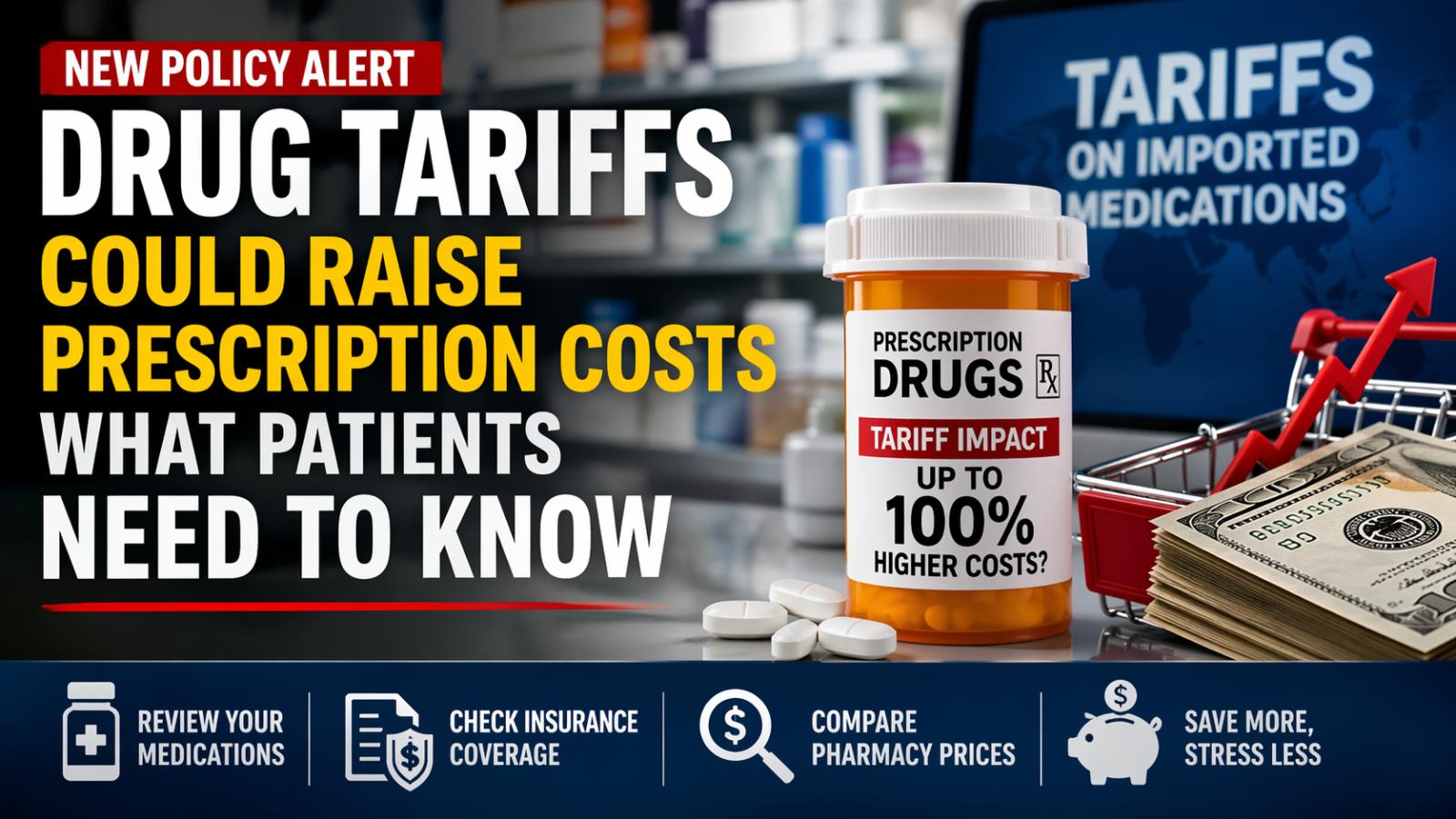
A newly announced policy introducing tariffs on certain imported pharmaceuticals could gradually increase prescription drug costs for patients across the United States. The measure applies primarily to brand-name medications that remain under patent, along with some of their active ingredients, with tariff rates potentially reaching up to 100 percent depending on compliance with pricing or domestic production conditions.
While generic medications and biosimilars are currently excluded, the policy leaves room for future reassessment. Since a significant majority of prescriptions in the U.S. are filled with generics, many patients may not experience immediate changes at the pharmacy counter. However, the broader concern lies in how manufacturers, insurers, and pharmacies may respond to increased costs over time.
As production expenses rise, pharmaceutical companies could shift the financial burden through higher list prices, which may eventually influence insurance premiums and out-of-pocket costs. Even patients not directly using affected drugs could feel indirect effects if insurers adjust coverage tiers or pricing structures.
Given this uncertainty, reviewing prescription strategies is becoming increasingly important. Patients using brand-name medications may benefit from discussing lower-cost alternatives with their healthcare providers. Generic versions, where available, offer comparable effectiveness at reduced prices and are not currently impacted by the tariffs.
Price variations across pharmacies also remain significant, making comparison tools and cash pricing options useful for cost-conscious consumers. Additionally, reviewing insurance formularies can help identify whether medications fall into higher-cost tiers and if alternatives exist. Savings programs offered by pharmaceutical companies may provide further relief, particularly for those facing higher out-of-pocket expenses.
As the policy evolves, staying informed and proactive may help patients better manage potential cost increases. Careful planning and regular consultation with healthcare providers can play a key role in maintaining affordability while ensuring continuity of care.