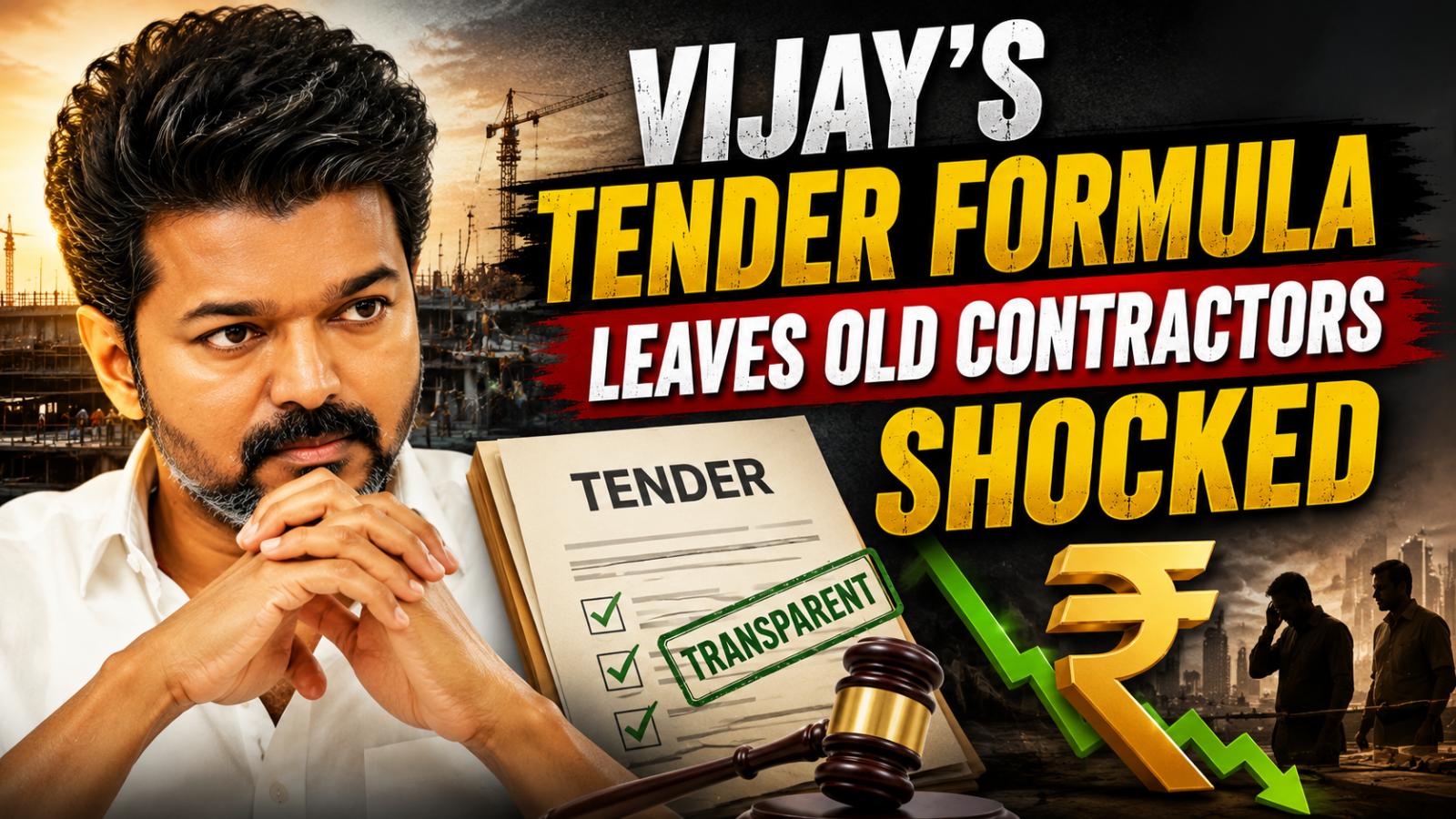
Vijay’s Tender Formula Creates Buzz
Tamil Nadu Chief Minister Vijay’s new approach to public tenders has become one of the most talked-about moves in state politics. Within weeks of introducing a more transparent tender system, the government is claiming major savings in civic works, while old contractors are reportedly struggling to adjust to the new rules of the game.
For years, public works contracts were surrounded by allegations of inflated estimates, political influence and hidden commissions. Contractors were often accused of quoting higher prices because unofficial expenses were believed to be part of the system. Vijay’s government is now trying to change that perception by pushing open competition, stricter scrutiny and a more transparent bidding process.
Reports suggest that several contractors are now bidding far below the official estimated cost of projects. In some cases, bids have reportedly come in 25 to 30 percent lower than the government’s estimates. This has created a major political talking point for the ruling side, as the government is presenting the development as proof that public money can be saved when the tender process is clean and competitive.
Old Contractors Face New Reality
The new system has reportedly surprised many established contractors who were used to the older method of securing civic works. With increased competition and closer monitoring, contractors can no longer depend on influence or old networks alone. Instead, they are being forced to compete through lower quotes and better project proposals.
Interestingly, some contractors are said to be welcoming the change. According to discussions in political and contractor circles, the new method may reduce the pressure of unofficial payments and allow genuine bidders to participate without fear of being pushed aside by politically backed players. If this continues, smaller and more efficient contractors may also get a better chance to win government work.
At the same time, the sharp drop in bid amounts has raised an important question. If contractors can execute projects at 25 to 30 percent lower costs today, were previous governments spending more than necessary on public works? This question is now becoming a powerful weapon in Vijay’s political messaging.
Savings Vs Quality Debate Begins
While the government is celebrating the reported savings, the real test will be the quality of the work delivered under the new tender system. Lower bids may save public money, but they must not lead to poor materials, delayed projects or incomplete civic works. Experts believe the government must combine cost reduction with strict quality checks to ensure that roads, drainage systems, public buildings and other civic projects are not affected.
For now, Vijay has managed to create a strong governance narrative. His tender formula has placed transparency, public savings and anti-corruption messaging at the centre of political debate in Tamil Nadu. The move has also put pressure on earlier systems of contract allocation and forced old contractors to rethink their methods.
If the government can maintain quality while saving money, this tender model may become one of Vijay’s biggest administrative successes. But if low-cost bids lead to poor execution, the same model could face criticism in the future. For now, the message from the Chief Minister’s office appears clear: the old style of awarding contracts is over, and public money will be watched more closely than before.