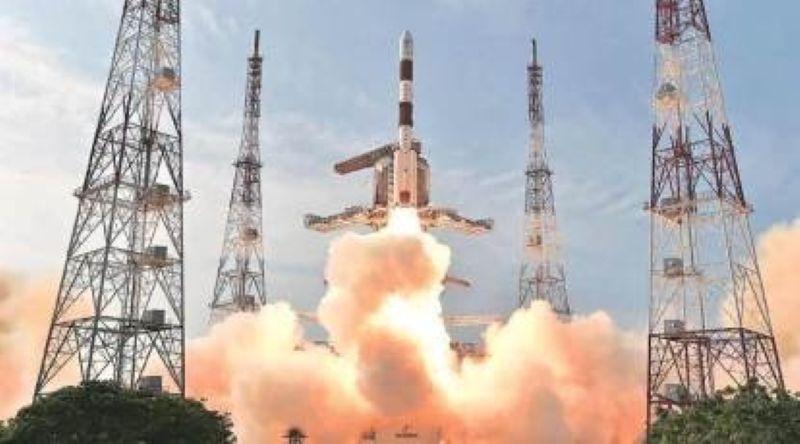
India has achieved a significant milestone in its space exploration and climate monitoring goals with the successful launch of the Nasa-Isro Synthetic Aperture Radar (Nisar) satellite. Launched on July 30, 2025, from the Satish Dhawan Space Centre in Sriharikota, the satellite is a $1.5 billion joint venture between the Indian Space Research Organisation (ISRO) and the United States’ National Aeronautics and Space Administration (Nasa). Weighing 2393 kilograms, the satellite is now set to transform the way we monitor Earth’s climate and respond to natural disasters.
Nisar is the world’s first Earth-mapping satellite equipped with dual-frequency synthetic aperture radar. By combining Nasa's L-band radar with ISRO's S-band radar, the satellite can detect even the smallest shifts on Earth’s surface, measuring movements as small as a few millimeters. Its ability to work through forests, clouds, and even in darkness makes it an invaluable tool for monitoring the planet. Nisar orbits the Earth every 97 minutes, capturing images of nearly all land and ice surfaces every 12 days.
The satellite's primary applications include monitoring glacier movements in the Himalayas, detecting fault-line shifts before earthquakes, tracking agricultural cycles, and managing water resources. For India, which frequently faces the brunt of climate change and natural disasters, Nisar’s near-real-time data will be crucial in improving the forecasting of floods, droughts, and landslides, thereby enabling more effective disaster management.
The Nisar mission represents a groundbreaking collaboration between ISRO and Nasa, showcasing the power of international partnerships in driving scientific progress. The development of the satellite took nearly a decade, with both space agencies working together on various aspects, including the development and integration of the radar systems. The satellite's science operations will continue for the mission's lifespan, and its data will be freely accessible to researchers, disaster managers, and policymakers worldwide.
As part of the mission’s four-phase process, Nisar will undergo deployment, commissioning, and science operations, marking a new era in satellite technology. India, with this mission, has not only enhanced its technological capabilities but also positioned itself as a leader in global environmental stewardship, offering vital tools for monitoring and protecting our planet.