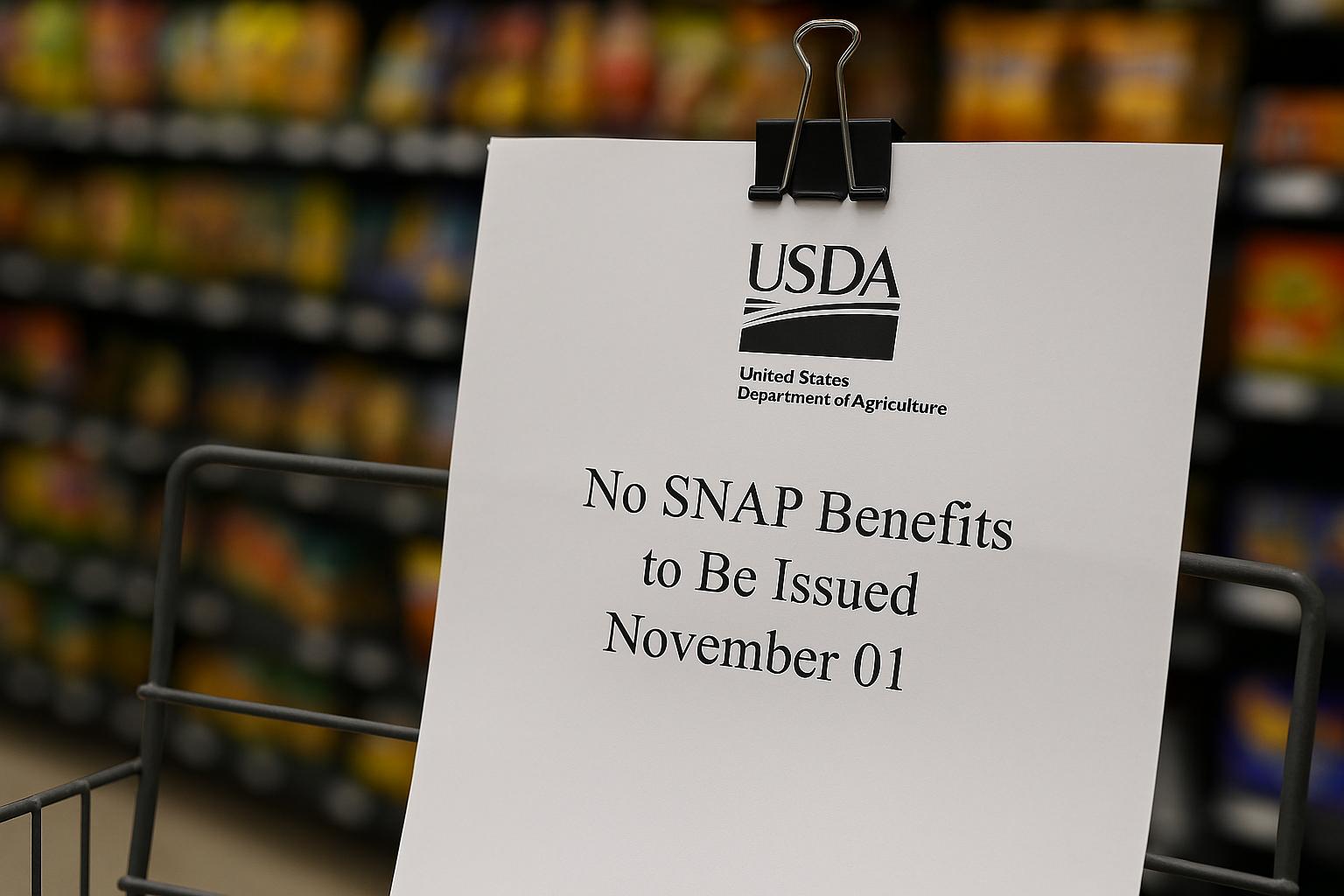
The U.S. Department of Agriculture has announced that federal food assistance under the Supplemental Nutrition Assistance Program (SNAP) will not be distributed beginning November 1, as the federal government shutdown extends with no resolution in sight. The announcement intensifies concerns across the country as millions of Americans who rely on SNAP face the prospect of losing their primary means of purchasing food.
According to the USDA’s notice, the agency will not tap into the estimated $5 billion in contingency funds that could have extended food aid into next month. The department blamed ongoing political gridlock in Congress, accusing Senate Democrats of repeatedly blocking measures to fund the program. The statement sharply criticized lawmakers for prioritizing unrelated policy debates over essential benefits, saying the “well has run dry.”
SNAP is one of the largest components of the federal social safety net, supporting nearly one in eight Americans each month. Beneficiaries receive electronic cards they can use at grocery stores and local markets to buy food. The potential cutoff would impact tens of millions of low-income households nationwide, creating ripple effects across local economies.
In Illinois alone, about 1.9 million residents depend on SNAP. Governor J.B. Pritzker voiced frustration over the situation, accusing the federal government of misplaced priorities. “They can find money during a shutdown to fund masked agents causing disruption in our communities, but not to ensure families can eat,” Pritzker said in a recent statement. He warned that ending food aid would harm not only struggling households but also grocers and workers who depend on SNAP spending.
As families brace for uncertainty, local businesses and organizations are stepping in to fill the gap. Living Fresh Markets, a Black-owned grocery chain in Chicago, has announced a free food distribution program to help those affected. Beginning November 3, the store will offer free produce to customers reliant on SNAP every Monday from 10 a.m. to noon. “Many of our customers are single mothers facing enormous challenges,” said Melody Winston, the company’s senior executive. “No child or family should be denied access to fresh produce.”
The shutdown, which began on October 1, has become the second-longest in U.S. history. Although the administration had previously taken measures to ensure October’s SNAP benefits were paid, the expiration of those efforts has widened the impact to some of the nation’s most vulnerable populations. With negotiations at a standstill, the possibility of restarting benefits appears uncertain.
The administration has placed the blame on Democrats for refusing to reopen the government, while Democratic lawmakers insist that negotiations cannot proceed unless Republicans agree to extend funding for Affordable Care Act subsidies. Lawmakers led by Sen. Chris Murphy of Connecticut have urged the administration to use contingency funds to continue food benefits, but the USDA has argued that the funds are legally restricted for disaster relief and emergencies such as hurricanes.
A USDA memo released late last week reaffirmed this stance, noting that the money must remain available for emergencies, citing Hurricane Melissa—a Category 5 storm—as an example of why the contingency funds are reserved. The memo also warned that states would not be reimbursed if they attempted to cover SNAP benefits using their own funds during the shutdown.
Some states are attempting to find workarounds, while others are preparing residents for the worst. Arkansas and Oklahoma have advised SNAP recipients to identify food pantries or local charities for assistance. State agencies across the Midwest and South have also begun compiling lists of community organizations that can provide emergency food supplies should federal aid stop.
Senator Murphy criticized the ongoing impasse, arguing that a bipartisan compromise could quickly end the crisis. “If they sat down to negotiate, we could reopen the government this week,” he said Sunday. “There wouldn’t be any crisis in the food stamp program.”
Meanwhile, federal workers are expected to miss another paycheck, with air travel already disrupted due to staff shortages among unpaid air traffic controllers. The broader shutdown continues to strain services across multiple sectors, and the absence of food aid threatens to deepen the human impact.
Unless a resolution is reached in the coming days, the cessation of SNAP benefits could represent one of the most immediate and visible consequences of the ongoing shutdown—one that directly affects the health, stability, and dignity of millions of American families.